Getting around Norway is the part of the trip people fret about most before they leave, and the part they rave about once they’re home. The country is long, mountainous and stitched together by fjords, yet the transport that connects it all — trains that climb above the treeline, ferries that double as scenic cruises, little turboprops that hop between Arctic islands — is one of the genuine pleasures of travelling here. I’ve done most of it the slow way and the fast way, in summer light that never quits and in February dark, and the short version is this: you can see an enormous amount of Norway without ever touching a steering wheel.
The quick answer: getting around Norway is easy, safe and well organised. Trains link Oslo with Bergen, Trondheim, Stavanger and Bodø; long-distance buses and a dense ferry network fill the gaps; and Widerøe, SAS and Norwegian fly you to the far north in under two hours. Download one app — Entur — and you can plan and pay for almost all of it. Rent a car only where it genuinely earns its keep: the fjord backroads and the remote north.
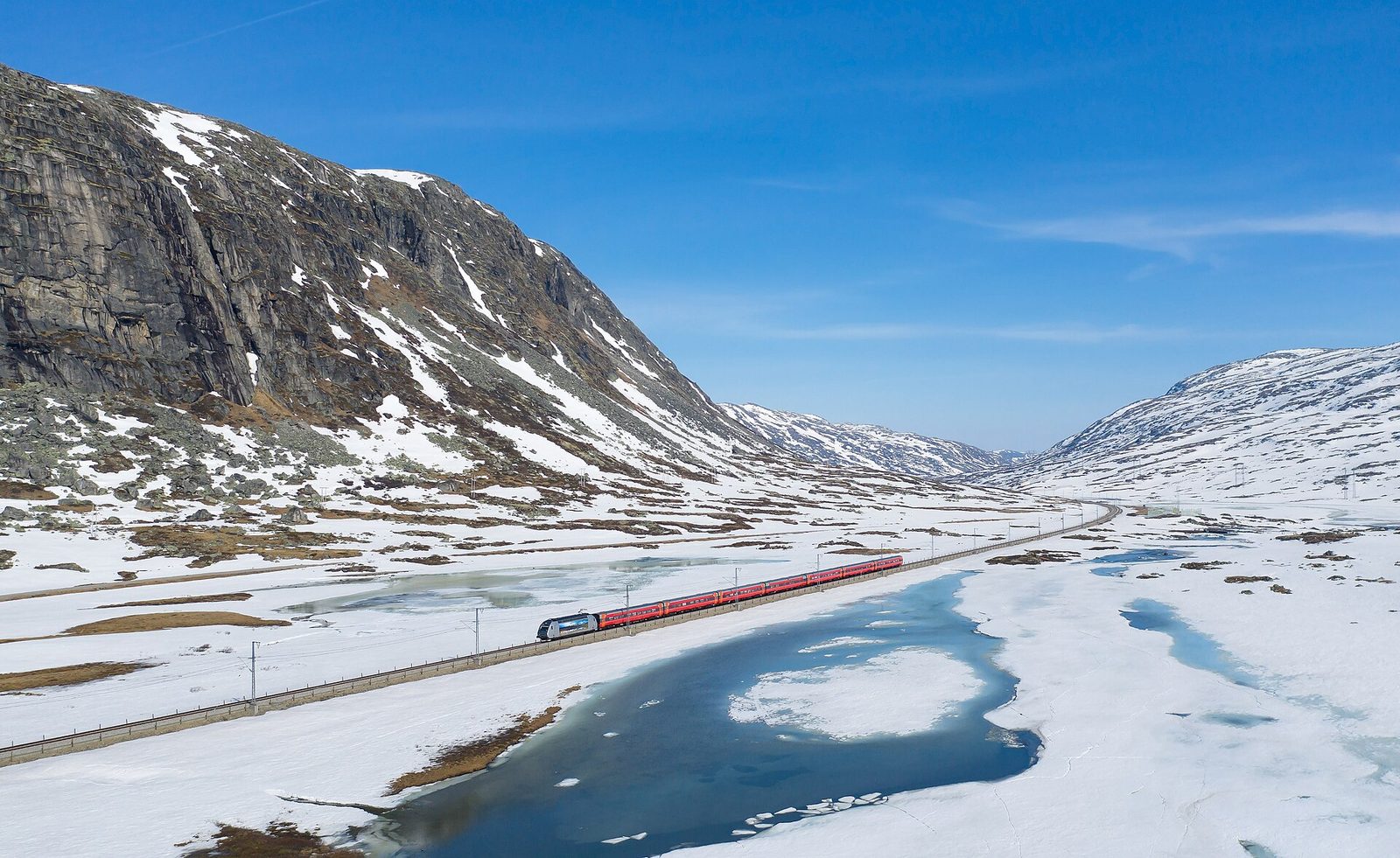
This guide pulls together everything I wish someone had handed me on my first trip: how each mode actually works, what it costs in 2026 (in kroner and rough dollars), which app to trust, and — the bit no one else seems to spell out — exactly how to reach the places you’ve come for, from Lofoten to Preikestolen. (For the what rather than the how, pair this with our roundup of Norway’s headline experiences.) Prices move, so I’ve flagged the ones worth double-checking before you book. Let’s get into it.
The modes at a glance
Here’s the whole transport system on one screen. Use it to sketch a rough plan, then dive into the sections below for the detail.
| Mode | Best for | Rough cost | Speed | Book ahead? |
|---|---|---|---|---|
| Train | Oslo–Bergen/Trondheim/Stavanger/Bodø; scenery on rails | NOK 249–1,100 / ~$26–115 per leg | Moderate (Oslo–Bergen ~7h) | Yes, for the cheap “Lowfare” tickets |
| Long-distance bus | Routes without trains; budget travel | NOK 200–600 / ~$21–63 | Slow but comfy | Helpful, not essential |
| Car ferry | Crossing fjords on a road trip | NOK 40–200 foot / car / ~$4–21+ | 15–90 min crossings | No — turn up and drive on |
| Express boat / coastal ship | Fjord arms, islands, the long coast | NOK 300–1,300 / ~$32–137 | Fast catamarans; ships are slow & scenic | Yes for cabins |
| Domestic flight | Reaching the Arctic and remote west fast | From ~NOK 700 / ~$75 one-way | Oslo–Tromsø ~1h55 | Yes — fares climb |
| Rental car | Fjord backroads, the far north, your own pace | ~NOK 600–1,900 / ~$65–200 per day | You set it | Yes in summer |
| City transit | Getting around within Oslo, Bergen, etc. | NOK 30–51 single / ~$3–5 | Frequent | No — buy in the app |
Conversions use roughly NOK 9.5 to the US dollar (mid-2026). The krone has been unusually strong lately, so check the rate the day you book.
Is it easy to get around Norway without a car?
Yes — genuinely. This is the question I get asked more than any other, usually by people picturing a Scandinavian wilderness with one bus a week. The reality is that Norway runs one of the most civilised public-transport networks in Europe. The classic first-timer route — Oslo, the Bergen Railway, the fjords around Flåm and Bergen, maybe a flight north to Tromsø or the Lofoten Islands — can be done entirely on trains, buses, boats and planes, and it’s a better trip for it. You spend the journey looking out of the window instead of at the tarmac.
Where a car earns its place is in the fjord countryside and the remote north: the side-valleys, the trailheads, the National Tourist Routes, the villages where the bus comes twice a day. If your dream is photographing a different fjord viewpoint each morning, drive. If it’s seeing the highlights with the least hassle, you may never need to. Plenty of people do a hybrid — train and boat for the long hauls, a rental car for two or three days in the fjords — and that’s often the sweet spot. I’ll give you a clear verdict by traveller type further down.
Two honest caveats. First, frequency thins out in winter and in rural areas; a route with hourly departures in July might run three times a day in January. Second, Norway is big — bigger than it looks on a Mercator map — so don’t try to “just pop” from Bergen to Lofoten. Respect the distances and the system rewards you. For a sense of how the seasons change everything from daylight to ferry timetables, our guide to the best time to visit Norway is worth a read alongside this one.
How much does it cost to get around Norway?
Norway has a reputation for being eye-wateringly expensive, and some of it is earned — but transport is one area where it’s more reasonable than you’d think, especially if you book trains early and lean on the apps. Here’s what things actually cost in 2026. I’ve kept every figure in kroner with a rough dollar conversion, because that’s the part competitors always leave out. Treat fares as “around” numbers; they’re dynamic and nudge up over time. (Transport is only one line in the budget — my Norway travel costs guide covers the full daily picture, food and hotels included.)
City transport ticket prices
Within a city you’ll buy a single ticket (good for 60 minutes including transfers) or a day/seven-day pass. Buy them in the local app — onboard purchase is dearer or simply not possible.
| City (operator) | Single ticket | 24-hour | 7-day |
|---|---|---|---|
| Oslo (Ruter) | NOK 46 / ~$5 | NOK 137 / ~$14 | NOK 379 / ~$40 |
| Bergen (Skyss) | NOK 51 / ~$5.50 | NOK 110 / ~$12 | NOK 280 / ~$29 |
| Trondheim (AtB) | NOK 47 / ~$5 | NOK 130 / ~$14 | ~NOK 320 / ~$34 |
| Stavanger (Kolumbus) | NOK 45 / ~$4.70 | NOK 110 / ~$12 | ~NOK 300 / ~$32 |
| Tromsø (Svipper) | NOK 30 / ~$3 | NOK 90 / ~$9.50 | ~NOK 230 / ~$24 |
Children, students and seniors pay roughly half. Tromsø’s fares are deliberately low — the city gets extra state funding to keep buses cheap. In Oslo, note that the Oslo Pass (NOK 580/845/995 for 24/48/72 hours, about $61/$89/$105) bundles all Ruter zones with free entry to 30-plus museums; if you’re sightseeing hard it pays for itself.
Train fares on the main routes
This is where booking ahead saves you the most. Vy’s cheapest advance fares — now branded Lowfare, the old “Minipris” — start around NOK 199–249 and rise as seats sell. Walk up to the counter on the day and you’ll pay the flexible fare, which can be three to four times more. The cheap tickets are released up to 90 days out, are tied to a specific departure, and aren’t refundable, so book the leg once your plans are firm.
| Route | Journey time | Lowfare from | Typical walk-up |
|---|---|---|---|
| Oslo–Bergen (Bergen Line) | ~6h30–7h | NOK 249 / ~$26 | NOK 800–1,100 / ~$85–115 |
| Oslo–Trondheim (Dovre Line) | ~6h30–7h | NOK 249 / ~$26 | NOK 700–1,000 / ~$74–105 |
| Oslo–Stavanger (Sørland Line) | ~8h | NOK 249 / ~$26 | NOK 700–950 / ~$74–100 |
| Trondheim–Bodø (Nordland Line) | ~10h | NOK 299 / ~$31 | NOK 800–1,100 / ~$85–115 |
| Flåm Railway (Flåmsbana) | ~1h | NOK 570 one-way / ~$60 | NOK 850 return / ~$90 |
Heads-up for 2026: the Nordland Line (Trondheim–Bodø) has been disrupted, with a replacement bus on part of the route and night trains suspended at the time of writing — check Entur for current status before you rely on it.
Buses, ferries, flights and car hire: what they cost
| Mode | Example | Rough 2026 price |
|---|---|---|
| Long-distance bus | Oslo–Stavanger or Oslo–Trondheim | NOK 200–450 / ~$21–47 if booked ahead |
| Car ferry (foot passenger) | Geiranger–Hellesylt | NOK 130–170 / ~$14–18 |
| Car ferry (car + driver) | Bodø–Moskenes (to Lofoten) | ~NOK 834 / ~$88 incl. reservation |
| Express boat (tourist) | Bergen–Flåm via the Sognefjord | From ~NOK 1,295 / ~$136 |
| Domestic flight | Oslo–Tromsø one-way | From ~NOK 700–900 / ~$75–95 |
| Rental car | Mid-size, per day | ~NOK 600–1,200 / ~$65–125 (more in August) |
| Petrol / diesel | Per litre (mid-2026) | ~NOK 20–21 / ~$2.15 — temporarily low |
How to travel around Norway cheaply
A few habits make a real difference. Book train Lowfares the moment your dates are set — the gap between NOK 249 and a NOK 1,000 walk-up is the single biggest saving on the whole trip. Take the bus where there’s no train: it’s slower but often half the price, and on routes like Ålesund–Trondheim it’s the sensible option anyway. For airport runs, skip the premium express where a normal train does the same job: in Oslo, the Vy regional train to the airport is about NOK 134 (~$14) versus the Flytoget express at NOK 268 (~$28) for a journey only a few minutes longer. And register a ferry-discount account before a fjord road trip (more on that below) — it knocks 40–50% off every crossing. If you’re piecing together a longer route, our Norway itinerary and road-trip guide shows how the cheap legs slot together.
The apps and tools you actually need
Norway’s transport runs on a handful of apps, and knowing which to use saves you money and a lot of confusion. Download these before you fly in.
Entur: the one app to download first
If you remember nothing else, remember Entur. It’s the national journey planner and ticket shop, and it covers essentially every public transport service in the country — trains from all three operators, long-distance and local buses, trams, metros, and many boats — in one place, with live departures. Crucially, Entur sells tickets at the operator’s own price with no surcharge, including for the lines that don’t sell their own tickets (SJ Nord, which runs the northern and central trains, has no ticket channel of its own — you buy its trains through Entur). For planning an intercity trip across different operators, nothing else comes close.
Vy and the regional transport apps
The Vy app is great for Vy’s own trains and buses, but it adds a small surcharge on rail legs run by other operators, so I default to Entur for cross-country journeys and use Vy mainly for the Bergen and Dovre lines. For getting around within a city or region, the local apps are usually the cheapest and slickest: Ruter in Oslo, Skyss in Bergen, AtB in Trondheim, Kolumbus around Stavanger, plus the likes of Brakar, FRAM, Reis Nordland and Svipper as you move around the country. You don’t need them all — just grab the one for wherever you’re based at the time.
Why Google Maps lets you down (and what to use instead)
Here’s the tip that saves real grief: Google Maps is unreliable for public transport in Norway. It misses departures, gets ferry and regional-bus times wrong, and sometimes insists there’s no connection when Entur shows three. Use Entur for transit routing and you’ll never be caught out. For driving and road conditions — mountain-pass closures, ferry timetables, roadworks — the official source is Statens vegvesen (the Norwegian Public Roads Administration) at vegvesen.no; it’s the authority on which high roads are open. And if your trip involves walking between trailheads, the UT.no app (run by the Norwegian Trekking Association) is the standard for trails and cabins, and pairs naturally with our hiking in Norway guide.
Getting around Norway by train
Norwegian trains are comfortable, scenic and refreshingly stress-free, and for the main corridors between cities they’re my first choice. The network isn’t dense — this is a country of mountains and fjords, not a flat grid — but the lines it does have are some of the most beautiful rail journeys on Earth. You won’t find a bullet-train network here; you’ll find big windows, reclining seats, a bistro car, and the Hardangervidda plateau sliding past at snow-line.
The Bergen Line is the journey most visitors are weighing up, and it is worth doing the sums properly. We compare all four ways of crossing between the two cities door to door, including the airport transfers that quietly undo the 55-minute flight.
Who runs the trains now
Three companies share the passenger network, which matters mainly for ticket-buying. Vy, the state operator, runs the Oslo local trains plus the flagship Bergen Line and the Dovre Line to Trondheim. Go-Ahead Nordic runs the south and southwest — the Sørland Line from Oslo to Kristiansand and Stavanger, plus the Arendal and Jæren lines. SJ Nord, the Norwegian arm of the Swedish state railway, runs the northern and central lines including the Nordland, Rauma and Røros lines. The old “NSB” you’ll still see in older guides became Vy back in 2019. The practical upshot: buy through Entur and you don’t have to think about any of this.
Booking and the cheapest fares
Norwegian rail uses dynamic pricing. The cheapest Lowfare (formerly Minipris) tickets are released up to 90 days before departure and sell out as a train fills, so the earlier you book, the less you pay — often NOK 249 (~$26) for a journey that costs four times that on the day. The trade-off is that Lowfares are tied to a specific train and aren’t refundable or changeable, and on a connection each leg is priced separately. Seat reservations are usually optional and cheap to add, with one exception: on the Bergen Line they’re compulsory for Interrail and Eurail pass holders, so reserve ahead if you’re travelling on a pass.
Classes, sleepers and bikes
Most long trains offer a standard carriage and a “Plus” comfort carriage with more space and a quiet zone — worth the small upgrade on a seven-hour run. Overnight trains on the Bergen, Dovre, Sørland and Nordland lines have proper sleeper berths (two- or six-berth compartments) and lie-flat “PlusNight” seats; an Oslo–Bergen night train saves you a hotel and a day. If you’re bringing a bike, you must reserve a bike space in advance on the Bergen Line — there are only a handful per train and they go quickly in summer.
The scenic lines worth planning a trip around
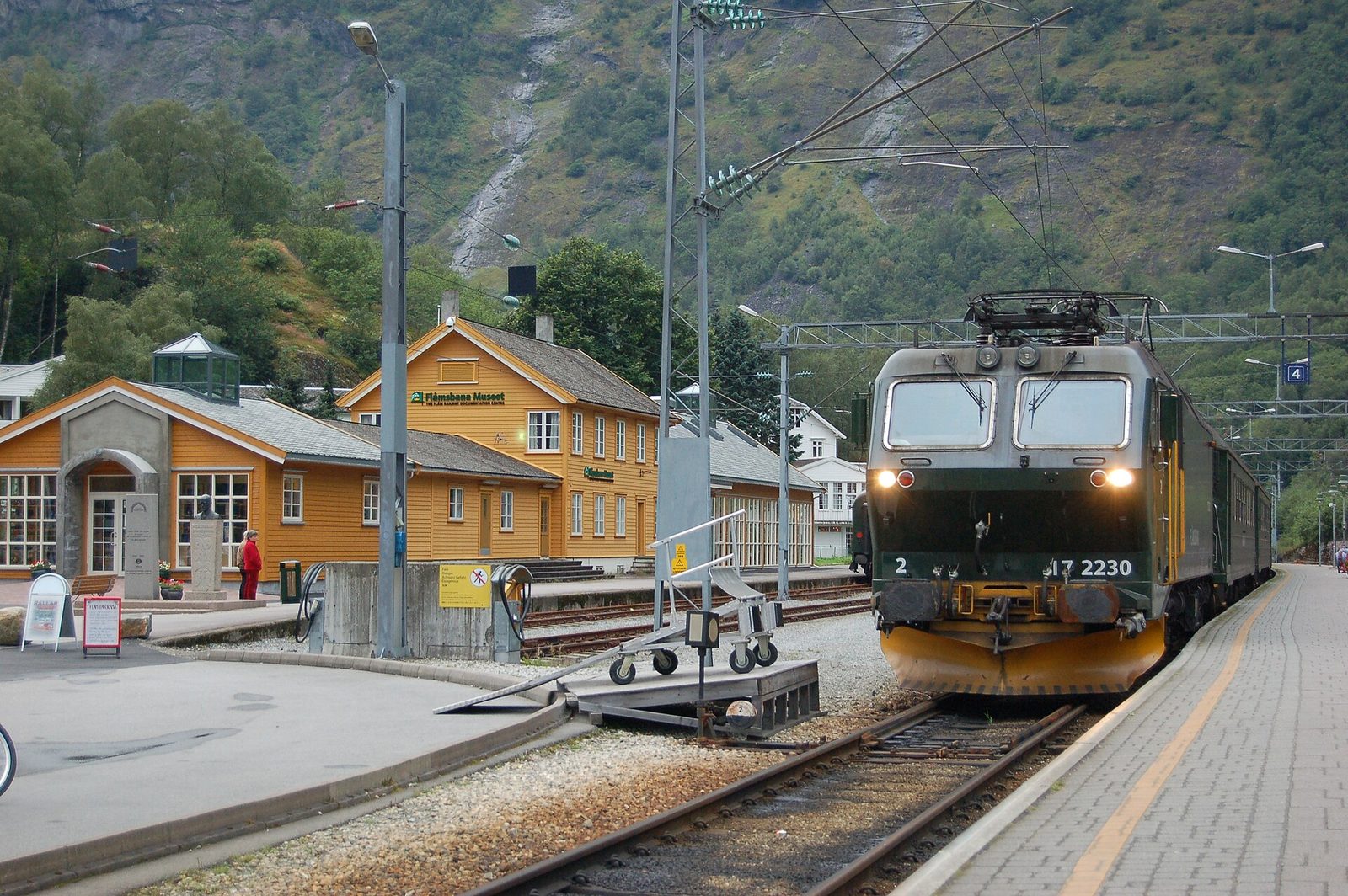
Some Norwegian railways aren’t just transport — they’re the attraction. The Bergen Line (Bergensbanen), Oslo to Bergen in about seven hours, climbs to the bleak, beautiful Hardangervidda and is regularly called one of the world’s great train journeys. Branching off it at Myrdal, the Flåm Railway (Flåmsbana) drops nearly 900 metres in under an hour through hairpin tunnels to the Aurlandsfjord, past the Kjosfossen waterfall — it runs daily, year-round, and costs around NOK 570 one-way (~$60). The Rauma Line from Dombås to Åndalsnes threads past the Trollveggen rock wall and over the Kylling Bridge, and the Nordland Line to Bodø crosses the Arctic Circle. I’ll be publishing dedicated deep-dives on the Bergen Railway, the Flåm Railway and Norway’s best scenic rail journeys as part of this series — they each deserve their own guide. The famous self-guided Norway in a Nutshell route stitches the Bergen Line, Flåmsbana and a Nærøyfjord cruise together; you can buy it as a package or, as I’d suggest, book the identical legs yourself through Entur and save NOK 400–700 a head. Our Norway tours and excursions guide breaks down when a package is worth it and when to go it alone.
Getting around by bus
Where the train doesn’t go, the bus usually does — and it’s often cheaper. Long-distance coaches in Norway are comfortable, modern affairs with Wi-Fi, power sockets, toilets and, on some lines, free coffee. Vy Express runs the biggest network, with around 17 domestic lines reaching corners no train can. NOR-WAY Bussekspress covers roughly ten scenic routes, mostly in the south, and there are budget operators like Lavprisekspressen on the busy corridors. A booked-ahead Oslo–Trondheim coach can undercut the train substantially. The catch is time — buses are slower — and frequency, which drops on weekends and outside summer. For something like Ålesund to Trondheim, where there’s no direct train, the express bus is simply the answer. Fares are bundled (tolls and ferries are included in the ticket), and you book through the operator’s app or Entur.
Getting around by ferry and boat
You cannot understand Norwegian transport without understanding boats. With more than a thousand fjords and a coastline that would wrap a third of the way around the planet if you straightened it out, ferries aren’t a novelty here — they’re road and rail. There are three kinds you’ll meet: car ferries that carry the highway across a fjord, fast passenger catamarans, and the coastal ships that run the length of the country. Even inside a city this matters: Oslo’s island boats are ordinary Ruter services on ordinary tickets, which is why a trip out onto the Oslofjord costs the price of a bus ride rather than the price of a cruise.
Car ferries and the AutoPASS discount
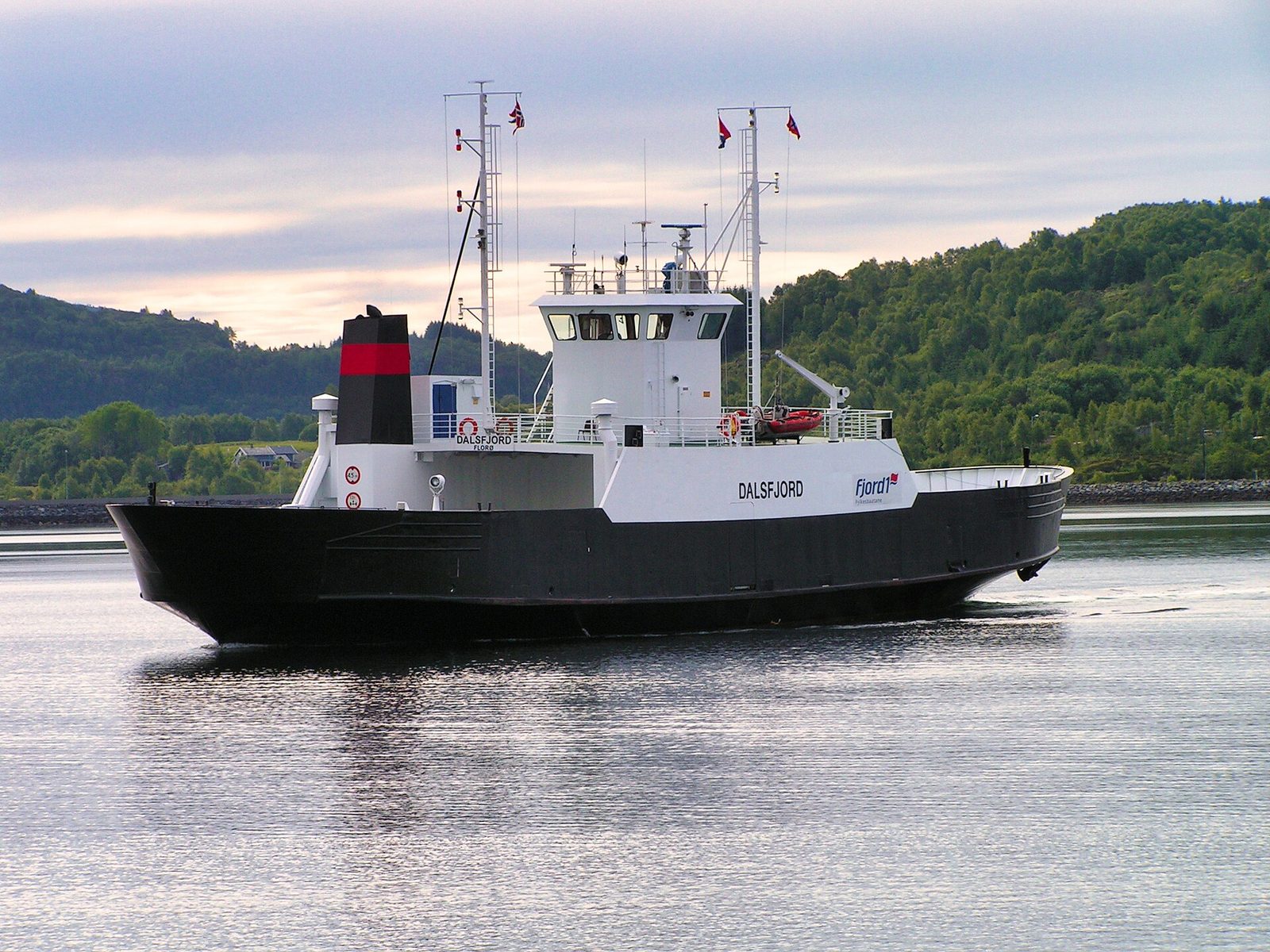
On a fjord road trip, car ferries are part of the rhythm. You don’t book them — you join the queue at the quay, drive on, pay onboard or by camera, and 20 minutes later you’re rolling off the other side. Operators like Norled, Torghatten Nord and Fjord1 run hundreds of crossings, many now on near-silent electric ferries. The one thing to sort in advance is the discount. The AutoPASS for ferje scheme works in tiers: with no tag and no account, the camera reads your plate and bills you full price plus a small fee; with a prepaid AutoPASS-for-ferry account (foreign cars can register at autopassferje.no), you get 40–50% off every crossing. On a two-week fjord trip with a dozen ferries, that adds up fast. Foot-passenger crossings are cheap — Geiranger to Hellesylt, one of the prettiest, is around NOK 130–170 (~$14–18).
Express passenger boats
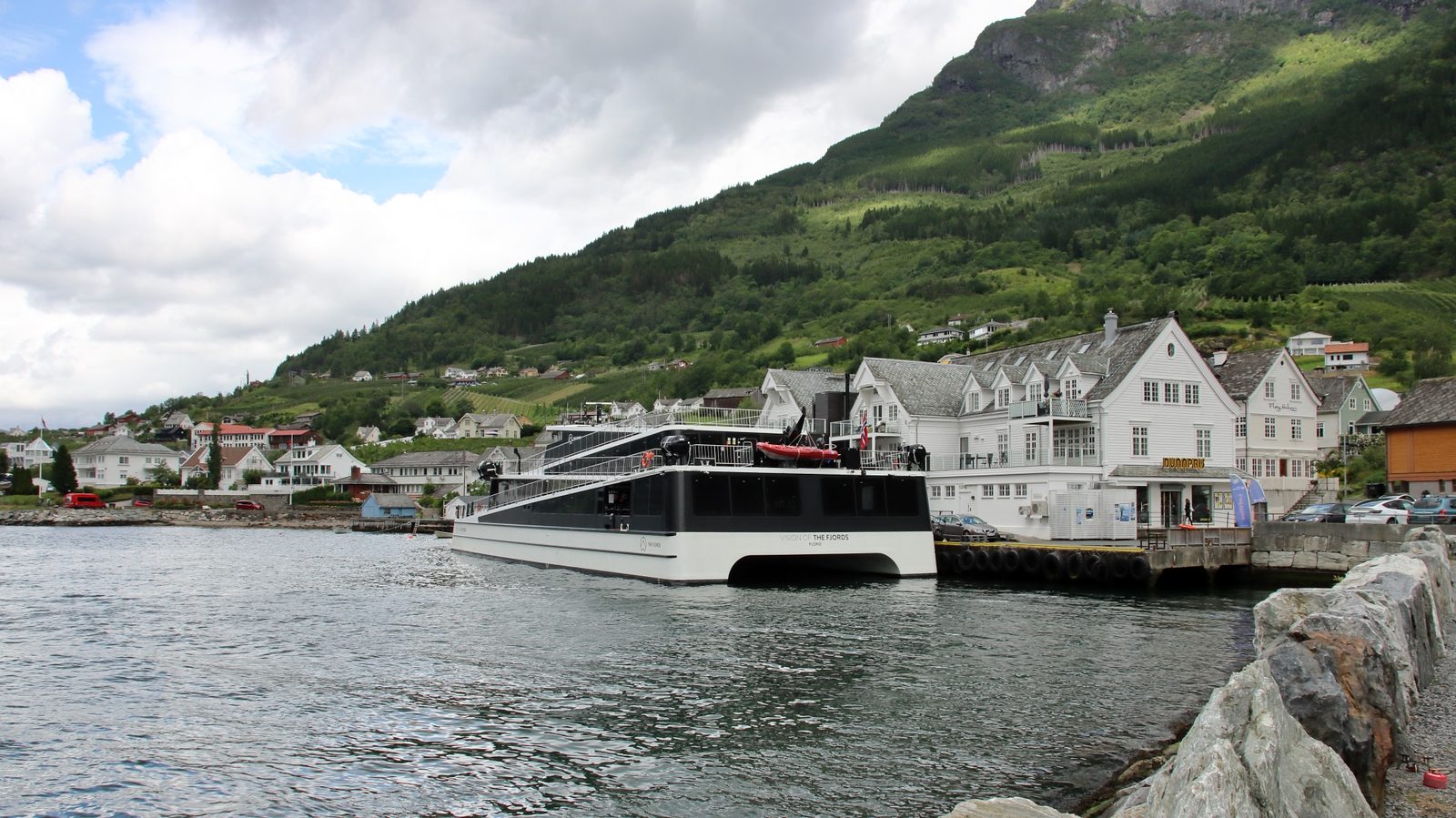
The fast catamarans — hurtigbåt — are how you reach fjord arms and islands without a car. Norled runs a popular Bergen–Sognefjord–Flåm express boat (a gorgeous trip in its own right), and companies like Rødne run sightseeing-cum-transport sailings into the Lysefjord from Stavanger and the Sognefjord from Bergen, increasingly on electric vessels. They cost more than a car ferry because they’re as much an experience as a journey, but gliding up a narrow fjord at water level is one of the trip’s quiet highlights.
The coastal voyage as transport
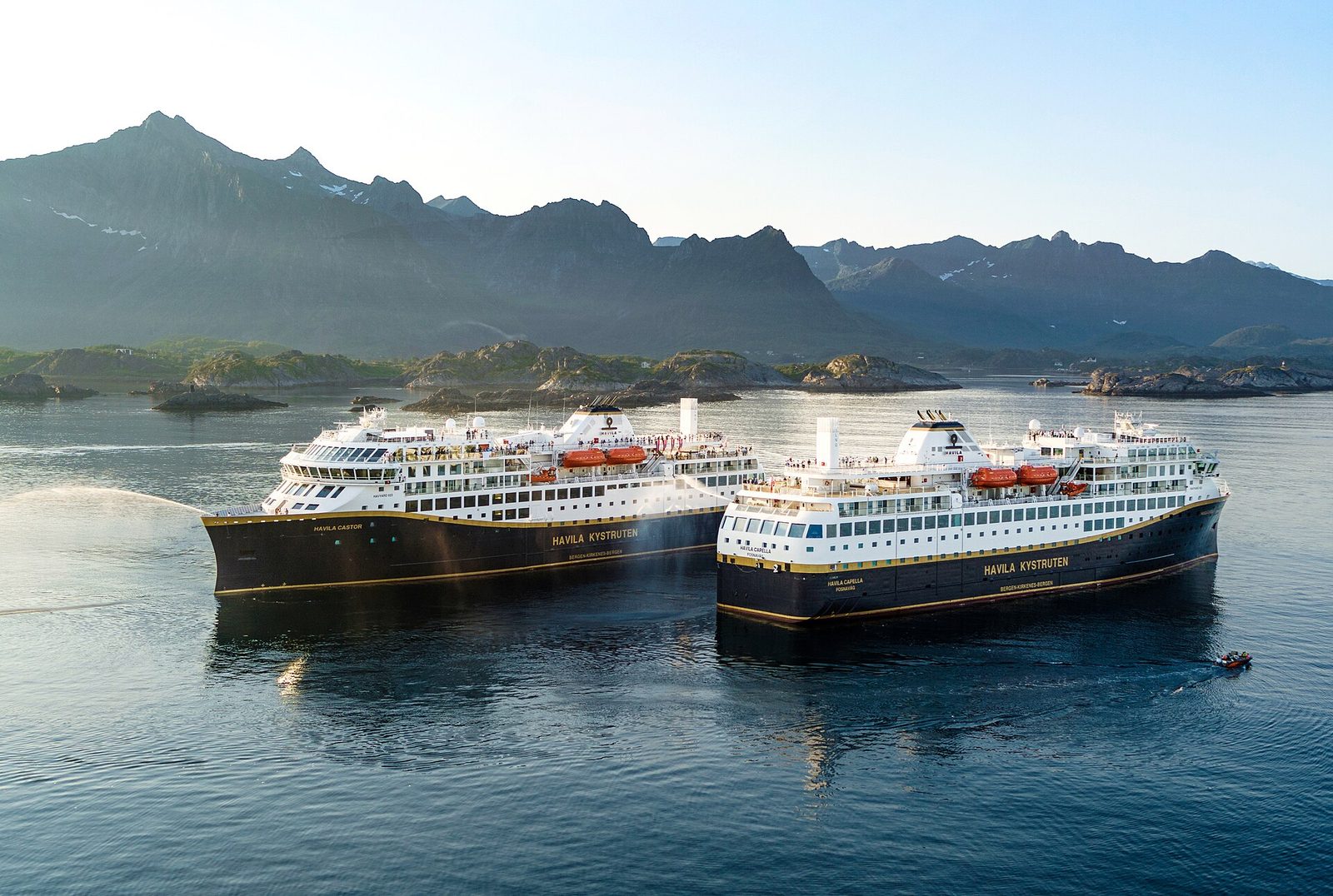
The famous Hurtigruten and Havila coastal ships sail Bergen to Kirkenes and back, calling at 34 ports over roughly a week northbound. Most travellers treat the full voyage as a cruise, but it’s also a working ferry service that locals use, and you can book it port-to-port — Bergen to Ålesund, say, or Tromsø to Honningsvåg — for a fraction of the full fare. It’s a wonderful, low-stress way to cover the coast while you sleep, eat and watch the scenery. We go deep on ships, cabins and itineraries in our Norway fjord cruise guide.
Getting around by domestic flight
Norway is long. Oslo to the North Cape is roughly the same as Oslo to Rome, so for the far north, flying isn’t lazy — it’s sensible. Three airlines carry you around: SAS and Norwegian on the trunk routes, and Widerøe, the regional specialist, on a web of short hops into small communities on the coast and in the Arctic, often on little turboprops landing on runways that seem to end at the sea. (The budget carrier Flyr collapsed back in 2023, so ignore older references to it.)
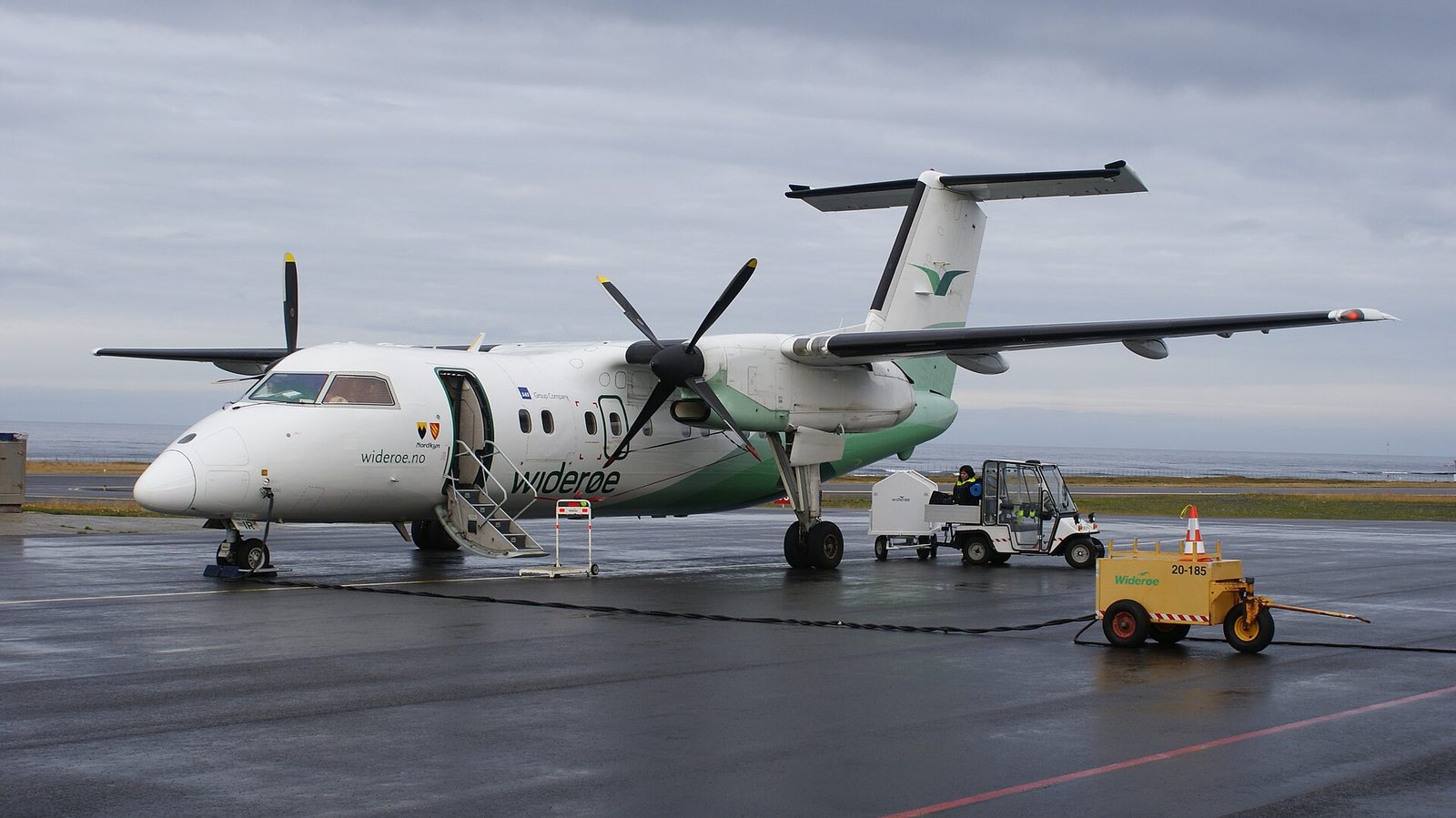
The numbers make the case. Oslo to Tromsø is under two hours and starts around NOK 700–900 (~$75–95) if you book ahead; the train-and-bus alternative would eat two days. Oslo–Bergen is barely an hour in the air, Oslo–Bodø about ninety minutes. Widerøe also serves the Lofoten airports at Svolvær and Leknes, which can be the quickest — and sometimes cheapest — way onto the islands. Many of Widerøe’s smallest routes are government-subsidised with capped fares, so the remote hops are more affordable than you’d expect. Book early; like everywhere, the cheap seats go first. Flying north and working your way back south overland is a classic way to structure a trip — see our Tromsø and Arctic Norway guide for what to do once you land.
Renting a car and driving in Norway
For the fjords and the far north, a car unlocks the Norway that buses can’t reach — the side-valley waterfalls, the sunrise viewpoint with no one else there, the trailhead at the end of a dead-end road. Driving here is a pleasure: roads are well kept, traffic is light once you leave the cities, and other drivers are calm. It’s also where the real planning lives, so here’s what you need to know.
The rules and the running costs are the part people underestimate, so we have broken them out separately: what it actually costs to drive here covers hire rates, the young-driver surcharge, toll admin fees, ferry length bands and the winter tyre law, which is not the flat calendar mandate most guides describe.
What a rental car really costs
Expect roughly NOK 600–1,200 a day (~$65–125) for a mid-size car, with August the priciest month and late winter the cheapest. Oslo tends to have the best rates; airport pickups are convenient but carry surcharges. Minimum age is usually 19–21 with young-driver fees under 25, and watch for one-way drop-off fees if you’re collecting in one city and leaving the car in another — they can be steep. An automatic is worth requesting if you’re not used to a manual, since most rentals here are still stick-shift. Increasingly the car you collect will be electric, which brings us to the running costs.
Tolls, fuel and charging
Norway has no toll booths — cameras read your plate and you’re billed automatically. In a rental, the agency handles it and passes on the charges (sometimes with an admin fee); if you bring your own car from abroad, register with Epass24 so you’re billed correctly rather than at the top rate. City toll rings in Oslo and Bergen are time- and emissions-based: an Oslo crossing runs about NOK 38 off-peak and NOK 47 in rush hour for a petrol car, less for an EV. Fuel, unusually, is cheap right now — around NOK 20–21 a litre in mid-2026 thanks to a temporary tax cut running through the summer, so expect it to climb again afterwards. If you’re in an EV, you’re in the world’s most charger-dense country: over 24,000 public points, thousands of them fast chargers, with charging running roughly NOK 2 per kWh. Coverage is excellent in the south and thinner in Finnmark, so in the far north, charge when you can rather than when you must.
Mountain passes, winter tyres and the scenic routes
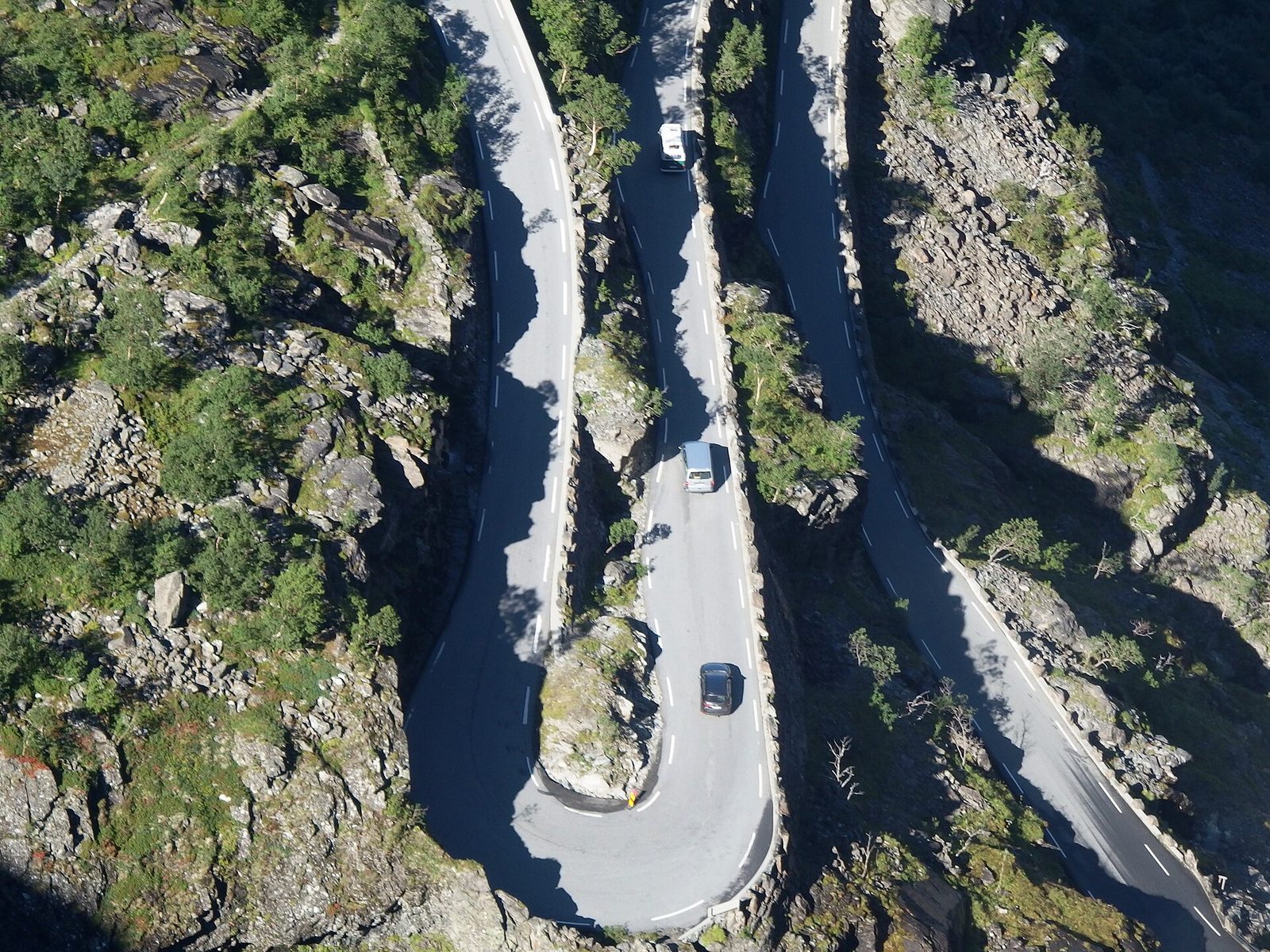
This is the part that catches people out. Many of Norway’s most spectacular high roads are seasonal — buried in snow and closed for half the year. Sognefjellet (the highest pass road in Northern Europe), the Aurlandsfjellet “Snow Road”, and old Strynefjellet typically open late May or June and close again in autumn; exact dates swing with the snowpack each year, so always check Statens vegvesen before counting on one. The good news for 2026: the legendary Trollstigen, closed for over a year after a 2024 rockslide, reopened in late April — earlier than usual after a light-snow winter — though it can still shut at short notice in heavy rain. In winter, rental cars come on winter tyres (studded tyres are legal from 1 November to the Monday after Easter in the south, and from mid-October in the north), but mountain driving in the dark and ice is a different sport — read our Norway in winter guide before you commit. If scenery is the point, aim your trip at the 18 National Tourist Routes — official scenic highways with architect-designed viewpoints, totalling some 1,850 km along the coast, through the fjords and over the mountains. The driving is the destination, which is exactly why a car can be worth it. Our road-trip itineraries map out the best loops.
City transport at a glance
Norway’s cities are compact and walkable, but the public transport is so good you’ll use it anyway. A quick tour:
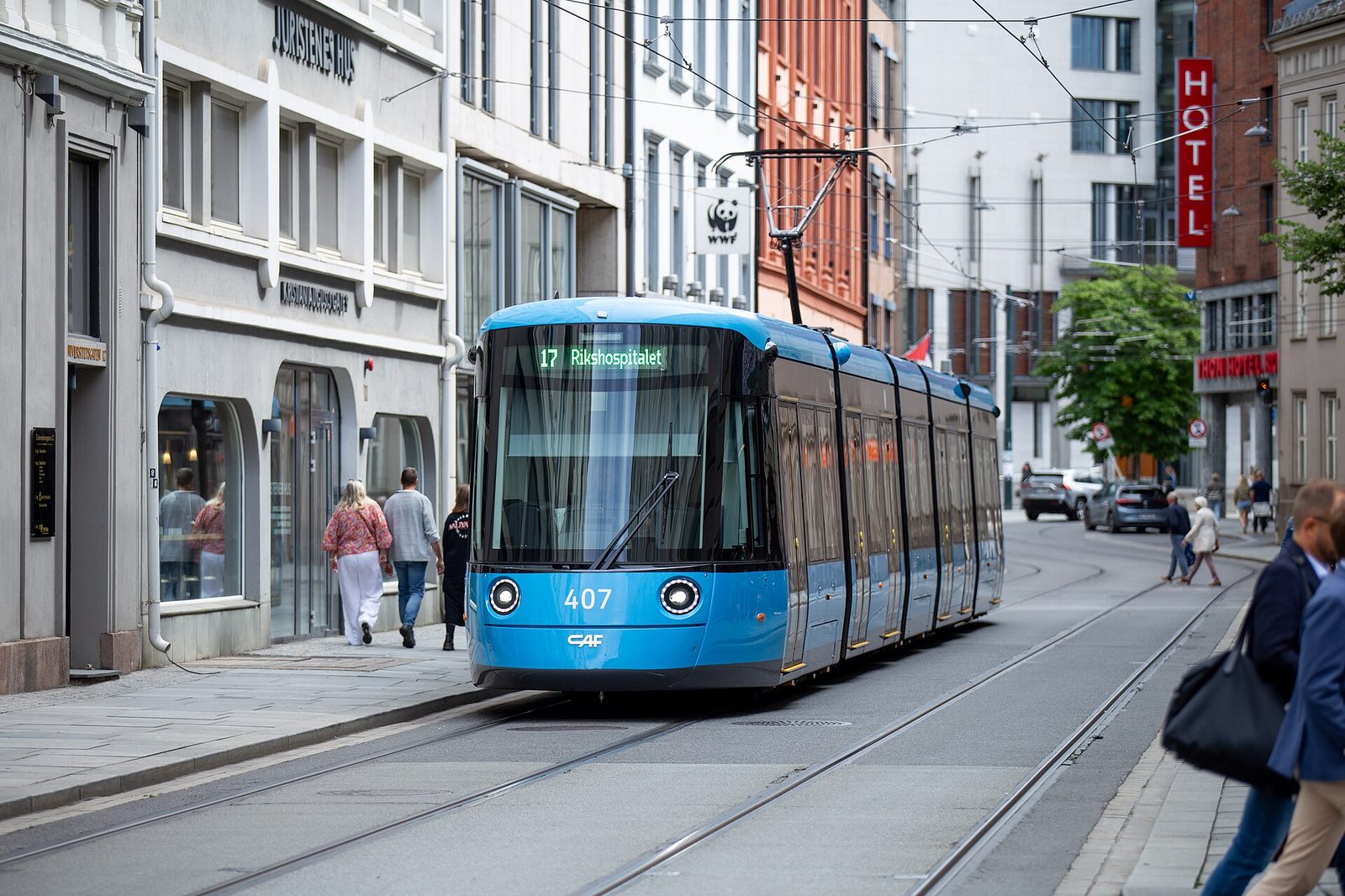
Oslo has the works — a metro (T-bane), trams, buses and little ferries out to the Oslofjord islands, all on one Ruter ticket. From the airport, the Vy regional train into the city (~NOK 134, ~$14) does almost exactly what the Flytoget express (~NOK 268, ~$28) does for half the price; only take Flytoget if you value the few saved minutes. Bergen runs the slick Bybanen light rail straight from the airport into the centre, plus Skyss buses. Trondheim (AtB) and Stavanger (Kolumbus) have tidy bus networks, and Trondheim even has the world’s only bicycle lift. Tromsø gets around by bus, with fares kept deliberately low. In every case, the move is the same: download the local app, buy a single or a day pass, and forget about it.
Car vs public transport: which should you choose?
Here’s the verdict the guidebooks dodge. There’s no single right answer — it depends on who you are and where you’re going — so here’s how I’d actually decide.
| If you are… | Going mainly to… | My recommendation |
|---|---|---|
| A first-timer doing the classics | Oslo, Bergen, the Nutshell fjords | Public transport. Train + boat does it beautifully, no parking stress. |
| A couple chasing fjord scenery | Geirangerfjord, the backroads, viewpoints | Rent a car for those days — the freedom is the whole point. |
| A family with kids | Cities plus one fjord region | Hybrid. Trains (kids love them, often free/half-price) plus a car for 2–3 fjord days. |
| Heading to the Arctic | Tromsø, Lofoten, Nordkapp | Fly in, then decide. Public transport in towns; car for Lofoten’s length. |
| On a tight budget | Anywhere | Buses and booked-ahead trains. Skip the car and its tolls, fuel and ferries. |
| Visiting in deep winter | The north, for aurora | Public transport + tours. Let someone else drive the ice roads. |
The honest summary: a car is a tool for a specific job — the fjord countryside and the remote north — not a default. For everything else, Norway’s trains, boats and planes are not just adequate, they’re a highlight. A “do you need a car in Norway?” deep-dive is coming in this series, but that table is the gist.
If the geography itself is the confusing part, our guide to where the fjords actually are explains the regions, the airports that serve each one, and why a short distance on the map can take most of a day.
How to reach Norway’s big-hitter destinations
This is the question behind the question. You don’t really want to know about “buses” in the abstract — you want to know how to get to the place on your moodboard. Here are the routes to Norway’s headline destinations, the way I’d do them.
The Bergen–Flåm run deserves its own arithmetic, because there are four ways to do it and the prices cross over depending how far ahead you book. We put the train, the express boat, the car and the packaged tour on one table, along with the last departures back that decide whether it works as a day trip.
Oslo to Bergen
Take the train. The Bergen Railway is the trip, not a means to it — seven hours across the high plateau for as little as NOK 249 (~$26) booked ahead. If you have a day or two to spare, break the journey at Myrdal for the Flåm Railway and a Nærøyfjord cruise (the Nutshell route) and arrive in Bergen by boat and bus instead. Flying is faster (under an hour) but you’ll trade the best train ride in the country for an airport. Once there, our Bergen travel guide takes over.
How to get to the Lofoten Islands
Three ways, and the right one depends on your priorities. Fly via Bodø or direct to Svolvær/Leknes on Widerøe for speed. Take the car ferry Bodø–Moskenes (about 3¼ hours, ~NOK 834 with a car) for the classic arrival by sea — book the car space in summer. Or come overland on the Arctic Route bus from Narvik or Tromsø, a long but spectacular ride. Most people fly to Bodø, then ferry across. Our Lofoten Islands guide covers getting around once you’re there (you’ll want a car).
Tromsø and the Arctic
For Tromsø, fly — Oslo–Tromsø is under two hours and the obvious move. From Tromsø you can push on by Widerøe to Alta or Kirkenes, take the coastal ship up to the North Cape region, or join the Arctic Route bus toward Lofoten. In winter especially, base yourself in town and let tour operators handle the driving to aurora spots and husky camps; the roads are fine but the dark and ice are not for a jet-lagged first night. Our northern lights guide and Tromsø guide go further.
The fjords and Geirangerfjord
The big fjords reward a car, but you can reach the famous ones without one. For the Nærøyfjord and Flåm, the train-and-boat Nutshell route is unbeatable. For Geirangerfjord, the seasonal Hellesylt–Geiranger ferry is itself one of the great fjord trips, reachable by bus from Ålesund. The Hardangerfjord sits an easy bus or drive from Bergen. If you want to roam between several fjords and their viewpoints freely, though, that’s the textbook case for renting a car — our Norwegian fjords guide lays out which is which and how they connect.
Stavanger, Preikestolen and Trolltunga
Stavanger is easy: fly in, or take the train down the Sørland Line or the coastal route. For Preikestolen (Pulpit Rock), shuttle buses and a short ferry connect Stavanger to the trailhead in season, no car needed. Trolltunga is tougher — it’s a serious day hike from Odda, reachable by bus from Bergen or Oslo but easier with a car to reach the higher parking. Both are covered in our hiking guide, including the realities of the trails and the toll-road parking at Trolltunga.
Nordkapp, Trondheim, Ålesund and Bodø
For Nordkapp (the North Cape), fly to Alta or Honningsvåg, or arrive by coastal ship and bus — there’s no train this far north. Trondheim sits on the Dovre and Nordland lines and has its own airport, so train or fly. Ålesund, the art-nouveau town and a gateway to Geiranger, is reached by bus from the rail network or by air. Bodø, the end of the Nordland Line and the jumping-off point for Lofoten, has both trains and flights. The pattern across the north is consistent: rail gets you as far as Bodø and Trondheim, and from there it’s planes, buses and ships.
Seasonal and practical tips
A handful of things worth knowing before you go, learned the slightly-harder way.
Summer runs more of everything. From roughly June to August, ferries sail more often, scenic roads are open, and tourist boats run full schedules. In winter, frequencies drop, mountain passes close, and your weight shifts to trains, flights and the coastal ships — which is partly why winter trips lean north and urban. The best-time-to-visit guide has the month-by-month detail.
Build in buffer time. Connections are generally reliable, but a single daily ferry or a Widerøe hop weathered out can reshuffle a day. Don’t schedule the unmissable thing for the hour after a tight connection. And yes, in rural areas a flock of sheep on the road is a legitimate reason your bus is late.
Pay by card or phone, everywhere. Norway is nearly cashless. You’ll buy tickets in apps and tap your card on the rare occasion you buy onboard; you almost never need kroner in your pocket. Ticket inspections do happen on city transit, and the fines for riding without a valid ticket are not gentle.
Bringing kids, bikes or lots of luggage? Children travel cheap or free, trains have space for buggies and bikes (reserve bike spots on the Bergen Line), and there’s no airline-style luggage limit on trains and buses — a relief if you’re hauling hiking or ski gear. For where to base yourself between journeys, our where to stay in Norway guide pairs well with this one.
Frequently asked questions
Is it easy to get around Norway without a car?
Yes. Trains, buses, ferries and domestic flights connect all the major destinations, and a single app (Entur) plans and pays for most of it. You only really need a car for the fjord backroads and remote north, and even then you can rent one for just those days.
What is the cheapest way to travel around Norway?
Book train “Lowfare” tickets as early as possible (from ~NOK 249/$26), take long-distance buses where there’s no train, use normal regional trains instead of premium airport expresses, and register a prepaid ferry account to halve crossing costs. Avoiding a rental car — with its tolls, fuel and ferries — is usually the single biggest saving.
Is public transport in Norway expensive?
Less than its reputation suggests. City singles run NOK 30–51 (~$3–5), and intercity trains are a bargain if booked ahead. Norway is pricey overall, but transport — especially trains booked early and buses — is one of the more affordable parts of a trip.
Do you need a car to see the Norwegian fjords?
No, but it helps for the lesser-known ones. The headline fjords — Nærøyfjord, Geirangerfjord, Hardangerfjord — are all reachable by train, bus and boat. A car comes into its own if you want to roam freely between fjords, viewpoints and side-valleys at your own pace.
Can you get to the Lofoten Islands without flying?
Yes. Take the car ferry from Bodø to Moskenes (about 3¼ hours), or come overland on the Arctic Route bus from Narvik or Tromsø. Flying via Bodø, Svolvær or Leknes is faster, but the ferry arrival by sea is the more memorable way in.
What’s the best app for getting around Norway?
Entur, for almost everything — it covers trains, buses, trams and many boats nationwide and sells tickets with no surcharge. Add the local app (Ruter, Skyss, AtB or Kolumbus) for wherever you’re based. Don’t rely on Google Maps for transit here; it’s frequently wrong.
Are trains or buses better in Norway?
Trains are faster and more scenic on the corridors they serve (Oslo–Bergen, Oslo–Trondheim, Oslo–Stavanger, to Bodø). Buses are cheaper and reach everywhere the rails don’t. Use trains for the big intercity hops and buses to fill the gaps — they’re designed to connect.
How many days do you need to get around Norway?
For the classic Oslo–fjords–Bergen loop, five to seven days is comfortable on public transport. Add the Arctic — Tromsø, Lofoten — and you’ll want 10 to 14, with a flight north to save a day or two. Our itinerary guide breaks down routes by length.
About this guide
This guide was written and fact-checked by the NorwayTourism.org editorial team, drawing on first-hand travel across the country by train, bus, ferry, plane and rental car, and cross-referenced against official 2026 sources including VisitNorway, Entur, Vy, Statens vegvesen and the transport operators. We update it as fares, timetables and road openings change. Prices are given in Norwegian kroner with approximate US dollars at roughly NOK 9.5 to the dollar; treat them as ballpark figures and confirm the current price when you book.
Last updated: June 2026.
Sources and further reading
- VisitNorway — Getting around Norway
- Entur — national journey planner and tickets
- Vy — trains, Lowfare fares and night trains
- Statens vegvesen — road and mountain-pass status
- AutoPASS for ferje — ferry discount accounts
- Widerøe — regional domestic flights
- Hurtigruten and Havila — coastal voyage timetables
- Nasjonale turistveger — Norway’s National Tourist Routes
- Ruter (Oslo) and Skyss (Bergen) — city transport tickets and prices
Photo credits
- A Vy train on the Bergen Line in the mountains — getting around Norway by rail — Photo: Kabelleger / David Gubler / CC BY-SA 4.0 via Wikimedia Commons (source).
- The Flam Railway train at a mountain station above the Aurlandsfjord — Photo: Alasdair McLellan (CC0) via Wikimedia Commons (source).
- A car ferry crossing a Norwegian fjord — Photo: Fischer1961 / CC BY-SA 4.0 via Wikimedia Commons (source).
- A Havila coastal voyage ship sailing the Norwegian coast — Photo: LasseAV / CC BY-SA 4.0 via Wikimedia Commons (source).
- A Wideroe regional aircraft, the workhorse of northern Norway’s airports — Photo: Algkalv / CC BY 3.0 via Wikimedia Commons (source).
- Trollstigen, one of Norway’s famous National Tourist Route mountain roads — Photo: Palickap / CC BY-SA 4.0 via Wikimedia Commons (source).
- A modern tram in central Oslo — Photo: Tarjei S. Arntsen / CC BY-SA 4.0 via Wikimedia Commons (source).
- An express passenger boat gliding up a narrow Norwegian fjord — Photo: Helmut Seger / CC BY-SA 4.0 via Wikimedia Commons (source).