
Planning a Norway itinerary is mostly an exercise in restraint. Norway is the longest country in Europe — it’s farther from the southern tip to the North Cape than it is from Oslo to Rome — and the scenery is so relentlessly good that the temptation is to cram in everything. Resist it. The trips that work are the ones that pick a region and slow down, because the roads here are winding, the fjords force detours, and a “two-hour drive” on the map can easily eat half a day once you factor in ferries, single-lane stretches, and the constant urge to pull over for one more photo.
So this guide hands you ready-made plans instead of a blank map. You’ll find complete day-by-day itineraries for 5, 7, 10 and 14 days, the best self-drive routes, an honest breakdown of what it all costs, the full logistics of driving in Norway (tolls, ferries, EVs and all), and a car-free option for those who’d rather take the train. It pulls together the wider pillars — our guides to the best time to visit Norway, the Norwegian fjords, and the best things to do in Norway — into actual routes you can follow.
How many days do you need for a Norway itinerary?
The honest answer: as many as you can give it, but here’s what each length realistically buys you. The golden rule first — pick one region per week. The most common first-timer mistake is trying to combine the southern fjords, the far north, and the cities in 7–10 days, which leaves you with a blur of driving and not much actually seen.
- 5 days: The fjord highlights from a single base, or a quick Oslo–Bergen run. Best done car-free by train and boat.
- 7 days: The sweet spot for first-timers — the classic Oslo → fjords → Bergen route, with time to breathe.
- 10 days: The fjords done properly, adding the great mountain roads (Geiranger, Trollstigen) and Ålesund.
- 14 days: Southern and western Norway without rushing — or split it and fly north to add Lofoten or Tromsø.
And a reality check on distances. Norwegian roads are slow, so take map estimates and add roughly 25% for real-world driving, ferries, and stops.
| Route | Driving time (no stops) | Distance |
|---|---|---|
| Oslo – Bergen | ~7–8 hrs | ~460–490 km |
| Oslo – Stavanger | ~7 hrs | ~550 km |
| Bergen – Ålesund | ~7.5 hrs (+ ferries) | ~420 km |
| Bergen – Stavanger | ~5 hrs (+ ferries) | ~210 km |
| Oslo – Trondheim | ~6.5 hrs | ~500 km |
| Oslo – Tromsø | ~21 hrs (fly: ~2 hrs) | ~1,650 km |
That last row is the clincher: to reach the Arctic, you fly. Trying to drive there and back inside two weeks turns a holiday into an endurance event.
Norway itinerary: 5 days (the fjords, fast)
Five days is enough to fall for the fjords if you base yourself smartly and don’t sprawl. This works brilliantly without a car, using the train and fjord boats.

- Day 1 — Bergen. Fly in, wander Bryggen (the UNESCO Hanseatic wharf), ride the Fløibanen funicular up Mount Fløyen, and graze the Fish Market. Overnight Bergen.
- Day 2 — Bergen. A half-day fjord cruise (the Mostraumen trip up the narrow Osterfjord is the easy local pick), then more of the city. Overnight Bergen.
- Day 3 — Bergen to Flåm. Take the Bergen Railway to Voss, then the bus/train down to Flåm; or drive via the Lærdal Tunnel. Overnight Flåm.
- Day 4 — Nærøyfjord and Aurland. The Flåm–Gudvangen cruise through the UNESCO Nærøyfjord, then up to the Stegastein viewpoint 650 m above the water. Overnight Flåm or Aurland.
- Day 5 — Flåm Railway and out. Ride the famous Flåm Railway up to Myrdal and back, then connect to Bergen or Oslo to fly home.
If you only have a long weekend and want the absolute shortcut, the self-guided “Norway in a Nutshell” route packs the Bergen Railway, Flåm Railway and Nærøyfjord cruise into a single day between Oslo and Bergen.
Norway itinerary: 7 days (the classic first-timer route)
Seven days is the sweet spot, and the classic shape is an open-jaw trip — fly into Oslo, out of Bergen (or reverse) — so you never backtrack. This is the Norway itinerary I’d hand most first-timers. Before you head west, our dedicated Oslo travel guide covers the best things to do in the capital.
- Day 1 — Oslo. Arrive and explore: walk the marble roof of the Opera House, wander Vigeland Sculpture Park, and see the museums on the Bygdøy peninsula. Overnight Oslo.
- Day 2 — Oslo to Hardanger. Drive the Rv7 over the Hardangervidda plateau (Europe’s largest mountain plateau), stopping at the dramatic Vøringsfossen waterfall, down into the orchards of the Hardangerfjord. Overnight Eidfjord/Ulvik.
- Day 3 — Hardangerfjord. Waterfalls (walk behind Steinsdalsfossen), fjord-side orchards and cider farms, and a relaxed drive toward Voss. Overnight Voss or Flåm.
- Day 4 — Flåm and the Aurlandsfjord. The Flåm Railway, the Stegastein viewpoint, and the village of Undredal with its goat cheese and tiny stave church. Overnight Flåm.
- Day 5 — Nærøyfjord to Bergen. The Flåm–Gudvangen cruise through the Nærøyfjord, then on to Bergen (about 2.5–3 hours). Overnight Bergen.
- Day 6 — Bergen. A full day in the “capital of the fjords” — Bryggen, Fløyen, the fish market, and Edvard Grieg’s lakeside home at Troldhaugen. Overnight Bergen.
- Day 7 — Depart Bergen.
Prefer a round trip from one airport? Reverse it into a Bergen-based loop (Bergen → Hardanger → Sognefjord → Flåm → Voss → Bergen) to dodge the one-way car-hire fee. Spending time in the city first? Our Bergen travel guide rounds up the best things to do in Bergen.
Norway itinerary: 10 days (the full fjord road trip)
Ten days is the standard road-trip length, and it lets you add Norway’s legendary mountain roads to the classic fjord route without a single rushed day. This one really wants a car.
- Day 1 — Oslo. Ease in with the capital’s highlights. Overnight Oslo.
- Day 2 — Oslo to Lom. Drive up the Gudbrandsdalen valley to Lom, gateway to the Jotunheimen mountains, with its handsome stave church. Overnight Lom.
- Day 3 — The Sognefjellet road. Cross the Sognefjellet scenic route — northern Europe’s highest mountain pass at 1,434 m — down to the inner Sognefjord. Overnight Skjolden/Lustrafjord.
- Day 4 — Sognefjord to Geiranger. Work north via ferries and the Stryn area to Geiranger. Overnight Geiranger.
- Day 5 — Geirangerfjord. A sightseeing cruise past the Seven Sisters, the Dalsnibba skywalk (1,500 m), and the Eagle Road’s hairpins. Overnight Geiranger.

- Day 6 — Trollstigen to Åndalsnes. The short ferry to Linge, then the white-knuckle hairpins of Trollstigen down to Åndalsnes. Overnight Åndalsnes or Molde.
- Day 7 — The Atlantic Ocean Road. Drive the famous bridge-hopping coastal road, then on to the Art Nouveau town of Ålesund. Overnight Ålesund.
- Day 8 — Ålesund to the Sognefjord. A long, scenic day south by road and ferry toward Flåm/Aurland. Overnight Flåm.
- Day 9 — Flåm and the Nærøyfjord. The Flåm Railway and a Nærøyfjord cruise, then drive to Bergen. Overnight Bergen.
- Day 10 — Bergen, then home.
Norway itinerary: 14 days (fjords plus the Arctic)
Two weeks lets you do the whole south and west at a civilised pace — or, better, run the 10-day fjord route above and then fly north for the grand finale. Don’t drive to the Arctic; the domestic flights are frequent and save you days behind the wheel.
- Days 1–9 — The fjord grand tour. Follow the 10-day itinerary above (perhaps trimmed by a day), ending in Bergen.
- Day 10 — Fly Bergen to Tromsø. The Arctic capital: the Fjellheisen cable car, the Arctic Cathedral, and — in summer — the midnight sun and whale or fjord cruises. Overnight Tromsø.
- Day 11 — Tromsø. Dog sledding (in season), a Sami experience, or a day on the water. Overnight Tromsø.
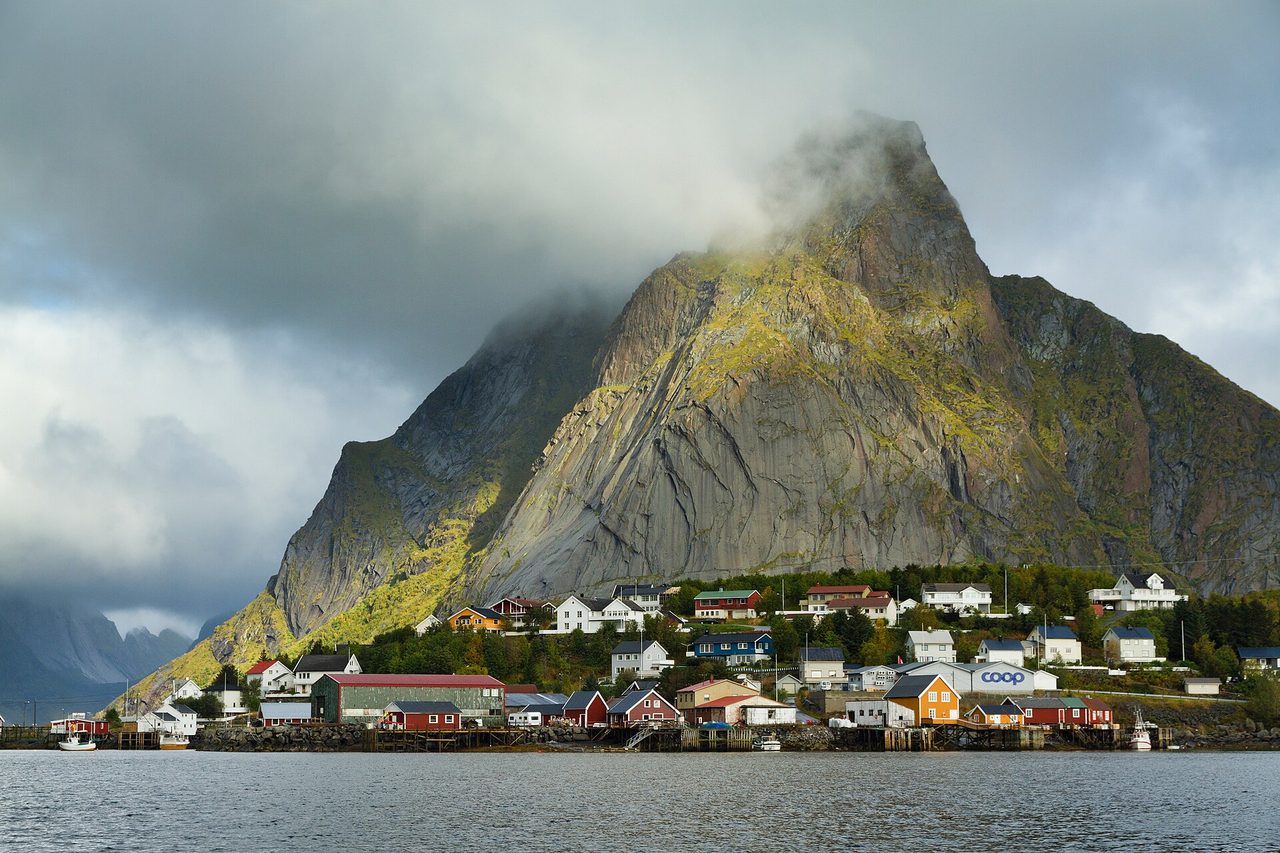
- Days 12–14 — Lofoten. Fly down to Lofoten (via Bodø or Svolvær) and drive the E10 spine — Henningsvær, Reine, Hamnøy, and the road’s end at Å — sleeping in a converted rorbu cabin. Fly out from Svolvær/Leknes or Bodø.
Travelling in winter? Flip the northern leg into a Northern Lights base in Tromsø and lean on guided tours rather than self-driving icy Arctic roads — our northern lights in Norway guide has the full playbook.
The best Norway road-trip routes
If you’d rather build your own trip than follow a fixed itinerary, these are the routes worth building around.

The classic Southwest fjords loop
The signature first-timer drive: Oslo or Bergen out through Hardanger, up the Sognefjord arms to Flåm and Aurland, and back. It strings together the greatest hits — Vøringsfossen, the Nærøyfjord, Stegastein, the Flåm Railway — on good roads, and can be done in anything from 5 to 14 days depending on how often you stop. For the fjords themselves, our Norwegian fjords guide breaks down which is which.
Oslo to Bergen: Hardangervidda or the Lærdal Tunnel
The two ways across the spine of southern Norway. The Rv7 over the Hardangervidda plateau (~470 km) is the more scenic, passing Vøringsfossen and Europe’s largest mountain plateau. The E16 via Lærdal is faster and all-weather, threading the 24.5 km Lærdal Tunnel — the longest road tunnel in the world, and toll-free. Neither requires a ferry.
The Golden Route: Geiranger, Trollstigen and the Atlantic Road
The most dramatic stretch of tarmac in the country: the UNESCO Geirangerfjord, the Eagle Road and Dalsnibba above it, the 11 hairpins of Trollstigen, and the bridge-hopping Atlantic Ocean Road out on the open coast. It’s the centrepiece of the 10-day itinerary and, for many, the whole reason to rent a car.

The 18 National Scenic Routes
Norway has designated 18 National Tourist Routes — stretches of road furnished with architect-designed viewpoints and rest stops purely to celebrate the scenery. The standouts: Geiranger–Trollstigen, the Atlantic Ocean Road, the Aurlandsfjellet “Snow Road” (which climbs past Stegastein), Sognefjellet (the highest pass), and, up north, the Lofoten and Senja routes. Most of the mountain ones are summer-only.

Lofoten and the Arctic north
A road trip in its own right: fly to Lofoten (or Bodø, with the car ferry to Moskenes) and drive the E10 through the islands, optionally extending across to Senja and Vesterålen for a 7–10 day Arctic loop. Best in summer for the midnight sun and snow-free roads.
The South Coast: Oslo to Stavanger
Quieter and gentler than the dramatic west, Norway’s south coast (“Sørlandet”) makes a relaxed alternative or add-on, and it’s a good shoulder-season choice when the mountain passes are still closed. From Oslo, the E18/E39 runs past white-painted summer towns like Risør, Lillesand and Grimstad to Kristiansand (about 3.5 hours), then on toward Lindesnes lighthouse — the country’s southernmost point — and finally Stavanger, gateway to the Lysefjord and the Pulpit Rock hike. It’s flatter, sunnier and faster-driving than the fjord roads, with skerry-dotted coast and easy beach towns rather than towering cliffs.
Driving in Norway: the self-drive logistics
Self-driving is the best way to see fjord and mountain Norway, but there’s a learning curve. Here’s everything you actually need to know before you pick up the keys.
Renting a car
Expect roughly $60–85 a day for a compact in summer (more for an SUV, much less in shoulder season), and book early — peak-season cars sell out. Two things catch people out: most Norwegian rental cars are manual, so reserve an automatic well ahead if you need one; and one-way drop-off fees (picking up in Oslo, dropping in Bergen) can be steep, so weigh that against the time an open-jaw route saves. You’ll usually need to have held your licence at least a year and have a credit card in the main driver’s name. EU/EEA and most other foreign licences are fine for a visit.
Tolls and AutoPASS
Norway’s toll roads, bridges and city rings are almost all automatic — cameras read your plate, and there are no booths. Rental cars come fitted with an AutoPASS tag, and the tolls are billed to your card (foreign-registered cars can register or pay at autopass.no). Individual passages run from about €1 to €15. It adds up over a long road trip, so budget for it rather than being surprised.
Car ferries
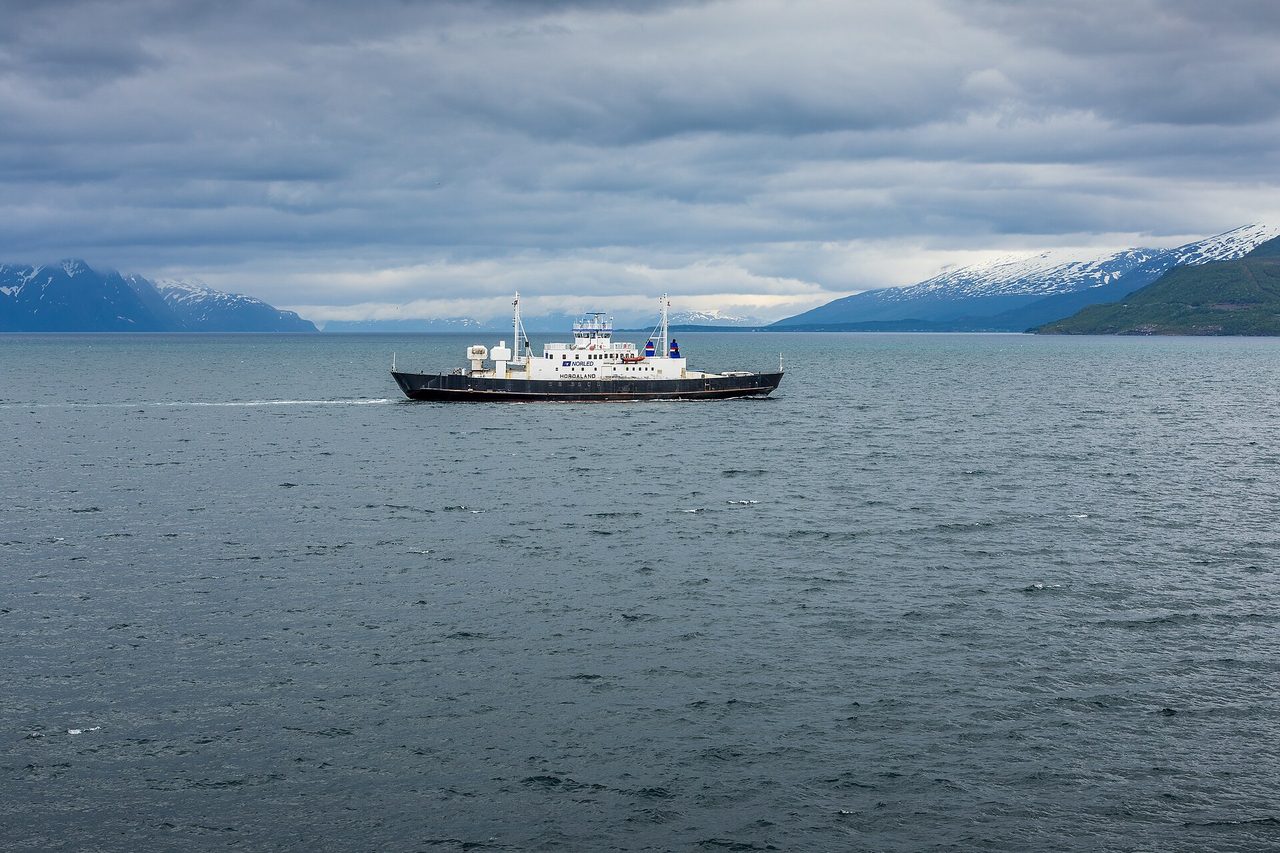
Fjord country runs on car ferries, and they’re a scenic part of the trip rather than a chore. Most are turn-up-and-go — you drive on, a conductor takes payment at the window or your plate is read automatically, and crossings are short (often 10–20 minutes). Short hops cost roughly 60–100 NOK for car and driver. A handful of routes now run free, and a few busy summer ones (Geiranger–Hellesylt, Bodø–Moskenes for Lofoten) are worth pre-booking.
Driving an electric car
Norway is the world’s EV capital, so road-tripping in an electric rental is genuinely easy: there are well over 15,000 charging points, including thousands of fast chargers, and most now take a contactless tap-to-pay card (apps like Recharge and Circle K still help). Plan a charge stop every 300–400 km, unplug around 80% (it slows after that, and idle fees apply), and enjoy the EV perks of reduced tolls. One quirk: some reserved EV parking and charging spots are for Norwegian-plated cars — which a Norwegian rental is, so you’re fine.
Campervans
A motorhome is a popular way to do Norway, rolling your transport and bed into one — figure roughly 1,500 NOK a day for a small van, more in peak summer. But know the rule that trips people up: Norway’s celebrated “right to roam” lets people wild-camp on uncultivated land, but it does not let you park a campervan there. Use designated sites and lay-bys, and note that Lofoten and parts of fjord Norway now restrict van camping — stick to campsites in those areas.
Rules of the road
A few essentials: headlights stay on at all times, even on a bright summer day; the drink-drive limit is effectively zero (0.02% BAC); and speeding fines are eye-watering and strictly enforced (limits are typically 80 km/h on open roads, up to 110 on motorways, 50 in towns). You’ll drive through a lot of tunnels — including the 24.5 km Lærdal Tunnel — so use a low gear on long descents to save your brakes, and watch for sheep and reindeer on northern and mountain roads.
Mountain passes and seasonal closures
This is the big one for road-trippers: most high mountain passes and scenic routes are closed in winter and only open roughly late May to October. Trollstigen is the cautionary tale — closed for much of 2024 and 2025 for rockfall work, reopened in 2026, but still liable to short closures in heavy rain. Whatever the month, check live road status with the Norwegian Public Roads Administration (vegvesen.no) the morning you plan to drive a pass.
How to visit Norway without a car
You can absolutely do the classic fjord trip car-free — Norway’s trains, fjord boats and buses are excellent, and Bergen makes a perfect car-free base. The backbone is the “Norway in a Nutshell” route, which combines the Bergen Railway, the Flåm Railway, and a Nærøyfjord cruise between Oslo and Bergen; you can do it in a single long day or stretch it over several with overnights in Flåm. Beyond it, the scenic rail network is a destination in itself — the Bergen Railway over the Hardangervidda, the steep little Flåm Railway, the Rauma Railway past the Trollveggen wall, and the Nordland Railway across the Arctic Circle to Bodø. Book each leg yourself through the Entur app to save money versus the packaged ticket; reservations are required on the scenic trains and the Flåm Railway sells out in summer.

If you would rather skip the rental car entirely, our complete guide to getting around Norway by train, bus, ferry and plane walks through every option, with current fares and the apps that make it painless.
A 7-day car-free Norway itinerary
Here’s how the classic week looks with no car at all, using trains, boats and your own two feet:
- Days 1–2 — Oslo. Two nights in the capital; everything’s walkable or a short metro ride away.
- Day 3 — Oslo to Flåm by rail. The Bergen Railway over the Hardangervidda to Myrdal, then the steep little Flåm Railway down to the fjord. Overnight Flåm.
- Day 4 — Nærøyfjord and Stegastein. The electric Flåm–Gudvangen cruise through the UNESCO Nærøyfjord, with the Stegastein viewpoint by shuttle bus. Overnight Flåm or Aurland.
- Day 5 — On to Bergen. Cruise or bus to Gudvangen and Voss, then the train into Bergen. Overnight Bergen.
- Days 6–7 — Bergen. The city sights, a half-day fjord cruise, then fly home.
Book it through the Entur app, which sells tickets across every train, bus and ferry operator in one place — and you’ll usually pay less than the packaged “Nutshell” fare for the identical route. Bergen makes the best car-free base if you’d rather stay put and day-trip.
How much does a Norway trip cost?
Norway is famously expensive — though the weak krone of recent years has made it noticeably cheaper for foreign visitors than it once was. As a rough per-person daily budget excluding flights, plan on around $100–130 a day backpacking (hostels, self-catering, public transport), $190–255 mid-range (a 3-star hotel or rental, one restaurant meal, some paid activities), and $300+ at the top end. On a road trip, add the car (roughly $60–85 a day for a compact), fuel (petrol is around $2 a litre), tolls and ferries.
| Travel style | Per person / day | 7 days (+ car & fuel) |
|---|---|---|
| Budget | $100–130 | ~$700–900 + car |
| Mid-range | $190–255 | ~$1,300–1,800 + car |
| Luxury | $300+ | ~$2,100+ + car |
Put together, a 7-day mid-range trip tends to land around $1,300–1,800 per person plus the car and fuel, and a 10-day trip around $1,900–2,600 — less per head if a couple shares a car and rooms. The biggest savings come from self-catering: cook from the discount supermarkets (Rema 1000, Kiwi, Coop Extra), drink the excellent free tap water, use the free ferries where they exist, book trains early, and travel in shoulder season. Our month-by-month guide to Norway’s seasons covers how prices swing across the year.
Where to stay on a Norway road trip
Norway’s small fjord hubs have limited beds and fill up fast in summer, so book accommodation as soon as your route is set — especially in tiny, in-demand spots like Flåm, Geiranger and Reine. A few pointers by base: Bergen and Oslo have the widest hotel choice and make easy first and last nights; Flåm and Aurland are the handiest fjord bases for the Sognefjord arms and the railways; Geiranger puts you right on the UNESCO fjord (though it empties of charm when cruise ships dominate the middle of the day); and Ålesund is a characterful coastal base for the northwest. Beyond hotels, Norway does memorable stays well: converted fishermen’s cabins (rorbuer) in Lofoten and the fjords, farm stays in Hardanger, glass-roofed cabins in the north, and well-equipped campsites with simple hytter (cabins) that are a real budget alternative to hotels. Wherever you land, a room with a fjord view is worth the small premium.
Is a Norway road trip good for families?
Very. The driving days are broken up by ferries (kids love them), waterfalls, and short walks to viewpoints, and the trains — especially the Flåm Railway — are a hit with all ages. Skip the all-day endurance hikes with little ones and lean on the cable cars and drive-up viewpoints for the big scenery without the slog. Pack layers and waterproofs, build in downtime, and don’t over-schedule the days: the travel between places is part of the adventure, but it runs long, and a tired family in a winding-road queue is nobody’s idea of a holiday.
The best time of year for a Norway itinerary
For a road trip, June to September is the window: the mountain passes and scenic routes are open, the days are long (the midnight sun north of the Arctic Circle), and the weather is at its kindest. July is the busiest and priciest; May and September are the value sweet spots — fewer crowds, lower prices, roaring waterfalls in May and golden colour in September — with the caveat that some high passes are still snow-closed in early May or closing by late September. Winter is a different trip entirely: most scenic mountain roads close, so a winter visit means the Arctic and the Northern Lights, generally by guided tour rather than self-drive. For the full month-by-month picture, see our best-time-to-visit guide.
First-timer mistakes to avoid
- Trying to see too much. The number-one error. Combining the south, the west, and the Arctic in a week means you spend the holiday in transit. Pick a region.
- Underestimating drive and ferry times. Map estimates are optimistic — add about 25% for winding roads, ferry waits, and photo stops, and never cut it fine for a flight or tour.
- Not pre-booking the bottlenecks. The Flåm Railway, popular summer ferries, and automatic rental cars all sell out — reserve ahead for June to August.
- Booking a manual you can’t drive. Most rentals are stick-shift; lock in an automatic early if you need one.
- Expecting a winter fjord road trip. The iconic mountain roads are closed in winter; that season is for the Arctic and the aurora.
- Forgetting the running costs. Tolls, ferries and ~$2/litre fuel add up on top of the rental — budget for them.
What to pack for a Norway road trip
Norway can serve up four seasons in a single day, so pack for all of them: waterproof layers, a warm mid-layer even in summer, and sturdy shoes for the viewpoint walks. Bring a reusable water bottle (the tap water is superb and free), sunglasses and an eye mask for the long summer light, and a credit card with a PIN for tolls, ferries and fuel — Norway is very nearly cashless. If you’re driving in winter, bring proper boots and leave the high mountain roads to the snowplough. Download offline maps and the Entur transport app before you set off, because phone coverage thins out in the long tunnels and up in the mountains.
Can you do a Norway road trip in winter?
You can, but it’s a different — and more limited — trip. Most high mountain passes and scenic routes (Trollstigen, Sognefjellet, the Atlantic-region passes) are closed from roughly November to May, so the classic fjord-and-mountain loop simply isn’t drivable in deep winter. What stays open are the main roads and the long tunnels: the E16 between Oslo and Bergen runs all year via the Lærdal Tunnel, and the coastal routes are kept clear. Winter rentals come with studded or winter tyres, but you’ll want to be genuinely comfortable on snow and ice, with very short daylight hours to plan around. For most visitors, the smarter winter move is to base in the Arctic — Tromsø or Lofoten — and chase the Northern Lights by guided tour rather than self-driving icy roads in the dark. If you do drive, check road status daily at vegvesen.no, carry warm gear and food, and never gamble on a mountain pass in bad weather.
More in this series
This guide is the hub for our Norway itinerary series. Each of the routes below is written up in full, with 2026 fares in kroner, real transfer times and an honest account of what that length of trip cannot do:
- Five days — built around the constraint. The transfer-time budget, four routes that work, and why Oslo plus the fjords usually is not one of them.
- Seven days, car-free — Oslo, the Bergen Line, the Nærøyfjord and Bergen by rail and boat, with every leg priced and the connection traps named.
- Ten days — the Arctic decision. Three costed routes, and whether the flight to Lofoten or Tromsø is worth a day and a half of transit.
- Two weeks by car — the road trip version, with real driving hours, toll and ferry costs, fuel prices and 2026 mountain pass opening dates.
- Three days — the short break, counted in usable hours rather than sold as three days. Arrival times, transfers and a winter daylight table.
- How many days you actually need — a decision tool rather than an itinerary. Start from what you want to see and work back through the transit times.
- Driving in Norway, priced — hire rates, the young-driver surcharge, toll admin fees, ferry length bands and the winter tyre rule most guides state wrongly.
- Seven and ten day driving routes — day by day, with honest daily hours, every ferry crossing priced separately and the winter closures listed.
- Oslo to Bergen, four ways — train, flight, drive and bus compared door to door, including the airport transfers that undo the 55-minute flight.
- Lofoten in four or six days — with real ferry fares, the parking rules that changed in Reine, and whether the visitor levy applies yet.
- The southern coast — Sørlandet has no mountain passes, so it is the one route that works in every month of the year.
- First-timer briefing — what changed at the border in 2026, what things cost now, and the right-to-roam limits people get wrong.
- By campervan — the ferry length bands that charge a van twice the car rate, and an honest case for not taking one.
Frequently asked questions
How many days do you need in Norway?
Five days covers the fjord highlights from one base; seven is the comfortable sweet spot for a first-timer’s Oslo–fjords–Bergen route; ten lets you add the great mountain roads and Ålesund; and fourteen lets you reach the Arctic. The key rule is to focus on one region per week rather than racing the whole country.
Is Norway good for a road trip?
It’s one of the best road-trip countries on earth — scenic routes, fjord ferries and mountain passes are practically designed for it. Just plan for slow, winding roads, frequent ferry crossings, and the cost of tolls and fuel, and don’t over-schedule your days. And before you set off, skim our Norway travel tips for the know-before-you-go essentials.
What is the best Norway itinerary for first-timers?
The classic seven-day open-jaw route: fly into Oslo, travel west through the Hardanger and Sognefjord country (via the Flåm Railway and a Nærøyfjord cruise), and finish in Bergen. It balances cities and fjords, needs no backtracking, and works by car or entirely by train and boat.
Can you visit Norway without a car?
Yes — the classic fjord trip is easily done car-free using the Bergen and Flåm railways, fjord cruises and buses, with Bergen as a base. The “Norway in a Nutshell” route is purpose-built for it. You only really need a car for the Atlantic Road, remote fjord country, and a Lofoten road trip.
What is the best route from Oslo to Bergen?
By car, the scenic choice is the Rv7 over the Hardangervidda plateau (past Vøringsfossen); the faster, all-weather choice is the E16 through the 24.5 km Lærdal Tunnel. Neither needs a ferry. By train, the Bergen Railway is one of the world’s great rail journeys at about seven hours.
How much does a trip to Norway cost?
Budget roughly $100–130 per person per day backpacking, $190–255 mid-range, and $300+ at the luxury end, excluding flights. A mid-range seven-day trip tends to run $1,300–1,800 per person plus the car and fuel; ten days around $1,900–2,600. Self-catering and shoulder-season travel cut costs significantly.
What is the best time of year for a Norway road trip?
June to September, when the mountain passes and scenic routes are open and the days are long. May and September are great value with fewer crowds, though some high roads may still be closed. Winter closes most scenic mountain roads, so it’s for Arctic and Northern Lights trips instead.
Is 10 days enough for Norway?
Ten days is ideal for the southern and western fjord region — enough to drive the classic route plus the Geiranger–Trollstigen–Atlantic Road “Golden Route” without rushing. It’s not enough to add the Arctic by road, but you could fly north for a couple of those days.
How do tolls work in Norway for foreigners?
Tolls are automatic — cameras read your number plate and there are no booths. Rental cars come with an AutoPASS tag and bill the tolls to your card; foreign-registered cars can register or pay online at autopass.no. Expect roughly €1–15 per passage, plus city toll rings around Oslo, Bergen and Stavanger.
How do car ferries work in Norway?
Most fjord car ferries are turn-up-and-go: you drive on, pay at the window or via automatic plate recognition, and crossings are short. Short hops cost about 60–100 NOK for car and driver; some routes are now free. Pre-book busy summer routes like Geiranger–Hellesylt and Bodø–Moskenes.
Can you do a Norway road trip in an electric car?
Easily — Norway has the densest charging network in the world, with thousands of fast chargers and contactless payment increasingly standard. Plan a stop every 300–400 km, charge to about 80%, and enjoy reduced tolls. A Norwegian rental EV also qualifies for EV-only parking and charging spots.
What is “Norway in a Nutshell” and is it worth it?
It’s a self-guided combination ticket linking the Bergen Railway, the Flåm Railway and a Nærøyfjord cruise into one greatest-hits journey between Oslo and Bergen. It’s genuinely scenic and saves planning; if you’re comfortable booking each leg yourself through Entur, you can usually do the identical route for less.
What is the most scenic drive in Norway?
The “Golden Route” combination of the Geirangerfjord, Trollstigen and the Atlantic Ocean Road is the showstopper, but the country has 18 designated National Scenic Routes. Others worth building a trip around include the Aurlandsfjellet “Snow Road,” Sognefjellet (the highest pass), and the Lofoten E10.
Should I rent a campervan in Norway?
A campervan is a popular, flexible way to road-trip Norway, rolling transport and accommodation together. Just remember the “right to roam” lets you wild-camp on foot but not park a van on uncultivated land — use designated sites and lay-bys, and note that Lofoten and parts of fjord Norway now restrict van camping.
Oslo to Bergen — train or car?
Take the train if you want to sit back and watch the Hardangervidda roll by, or you’re going car-free; it’s about seven hours and superb. Take the car if you want to detour to Vøringsfossen, the orchards of Hardanger, and the fjord villages along the way at your own pace.
Final thoughts: building your Norway itinerary
The best Norway trips come from a simple decision: choose one region, give it more time than you think it needs, and let the ferries and viewpoints set the pace. Pick the itinerary length that fits, anchor it to a route that excites you, and leave a buffer day for the weather. Still deciding what goes in those days? Our 25 once-in-a-lifetime Norway experiences are ranked with costs and seasons attached. When you’re ready to flesh out the details, our guides to the best time to visit Norway, the Norwegian fjords, the northern lights, and the best things to do in Norway will help you turn the route into a trip.
Road conditions, mountain-pass openings, ferry timetables and prices change with the season — always check current status (vegvesen.no for roads) before you travel. Last updated: June 2026.
About this guide
Written and maintained by the NorwayTourism.org editorial team — travelers and writers focused on practical, first-hand Norway trip planning. Routes, distances and logistics draw on Norway’s official tourism and roads resources; we refresh our guides regularly. Last updated: June 2026.
Sources & further reading
- Visit Norway — driving in Norway: car hire, tolls, ferries, EV and rules
- Norwegian Scenic Routes — the 18 National Tourist Routes
- Norwegian Public Roads Administration — live road and mountain-pass status
- Fjord Tours — the Norway in a Nutshell route
Photo credits
All photos are used under their respective Creative Commons licenses.
- The hairpin bends of Trollstigen, a highlight of any Norway road trip — Photo: W. Bulach / CC BY-SA 4.0 via Wikimedia Commons. Source
- A panorama over the Geirangerfjord from a clifftop viewpoint — Photo: Philippe Teuwen / CC BY-SA 2.0 via Wikimedia Commons. Source
- The E10 road winding through the Lofoten Islands — Photo: Ximonic (Simo Räsänen) / CC BY-SA 3.0 via Wikimedia Commons. Source
- The Storseisundet Bridge on Norway’s Atlantic Ocean Road — Photo: CHG / CC BY 3.0 via Wikimedia Commons. Source
- The mountains along the Sognefjellet scenic route, northern Europe’s highest pass — Photo: Pjacklam / CC BY 2.5 via Wikimedia Commons. Source
- A car ferry crossing a Norwegian fjord, a routine part of any road trip — Photo: Ximonic (Simo Räsänen) / CC BY-SA 4.0 via Wikimedia Commons. Source
- The Aurlandsfjord from Stegastein — Photo: Ximonic (Simo Räsänen) / CC BY-SA 4.0 via Wikimedia Commons. Source
- The Trollstigen hairpin bends — Photo: Palickap / CC BY-SA 4.0 via Wikimedia Commons. Source
- A Vy train on the Bergen Line at Hardangervidda — Photo: Kabelleger / David Gubler / CC BY-SA 4.0 via Wikimedia Commons. Source