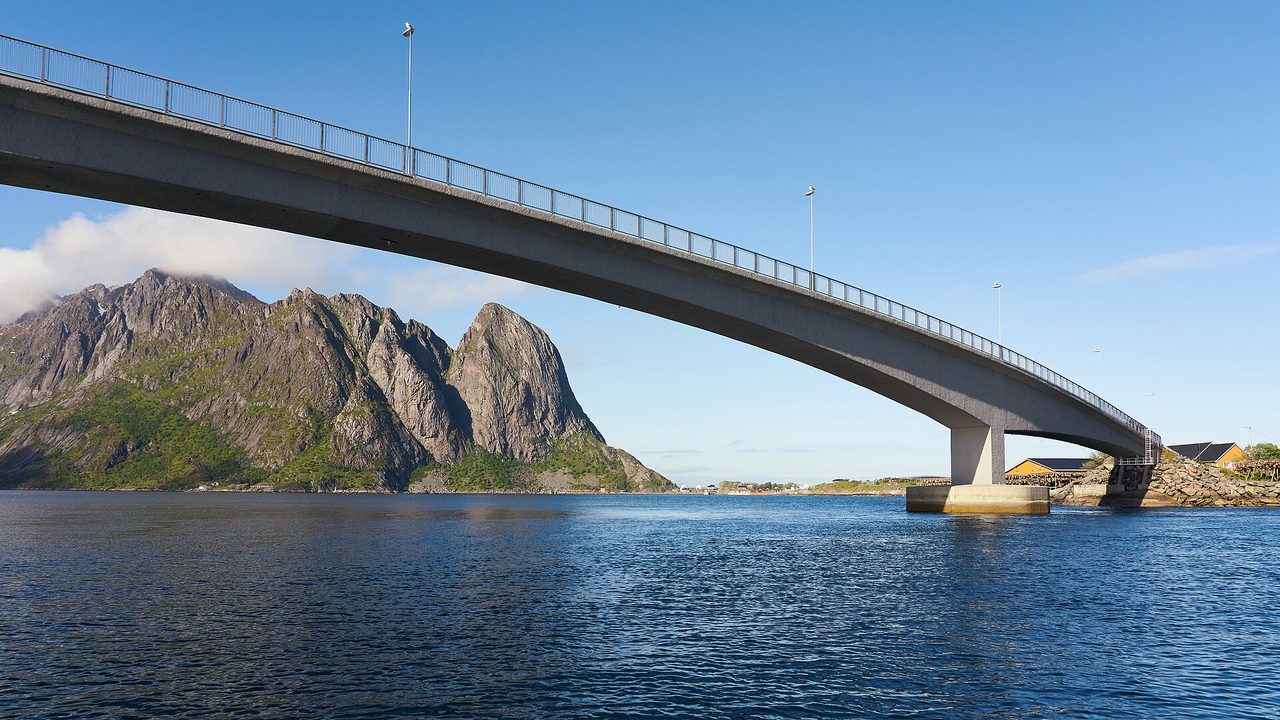
The honest answer to when you should go to Norway is: it depends entirely on what you want to see. This is a country that stretches from Oslo at around 60°N all the way past the Arctic Circle to the North Cape at 71°N, and that long, skinny shape means the “right” month for a Northern Lights trip is almost exactly the wrong month for hiking a fjord. There is no single best time to visit Norway — there’s a best time for your trip.
So this guide does something most don’t: it sorts the year by what you’re actually chasing. We’ll start with a quick decision table, then go deep — season by season, month by month (with real temperatures and daylight hours), and region by region, because the weather in rainy Bergen has almost nothing in common with Arctic Tromsø on the same date. I’ve leaned on Norwegian Meteorological data and years of watching how trips actually play out, and I’ll be candid about the months I’d avoid for certain plans. Once you’ve nailed the when, our guide to the best things to do in Norway covers the what.
The short answer: best time to visit Norway at a glance
If you want the one-line version: late May through September is the safest all-round window — long days, open roads, fjords in full swing — with June and September as the sweet spots for fewer crowds and better value. But if your trip is built around the Northern Lights, flip everything and come in winter. Here’s the year in one table.
| Season | Months | Best for | Crowds | Cost | Weather |
|---|---|---|---|---|---|
| Summer | Jun–Aug | Midnight sun, fjords, hiking, road trips | Highest | Highest | Mild, very long days |
| Autumn | Sep–Oct | Fall colour, value, aurora returns | Low | Low | Cooler, wetter in the west |
| Winter | Nov–Mar | Northern Lights, skiing, polar night | Low (Arctic high) | Low (holiday spikes) | Cold, dark, snowy |
| Spring | Apr–May | Waterfalls, blossom, 17 May, value | Low | Shoulder | Unpredictable, days lengthening |
Best time to visit Norway by goal
This is the part to actually use. Pick the thing you most want out of the trip, and let that choose your month — not the other way around.
| If you mainly want… | Go in… | Why |
|---|---|---|
| Northern Lights | Late Sept–March (peak Nov–Feb) | Dark, clear Arctic nights |
| Midnight sun | Late May–mid-July | 24-hour daylight above the Arctic Circle |
| Fjords & waterfalls | May–September (falls peak late May–June) | Snowmelt roaring, cruises and roads open |
| Big hikes (Trolltunga, Besseggen) | Late June–September | Trails snow-free |
| Skiing & snow | December–April (best Feb–March) | Reliable snow plus returning daylight |
| Road trip / mountain passes | Late June–September | High passes open and safe |
| Fjord cruise / coastal voyage | May–September | Full schedules, kinder weather |
| Whale watching | Nov–Jan (orcas) · June–Aug (sperm whales) | Follow the species |
| City breaks (Oslo, Bergen) | May–Sept, or December for markets | Mild, long days (or festive) |
| Fewer crowds & lower cost | May, late Aug–Sept, October | Shoulder-season value |
If a sailing holiday is the goal, month matters more than anything else you’ll book — our Norway fjord cruise guide breaks down when the big ships, Hurtigruten and Havila each make sense.
The best time for the Northern Lights
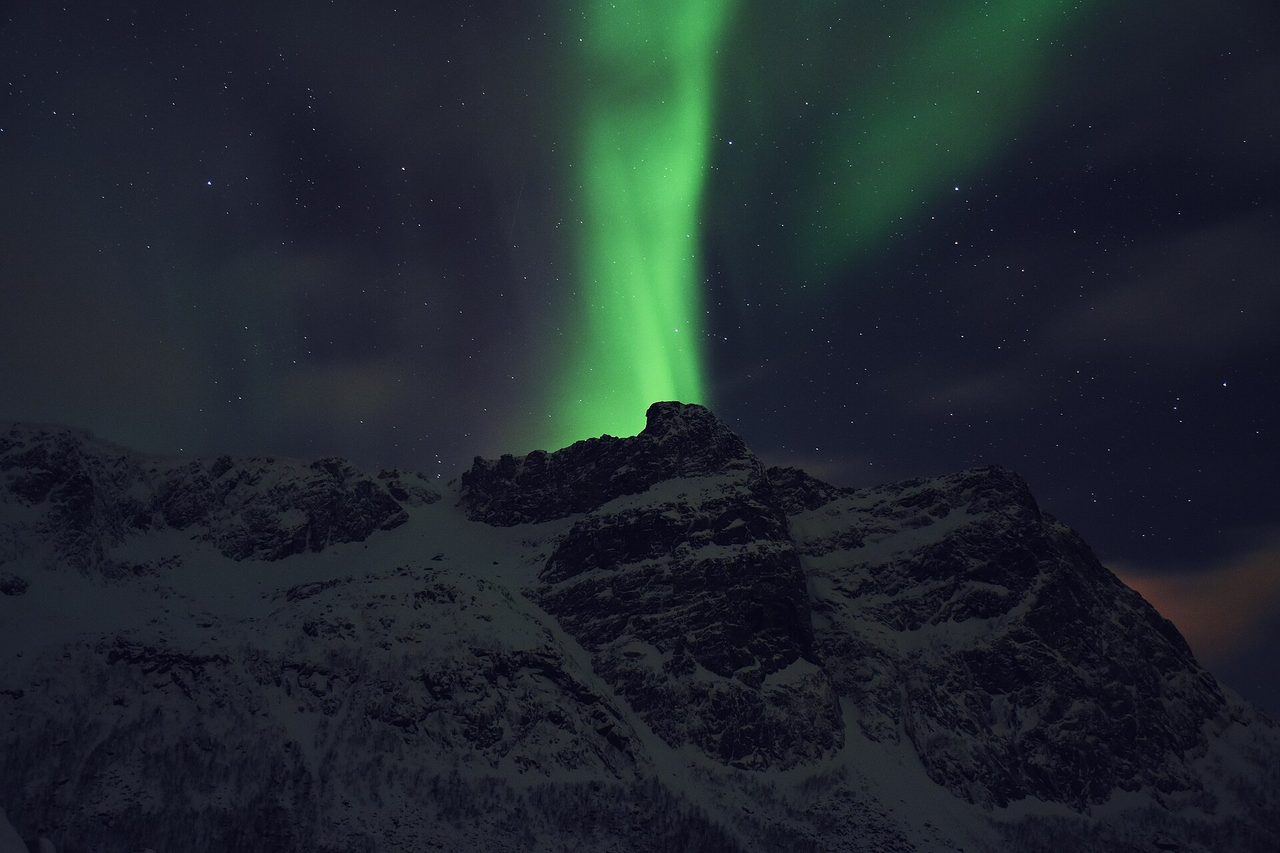
The aurora needs darkness, so the season runs roughly late September to late March, and you simply can’t see it from mid-April to mid-August because the sky never gets dark enough. The longest, darkest nights of November to February give the best odds, though I have a soft spot for the equinox shoulder — late September, October, and March often bring clearer, less stormy skies and a bit more daylight to fill the days. Base yourself in the north (Tromsø is the easy choice), give it at least three or four nights to beat the clouds, and treat any sighting as a bonus rather than a guarantee — it depends on solar activity and clear skies, neither of which takes bookings. For the full guide, see our northern lights in Norway guide.
The best time for the midnight sun
Flip the calendar. Above the Arctic Circle the sun refuses to set for weeks in high summer: roughly May 25–July 17 in Lofoten, May 20–July 22 in Tromsø, and from mid-May to the end of July at the North Cape. Even southern Norway gets “white nights” in June where it never truly goes dark. It’s genuinely magical for late-night hiking and kayaking — just pack an eye mask, because not every room has blackout curtains and your body clock will thank you.
The best time for the fjords and waterfalls
Fjord country is at its best from May through September, when the sightseeing cruises run full schedules and the mountain roads are open. Our complete Norwegian fjords guide covers which to visit and how. If the waterfalls are your priority, come in late May or June, when the snowmelt has every cliff thundering — by late August many of the smaller falls have thinned out. Winter shuts a lot of this down: scenic mountain roads close and cruise options shrink, so deep winter is the wrong time for a classic fjord road trip (it’s prime Arctic time instead).

The best time for hiking
The marquee trails are summer-only. Trolltunga is self-guided from about June 1 to the end of September; Besseggen runs roughly mid-June to mid-October on the boat schedule; Preikestolen (Pulpit Rock) is doable year-round in good conditions but easiest and safest June–September. July and August are peak — and crowded — so if you can hike in late June or early September you’ll get the trails with thinner queues. Below the tree line, lower coastal walks open earlier.
The best time for skiing and snow
Norway is the birthplace of skiing, and the season runs December to April, with the most reliable snow December to February and the bonus of long, sunny days in March and April. Resorts like Trysil, Hemsedal, and Geilo typically open around November and run into late April or May, though exact dates swing with the year’s snowfall — worth checking before you book.
The best time for a road trip
For a self-drive trip you want the high mountain passes open, which generally means late June through September. The famous Trollstigen road is a good cautionary tale: after major rockfall problems it was closed for much of 2024 and 2025, then reopened unusually early in 2026 — so the old “it opens in May” rule isn’t reliable. Always check the current road status with the Norwegian Public Roads Administration before you plan a route over a high pass, whatever the month.
The best time for whale watching
Match the season to the species. In winter (mid-November to late January), orcas and humpbacks follow the herring into the fjords near Tromsø and Skjervøy — you watch them in low Arctic light, which is dramatic. In summer (June–August), sperm whales are reliably seen off Andenes in Vesterålen, where a deep canyon sits close to shore. Don’t expect orcas in July or sperm whales in January.
Norway’s seasons explained
If the goal-based table got you in the right ballpark, here’s the texture of each season — what it actually feels like, and the trade-offs.
Summer (June–August): the easy choice
This is high season for good reason. Days are long (18–24 hours of light depending how far north you go), the weather is at its mildest — Oslo highs around 20–22°C / 68–72°F, the Arctic a cooler but pleasant 15°C / 59°F — and everything is open: every hiking trail, every mountain road, every cruise. The catch is crowds and cost. July is the absolute peak, with Norwegian school holidays in full swing; fjord villages and Lofoten get genuinely busy, cruise ports see several ships a day, and accommodation in small places books out months ahead. The marquee guided tours and excursions sell out just as fast. If you come in summer, reserve early and consider the quieter fringe — late August is still mild but noticeably calmer. If your trip centres on the capital, our things to do in Oslo guide breaks the city down season by season.
Autumn (September–October): the underrated one
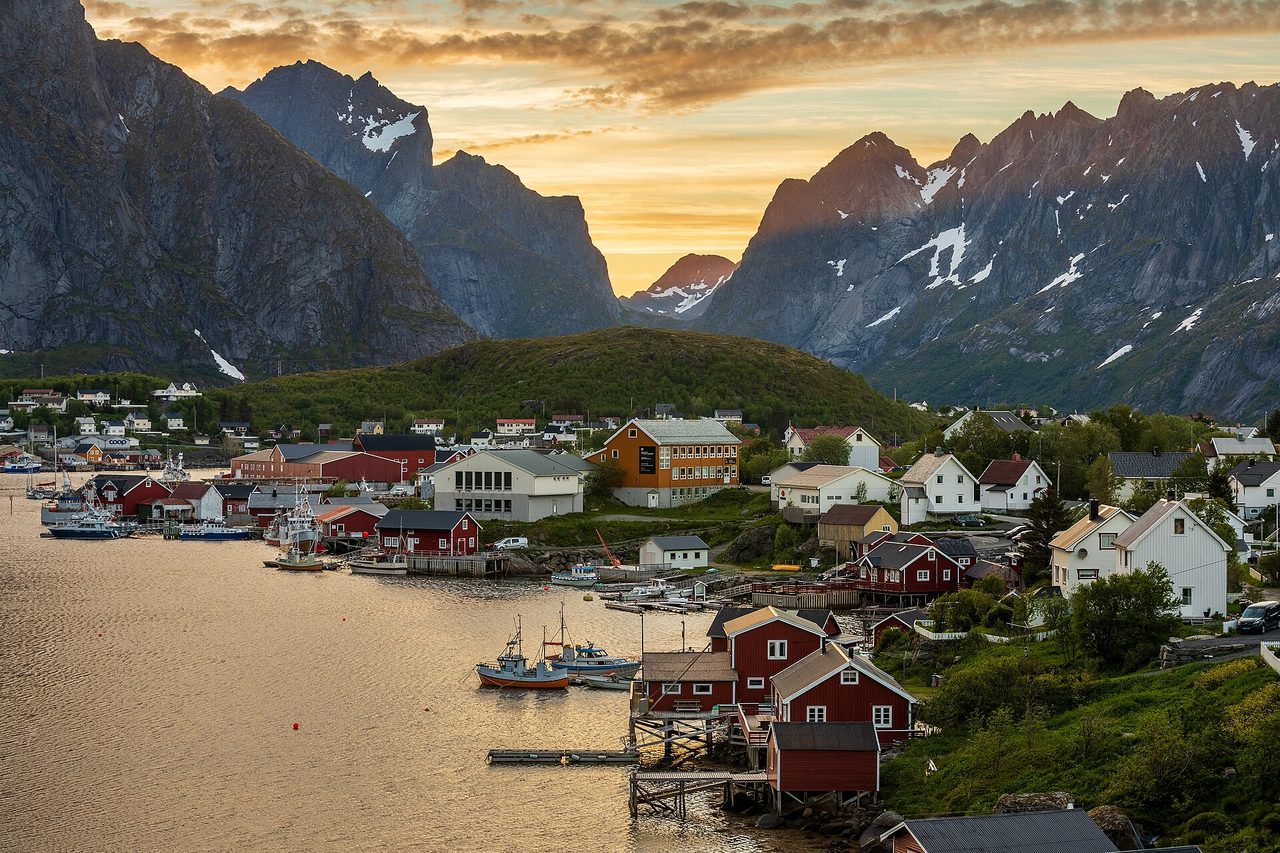
Autumn is my quiet favourite. The crowds vanish after late August, prices drop, the birch forests turn gold and the mountain plateaus go red and orange, and — crucially — the Northern Lights become possible again from late September as the Arctic nights darken. The trade-off is weather: rain and wind climb sharply, especially on the west coast, and some seasonal roads and attractions start closing in October. September is the sweet spot; October is quieter and cheaper still, but pack for wet.

Winter (November–March): two very different halves
Winter is for the Northern Lights, skiing, dog sledding, winter whale watching, and the strange, beautiful half-light of the polar night up north. But “winter” hides a big difference: November is the toughest month in much of the country — dark and wet in the south, snow not yet reliable for skiing, and many summer sights shut — whereas February and March bring better snow, clearer skies, and more daylight. Prices are generally low, with sharp spikes around Christmas, New Year, and the ski-holiday weeks. One regional twist: Tromsø and the Arctic are in their high season in winter thanks to aurora demand, so northern hotels can be pricey even when the rest of the country is cheap.

Spring (April–May): waterfalls and great value
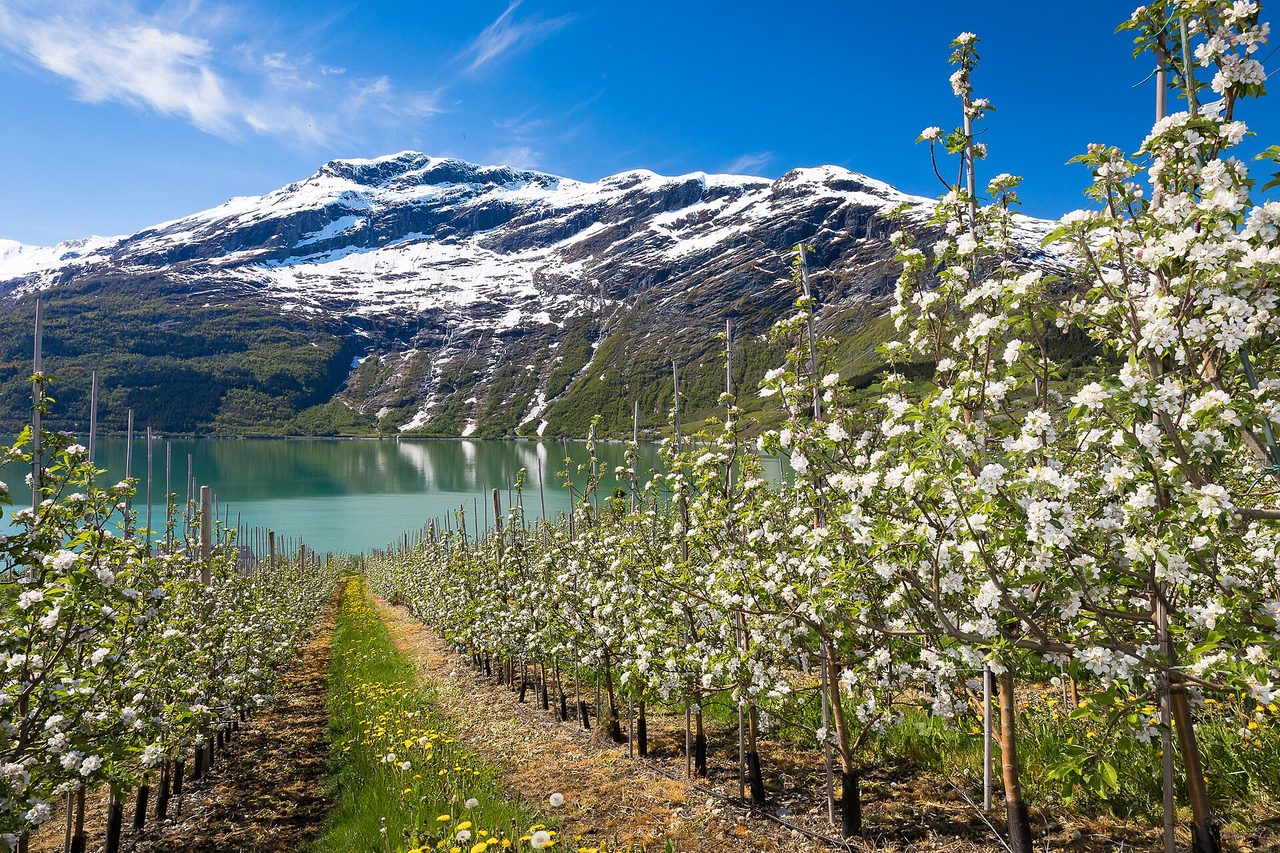
Spring in Norway has, as the locals say, many faces — sun, rain, and snow showers can all turn up in a single afternoon. But it’s a genuinely rewarding shoulder season. The snowmelt swells the waterfalls to their most dramatic, the Hardanger orchards bloom white and pink around mid-May, days stretch back out to 17–19 hours by late May, and prices and crowds stay low until the late-June surge. Just know that high mountain passes and altitude trails may still be snowbound into May. And if you’re around on 17 May — Norway’s Constitution Day — you’ll catch the whole country in folk costume and full celebration (it’s also the busiest domestic travel day of the year, so book ahead).
Norway weather and daylight, month by month
Here’s the hard data most guides skip. Temperatures are typical daytime highs; daylight is approximate for mid-month. Notice the Arctic columns — Tromsø swings from barely any daylight in December to 24 hours in June. That single fact should shape your whole trip.
| Month | Oslo high | Tromsø high | Oslo daylight | Tromsø daylight |
|---|---|---|---|---|
| January | −1°C (30°F) | −3°C (27°F) | ~6 hrs | Polar night → ~2 hrs |
| February | 1°C (34°F) | −2°C (28°F) | ~9 hrs | ~7 hrs |
| March | 5°C (41°F) | −1°C (30°F) | ~12 hrs | ~12 hrs |
| April | 10°C (50°F) | 2°C (36°F) | ~14 hrs | ~16 hrs |
| May | 16°C (61°F) | 6°C (43°F) | ~18 hrs | ~20 hrs (sun never sets late May) |
| June | 20°C (68°F) | 12°C (54°F) | ~18.5 hrs | 24 hrs (midnight sun) |
| July | 22°C (72°F) | 15°C (59°F) | ~18 hrs | 24 hrs → ~21 hrs |
| August | 21°C (70°F) | 14°C (57°F) | ~15 hrs | ~18 hrs |
| September | 16°C (61°F) | 9°C (48°F) | ~12.5 hrs | ~13 hrs |
| October | 9°C (48°F) | 4°C (39°F) | ~9.5 hrs | ~8 hrs |
| November | 3°C (37°F) | −1°C (30°F) | ~7 hrs | ~3 hrs → polar night |
| December | 0°C (32°F) | −3°C (27°F) | ~6 hrs | Polar night (no sunrise) |
January
The coldest, darkest month — and, paradoxically, one of the best for the Arctic. Oslo gets about six hours of weak daylight; Tromsø is just emerging from the polar night (the sun returns around January 15–21). It’s prime Northern Lights and skiing time, prices are low after the holidays, and the snowy quiet has its own appeal. Just don’t come expecting fjord cruises or hiking.
February
Reliable snow, clearer skies than midwinter, and fast-lengthening days make February arguably the best all-round winter month. It’s peak aurora and excellent skiing. Time it with Sami Week in Tromsø (early February) for reindeer racing through the city centre — confirm the exact dates for your year.
March
By the end of March, day and night are roughly equal across the country. You get good snow and long, sunny ski days, plus late-season Northern Lights. A strong, slightly underrated month — though Easter timing varies year to year and can spike prices and pack the resorts.
April
Shoulder season proper. Snow is melting in the south, the weather is unpredictable, and many high mountain roads are still closed — but it’s one of the cheapest months, with spring skiing still good and the waterfalls starting to swell. A quiet, good-value time if your plans stay flexible and low-altitude.
May
One of the best-value months on the calendar. Days are long (17–19 hours), the landscape is lush, dry sunny spells are common, the Hardanger blossom peaks mid-month, and the midnight sun begins in the far north. Crowds and prices stay moderate until late May. The fjords are gorgeous and far less busy than they’ll be in six weeks.
June
For my money, the best single month to visit Norway. You get the long days and open infrastructure of summer, the waterfalls are still at full strength, the hiking season opens (Trolltunga from June 1), the midnight sun is in full swing up north — and prices haven’t yet hit their July peak. Book ahead for late June, when the surge begins.
July
The warmest month and the busiest. Everything is open and the weather is at its kindest, but this is peak crowds and peak prices — fjord and Lofoten lodging books out far in advance and trails can be congested. If July is your only option, reserve early, hike at dawn, and seek out the less-famous fjords.
August
A near-twin of July with a quiet secret: after mid-month, the crowds thin and prices ease while the weather stays mild. Late August is one of my favourite windows — still warm enough for hiking and fjords, but calmer. A little more rain creeps in toward the end.
September
The shoulder-season sweet spot. Fall colour begins (the north turns first), the crowds are gone, prices drop, and the Northern Lights return to Arctic skies late in the month. The west coast gets wetter, so pack for rain — but September delivers a lot of Norway for noticeably less.
October
Peak foliage in the south, the cheapest hotels of the year in many areas, and good early-season aurora. The flip side: it’s Bergen’s wettest month (over 200 mm of rain), days are short, and Trollstigen and other scenic roads typically close. Great for budget city-and-aurora trips; poor for fjord road trips.
November
The honest low point in the south — dark, grey, wet, with many summer sights closed and snow not yet reliable for skiing. But the Arctic tells a different story: it’s the start of peak Northern Lights season and winter whale watching near Tromsø. The rule for November is simple — go north, or wait.
December
Short days (Oslo gets about six hours; Tromsø and the North Cape are in full polar night), but real magic: Christmas markets in Oslo, Bergen, Trondheim and Tromsø, the Northern Lights, early skiing, and winter whales. Prices are low until the Christmas–New Year spike. Note that much of Norway genuinely shuts down for a few days around Christmas, so plan meals and transport accordingly.
Daylight, the midnight sun and the polar night
Norway’s defining feature for trip-planning isn’t temperature — it’s light. The further north you go, the more extreme the swing, and it’s the single biggest thing to get right.

Midnight sun: when the sun never sets
Above the Arctic Circle the sun stays up around the clock in high summer. The commonly cited windows are roughly May 25–July 17 in Lofoten, May 20–July 22 in Tromsø, and mid-May to the end of July at the North Cape (the longest stretch of the three). Dates shift by a few days depending on your exact spot, but plan around late May to mid-July if 24-hour daylight is the dream.
Polar night: when the sun never rises
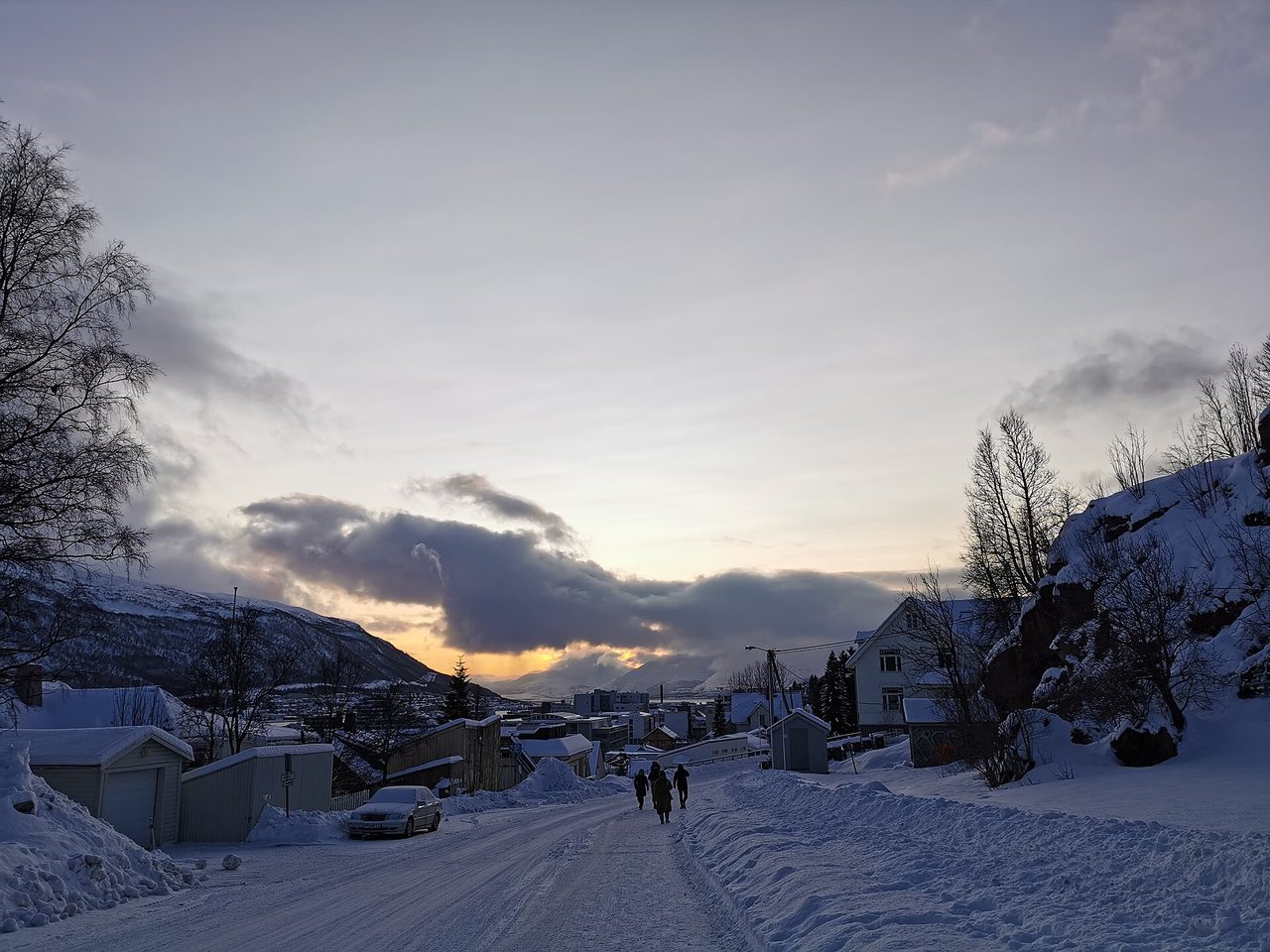
The mirror image. The sun stays below the horizon for weeks: about four weeks in Lofoten (early December to early January), roughly November 27–January 15 in Tromsø, and over two months at the North Cape (around November 20–January 22). It’s not pitch black all day, though — there are several hours of soft blue-and-pink twilight the Norwegians call the “blue hour,” which photographers adore. Just plan activities for the limited bright window.
Best time to visit Norway by region
Here’s the thing almost every other guide glosses over: “Norway weather” isn’t one thing. The Gulf Stream keeps the coast surprisingly mild for the latitude, but conditions vary enormously across the country, and the best month genuinely changes depending on where you’re headed.
Eastern Norway and Oslo
The most continental climate — the coldest, snowiest winters, but also the warmest, driest, sunniest summers and the least rain of the major regions. Best visited late spring through summer for warmth, or in December for snow and Christmas markets.
Fjord Norway and the west coast (Bergen, Stavanger, Ålesund)
This is the rain story. Bergen is one of the wettest cities in Europe — well over 200 rainy days a year, with October its soggiest month — so pack proper waterproofs whatever the season and don’t pin your whole trip on a clear day. The best odds of dry weather come in early summer (June); autumn is notably wet. The fjords themselves are at their best from late May to September.
Northern Norway and the Arctic (Tromsø, Lofoten, Alta)
The north runs on the light calendar, not the thermometer. There are really two seasons that matter: midnight-sun summer (late May to July) for hiking, kayaking, and endless golden light, and aurora winter (late September to March) for the Northern Lights, dog sledding, and whales. It’s colder year-round and far from the south, so budget a domestic flight and extra days.
The mountains and inland
Jotunheimen, the Hardangervidda plateau, and the high passes are firmly seasonal. The big ridge hikes and scenic mountain roads are reliably open only from late June into September; outside that, expect snow, closed passes, and winter-sports conditions instead.
Best time to visit Norway by destination
Zoom in from regions to specific places and the timing sharpens further. Here’s when to visit the spots most people build a trip around.
Best time to visit Oslo
The capital works year-round, but it’s at its best from May to September, when the harbour promenade, the island ferries on the Oslofjord, and the park life all come alive under long, mild evenings. December is the other sweet spot — Christmas markets, lights, and a decent shot at snow. The months I’d manage expectations for are November to January, when daylight is short and the weather is grey; that’s a museums-and-cafés trip rather than an outdoors one (and Oslo’s museums are very good).
Best time to visit Bergen
Bergen’s calendar is ruled by one thing: rain. Your best odds of dry, bright weather come in May and June, while October — its wettest month — is the one to avoid if blue sky matters to you. That said, locals will tell you to just embrace it and pack proper waterproofs, because a clear-day guarantee doesn’t exist here. As the gateway to the western fjords, summer in Bergen also doubles as the best window for day trips into fjord country and the “Norway in a Nutshell” route.
Best time to visit Tromsø
Tromsø is unusual in having two distinct peak seasons. Come late September to March for the Northern Lights, dog sledding, and winter whale watching — accepting short days, real cold, and the fact that this is Tromsø’s high season, so prices hold up. Or come in June and July for the midnight sun, hiking, and a buzzing summer city. The shoulder weeks in between (April–May, late August–September) are quieter and cheaper, but they fall between the two headline experiences, so you trade the marquee sights for value and calm. Our complete Tromsø travel guide breaks down both seasons, the activities and the costs in detail.
Best time to visit the Lofoten Islands
Lofoten is spectacular in two completely different moods. Late May to July brings the midnight sun, green peaks, beach weather (by Arctic standards), and the best hiking — Reinebringen and the rest are snow-free. February and March swing the other way: the Northern Lights arcing over snow-dusted summits, with more daylight than midwinter. Summer is the easier, more forgiving trip; winter is moodier and more dramatic but means short days, cold, and more careful driving on island roads. Avoid November, when it’s dark and wet without reliable snow.
Best time to visit the Geirangerfjord and the fjords
The classic fjords — Geirangerfjord, the Nærøyfjord, the Sognefjord — are firmly seasonal. Late May to September is when sightseeing cruises run full schedules and the scenic mountain roads and viewpoints (Trollstigen, Dalsnibba) are open. Within that, June is best for waterfalls at full snowmelt, while September trades some daylight for fall colour and far fewer cruise ships. Deep winter closes much of the fjord infrastructure, so it’s the wrong season for a classic fjord road trip — save that idea for the Arctic instead.
The cheapest time to visit Norway
Norway is expensive whenever you come, but timing helps a lot. Broadly, October and January are the cheapest months, and the whole October-to-April low season undercuts summer significantly — fjord-town hotels can drop 30–60% off their July rates. There’s an important regional inversion, though: the Arctic north stays pricey through the dark months because that’s aurora high season, and it’s actually cheapest in the post-aurora lull of late March to May. The genuine value sweet spots, balancing decent conditions against price, are May and late August through September — long-enough days, mostly open infrastructure, and noticeably lower costs than peak. (Prices move with the year and the exchange rate, so treat any figure as a rough guide.) For the full money picture — daily budget tiers, food and transport prices, and what a week really totals — see my Norway travel costs and budget guide.
How far ahead should you book a Norway trip?
Timing your booking matters almost as much as timing your trip, because Norway’s best-value lodging is also its most limited. For a summer trip — especially July — reserve fjord and Lofoten accommodation six to twelve months ahead; the characterful places (waterfront rorbuer cabins, small fjord-village hotels) sell out first and rarely discount. Winter aurora trips to Tromsø book up surprisingly early too, since the city has limited rooms and high demand from late September onward. For shoulder season (May, September), three to six months is usually comfortable.
A few money-savers tied to timing: flights to Norway tend to be cheapest booked roughly two to four months out; the scenic Bergen Railway and Flåm Railway release cheap “minipris” fares around 90 days ahead, so grab those as soon as they open; and genuine last-minute travel only really works in the deep low season (October, and January to April outside the Christmas, New Year, and ski-holiday weeks), when you can often just turn up. Whenever you book, build in a buffer day or two — Norwegian weather doesn’t read itineraries.
The worst time to visit Norway (and how to avoid it)
No month is universally bad, but there are mismatches worth flagging. November is the weakest all-rounder in the south — dark, wet, with summer sights closed and skiing not yet reliable — so if you must travel then, go north for the aurora and whales instead. July and early August are the “worst” time for budget and crowd-averse travellers: top prices, booked-out lodging, busy trails. Shift to June or September, or target lesser-known fjords. Deep winter (December–February) is wrong for classic fjord road trips and big hikes — short days and closed passes — but it’s perfect if you repurpose the trip around the Arctic. And April into early May frustrates high-altitude hikers, with trails still snowbound and passes closed; stick to coastal and lower routes and enjoy the waterfalls instead.
Festivals and events worth timing a trip around
Norway’s calendar has a few highlights worth building around — confirm exact dates for your travel year, as they move.
| Event | Roughly when | Where |
|---|---|---|
| Northern Lights Festival | Late January / February | Tromsø |
| Sami Week (reindeer racing) | Early February | Tromsø |
| Constitution Day (Syttende Mai) | 17 May | Nationwide (biggest in Oslo) |
| Bergen International Festival | Late May–early June | Bergen |
| Midnight Sun Marathon | June | Tromsø |
| Øya Festival (music) | August | Oslo |
| Christmas markets | Late November–late December | Oslo, Bergen, Trondheim, Tromsø |
What to pack for each season
Whatever the month, Norway rewards layers and waterproofs — the weather changes fast, especially in the mountains and on the west coast. For summer, bring layers, a rain shell, good walking shoes, and an eye mask for the midnight sun. For spring and autumn, add a warm mid-layer and waterproof trousers; the shoulder seasons are the most changeable. For winter, you need a proper insulated coat, thermal base layers, hat, gloves, and grippy, waterproof boots — and if you’re chasing the aurora, hand warmers and a tripod. Year-round, skip the bottled water: Norwegian tap water is excellent and free.
More in this series
This guide is the hub for our Best Time to Visit Norway series. Each of these goes deeper on one part of the calendar, with official climate data and dated openings rather than generalities:
- Norway weather by month — the full 1991–2020 climate tables for seven cities, plus daylight and sea temperatures.
- Norway in spring — what opens week by week, and why April and May are different countries.
- Norway in summer — climate normals, the 2026 heatwave, and when Norwegians take their own holidays.
- Norway in July — the busiest, hottest month, and six things that make it work.
- Norway in autumn — colour-peak dates by latitude and the fortnight when colour and aurora overlap.
- Norway in winter weather — how cold it really gets, and where the snow is actually reliable.
- Norway in December — exactly what closes over Christmas, and when.
- The midnight sun — exact dates by location, and why published dates disagree.
- The polar night — how much light you actually get, and when the sun returns.
- The cheapest time to visit — official price data by month and region.
- The worst time to visit — the specific weeks to avoid, the pass-closure dates, and what shuts at Easter.
- Timing a fjord trip — which boats run when, and when the viewpoint roads open.
Frequently asked questions
What is the best month to visit Norway?
For most travellers, June is the best single month — long days, open roads and trails, waterfalls at full strength, the midnight sun in the north, and prices still below the July peak. If your trip is about the Northern Lights, the best months flip to November–February.
What is the cheapest time to visit Norway?
October and January are generally the cheapest months, and the broader October–April low season is well below summer prices. The exception is the Arctic north, which stays expensive through aurora season and is cheapest from late March to May.
What is the worst time to visit Norway?
November is the hardest month in southern and fjord Norway — dark, wet, with many sights closed and skiing not yet reliable. It’s still good for the Northern Lights and whales in the Arctic, so the fix is to head north or wait for February–March.
What is the best time to visit the Norwegian fjords?
May to September, when cruises and mountain roads are open. For the most dramatic waterfalls, come in late May or June at peak snowmelt. Deep winter closes many fjord roads and limits cruising.
When is the best time to see the Northern Lights in Norway?
The season runs from late September to late March, with the best odds from November to February in the far north (Tromsø, Lofoten, Alta). You need dark, clear skies, so stay several nights to improve your chances.
When can you see the midnight sun in Norway?
From roughly mid/late May to late July above the Arctic Circle — about May 25–July 17 in Lofoten, May 20–July 22 in Tromsø, and mid-May to end of July at the North Cape. Southern Norway gets bright “white nights” around the June solstice.
What is the coldest month in Norway?
January is the coldest month, with Oslo highs around −1°C (30°F) and Tromsø around −3°C (27°F), colder still inland and overnight. It’s also one of the best months for the Northern Lights and skiing.
What is the warmest month in Norway?
July is the warmest, with Oslo highs around 22°C (72°F) and the Arctic a milder 15°C (59°F). It’s also the busiest and most expensive month of the year.
Is Norway very rainy?
It depends where you go. The west coast (Bergen and the fjords) is genuinely one of the wettest parts of Europe, especially in autumn, while eastern Norway around Oslo is much drier with sunnier summers. Pack waterproofs regardless and weight your plans accordingly. Our Norway travel tips guide covers exactly what to pack, along with the money, visa and safety essentials.
How many days do you need in Norway?
Plan four to six days for the fjords around Bergen, seven to ten to add Oslo and a marquee hike, and ten to fourteen if you want to reach the Arctic for the lights or midnight sun. For complete day-by-day routes, see our Norway itinerary guide. Our guide to things to do in Norway breaks down what to fit into each.
Is Norway worth visiting in winter?
Absolutely — as long as you come for winter’s strengths. From roughly December to March, especially February and March, Norway is the best it gets for the Northern Lights, skiing, dog sledding, and the quiet beauty of the snow-covered north, often at lower prices than summer. Just don’t expect fjord cruises, open mountain passes, or long daylight hours; for those, summer is your season. For the full winter menu — activities, prices and where to go — see our guide to things to do in Norway in winter.
When is the busiest time to visit Norway?
July is the busiest month, during the Norwegian school holidays, with the highest crowds and prices — fjord villages and Lofoten get packed and accommodation books out months in advance. The quietest months are October through April, outside the Christmas, New Year, and ski-holiday weeks (though the Arctic north is busy throughout aurora season).
What is the best time to visit the Lofoten Islands?
Late May to July for the midnight sun, hiking, and green landscapes; February and March for the Northern Lights over snowy peaks. Summer is the easier trip, while winter is moodier and more dramatic but comes with short days and trickier driving.
What is the best time to visit Tromsø?
Two windows work: late September to March for the Northern Lights and winter activities, or June to July for the midnight sun. Tromsø is busiest and most expensive during aurora season, so book well ahead for a winter visit.
When do the mountain roads in Norway open?
Most high scenic passes open between mid-May and late June and close again in October or November, depending on snow. Dates vary year to year — and roads like Trollstigen have had recent closures for safety work — so always check current status with the Norwegian Public Roads Administration before driving a high route.
So, when should you visit Norway?
Strip it back to one decision: are you chasing light or dark? If you want green landscapes, open fjords, and the midnight sun, come between late May and September — and if you can swing June or September, you’ll dodge the worst of the crowds and cost. If you want the Northern Lights, snow, and Arctic adventure, come between late September and March, ideally February or March for the best mix of darkness, snow, and daylight. Get that one choice right and almost everything else falls into place. When you’re ready to fill in the days, our roundup of the country’s best experiences picks up where this one leaves off.
Weather figures are typical averages and light dates are approximate — Norwegian conditions are famously changeable, so check current forecasts, road status, and event dates before you travel. Last updated: June 2026.
About this guide
Written and maintained by the NorwayTourism.org editorial team — travelers and writers focused on practical, first-hand Norway trip planning. Climate and daylight figures are drawn from the Norwegian Meteorological Institute and timeanddate.com; we refresh our guides regularly. Last updated: June 2026.
Sources & further reading
- Visit Norway — official month-by-month and seasons guide
- Yr.no — forecasts from the Norwegian Meteorological Institute (NRK)
- timeanddate.com — sunrise, sunset, midnight sun and polar night data
- Norwegian Public Roads Administration — live mountain-road and pass status
Photo credits
All photos are used under their respective Creative Commons or public-domain licenses.
- A sunny summer day in Norway’s Lofoten Islands, peak season for fjords and hiking — Photo: Virtual-Pano / CC BY-SA 4.0 via Wikimedia Commons. Source
- The northern lights glowing over snowy peaks in northern Norway — Photo: Adithya Ananth hashinclude (CC0) via Wikimedia Commons. Source
- A cruise ship in the Geirangerfjord; summer is the best time for a Norwegian fjord cruise — Photo: Virtual-Pano / CC BY-SA 4.0 via Wikimedia Commons. Source
- Golden midnight-sun light over a Lofoten fishing village in summer — Photo: Ximonic (Simo Räsänen) / CC BY-SA 4.0 via Wikimedia Commons. Source
- Autumn colours reflected in a lake in the Lofoten Islands, Norway — Photo: Ximonic, Simo Räsänen / CC BY-SA 3.0 via Wikimedia Commons. Source
- A snow-covered Lofoten village under a winter twilight sky in Norway — Photo: Smtunli / CC BY-SA 4.0 via Wikimedia Commons. Source
- Fruit-tree blossom beside the Hardangerfjord in spring — Photo: Svein Magne Tunli / CC BY-SA 4.0 via Wikimedia Commons. Source
- Skiing across the snow in Norway in winter — Photo: Erik Fløan (CC0) via Wikimedia Commons. Source
- The Voringsfossen waterfall, fed by spring snowmelt — Photo: Ximonic, Simo Räsänen / CC BY-SA 3.0 via Wikimedia Commons. Source
- Tromso in winter, the gateway to the Norwegian Arctic — Photo: Harald Groven from Tromsø, Norway / CC BY-SA 2.0 via Wikimedia Commons. Source