Last updated: June 2026
I still remember the first time I paid 130 kroner for a beer in Oslo and did the mental math twice, convinced I’d misread the menu. So let’s get the big question out of the way honestly. Is Norway expensive? Yes — Norway runs roughly 25–40% above the European average for hotels, restaurants and alcohol. But in 2026 the weak krone (around NOK 9.5 to the US dollar) makes it cheaper for visitors than it has been in a decade, and notably cheaper than Iceland or Switzerland. Plan a realistic NOK 800–1,200 (~$85–125) per day on a budget, or NOK 1,800–2,500 (~$190–265) mid-range.
That’s the 30-second answer. The longer answer — the one that actually saves you money — is that Norway is expensive in very specific, predictable places (restaurants, bars, taxis) and surprisingly reasonable in others (groceries, city transit, and a landscape that charges absolutely nothing for admission). I’ve put real 2026 prices on everything below, in both NOK and approximate US dollars, so you can build a budget that survives contact with reality.
Is Norway Expensive? Daily Budgets at a Glance (2026)
Here’s what a day in Norway actually costs per person, based on current prices and what travelers report spending. Throughout this guide I use NOK 9.5 ≈ $1 USD (the rate as of mid-2026 — check before you travel, because this rate is doing you a favor right now).
| Travel style | Per day (NOK) | Per day (USD) | What that looks like |
|---|---|---|---|
| Shoestring / camper | NOK 500–800 | $55–85 | Wild camping or tent pitch, groceries only, buses, free hikes |
| Backpacker | NOK 800–1,200 | $85–125 | Hostel dorm, self-catering + one cheap eat, city transit, mostly free activities |
| Mid-range | NOK 1,800–2,500 | $190–265 | 3-star hotel (breakfast included), one restaurant meal, a paid tour every other day |
| Comfort | NOK 2,500–3,500 | $265–370 | 4-star hotels, restaurant dinners, fjord cruises and guided tours |
| Luxury | NOK 3,500+ | $370+ | Top hotels, tasting menus, private guides — the ceiling is Maaemo-high |
Two people traveling together spend meaningfully less per person than these numbers suggest — hotel rooms and rental cars split in half, and that’s where most of the money goes. A couple can do Norway comfortably on a combined NOK 3,000–3,500 per day.
How Much Does a Trip to Norway Cost in 2026?
Multiplying out the daily tiers, here’s what whole trips realistically total, per person, excluding international flights:
| Trip length | Budget (NOK / USD) | Mid-range (NOK / USD) | Comfort (NOK / USD) |
|---|---|---|---|
| 5 days | 5,000 / ~$525 | 10,500 / ~$1,100 | 15,000 / ~$1,580 |
| 7 days | 7,000 / ~$735 | 15,000 / ~$1,580 | 21,000 / ~$2,200 |
| 10 days | 10,000 / ~$1,050 | 21,500 / ~$2,260 | 30,000 / ~$3,160 |
| 14 days | 14,000 / ~$1,475 | 30,000 / ~$3,160 | 42,000 / ~$4,420 |
What these numbers don’t include: flights to Norway (hugely variable — I’ve seen $350 round trips from the US East Coast on sales and $1,200 in peak July), travel insurance, and gear. They also assume you move around a bit but don’t fly domestically every second day. A trip that’s all Oslo and Bergen costs less to get around than one that strings together the Lofoten Islands, Tromsø and the fjords — internal transport is the budget line that varies most. For a sense of how routes affect cost, my Norway itinerary guide compares 5, 7, 10 and 14-day routes including rough transport math.
Why Is Norway So Expensive?
It’s not a tourist trap thing — Norwegians pay these prices too, every day. Three structural reasons explain almost everything on your receipt.
Wages are high and flat. Norway’s oil-and-gas wealth pushed salaries up across the board, and the country’s compressed wage structure means the person making your coffee earns a genuinely livable wage. Labor is the biggest cost in any café meal, which is why eating out stings while supermarket pasta doesn’t.
Taxes are deliberate. VAT is 25% on most things (15% on groceries, 12% on hotels and transport — which is why those feel comparatively reasonable). Alcohol carries an excise tax of roughly NOK 5.40 per litre per percentage point of alcohol for beer and wine, which is how a bottle of unremarkable wine ends up at NOK 150–250 at the state-run Vinmonopolet.
It’s a long, thin, mountainous country. Getting anything anywhere involves fjords, mountains, tunnels and ferries. Distribution costs show up in prices, especially in the north and on islands.
The flip side: the things Norway does cheaply or free — nature, hiking, clean tap water, the legal right to camp almost anywhere — happen to be the reasons you’re coming. More on that below.
The Weak Krone: Why 2026 Is a Good Year to Go
Here’s the part most “Norway is ruinously expensive” articles haven’t caught up with. The Norwegian krone has weakened dramatically against the dollar and euro over the past decade. As I write this in mid-2026, $1 buys around NOK 9.5 and €1 around NOK 10.9. Ten years ago your dollar bought roughly 20% fewer kroner.
In practical terms: that NOK 350 restaurant main is about $37 — a normal big-city price in the US, not an outrage. Statistics agencies that track European price levels now put Switzerland and Iceland clearly above Norway for travelers; on Numbeo’s 2026 cost-of-living index, Switzerland scores 110.7, Iceland 97.2 and Norway 83.7. Norway being the cheap Nordic-adjacent option is a strange sentence to type, but for Americans paying in dollars, it’s currently not far from true.
Exchange rates move, so treat this as a snapshot — but if Norway has been sitting on your list for years, the math is better now than it was when you first added it.
Accommodation Costs in Norway
Where you sleep is the biggest line in any Norway budget, and also where the range is widest — from literally free (a tent above a fjord) to NOK 6,000 designer hotels. Statistics Norway pegged the national average hotel room at around NOK 1,400–1,700 a night through 2025, peaking in June–August. Here’s the realistic 2026 spread:
| Accommodation type | Typical price per night (NOK) | USD approx. |
|---|---|---|
| Wild camping (allemannsretten) | Free | Free |
| Campsite tent pitch (2 people + car) | 150–350 | $16–37 |
| Hostel dorm bed | 350–500 | $37–53 |
| DNT self-service mountain hut (member) | ~300 | ~$32 |
| Campsite cabin (basic, shared bath) | 500–800 | $53–85 |
| Budget hotel (Citybox, Comfort Xpress) | 700–1,100 | $74–116 |
| Mid-range chain (Thon, Scandic, Strawberry) | 1,200–2,000 | $126–210 |
| Lofoten rorbu (fisherman’s cabin) | 1,400–4,000 | $147–420 |
| High-end hotel (The Thief, Britannia) | 3,500–6,000+ | $370–630+ |
Hotels: the breakfast trick
Almost every Norwegian hotel rate includes breakfast, and Norwegian hotel breakfasts are serious — bread, cheeses, eggs, smoked fish, the works. Eat late and big, and it covers half your food day. Business-oriented city hotels also drop prices on weekends and in July, when their corporate guests vanish; you can land a nice Thon or Scandic in Oslo for NOK 1,200 on a summer Saturday. I’ve broken down which neighborhoods and regions to base yourself in — with price bands for each — in my full guide to where to stay in Norway.
Hostels, cabins and DNT huts
Hostel dorms run NOK 350–500 in the cities — not cheap by European standards, but most Norwegian hostels are spotless and have proper guest kitchens, which is where the real saving happens. Campsite cabins are Norway’s underrated budget weapon: NOK 500–800 gets a small hut with bunks and a hotplate at nearly every campground in the country, no tent required.
If you’re hiking, the Norwegian Trekking Association (DNT) runs hundreds of mountain cabins. Membership costs around NOK 860 a year and roughly pays for itself in three nights: members pay around NOK 300 for a bed in a self-service hut versus NOK 450+ for non-members, and staffed lodges offer full board for around NOK 1,100–1,300. Details on how the hut system works are in my hiking in Norway guide.
Camping: the right to roam
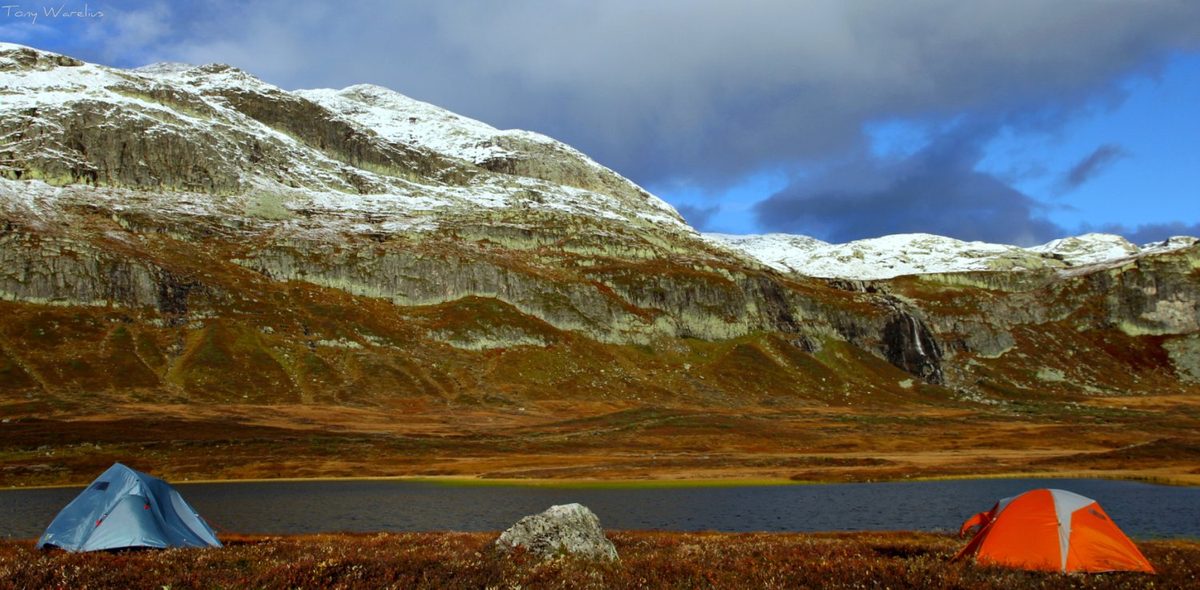
Norway’s allemannsretten (right to roam) lets you pitch a tent on uncultivated land for free, anywhere that’s at least 150 meters from the nearest occupied house, for up to two nights in one spot. This is not a loophole — it’s a cherished legal right, and it means a road trip with a tent can drop your accommodation budget to nearly zero. Combine it with campsite stops every few days for showers (~NOK 20) and laundry (~NOK 80).
The new tourist tax (from July 2026)
One to watch: Norway’s new “visitor’s contribution” law takes effect on July 1, 2026, allowing municipalities under tourism pressure to add up to 3% to overnight stays. It’s opt-in and rolls out gradually — Tromsø, the Lofoten municipalities and Bergen are expected to be among the first adopters, but most visitors in 2026 won’t pay it anywhere yet. Tents, campervans and boats are exempt. On a NOK 1,500 room it would add about NOK 45 a night — annoying, not trip-changing. Check your booking confirmation and don’t let anyone scare you off with it.
Food & Drink Costs in Norway
Food is where first-time visitors get sticker shock, and also where smart travelers save the most. The gap between eating out and self-catering in Norway is bigger than almost anywhere in Europe — restaurant food carries 25% VAT and high labor costs; groceries are taxed at 15% and are genuinely affordable.
What eating out costs
| Item | Typical price (NOK) | USD approx. |
|---|---|---|
| Coffee / cappuccino | 40–65 | $4–7 |
| Bakery pastry (skolebolle, kanelbolle) | 30–50 | $3–5 |
| Gas-station hot dog (pølse) | 30–45 | $3–5 |
| Kebab / burger combo | 140–190 | $15–20 |
| Casual café lunch | 150–250 | $16–26 |
| Restaurant main course | 250–400 | $26–42 |
| Three-course dinner for two (no drinks) | 700–1,200 | $74–126 |
| Beer in a bar (0.5L) | 90–140 | $9–15 |
| Glass of wine in a restaurant | 110–160 | $12–17 |
| Maaemo tasting menu (3 Michelin stars) | 5,600 | ~$590 |
Oslo runs maybe 10–25% above Bergen and Trondheim for restaurant prices; rural Norway is often cheaper still, though with fewer options. Fine dining, oddly, is where Norway looks almost reasonable by international standards — Oslo has excellent tasting menus around NOK 1,000–1,300 that would cost more in London or New York.
Groceries: your budget’s best friend
A self-catering day costs NOK 110–200 per person. The cheap chains are Kiwi, Rema 1000 and Coop Extra — look for the First Price house brand, which is dramatically cheaper than name brands. Rough 2026 staples: a litre of milk NOK 27, a loaf of bread NOK 20–35, a dozen eggs around NOK 70, 500g of pasta NOK 15–25. Frozen pizza (Grandiosa — a national institution, make of that what you will) about NOK 50.

Do as Norwegians do and make a matpakke — a packed lunch of bread, cheese and toppings. It’s not a tourist hack; it’s literally what half the country eats at noon. The Too Good To Go app is also active across Norwegian cities, selling surplus bakery and supermarket bags for NOK 39–79, about a third of retail value. And drink the tap water — it’s excellent, free, and a NOK 35 bottled water habit adds up fast.
Alcohol: the genuinely brutal part
No way to sugarcoat this: alcohol in Norway is taxed like a vice, because policy-wise it is one. A bar beer is NOK 90–140. Wine and anything above 4.7% is sold only at Vinmonopolet, the state monopoly, where a basic drinkable bottle starts around NOK 120–150. Supermarkets sell beer up to 4.7% but stop selling at 8 pm on weekdays, 6 pm on Saturdays, and not at all on Sundays — time your shopping. Vinmonopolet keeps shorter hours still (closed Sundays, early close Saturdays).
If you’re flying in, use your duty-free allowance at the airport arrivals store — virtually every Norwegian on your flight will be doing exactly that, and the queue is its own cultural experience. If your trip happiness depends on a nightly bottle of wine, budget for it explicitly or recalibrate; treating alcohol as an occasional treat rather than a default is the single biggest discretionary saving available in Norway.
Transport Costs in Norway
Transport is the most variable line in a Norway budget — a trip can be a NOK 44 tram ticket or a NOK 1,000-a-day rental car with ferry tabs. I’ve covered the full how-to (apps, passes, routes, the car-versus-no-car decision) in my getting around Norway guide; here’s purely what things cost in 2026.
Getting from Oslo Airport
The classic first-hour-in-Norway money test. The Flytoget express train costs NOK 268 to the city center and takes 19 minutes. The regular Vy commuter train covers the same route in 23 minutes for around NOK 114–129. Take the Vy train; spend the difference on a cinnamon bun. (Flytoget’s one real perk: kids under 16 ride free with an adult.)
City transit
| City | Single ticket | 24-hour pass | 7-day pass |
|---|---|---|---|
| Oslo (Ruter, zone 1) | ~NOK 44 | ~NOK 135 | ~NOK 350 |
| Bergen (Skyss, 1 zone) | NOK 51 | NOK 136 | NOK 315 |
| Tromsø (Svipper) | NOK 50 (off-peak NOK 30) | NOK 140 | NOK 327 |
All three systems run on apps with card payment — no paper tickets, no cash, no drama. Tromsø’s off-peak single (weekdays 9 am–2 pm and evenings) at NOK 30 is a nice touch nobody tells you about.
Trains and long-distance buses
The Oslo–Bergen railway — one of the world’s great train rides — costs from about NOK 249–400 if you book a Lowfare ticket when sales open (roughly three months ahead), versus NOK 1,000+ for a flexible ticket bought the same week. That 4x spread is the single most important booking rule in Norway: long-distance transport is cheap early and punishing late. Long-distance buses (Vy Buss, NOR-WAY, FlixBus) undercut even that, with Oslo–Bergen from around NOK 249–350 if you can stomach 9+ hours.
Domestic flights
Norway is long — Oslo to Tromsø is further than Oslo to London. Booked a few weeks out, SAS and Norwegian sell Oslo–Tromsø one-ways from around NOK 850–1,100; left to the last minute they can hit NOK 2,500. For itineraries that include the Arctic north, a budget flight often beats two days of overland travel on both money and time.
Driving: rental cars, fuel, tolls and ferries
A compact rental runs roughly NOK 400–900 a day in summer 2026 booked ahead (electric cars are often the cheap end of the range — Norway’s charging network is the world’s densest, so don’t fear them). Here’s the unusually good 2026 news: Norway suspended its road-use fuel excise from April through September 1, 2026, so petrol is hovering around NOK 20–21 per litre instead of the usual NOK 23–25. Enjoy it; prices snap back after September 1.
Budget extras that catch people out: automatic road tolls (your rental company bills them afterward — figure NOK 700–800 in tolls for a one-week cross-country trip, plus a small admin fee), fjord ferries (NOK 150–200 per car per crossing, several per day on coastal routes), and city parking (NOK 200–300 a day in Oslo or Bergen). A realistic all-in cost for a week’s road trip for two, including rental, fuel, tolls and ferries, is NOK 7,000–9,000 — which, split two ways, often beats trains plus tours for flexibility per krone. The classic scenic drives are covered in my itinerary and road trip guide.

Activity & Tour Costs
The best things really are free
This is the part that rebalances every Norway budget: the headline attractions cost nothing. Hiking Preikestolen near Stavanger is free (you pay ~NOK 250–275 for parking or about NOK 500 for the shuttle). Walking Bergen’s Bryggen wharf, free. Oslo’s Vigeland Sculpture Park with its 200+ statues, free and open 24/7 — I’ve costed out a whole day of zero-kroner sightseeing in the capital, transport included, and it came to 164 NOK. Every beach, fjord viewpoint and mountain trail in the country, free, forever, by law. My list of the best things to do in Norway is full of entries that cost NOK 0.

What paid experiences cost (2026)
| Experience | Typical 2026 price (NOK) | USD approx. |
|---|---|---|
| Oslo museums (MUNCH, National Museum) | ~180–200 | $19–21 |
| Oslo Pass (24h / 48h / 72h) | 580 / 870 / 995 | $61 / $92 / $105 |
| Flåm Railway (one way) | ~440–570 | $46–60 |
| Nærøyfjord cruise (Flåm–Gudvangen) | ~550–890 | $58–94 |
| Lysefjord cruise (Stavanger) | 890 | ~$94 |
| Norway in a Nutshell (Bergen round trip) | from ~2,600 | ~$275 |
| Northern lights chase, Tromsø | 1,100–1,500 | $116–158 |
| Whale watching, Skjervøy (Nov–Jan) | ~1,990 | ~$210 |
| Husky sledding (self-drive) | ~2,700–3,100 | $285–325 |
Two pieces of honest advice from someone who has paid for a lot of these. First, the Oslo Pass only pays off if you’ll do three or more museums plus transit in a day — do the math against the ~NOK 180 single entries before buying. Second, Norway in a Nutshell is a packaging of public trains, boats and buses you can book separately for NOK 1,600–2,000; the package buys convenience, not access. I’ve unpacked which tours are worth paying for — and which to do yourself — in my Norway tours guide and the fjord cruise guide.
Where guided tours genuinely earn their price: anything involving boats, ice, animals or Arctic winter driving. A NOK 1,400 northern lights chase with a guide who reads cloud forecasts beats a DIY rental-car fumble most nights, and nobody should self-drive a husky sled without the people who own the dogs.
Costs by Region: Oslo vs Bergen vs Tromsø vs Lofoten
Norway isn’t uniformly priced, and the differences run opposite to what most people guess.
Oslo is the most expensive city for eating and drinking — figure 10–25% above the rest of the country in restaurants — but it’s also where budget infrastructure is best: the most hostel beds, the cheapest weekend hotel deals, a flat NOK 44 transit ticket that covers everything, and a remarkable stack of free sights (Vigeland Park, the Opera House roof, Akershus Fortress grounds, the harbor saunas excepted).
Bergen is slightly gentler on the wallet for food and hotels, though its compact center means you barely spend on transit at all. The budget risk in Bergen is the day-trip economy — fjord tours from NOK 550 upward make it easy to spend NOK 1,500 a day on boats.
Tromsø breaks the seasonal rules: its peak season is winter, when aurora hunters fill every hotel and prices for rooms can exceed Oslo’s. Tours are the budget driver here — most Arctic experiences cost NOK 1,100–3,000 a head — and a Tromsø winter trip is realistically the most expensive Norway trip per day you can take. Summer Tromsø, under the midnight sun, is quietly cheaper and underrated. More in my Norway in winter guide.
Lofoten has limited beds and huge summer demand, so rorbu cabins command NOK 2,000+ in July that cost NOK 1,400 in May or September. Food shops are normal Norwegian prices; restaurants are few and busy. Lofoten rewards the camper and the shoulder-season traveler more than anywhere else in Norway.
The fjord region (Flåm, Geiranger, Hardanger) prices its hotels for tour groups in summer — book months ahead or stay in cheaper towns like Voss or Sogndal and day-trip in. Geiranger’s cruise-day crowds also mean prices hold firm; check the fjords guide for quieter, cheaper bases.
When Is Norway Cheapest?
For most of the country, the cheap months are the shoulder and off seasons: May, September and October offer 20–40% off summer hotel rates, and city hotels are cheapest on winter weekends. July is peak pricing everywhere except, paradoxically, the big-city business hotels, which discount when Norwegians head to their cabins. The north inverts all of this: Tromsø and the aurora belt peak from November to March, with summer as the value season.
If pure cost-per-experience drives you: May and early September give you open hiking trails, functioning tour schedules, long daylight and shoulder prices — the best value windows in the calendar. I’ve gone month-by-month, with weather and price notes, in the best time to visit Norway guide.
Norway vs Iceland vs Switzerland vs Sweden: Which Is More Expensive?
The question I get most from readers deciding between Nordic-ish trips. Based on 2026 price-level data and on-the-ground prices:
| Country | Numbeo cost index 2026 | Bar beer | Mid-range hotel | Verdict |
|---|---|---|---|---|
| Switzerland | 110.7 | ~$9–11 | $250–350 | The most expensive — clearly |
| Iceland | 97.2 | ~$10–12 | $200–300 | Pricier than Norway, fewer free alternatives |
| Norway | 83.7 | ~$10–14 | $130–210 | Expensive but the best value of the three |
| Sweden | ~70 | ~$8–9 | $110–180 | The cheap(er) Scandinavian option |
The surprise for most people: Norway is no longer the most expensive country in Europe, or even second. Switzerland holds that crown comfortably, and Iceland — with its imported-everything economy and no real budget-food culture — now costs visitors more per day than Norway for a comparable trip. Norway’s secret weapon in this comparison is the free layer: the right to roam, free world-class hikes, and a grocery culture that makes self-catering normal rather than a sacrifice. Alcohol is the one category where Norway still wins the wrong trophy.
A Worked Example: 7 Days in Norway at Three Budgets
Same one-week trip — three nights Oslo, train over the mountains, two nights Bergen/fjords, two nights more — at three spending levels, per person, assuming two people sharing:
| Line item | Backpacker | Mid-range | Comfort |
|---|---|---|---|
| Accommodation (7 nights, pp share) | NOK 2,450 (hostels/cabins) | NOK 5,250 (3-star doubles) | NOK 8,750 (4-star) |
| Food & drink | NOK 1,300 (groceries + 2 cheap eats) | NOK 2,800 (breakfast incl., 1 restaurant/day) | NOK 4,500 |
| Transport (incl. Oslo–Bergen Lowfare) | NOK 900 | NOK 1,400 | NOK 2,200 (flex tickets) |
| Activities & tours | NOK 700 (one fjord cruise, free hikes) | NOK 2,200 (cruise, Flåm Railway, museums) | NOK 4,000 (+ Nutshell, guided tour) |
| Week total (NOK) | ~5,350 | ~11,650 | ~19,450 |
| Week total (USD) | ~$565 | ~$1,225 | ~$2,050 |
These are real, achievable numbers, not best-case fantasies — they assume you book trains early and don’t drink your budget. Add NOK 1,000–2,000 of slack for the things that go sideways, because something always does. And for the planning that goes beyond money — visas and ETIAS, travel insurance, what to pack and staying connected — see our Norway travel tips guide.

15 Ways to Make Norway Cheaper
Collected from years of trips and a lot of receipts — roughly in order of impact:
- Book long-distance trains the day sales open (about 3 months out). NOK 249 vs NOK 1,100 for the same seat is the biggest single saving in Norway.
- Self-cater most meals. Groceries at Kiwi or Rema 1000 with First Price brands cut food costs by two-thirds versus restaurants.
- Make the hotel breakfast your main meal. It’s included almost everywhere and it’s substantial.
- Travel May or September — shoulder prices, open trails, no crowds. (For the north, summer is the value season.)
- Use the right to roam. A tent turns Norway’s biggest cost line into zero.
- Drink less, and buy what you drink at the airport duty-free or supermarket before 8 pm (6 pm Saturdays).
- Drink tap water. Among the world’s best, and free everywhere.
- Make a matpakke — packed lunch like a local instead of NOK 200 café lunches.
- Pick budget hotel brands (Citybox, Comfort Xpress, Smarthotel) or campsite cabins over standard hotels.
- DIY the Norway in a Nutshell legs — same trains and boats, NOK 600–1,000 cheaper.
- Do the city-pass math before buying. The Oslo Pass needs 3+ paid sights a day to win.
- Use off-peak and app fares for transit (Tromsø’s NOK 30 off-peak single; Ruter/Skyss app tickets beat driver-bought ones).
- Fly the long hops. Oslo–Tromsø from NOK 850 beats 24 hours of overland travel.
- Choose one splurge tour and protect it. One great husky day beats three mediocre paid excursions.
- Pay in NOK, always. When a card terminal offers your home currency, decline — dynamic currency conversion quietly adds 3–8%.
Money in Norway: Cards, Cash and Tipping
Norway is functionally cashless. Cards (and Apple/Google Pay) work for everything: buses, public toilets, parking meters, hot dog stands, church donations. Cash is involved in under 5% of transactions, and I haven’t touched a Norwegian banknote in years of visits. Bring one fee-free Visa or Mastercard and a backup; skip the airport currency exchange entirely. American Express works in bigger hotels and chains but is patchy elsewhere.
Tipping is genuinely optional. Service is included in prices and staff are properly paid. Norwegians round up or leave 5–10% for notably good restaurant service, and nothing at cafés, in taxis, or for hotel staff. The card terminal will ask; “no tip” is a socially acceptable button. Don’t import your home tipping anxiety — nobody here has rent riding on it.
One refund worth knowing: as a non-resident you can claim VAT back (roughly 12–19% of the price) on goods over NOK 315 per store through tax-free desks at departure — Norway is outside the EU, so even EU residents qualify.
So, Is Norway Worth the Cost?
I’ve spent more money in Norway than in any country I keep returning to, and I keep returning. Here’s the honest framing: Norway is expensive the way good boots are expensive. You’re paying for a place where everything works, where the bus is on time and spotless, where the tap water beats bottled, and where the scenery — the actual product you came for — is free and limitless once you’ve covered bed, bread and the bus.
A NOK 15,000 week in Norway buys experiences — standing over Lysefjord, the Bergen line crossing the Hardangervidda plateau, green light unspooling over a Tromsø beach — that simply don’t have a cheaper substitute anywhere. Iceland costs more now. Switzerland costs much more. The krone is weak, the trails are free, and the cinnamon buns are worth every øre. Go.
The Full Price List: 40 Everyday Costs in Norway (2026)
For the planners who want line items rather than tiers — the prices I’d actually expect to pay this year, gathered into one table. Treat anything marked seasonal as a moving target and check current prices for the big-ticket bookings.
| Item | NOK | USD approx. |
|---|---|---|
| Espresso-bar cappuccino | 45–65 | $5–7 |
| Cinnamon bun (kanelbolle) | 35–50 | $4–5 |
| 1L milk (supermarket) | ~27 | ~$2.80 |
| Loaf of bread | 20–35 | $2–4 |
| 12 eggs | ~70 | ~$7 |
| Frozen Grandiosa pizza | ~50 | ~$5 |
| Gas-station hot dog | 30–45 | $3–5 |
| Kebab or burger meal | 140–190 | $15–20 |
| Casual lunch out | 150–250 | $16–26 |
| Restaurant dinner main | 250–400 | $26–42 |
| Bar beer 0.5L | 90–140 | $9–15 |
| Supermarket beer 0.5L | 35–50 | $4–5 |
| Basic Vinmonopolet wine | 120–180 | $13–19 |
| Oslo transit single (zone 1) | ~44 | ~$4.60 |
| Oslo 24-hour transit pass | ~135 | ~$14 |
| Flytoget airport express | 268 | ~$28 |
| Vy airport train | ~120 | ~$13 |
| Oslo–Bergen train (Lowfare, early) | 249–400 | $26–42 |
| Oslo–Bergen train (flex, late) | 1,000+ | $105+ |
| Oslo–Tromsø flight (booked ahead) | 850–1,100 | $90–116 |
| Compact rental car, per day | 400–900 | $42–95 |
| Petrol, per litre (summer 2026) | ~20–21 | ~$2.15 |
| Fjord car ferry crossing | 150–200 | $16–21 |
| City parking, per day | 200–300 | $21–32 |
| Hostel dorm bed | 350–500 | $37–53 |
| Campsite cabin | 500–800 | $53–85 |
| Mid-range hotel double | 1,200–2,000 | $126–210 |
| MUNCH museum entry | ~180 | ~$19 |
| Fjord cruise (Nærøyfjord) | 550–890 | $58–94 |
| Northern lights tour, Tromsø | 1,100–1,500 | $116–158 |
| Preikestolen parking | ~250–275 | ~$26–29 |
| Public toilet | 0–20 | $0–2 |
| Tap water | 0 | $0 |
| Every hike and viewpoint in the country | 0 | $0 |
Norway with Kids: The Family Cost Picture
Norway quietly takes good care of family budgets, in ways the headline prices hide. Children under 16 ride the Flytoget airport express free with a paying adult. City transit is half price for kids, and Bergen’s Skyss goes further: one adult ticket lets up to four children travel free. Most museums are free or heavily discounted under 18, hotel family rooms routinely sleep four for less than two doubles, and that included hotel breakfast feeds hungry kids at no extra cost.
The family-specific costs that do add up: rental cars big enough for the gear, paid attractions priced per head (a NOK 890 fjord cruise for four people is suddenly a NOK 3,000 morning — look for family tickets, which most operators offer at roughly the price of 2.5 adults), and the simple calorie throughput of teenagers in a country where eating out is dear. Self-catering cabins are the family sweet spot: a NOK 1,200 four-bunk campsite cabin with a kitchenette beats two hotel rooms by thousands of kroner a week, and Norwegian campgrounds almost always have playgrounds. With a bit of matpakke discipline, a family of four can do a comfortable Norway week for NOK 25,000–35,000 (~$2,600–3,700) all-in, excluding flights.
Norway Travel Costs: Your Questions Answered
How much does a 7-day trip to Norway cost?
Per person, excluding international flights: around NOK 7,000 (~$735) backpacking, NOK 12,000–15,000 (~$1,260–1,580) mid-range, and NOK 20,000+ (~$2,100+) for a comfort-level trip with tours and nice hotels. Couples sharing rooms spend notably less per person.
Is $100 a day enough for Norway?
Yes, with discipline. $100 is roughly NOK 950, which covers a hostel dorm or campsite cabin share, groceries with one cheap hot meal, city transit and free activities. It does not stretch to nightly restaurant dinners, bar rounds or daily paid tours. With a tent and the right to roam, even $60–70 a day is workable.
Is Norway more expensive than Iceland?
No — not anymore. On 2026 cost-of-living indices Iceland (97.2) sits clearly above Norway (83.7), and most travelers now report higher daily costs in Iceland for comparable trips. Norway also has more budget infrastructure: cheap grocery chains, a packed-lunch culture, and free wild camping.
Is Norway more expensive than Switzerland?
No. Switzerland is the most expensive country in Europe for travelers by a comfortable margin — roughly 25–30% above Norway on overall price levels, with notably pricier hotels and restaurants.
Why is Norway so expensive?
High wages across all jobs (your barista earns a living wage), deliberate taxation (25% VAT, steep alcohol excise), and the logistics of a long, mountainous country. Locals pay the same prices — Norway is expensive by design, not as a tourist surcharge.
What is the cheapest month to visit Norway?
For southern Norway and the fjords: May, September and October combine 20–40% hotel savings with workable weather and open attractions. City hotels are cheapest on winter weekends. For Tromsø and the Arctic north it inverts — winter is peak season there, and summer is the bargain window.
How much is a beer in Norway?
NOK 90–140 ($9–15) for a half-litre in a bar or restaurant; NOK 35–50 in a supermarket (max 4.7% strength, sold until 8 pm weekdays, 6 pm Saturdays, never on Sundays). Wine and spirits are sold only at the state-run Vinmonopolet.
Do I need cash in Norway?
No. Norway is one of the most cashless societies on earth — cards and phone payments work everywhere, including buses, parking and street food. Just decline dynamic currency conversion and pay in NOK. There’s no need to exchange money before your trip.
Do you tip in Norway?
Not expected. Round up or add 5–10% for genuinely good restaurant service if you like; nothing for cafés, taxis or hotels. Service staff earn proper wages, so nobody depends on tips.
Is the new Norway tourist tax going to make trips more expensive?
Barely. The visitor’s contribution law (in force from July 1, 2026) lets individual municipalities add up to 3% on overnight stays, with revenue funding trails and facilities. Rollout is gradual — most destinations won’t charge it in 2026 — and on a NOK 1,500 room it’s about NOK 45 a night. Campers in tents and campervans are exempt.
About This Guide
This guide is written and maintained by the NorwayTourism.org editorial team — travelers who have crossed Norway by train, rental car, ferry and on foot in every season, and who keep receipts. Prices were checked in June 2026 against official operator and statistics sources; we use NOK 9.5 ≈ $1 USD throughout and update this page as prices and the krone move. Spot something out of date? Tell us.
Sources & Further Reading
- Visit Norway — Currency & prices
- Statistics Norway (SSB) — Accommodation statistics
- Skatteetaten — Norwegian tax rates (VAT, excise)
- Ruter — Oslo ticket prices
- Skyss — Bergen ticket prices
- Svipper — Tromsø bus fares
- Flytoget — Tickets and fares
- Vy — Train tickets and Lowfare
- DNT — Norwegian Trekking Association cabins
- Rødne — Lysefjord cruise fares
- Visit Oslo — Oslo Pass
- Norwegian Customs — VAT refunds for tourists
- Numbeo — Norway cost of living (crowdsourced)
Photo Credits
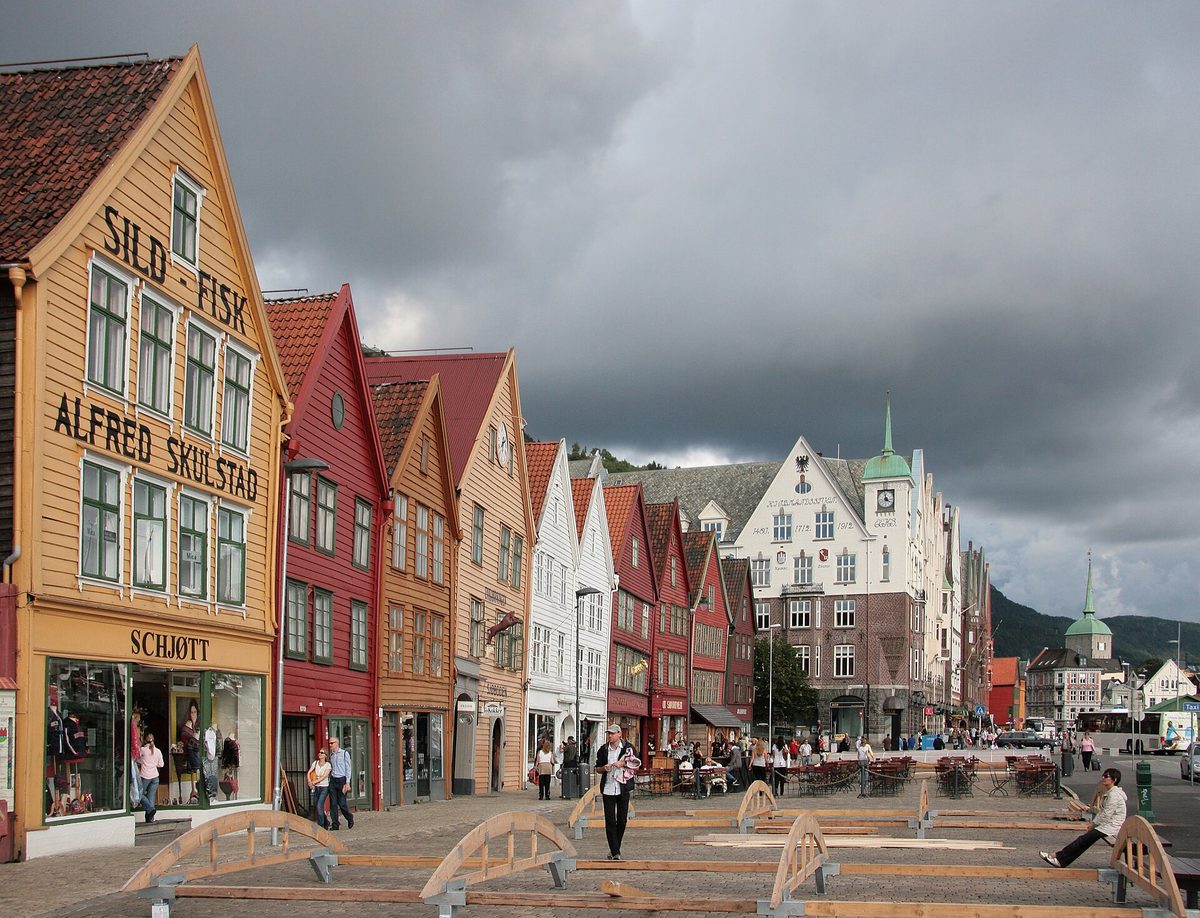
Bryggen wharf, Bergen — Photo: Anna Anichkova / CC BY-SA 3.0 via Wikimedia Commons (Source)
Wild camping in the Norwegian mountains — Photo: Tony Warelius / CC BY 2.0 via Wikimedia Commons (Source)
The Bergen Line near Finse — Photo: Kabelleger / David Gubler / CC BY-SA 4.0 via Wikimedia Commons (Source)
Hamnøy, Lofoten Islands — Photo: Svein-Magne Tunli – tunliweb.no / CC BY-SA 4.0 via Wikimedia Commons (Source)
A REMA 1000 supermarket — Photo: Wolfmann / CC BY-SA 4.0 via Wikimedia Commons (Source)
Vigeland Sculpture Park, Oslo — Photo: Ignaz Wiradi / CC BY-SA 3.0 no via Wikimedia Commons (Source)