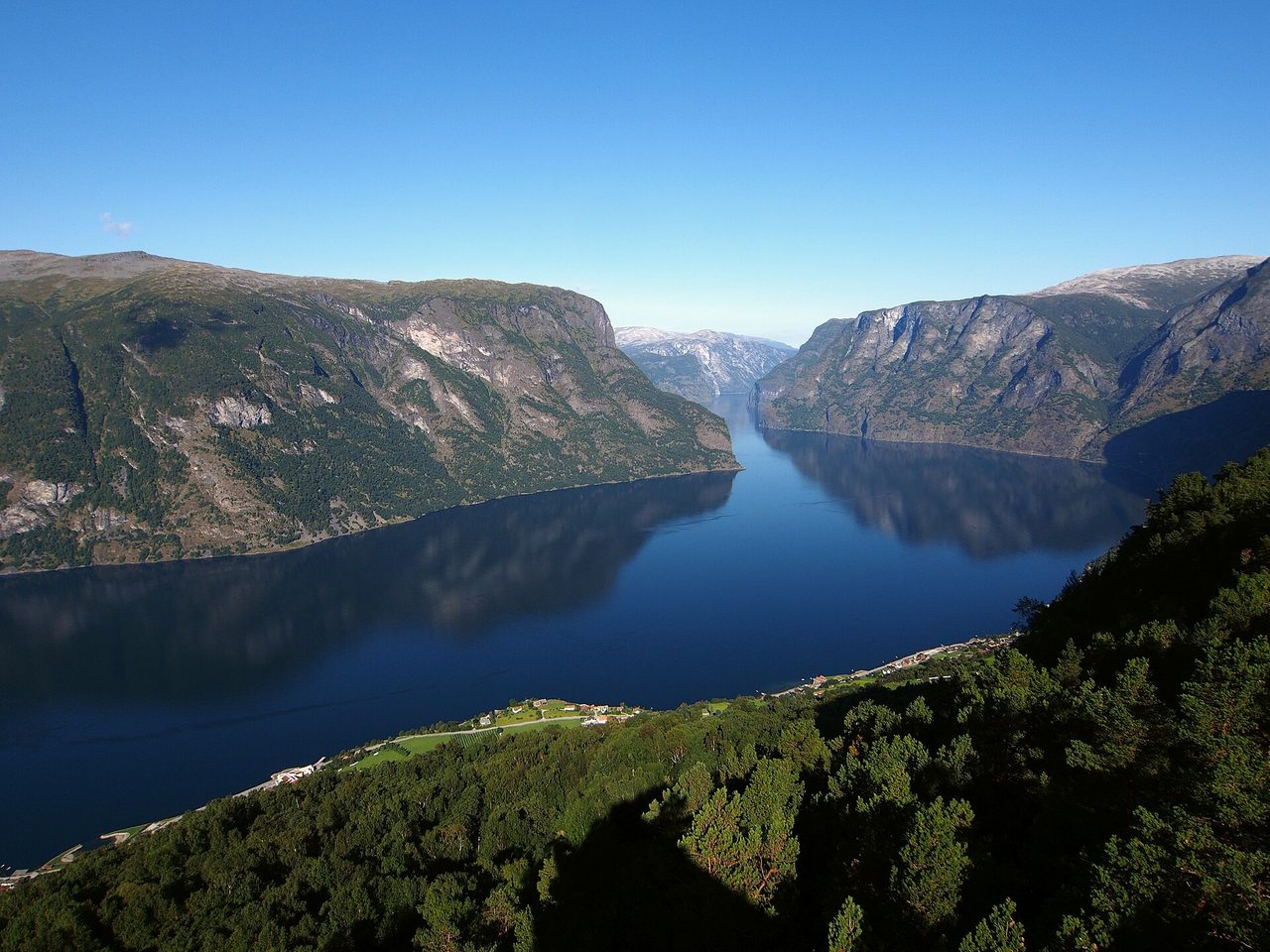
The Norwegian fjords are the reason most people put Norway on their list in the first place — and standing on the deck of a small boat as a kilometre of sheer rock slides past, waterfalls spilling straight into water so still it doubles the sky, you understand why. These aren’t just pretty inlets. They’re the drowned valleys that glaciers spent two million years carving, and Norway has more than a thousand of them.
The trouble is that “see the fjords” is a vague plan, and the fjords are spread across hundreds of kilometres of coast. This guide fixes that. We’ll cover which fjords are actually worth your time (and which suits which kind of traveler), how to experience them — cruise, local ferry, train, car, or kayak — what it costs, when to come, and where to base yourself. There’s a comparison table, real itineraries, an honest Geirangerfjord-versus-Nærøyfjord verdict, and a note on the big 2026 change that’s reshaping fjord cruising. If you’re still shaping the wider trip, pair this with our guides to the best time to visit Norway and the best things to do in Norway.
Norwegian fjords at a glance
| Question | Short answer |
|---|---|
| Most famous fjords | Geirangerfjord & Nærøyfjord (both UNESCO World Heritage) |
| Longest & deepest | Sognefjord — about 205 km long, 1,308 m deep (“King of the Fjords”) |
| Closest to Bergen | Hardangerfjord |
| Best way to see one | A sightseeing cruise or a local car ferry through the fjord |
| Best base | Bergen (gateway city); Flåm or Geiranger to sleep fjord-side |
| Best time | May–September; waterfalls peak late May–June |
| How many days | Three minimum; five to seven to do it justice |
What is a fjord, and why does Norway have so many?
A fjord is a long, narrow, deep inlet of the sea that fills a valley a glacier carved out — and that glacial origin is exactly what separates a true fjord from an ordinary bay. The word itself is Norwegian, an old term related to “crossing point” and to the same root as “ferry,” which tells you how central these waterways have always been to getting around a country chopped up by water.
The formation story is worth a moment, because it explains what you’re actually looking at. Over roughly two million years, repeated ice ages sent enormous glaciers grinding down existing river valleys. The ice carries embedded rock that works like sandpaper, gouging those valleys far deeper and wider than any river could and leaving the characteristic steep-sided, U-shaped profile — rivers, by contrast, cut narrow V-shapes. Glaciers erode most powerfully in their middle reaches, which is why fjords are often deeper inland than at their mouth, where a shallower “threshold” of deposited rock frequently sits. When the last ice age ended about 11,700 years ago, the sea rose and flooded the valleys, and the fjords as we know them were born.
So why does Norway have the world’s most famous fjords? Partly its hard, crystalline bedrock, which holds near-vertical walls without crumbling, and partly the sheer intensity and repetition of its glaciations. The result is more than 1,000 fjords, so intricate that they stretch Norway’s coastline from about 2,500 km measured straight to roughly 29,000 km once you trace every inlet. One detail that surprises first-timers: thanks to the warm Gulf Stream, the fjords stay virtually ice-free even in deep winter — which is why cruises run year-round, and why seals, porpoises and white-tailed sea eagles all make a living along them.
The best Norwegian fjords (and what each is best for)
Of Norway’s 1,000-plus fjords, only about ten see regular tourist traffic — which is good news, because it means a handful of names cover almost everything you’d want. Here’s how the headline fjords compare, then the detail on each.
| Fjord | Region / gateway | Length | Best for | How to visit | UNESCO |
|---|---|---|---|---|---|
| Sognefjord | Vestland, north of Bergen | ~205 km | Scale & scenic side-arms | Express boat, cruise, rail | No |
| Nærøyfjord | Sognefjord branch | ~18 km | Drama, kayaking | Flåm–Gudvangen electric cruise | Yes (2005) |
| Geirangerfjord | Sunnmøre / Ålesund | ~15 km | Waterfalls & viewpoints | Cruise from Geiranger; Hellesylt ferry | Yes (2005) |
| Hardangerfjord | Closest to Bergen | ~183 km | Blossom, waterfalls, Trolltunga | Road trip; cruise from Bergen | No |
| Lysefjord | Ryfylke / Stavanger | ~42 km | Clifftop hikes | Electric cruise from Stavanger | No |
| Aurlandsfjord | Sognefjord branch | ~29 km | Train access, Stegastein view | Flåm Railway; cruise; drive | No |
Sognefjord — the King of the Fjords
If the fjords had a main artery, this is it. The Sognefjord runs about 205 km inland and plunges to 1,308 m deep — Norway’s longest and deepest, and one of the longest in the world. It’s too vast to “see” in one go; the trick is that its narrow side-arms (the Nærøyfjord and Aurlandsfjord among them) hold the most dramatic scenery, while characterful villages like Balestrand and Flåm make relaxed bases. An express boat runs from Bergen up to Flåm in season — a scenic half-day in its own right. My advice: don’t race its full length; pick one arm and one village and settle in.
It’s also the gateway to some of the country’s most memorable add-ons: the Flåm Railway climbs out of the Aurlandsfjord through 20 tunnels to the mountains at Myrdal, regularly rated one of the world’s great train rides, while the side-arm to Fjærland leads to the blue tongues of the Jostedalsbreen glacier. If you do nothing else on the Sognefjord, ride a boat up one narrow arm and a scenic train out of another — it’s the cleanest way to feel the sheer scale of the place.
Nærøyfjord — the narrow, UNESCO-listed wonder
A branch of the Sognefjord and, for many people, the fjord — narrowing to just 250 metres with walls climbing toward 1,800 m. It’s a UNESCO World Heritage site (inscribed in 2005) and among the most pristine fjord arms in the country, with no road along it, so it looks much as it did a century ago. The classic Flåm–Gudvangen cruise, now on silent electric boats, is the single best fjord-cruise leg most visitors will take, and it’s the marine centrepiece of “Norway in a Nutshell.” For fewer people and closer cliffs, swap the big cruise for a RIB safari or a kayak.
Geirangerfjord — the iconic one
The postcard fjord: a 15-km gorge of sheer cliffs, abandoned clifftop farms, and waterfalls pouring straight down the rock. The Seven Sisters waterfall fans out in seven streams opposite a single cascade nicknamed “the Suitor,” and the viewpoints — Dalsnibba (a toll road to around 1,500 m), Flydalsjuvet, and Ørnesvingen (the Eagle’s Bend) — deliver the big-sky shots. It’s also a UNESCO site and, frankly, a victim of its own fame: cruise ships pour visitors in midday in summer.

Honest tip: stay overnight in Geiranger, or visit in the shoulder season, and take an early-morning or late-afternoon boat — the difference between a serene fjord and a crowded one is just a couple of hours.
Hardangerfjord — the Queen of the Fjords
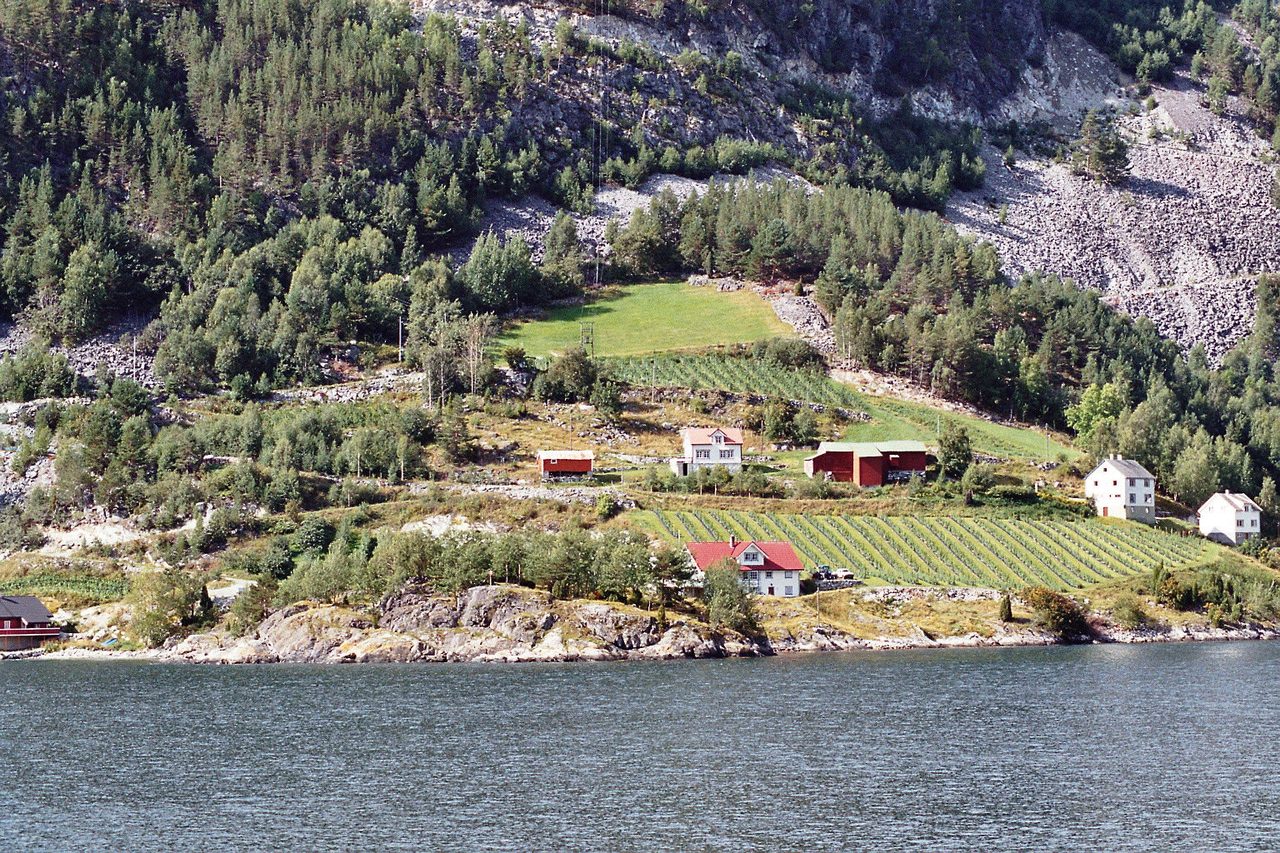
The Hardangerfjord is the closest big fjord to Bergen and, at around 183 km, the country’s second-longest. It’s gentler and more pastoral than the dramatic western fjords — this is Norway’s orchard country, and in mid-to-late May the apple, cherry and plum trees bloom white and pink against snow-streaked peaks (one of Norway’s loveliest, and shortest, windows). It’s also a region of waterfalls — Vøringsfossen, plunging 182 m into the Måbødalen canyon, has a dramatic stepped viewing structure — and the launch point for the famous Trolltunga hike. Most fjord trips here begin in Bergen, Norway’s gateway to the fjords; our Bergen travel guide covers the best things to do in Bergen and the cruises that leave straight from the harbour.
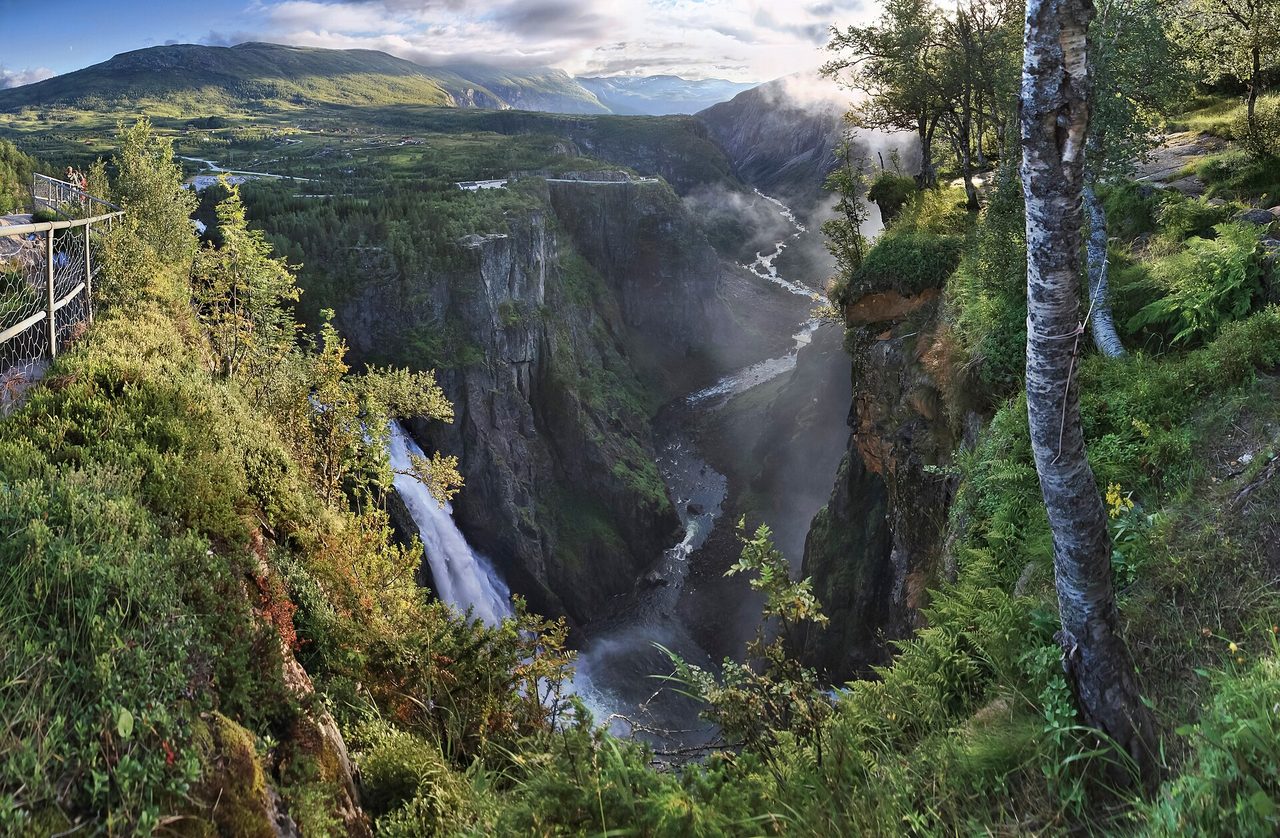
Hardanger rewards a road trip more than a single cruise; the orchards, waterfalls and farm cideries are strung along the shore. If you only have a day and want blossom, gamble on mid-to-late May and check the bloom reports.
Lysefjord — clifftops and Pulpit Rock
Down near Stavanger, the 42-km Lysefjord is famous less for the water than for what towers above it: Preikestolen (Pulpit Rock), the flat cliff 604 m up, and Kjeragbolten, a boulder wedged in a chasm with a 1,000-m drop beneath. An electric sightseeing cruise from Stavanger (around 3 hours, roughly NOK 890 / about $80–90) sails right under Pulpit Rock and close to the Hengjane waterfall. For the full regional picture — cruises compared, hike logistics and the city itself — see our complete guide to Stavanger and the Lysefjord.
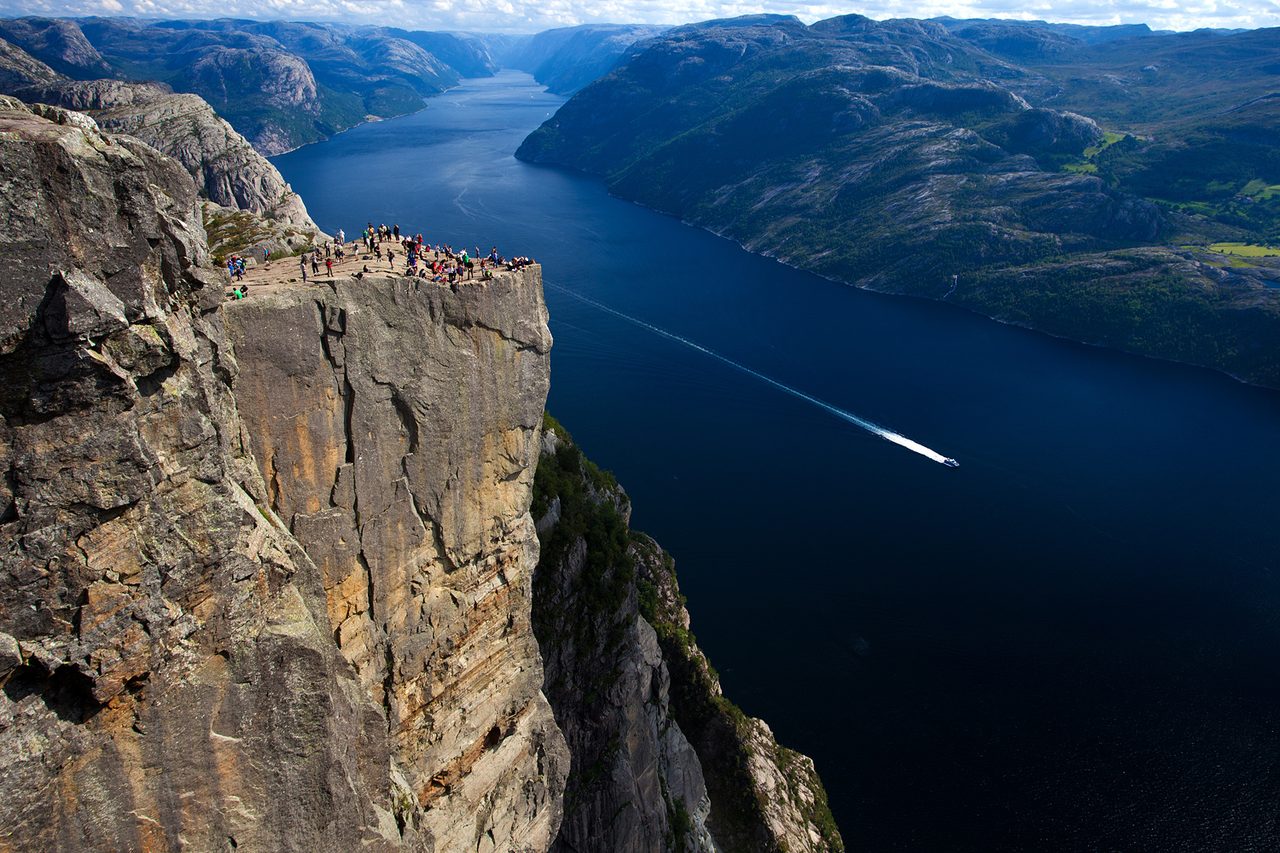
One thing to be clear about: the cruise shows you Pulpit Rock from below; to get the famous photo standing on top you have to do the hike (about 8 km round trip, 4–5 hours). They’re two completely different days out.
Aurlandsfjord and the lesser-known fjords
The Aurlandsfjord — another Sognefjord branch — is where most rail travellers arrive, via the Bergen Railway and the spectacular Flåm Railway, and it’s home to the Stegastein viewpoint, a platform jutting 30 m out, 650 m above the water (open year-round, about 30 minutes from Flåm). Beyond the headliners, it’s worth knowing the quieter names: Hjørundfjord near Ålesund offers Geiranger-level drama with a fraction of the crowds; Nordfjord pairs glacier arms (Briksdal) with the Loen Skylift cable car up Mount Hoven; and the tiny Trollfjord, far north between Lofoten and Vesterålen, is so narrow that only small boats and the coastal ships can thread in and turn around inside its walls. And the Oslofjord, for the record, is a broad, island-dotted sea inlet near the capital — lovely for summer island-hopping, but not the towering-cliff fjord most people picture.
Two of those lesser-known fjords genuinely deserve a detour. The Nordfjord pairs deep-blue water with the icy arms of the Jostedalsbreen, mainland Europe’s largest glacier — you can walk to the face of the Briksdal arm or ride the Loen Skylift cable car more than a kilometre up Mount Hoven in about five minutes. The Hjørundfjord, ringed by the jagged Sunnmøre Alps, gives you Geiranger-scale drama with a fraction of the boats; a small excursion from Ålesund here feels far more intimate than the big-ship circuit. Wherever you end up, keep an eye on the water and the cliffs: porpoises and seals surface in the fjords, and white-tailed sea eagles — Europe’s largest — ride the updrafts above them.
The best fjord for every kind of traveler
Short on time and not sure which to choose? Here’s the quick matchmaking:
- Most dramatic scenery: the Nærøyfjord and Geirangerfjord (both UNESCO), or the tiny Trollfjord up north.
- Easiest day trip from Bergen: the Hardangerfjord, or the Nærøyfjord via the Norway in a Nutshell route.
- Best for a classic sightseeing cruise: Geirangerfjord, Nærøyfjord and Lysefjord, all served by good electric boats.
- Best for kayaking: the narrow, calm Nærøyfjord, or paddling toward the Seven Sisters in Geiranger.
- Best for avoiding crowds: the Hjørundfjord and the inner Sognefjord arms — or any fjord in shoulder season.
- Best for waterfalls: Geirangerfjord (the Seven Sisters) and Hardangerfjord (Vøringsfossen), fullest in late May and June.
- Best for hiking above the fjord: Lysefjord (Pulpit Rock and Kjerag) and Hardanger (Trolltunga); Nordfjord for an easy cable-car summit. Our full guide to hiking in Norway compares all the big fjord trails side by side.
Geirangerfjord vs Nærøyfjord: which should you choose?
If you only have time for one classic fjord, it usually comes down to these two UNESCO names. The quick verdict: Geirangerfjord wins on sheer waterfall drama and clifftop viewpoints, but it’s busier and further north (best paired with Ålesund and the Trollstigen road). Nærøyfjord wins on intimacy and access — it’s narrower, feels wilder, and slots straight into the easy Oslo–Bergen “Norway in a Nutshell” route. Choose Geiranger if you’re driving the northwest and love a viewpoint; choose Nærøyfjord if you’re doing the classic rail-and-fjord loop or want to kayak. Both are sensational; neither is a wrong answer.

The famous hikes above the fjords
Some of Norway’s most iconic hikes look straight down onto the fjords, and they’re a huge part of the draw. Above the Lysefjord, Preikestolen (Pulpit Rock) is the accessible icon — about four hours round trip to a flat cliff 604 m above the water — while Kjeragbolten is the harder, higher cousin. From the Hardangerfjord region, Trolltunga juts out some 700 m above a lake on a demanding all-day trek (self-guided roughly June to September). These are summer outings on real mountain trails, so check conditions and start early; our roundup of Norway’s best experiences has the full rundown on each.
How to experience the fjords (and which way is right for you)
There’s no single “fjord tour” — there are six good ways in, at very different prices. Here’s how they stack up.
For the nuts and bolts of fjord travel — car ferries, the AutoPASS discount, express boats and the scenic trains that reach the water — see our full guide to getting around Norway.
| Way to see them | Roughly | Best for | Watch out for |
|---|---|---|---|
| Public car/passenger ferry | NOK 150–600 | Budget; flexible; local feel | No commentary; schedule-bound |
| Sightseeing cruise (electric) | NOK 800–1,200 | The classic comfortable fjord trip | Crowded midday in summer |
| RIB safari | NOK 700–1,200+ | Speed, thrills, close to cliffs | Bumpy, cold, weather-dependent |
| Sea kayaking (guided) | From ~NOK 1,200 | Quiet, intimate, water-level views | Needs a guide; weather-sensitive |
| By train (Flåm/Bergen Railway) | From ~NOK 600 | Scenery without a car | Books out in peak summer |
| By car (self-drive) | Variable | Total flexibility; viewpoints | Ferries, tolls and fuel add up |
The single most underrated option is the regular car ferry: working boats like the Geiranger–Hellesylt route double as sightseeing for the price of a local crossing, with a fraction of the tour-boat markup.
And if you’d rather let the ship do the work for days at a time — sailing into Geirangerfjord on the way up the whole coast — that’s a different decision entirely: our guide to Norway fjord cruises and coastal voyages compares the big ships, Hurtigruten, Havila and the electric day boats honestly.
Active ways: kayaking and RIB safaris
If you’d rather feel the fjord than watch it through glass, get on the water yourself. Guided sea kayaking — beginner-friendly with a little instruction — is the most intimate way to experience a fjord, drifting at water level beneath cliffs that feel impossibly tall from a kayak; half-day trips on the Nærøyfjord or in Geiranger start from around NOK 1,200. At the other end of the energy scale, a RIB safari straps you into a fast rigid-inflatable boat that skips deep into narrow arms and chases waterfalls and wildlife, flotation suit and all. Both put you somewhere the big cruise boats can’t go, with a fraction of the crowd — just dress for cold spray and check the weather.

The coastal voyage: fjords by the dozen
For the slow, all-in version, the historic coastal route between Bergen and Kirkenes — run by Hurtigruten and the newer, low-emission Havila — calls at 34 ports and threads a whole string of fjords over six to seven days one way (about twelve round trip). The northbound leg leans toward cities and a summer Geirangerfjord detour; the southbound is the nature-lover’s route, past Lofoten and into the dramatic, cliff-walled Trollfjord, where the ships famously turn around inside the rock walls. It’s transport-with-a-view rather than a luxury cruise, and it runs year-round — winter sailings double as a Northern Lights hunt in the far north. Round-trip fares start around $2,000 per person and climb with cabin and season, so compare both operators and book months ahead for summer.
“Norway in a Nutshell” — the classic combo
The most popular way to string the fjords together without a car is Norway in a Nutshell, a flexible, self-guided combination of the Bergen Railway, the Flåm Railway, a Nærøyfjord cruise, and a bus, linking Oslo and Bergen. It’s now all-electric, doable in a (long) day or extended with overnights, and starts at roughly NOK 2,698 (about $245). You can book each leg yourself — the train tickets, the Flåm Railway, the cruise — and typically save $100–200, at the cost of doing your own logistics; the route and scenery are identical. Either way, book the Flåm Railway ahead in summer, as it sells out on cruise-ship days.
Best fjord day trips from Bergen
Bergen is the natural launchpad, and you don’t need to commit to a multi-day trip to taste the fjords. The quickest hit is a Mostraumen cruise from Bergen harbour — about 3.5 hours up the narrow Osterfjord past waterfalls and tidal currents, no car or train needed (from roughly NOK 800) — it’s one of four options I weigh up for a second day based in Bergen. For the full classic, the Nærøyfjord via Flåm makes a long but doable round trip from Bergen by train and boat. With more time, drive or cruise into the Hardangerfjord (closest of the big fjords) for orchards and Vøringsfossen. From Oslo, the fjords are a full day away — the “Norway in a Nutshell” route is the cleanest option. From Stavanger, the Lysefjord and Pulpit Rock are on the doorstep; from Ålesund, it’s the Geirangerfjord and Hjørundfjord.
What it costs to visit the fjords
Norway is expensive, and the fjords are no exception — but the range is wide depending on how you travel. A local car ferry can cost a few hundred kroner; a sightseeing cruise runs roughly NOK 800–1,200; the Flåm Railway is about NOK 600+ one way; and Norway in a Nutshell starts around NOK 2,698. A multi-day coastal voyage (Hurtigruten or Havila), which threads several fjords, runs from roughly $2,000 per person for a round trip and up. As a rough daily budget, plan on around $150–250 per person once you factor in Norwegian hotel and food prices. The big money-savers: use the public ferry network instead of branded cruises where you can, self-cater some meals, book trains early for cheap fares, and travel in shoulder season. For the wider cost picture, our guide to the best time to visit covers seasonal pricing.
Best time to visit the Norwegian fjords
The fjords are at their best from May through September, when cruises run full schedules, mountain roads and viewpoints are open, and the days are long. Within that window, late May and June are special: the snowmelt has every waterfall thundering, and the Hardanger orchards blossom in mid-to-late May. July and August bring the warmest weather but also the biggest crowds and cruise-ship traffic. September and early October trade some daylight for golden autumn colour and far fewer people. Winter is quieter but not closed — thanks to the Gulf Stream the fjords stay ice-free, and the Nærøyfjord and coastal cruises run year-round, with snow-dusted peaks and a real chance of the northern lights in the far north. For a full month-by-month breakdown, see our seasons guide.
Where to base yourself
Where you sleep shapes the whole trip. Bergen is the classic gateway — airport, the Oslo railway terminus, a gorgeous UNESCO wharf — but the big fjord scenery is a few hours east, so it’s a launchpad more than a fjord-side base. Flåm is the best hub for the Sognefjord arms and the railways (tiny and tourist-busy by day, magical at night). Geiranger puts you right on the UNESCO fjord for the Seven Sisters and Dalsnibba. Ålesund, a striking Art Nouveau town, is the northern gateway to Geiranger and Hjørundfjord. Stavanger is the base for the Lysefjord and Pulpit Rock. And Balestrand is the quiet, scenic Sognefjord village for travellers who’d rather settle than rush.
Best fjord viewpoints
Some of the most jaw-dropping fjord moments come from above, reached by road or cable car rather than boat:
- Stegastein (Aurlandsfjord) — a platform 650 m up, jutting 30 m out over the fjord; open year-round, ~30 minutes from Flåm.
- Dalsnibba / Geiranger Skywalk (Geirangerfjord) — a toll road to about 1,500 m for the big-sky panorama (seasonal, roughly late May–October).
- Flydalsjuvet & Ørnesvingen (Geirangerfjord) — the classic postcard ledge and the Eagle’s Bend hairpin, both looking straight down the fjord.
- Loen Skylift to Mount Hoven (Nordfjord) — a cable car climbing more than 1,000 m in about five minutes, one of the world’s steepest.
Norwegian fjord itineraries
One day: a taste of the fjords
From Bergen, a Mostraumen cruise (about 3.5 hours) gets you into a narrow fjord and back in an afternoon. With a full day and an early start, the Norway in a Nutshell loop from Bergen (or Oslo) packs in two scenic railways and the Nærøyfjord cruise.
Two to three days: the classic fjord core
Base in Flåm for two nights. Day one: the Flåm Railway up to Myrdal and back, plus the Stegastein viewpoint. Day two: the Flåm–Gudvangen Nærøyfjord cruise and a kayak or village wander. Add a third day to push up the Sognefjord to Balestrand, or detour into the Hardangerfjord.
Five to seven days: the grand fjord loop
Fly into Bergen and out of Ålesund (or do a loop). String together Bergen → Hardangerfjord (Vøringsfossen, orchards) → the Sognefjord and Flåm/Nærøyfjord → up to the Geirangerfjord via the scenic roads → Ålesund. A week lets you mix cruises, a marquee viewpoint or two, and a hike (Pulpit Rock if you swing south, or Trolltunga from Hardanger) without feeling rushed.
Practical tips for visiting the fjords
Watch the weather — all of it. Western Norway can serve up sun, rain and wind in a single afternoon, so pack proper waterproofs and layers whatever the forecast, and don’t pin a whole trip on one clear day.
Book the bottlenecks ahead. The Flåm Railway, popular cruises and small-village accommodation sell out in peak summer (especially on cruise-ship days) — reserve well in advance for June to August.
Travel kinder, and dodge the crowds. The famous fjords get genuinely overwhelmed midday in high summer. There’s a big change underway: from 2026, the World Heritage fjords (Geiranger, Nærøy and their neighbours) require zero-emission operation for smaller passenger vessels, with larger ships following from 2032 — which is why so many fjord cruises are now silent electric boats. You can do your bit (and have a better time) by choosing those electric cruises, visiting in shoulder season, going early or late in the day, and seeking out quieter fjords like the Hjørundfjord. In winter, the fjords are at their most serene, and in the far north a fjord trip can pair with the northern lights.
Are the Norwegian fjords good for families?
Very — with a little planning. The cruises and car ferries are easy with children (open decks, cafés, and endless things to point at), the Flåm Railway is a hit with kids of every age, and short, gentle walks to waterfalls or viewpoints break up the time on the water. Skip the all-day endurance hikes like Trolltunga with little ones and lean instead on the cable cars (Loen Skylift) and drive-up viewpoints (Stegastein) for the big views without the slog. Pack layers and waterproofs — the one dependable thing about fjord weather is that it changes — and build in downtime, because the travel between fjords is part of the adventure but can run long.
More in this series
This guide is the hub for our Norwegian fjords series. Each of these takes one fjord — or one decision — and goes at it with 2026 prices, season dates and an honest verdict:
- Which fjord to choose — a shortlisting table by days needed, cost from Bergen, crowd levels and whether it works without a car.
- Geirangerfjord — the car ferry and the sightseeing cruise are two different products at two different prices. Which one you actually want.
- Geiranger village — parking tariffs, where to sleep, and how to time a visit around five cruise ships and 8,000 passengers.
- Nærøyfjord — the 2026 Flåm–Gudvangen timetable, the request-stop system nobody mentions, and how to get back afterwards.
- Sognefjord — 205 km and four arms, with a five-day route that needs no car and every admission price for 2026.
- Hardangerfjord — blossom dates, cider farms with protected origin status, and the full Trolltunga parking and shuttle tariff.
- Lysefjord — Preikestolen, Kjerag and Flørli compared, plus the cut-off times that decide whether the hike is on.
- Which fjord to visit — a decision tool rather than a ranking: matched to days available, season, and whether you have a car.
- Flåm — the railway, the Nærøyfjord boat and Stegastein, with the same day costed three ways and a cruise-ship-day playbook.
- Fjord sightseeing cruises — every major day boat in Norway priced in kroner, plus the zero-emission rules that came in on 1 January 2026.
- Fjord viewpoints — fifteen of them with parking fees, road opening dates, hike times and the hour of day each one works.
- The fjords map — where they actually are, which airport serves which, and why map distance and travel time diverge so badly here.
- How the fjords were formed — the geology, with the exact viewpoint or glacier where you can see each stage for yourself.
Frequently asked questions
What is a fjord, exactly?
A fjord is a long, narrow, deep inlet of the sea formed when a glacier carved out a U-shaped valley that later flooded with seawater as the ice melted. That glacial origin is what gives fjords their steep walls and great depth, and distinguishes a true fjord from an ordinary bay or river estuary.
How were the Norwegian fjords formed?
Over roughly two million years, repeated ice ages sent glaciers grinding down existing valleys, gouging them far deeper and wider than rivers could. When the last ice age ended about 11,700 years ago, sea levels rose and flooded these U-shaped valleys, creating the fjords we see today.
Which is the most beautiful fjord in Norway?
It’s subjective, but the Nærøyfjord and Geirangerfjord — both UNESCO World Heritage sites — are the usual top picks for sheer drama. The Nærøyfjord is narrower and wilder; the Geirangerfjord has the famous waterfalls and viewpoints. For quieter beauty, the Hjørundfjord and the inner Sognefjord arms are hard to beat.
What is the longest fjord in Norway?
The Sognefjord, at about 205 km, is Norway’s longest fjord and one of the longest in the world. It’s also the deepest, reaching about 1,308 m, which is why it’s nicknamed the “King of the Fjords.”
What is the deepest fjord in Norway?
Also the Sognefjord, at around 1,308 m (4,291 ft) at its deepest point. Its inner arms drop hundreds of metres below sea level while the surrounding mountains rise well over a kilometre above it.
How many fjords does Norway have?
More than 1,000. They’re so numerous and intricate that they multiply Norway’s coastline from about 2,500 km (without them) to roughly 29,000 km. Only around ten, however, are regularly visited by cruises and tours.
Where are the Norwegian fjords?
The most famous fjords are in “Fjord Norway” — the western coast between Stavanger and Ålesund, with Bergen as the main gateway. There are also dramatic fjords much further north, around Lofoten, Tromsø and beyond.
Which fjord is best for first-time visitors?
The Nærøyfjord, because it’s easy to reach on the well-organised “Norway in a Nutshell” route from Oslo or Bergen, it’s UNESCO-listed and genuinely dramatic, and the cruise is a manageable couple of hours. If you’re flying into Stavanger, the Lysefjord (with Pulpit Rock) is the easy first fjord.
Is Geirangerfjord or Nærøyfjord better?
Geirangerfjord has more waterfall drama and famous viewpoints but bigger crowds, and suits a northwest road trip via Ålesund. Nærøyfjord is narrower, wilder and more accessible, slotting into the classic Oslo–Bergen rail-and-fjord loop. Choose based on your route — both are spectacular.
What is the best fjord day trip from Bergen?
For a half-day, the Mostraumen cruise from Bergen harbour. For the full classic, a round trip to the Nærøyfjord via Flåm (train plus boat). With a car or more time, the Hardangerfjord is the closest of the big fjords, with orchards and the Vøringsfossen waterfall.
Should I take a fjord cruise or the ferry?
A dedicated sightseeing cruise is more comfortable, has commentary, and is built for photos — but costs more and gets crowded midday. A regular car/passenger ferry (like Geiranger–Hellesylt) covers the same water for far less, with a local feel, if you don’t mind no commentary. For the famous narrow fjords, the purpose-built electric cruises are worth it; elsewhere, ferries are the savvy choice.
How many days do you need to see the fjords?
You can taste them in a single “Norway in a Nutshell” day, but three days lets you settle into one fjord region properly, and five to seven days lets you combine two or three fjords with a viewpoint and a hike without rushing. For complete day-by-day routes, see our Norway itinerary guide.
What is the best time of year to visit the fjords?
May to September, when cruises and roads are fully open. Late May and June bring the most powerful waterfalls and the Hardanger blossom; September offers autumn colour and fewer crowds. Winter is quiet and serene, with the Nærøyfjord and coastal cruises still running.
How do you get to the fjords from Oslo?
The most scenic way is the Oslo–Bergen railway, branching onto the Flåm Railway down to the Sognefjord arms — the backbone of the “Norway in a Nutshell” route. Driving takes the better part of a day; flying to Bergen, Ålesund or Stavanger and starting from there saves time.
How much does a Norwegian fjord cruise cost?
A short sightseeing cruise runs roughly NOK 800–1,200 (about $75–110); the Lysefjord cruise from Stavanger is around NOK 890. The “Norway in a Nutshell” combo starts near NOK 2,698, and a multi-day coastal voyage that threads several fjords starts around $2,000 per person. Prices vary by season — always check current rates.
The fjords on screen and in story
You may feel a flicker of recognition the first time you round a bend in the Nærøyfjord, and there’s a reason: Norway’s fjord country has seeped deep into pop culture. The fictional kingdom of Arendelle in Disney’s Frozen drew on the architecture of Bergen and the scenery of the western fjords, and filmmakers have used these waterways as shorthand for the wild and the epic for decades. Long before Hollywood, the fjords were the highways of the Viking Age — sheltered, navigable, and dotted with the farms and trading sites whose names still cling to the shore. Part of the pleasure of a fjord trip is feeling that layered history: the abandoned clifftop farms above Geiranger, the stave church at Undredal, the goat-cheese makers and cider farms of Hardanger. The scenery is the headline, but the culture tucked into these valleys is what makes a fjord feel lived-in rather than just looked-at.
Final thoughts: planning your fjord trip
The fjords reward a little strategy. Pick one or two rather than trying to see them all, match the way you travel — cruise, ferry, train or kayak — to the experience you want, and come between late May and September for the fullest show (or in winter for serenity and a shot at the lights). Get that right and the Norwegian fjords deliver one of the great travel experiences anywhere. When you’re ready to build out the rest of the trip, our guides to the best things to do in Norway, the best time to visit, and the northern lights pick up where this one leaves off.
Fjord cruise schedules, prices, ferry timetables and road openings change seasonally — always confirm current details before you travel. Last updated: June 2026.
About this guide
Written and maintained by the NorwayTourism.org editorial team — travelers and writers focused on practical, first-hand Norway trip planning. Fjord facts and figures draw on Norway’s official tourism resources, UNESCO, and operator information; we refresh our guides regularly. Last updated: June 2026.
Sources & further reading
- Visit Norway — the fjords explained, regions and itineraries
- UNESCO — West Norwegian Fjords (Geirangerfjord & Nærøyfjord) World Heritage listing
- Fjord Norway — regional guides and live road/route status
- Fjord Tours — Norway in a Nutshell route and pricing
Photo credits
All photos are used under their respective Creative Commons licenses.
- A classic Norwegian fjord: the Aurlandsfjord seen from the Stegastein viewpoint — Photo: rheins / CC BY 3.0 via Wikimedia Commons. Source
- The Geirangerfjord and its Seven Sisters waterfall, a UNESCO World Heritage site — Photo: Sergey Ashmarin / CC BY-SA 3.0 via Wikimedia Commons. Source
- A fjord-side hamlet with farms and orchards in western Norway — Photo: Vesna Vujicic-Lugassy / CC BY-SA 3.0 IGO via Wikimedia Commons. Source
- Vøringsfossen, one of Norway’s most famous waterfalls, in the Hardangerfjord region — Photo: Ximonic, Simo Räsänen / CC BY-SA 3.0 via Wikimedia Commons. Source
- Preikestolen (Pulpit Rock) high above the Lysefjord — Photo: Svein-Magne Tunli / CC BY-SA 3.0 via Wikimedia Commons. Source
- A cruise ship sailing into the Geirangerfjord in summer — Photo: W. Bulach / CC BY-SA 4.0 via Wikimedia Commons. Source
- The Nærøyfjord seen from a fjord cruise — Photo: Cbliu / CC BY-SA 4.0 via Wikimedia Commons. Source