Every guide to getting from Oslo to Bergen quotes the flight at 55 minutes and the train at just under seven, then leaves you to work out the rest. The rest is where the decision actually lives. Oslo Airport sits 47 km north-east of the city and Bergen Airport Flesland is a 45-minute tram ride from Byparken, so that 55-minute flight is really a four-and-a-half-hour day once you count the transfers, the check-in buffer and the wait at the bag belt.
I have done this route in all five ways — train, plane, hire car, express bus, and the packaged Norway in a Nutshell version — and the thing that surprised me most was how close the plane and the train are on door-to-door time once you stop measuring from gate to gate. The gap is nowhere near six hours to one. It is closer to two and a half.
So this article does one job. It puts every mode in a single table with real fares, real timings, and — the bit nobody else bothers with — the airport transfers at both ends, priced and clocked. No itinerary, no list of things to see in Bergen when you land. Just the honest arithmetic of 496 km of Norway. For whole-trip routes that build this crossing in, see the main Norway itineraries.
The door-to-door comparison table
All timings are Oslo city centre (Oslo S / Jernbanetorget) to Bergen city centre (Byparken / Bryggen), because that is where you actually start and finish. Flight timings assume a 75-minute airport buffer for a domestic departure with a bag, plus roughly 20 minutes to deplane and collect it at Flesland. Fares are one adult, one way, checked September 2026.
| Mode | Moving time | Realistic door-to-door | Transfers included | Typical one-way cost NOK (USD) | Cheapest realistic NOK (USD) |
|---|---|---|---|---|---|
| Train (Bergen Line) | 6h35 fastest, 6h30–7h30 typical | 6h50–7h50 | Walk to Oslo S; walk from Bergen stasjon | 350–500 (37–53) | 299 (32) Minipris |
| Fly, Vy regional to OSL | 55 min in the air | 4h15–4h45 | Vy 25–30 min NOK 124; Bybanen 45 min NOK 51 | 775 (83) | 724 (77) |
| Fly, Flytoget to OSL | 55 min in the air | 4h10–4h40 | Flytoget 19 min NOK 243; Bybanen 45 min NOK 51 | 894 (96) | 843 (90) |
| Drive, E16 via Lærdal | About 500 km | 7h–9h with two stops | None; door to door by definition | 1,060–1,130 (113–121) fuel and tolls | Split two ways: 530–565 (57–60) |
| Drive, Rv7 over Hardangervidda | About 470 km | 7h30–10h | None | 1,155–1,275 (124–136) fuel and tolls | Split two ways: 578–638 (62–68) |
| Express bus (Nor-Way / Vy VY450) | 9h15–10h | 9h30–10h15 | Walk to bus terminal; some services route via Oslo Airport | 404–500 (43–53) | 371 (40) |
| Norway in a Nutshell | About 12h | 12h+ if done in one day | Four legs, all connections pre-booked | 2,200–2,500 (235–267) package | 1,300–1,950 (139–209) legs booked separately |
| Night train | Departs 23:03, arrives 06:44 | 7h41 asleep | Walk both ends; berth extra | Base fare plus sleeper supplement | Saves a hotel night |
Two numbers in that table do most of the work. The first is that flying saves you roughly two and a half hours door to door, not six. The second is that the drive costs more than the train even before you rent the car — and if you do rent one, the one-way surcharge alone is five to nine times the price of a train ticket.
The five ways to cross Norway, priced
The train: Bergen Line, 496 km, six and a half hours
The Bergensbanen is the default answer and usually the right one. It runs 496 km, climbs to 1,237 m at Finse — the highest mainline in Northern Europe — and passes through more than 180 tunnels. The fastest scheduled service does it in 6h35; most take between 6h30 and 7h30 depending on the departure and the season.
Frequency: five departures a day from Oslo S, at roughly 06:23, 08:23, 12:01, 16:23 and 23:03. That last one is the night train, arriving Bergen 06:44.
Fares: tickets are released 90 days ahead. Book early and low-season one-way fares run 350–500 NOK (37–53 USD), with Minipris seats appearing from 299 NOK (32 USD). Leave it late and a fully flexible ticket climbs to around 1,200 NOK (128 USD). One aggregated fare source I checked gives a slightly different picture — Minipris 249–399 NOK, flexible 700–1,100 NOK, walk-up up to 1,400 NOK and a seat reservation at 90 NOK — but that is a single unverified source, so treat it as indicative rather than gospel. The pattern both agree on: the Minipris allocation is small and it goes first.
Verdict: best value on the route by a wide margin, and the only mode where the journey is the point. Sit on the left leaving Oslo for the Hallingdal valley, then it stops mattering above the treeline because the view is 360 degrees of nothing. The stretch across the Hardangervidda plateau between Ustaoset and Finse is bleak in the best way — snow poles, frozen lakes, a few red cabins and no roads.
Flying: 55 minutes in the air, four and a half hours in reality
OSL–BGO is one of the busiest short-haul pairs in Europe: 295 flights a week as of August 2026, more than 20 a day. Flight time is 55 to 56 minutes. Fares start around 600 NOK (64 USD), or 549 NOK (59 USD) on the hand-luggage-only fares.
Now the part the airlines do not advertise. From Oslo city centre you need to reach Gardermoen. Flytoget does it in 19 minutes for NOK 243 (26 USD), every 10 minutes. The Vy regional does the same trip in 25–30 minutes for NOK 124 (13 USD). That is roughly double the price for six to ten minutes saved, and I will say it plainly: unless you are genuinely late, take the Vy train. This is single-source pricing, so treat it as indicative, but the ratio has held for years.
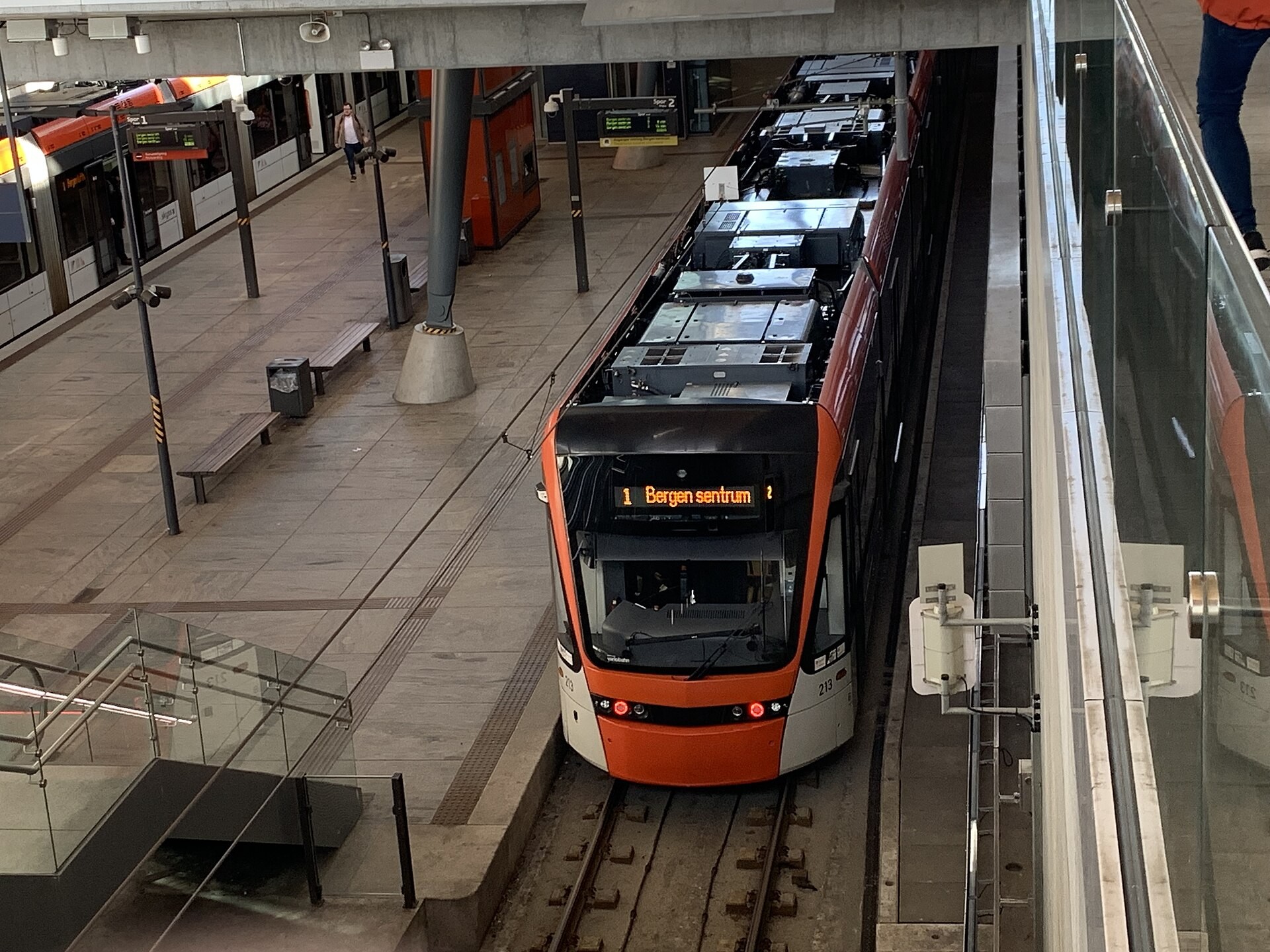
At the Bergen end, Bybanen line 1 runs from the airport terminal to Byparken in about 45 minutes for NOK 51 (5 USD). It is a light rail, it is frequent, and it beats a taxi on both price and predictability.
Add it up: 25 minutes Vy, 75 minutes at the airport, 55 in the air, 20 to deplane and collect a bag, 45 on Bybanen, plus walking. That is 4h15 to 4h45 door to door and 724–775 NOK (77–83 USD) with the cheap airport train.
Verdict: worth it when you are short on days, not when you are short on money. You save about two and a half hours over the train and pay roughly double for the privilege, and you spend most of that saved time standing in an airport anyway. With only three days in Norway, my three-day itinerary argues against making the crossing at all.
Driving: 500 km, seven to ten hours, and a rental surcharge that ruins it
Two realistic routes. E16 via Lærdal is about 500 km and includes the Lærdal Tunnel — 24.5 km, the longest road tunnel in the world, and toll-free — plus the 11 km Gudvanga Tunnel. Rv7 over the Hardangervidda plateau is shorter at about 470 km and crosses the 1.38 km Hardanger Bridge. Neither route requires a ferry, which is the single biggest reason both are quicker than they look on a map of Norway’s fjord country.
Ignore the guides that say five to six hours. Plan seven to ten. Norwegian speed limits, tunnel sections, road works and the fact that you will stop for photographs make the optimistic figure fantasy. One popular drive guide even contradicts itself on the applicable speed limit, quoting both 70 and 80 km/h in the same article, which tells you how much care went into its timings.
Fuel: petrol was averaging NOK 26.84 per litre nationally on 1 September 2026, after a fuel-duty increase that added NOK 4.71 per litre that same day. A typical petrol hire car at 7 litres per 100 km burns about 35 litres over the E16 route, so roughly NOK 940 (100 USD) in fuel alone. If you read a guide quoting 19–22 NOK per litre, it predates the rise and its total is wrong by about a third.
Tolls: around 120–190 NOK (13–20 USD) on the Aurland/E16 route, and 270–390 NOK (29–42 USD) on Rv7.
The killer: the one-way rental surcharge. In early 2026 Sixt charged 2,800 NOK (299 USD) and Hertz 2,500 NOK (267 USD) to drop an Oslo car in Bergen. That is on top of the daily rate, the fuel and the tolls. Unless you already own the car, are travelling as a family of four, or are looping back to Oslo afterwards, driving is the most expensive way to cover this route by a long way.
Verdict: excellent as a two-day road trip with a night in Flåm, Voss or Geilo. Bad as a way of simply getting to Bergen. The Oslo to Bergen road trip earns its keep on the detours — the Aurlandsfjellet Snow Road, the viewpoint at Stegastein, the Hardanger orchards — not on the transit itself. If that is the trip you want, our notes on moving between Norwegian regions cover the practicalities.
The express bus: cheapest, slowest, genuinely fine
Two operators run the corridor. Vy express service VY450 takes about 9h45, daily, with night departures routed via Oslo Airport. Nor-Way’s express does it in 9h15 to 10h, from 404 NOK (43 USD) — though a second source lists fares from 371 NOK (40 USD), so the entry price depends on where you book.
Frequency: daily, with additional overnight runs.
Verdict: it is a coach, it takes ten hours, and the seats recline. If the train’s Minipris allocation has sold out and the flexible fare is sitting at 1,200 NOK, the bus at 371–404 NOK is a genuinely rational fallback rather than a punishment. The scenery on the E16 section through the Lærdal valley is better than you would expect from a bus window. It is also the mode that suffers least from a late booking, because coach fares barely move.
Norway in a Nutshell: twelve hours, four legs, one big premium
The packaged version strings together the Oslo–Myrdal train, the Flåm Railway down to the fjord, the Flåm–Gudvangen cruise, a bus to Voss and a final train into Bergen. One-way Oslo to Bergen takes about 12 hours. It is a lovely day and a terrible way to travel if your only goal is arriving.
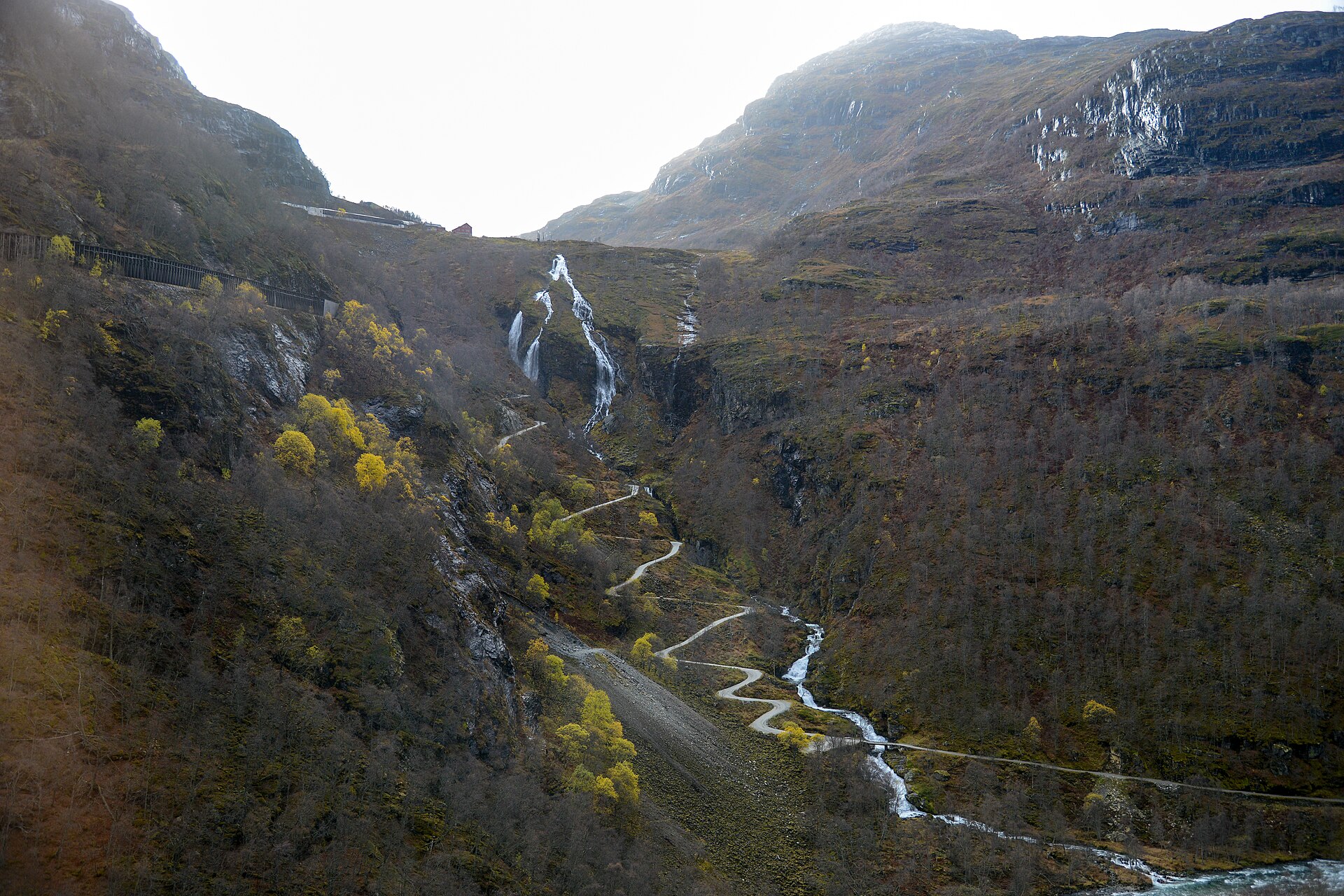
The Flåm Railway leg is the headline: 20 km from Flåm at sea level to Myrdal at 867 m, 20 tunnels of which 18 were dug by hand, 80 per cent of the line at a 5.5 per cent gradient, about an hour each way, with a five-minute photo stop at Kjosfossen. Eurail and Interrail holders get 30 per cent off singles.
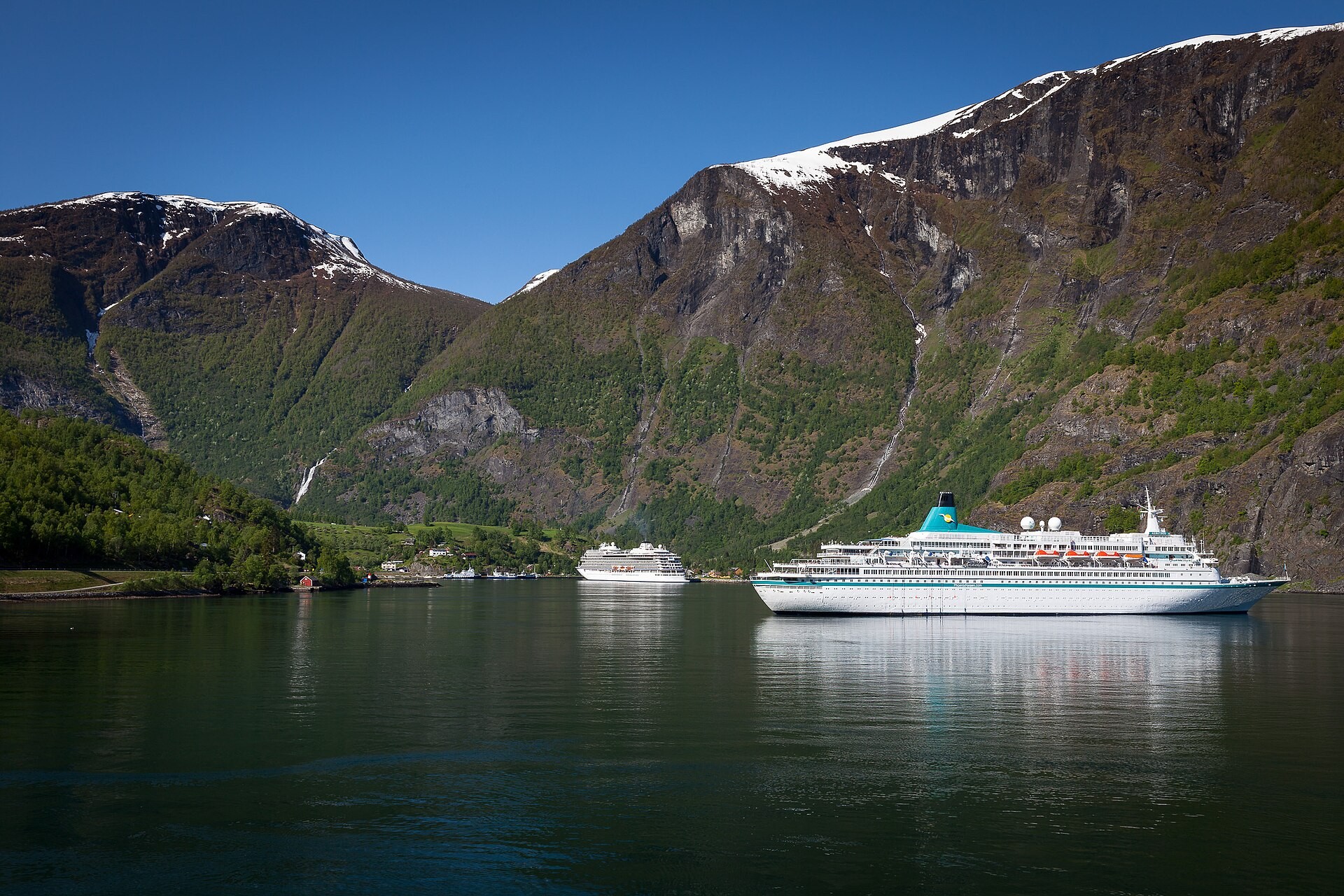
The cruise leg runs through the Nærøyfjord, the narrowest navigable arm of the Sognefjord system, and it is the part of the day that justifies the whole thing.
Verdict: see the pricing section below. Worth doing once; not worth doing as a package if you can be bothered to book four tickets.
When the train is the wrong answer
I default to the train, but there are four situations where I do not.
You booked late and the Minipris is gone
This is the big one. The whole “the train is cheapest” argument rests on the Minipris allocation. Once those 299–500 NOK seats are gone, you are looking at 1,200 NOK for a flexible fare, at which point a 549 NOK flight plus 175 NOK in transfers is both faster and cheaper. The train’s advantage is a booking-window advantage, not a structural one. If you are inside three weeks of travel and the cheap fares have vanished, check flights before you resign yourself to paying full whack for a seat.
You are ending your trip in Bergen and flying home from there
If your outbound is from Flesland anyway, the Bybanen transfer is a sunk cost you were paying regardless, which shifts the arithmetic toward flying. Conversely, if you are continuing from Bergen by boat or road, the train’s city-centre-to-city-centre finish is worth real money.
Is Norway in a Nutshell worth the premium?
Here is the honest answer, with a caveat. The package is quoted at roughly 2,200–2,500 NOK (235–267 USD) one way, while booking the same four legs yourself comes to something in the region of 1,300–1,950 NOK (139–209 USD). That is a single unverified source, so read it as an approximate premium of several hundred kroner rather than an exact figure. Even so, the direction is clear: you are paying a few hundred kroner for guaranteed connections and one booking reference instead of four.
Is that worth it? If you are travelling in July with a tight onward connection in Bergen, yes — a missed bus at Gudvangen on a self-booked itinerary is your problem, not the operator’s. If you are travelling in shoulder season with a flexible evening, book the legs yourself and keep the difference.
There is a second problem with the packaged pricing, which is that the Flåm Railway fare itself is a mess. Different sources quote 430, 510 and 570 NOK one-way adult, while others publish a seasonal ladder of 245 NOK (October–December), 260 NOK (January–April) and 315 NOK (May–September). The low band looks like the rail-pass holder rate, but the arithmetic does not close: 315 divided by 0.7 is 450, not 510. Norway’s Best does not publish a numeric fare on its own timetable page, which is why the figures floating around the internet do not reconcile. Budget the higher band and be pleasantly surprised. Our breakdown of what Norway actually costs per day uses the same conservative approach.
One thing to settle before you book any of it: the Flåm Railway fare. I found four different one-way adult prices across reputable sources, and they do not reconcile.
| Source type | One-way adult | What it probably is |
|---|---|---|
| Seasonal walk-up, checked April 2026 | 430 NOK low season, 510 NOK high season (about $46-$55) | The standard published fare |
| Second travel source | 510 NOK (about $55) | High-season fare quoted year-round |
| Outlier operator listing | About 570 NOK one way, 850 return (about $61 / $91) | Possibly a bundled or premium-carriage rate |
| Eurail/Interrail listing | 245 NOK Oct-Dec, 260 Jan-Apr, 315 May-Sep (about $26-$34) | The 30% pass-holder discount, not walk-up |
The pass-holder theory almost works and then doesn’t: 315 divided by 0.7 is 450, not 510. Norway’s Best, which runs the line, publishes a timetable without a numeric fare, so there is no authoritative figure to check against. Budget 510 NOK one way and treat anything lower as a bonus. If you hold a Eurail or Interrail pass, ask for the discount explicitly at the counter rather than assuming the booking engine applies it.
Winter mode-switching
Nobody writes about this and it matters. In winter the two driving routes are not equivalent. E16 is designed to stay open in all weather and is the last road across the mountains to close. Rv7 over the Hardangervidda is nominally year-round but regularly drops into convoy driving — kolonnekjøring, where you queue behind a snowplough and cross in a group — and closes outright during storms. The Aurlandsfjellet Snow Road, the scenic alternative to the Lærdal Tunnel, opens in early June and shuts in mid-October, so it is simply not an option for two-thirds of the year.
The practical rule I use from November to April: book the train, not the car. The Bergen Line was built to run through weather that shuts roads and it mostly does. If you must drive, take E16 and accept you may still be sitting behind a plough on the Hardangervidda section of the alternative. If you are planning a cold-season crossing, our guide to Norway between November and March covers what actually stays open.
Flying in winter has its own failure mode: Flesland fogs and Bergen’s weather cancels flights more often than it stops trains. I have twice watched a departure board at OSL go amber while the 16:23 to Bergen left on time.
Booking it properly
Train. Tickets go on sale 90 days out. Set a reminder for the day your date opens if you want a Minipris — the cheap allocation on the daytime departures, especially the 08:23, disappears fast in summer. Buy direct from Vy rather than a reseller; the resellers add a fee and cannot help you when a connection breaks. If you are travelling with a rail pass, you still need a seat reservation, and on the Bergen Line in summer that reservation is not optional in practice.
Flights. Compare the hand-luggage fare against the bag fare honestly. A 549 NOK ticket becomes 800-plus once you add a hold bag, at which point the train wins again. Also check which Oslo airport you are actually flying from before you buy your Flytoget ticket.
Airport transfers. Buy the Vy regional to Gardermoen, not Flytoget, unless minutes genuinely matter. At the Bergen end, buy the Bybanen ticket in the Skyss app before you board; there is no conductor selling tickets and the inspectors do check.
Car. Get the one-way surcharge in writing before you book. Some brokers bury it and present it at the desk. If the total surcharge plus fuel plus tolls comes to more than four train tickets, and it usually does, you are paying for flexibility rather than transport.
Norway in a Nutshell. Price the four legs separately first — it takes fifteen minutes — then decide whether the package premium buys you anything. Going eastbound from Bergen is often easier to self-assemble than westbound because the afternoon connections are less tight.
Whichever you pick, book the accommodation before the transport in July and August. Beds in Oslo and Bergen run out before seats do, and our notes on choosing a base in each Norwegian city are worth a read first.
Frequently asked questions
How long does it take to get from Oslo to Bergen?
Six and a half to seven and a half hours by train, about four and a quarter to four and three-quarter hours door to door by air once you include both airport transfers, seven to ten hours by road, and nine to ten hours by express bus. The advertised 55-minute flight time is only the airborne portion; the transfers at Gardermoen and Flesland add roughly two hours between them.
Is it better to fly or take the train from Oslo to Bergen?
Take the train unless you are genuinely short of time or the cheap fares have sold out. Flying saves about two and a half hours door to door and costs roughly double once transfers are counted, and you spend the saved time in an airport rather than looking at the Hardangervidda. The exception is a late booking, where a 549 NOK flight can undercut a 1,200 NOK flexible rail fare. On a five-day trip, read what five days cannot do before giving a whole day to the crossing.
How much is the Oslo to Bergen train?
Minipris fares start at 299 NOK (32 USD) and low-season one-ways typically land between 350 and 500 NOK (37–53 USD). A fully flexible ticket runs to about 1,200 NOK (128 USD). One aggregated source quotes a slightly different set of bands, including a 90 NOK seat reservation, but it is a single unverified source and I would not plan around it.
How many trains a day run from Oslo to Bergen?
Five, departing Oslo S at approximately 06:23, 08:23, 12:01, 16:23 and 23:03. The 23:03 is the night train and reaches Bergen at 06:44. Frequency thins slightly on some public holidays, so check the specific date rather than assuming five.
Can you drive from Oslo to Bergen in one day?
Yes, comfortably, but budget seven to ten hours rather than the five or six some guides claim. Both main routes are ferry-free, which helps, but tunnel sections, speed limits and the inevitable photo stops eat the optimism. If you want to enjoy any of it, split the drive with a night in Flåm, Voss or Geilo.
Which driving route from Oslo to Bergen is best?
E16 via Lærdal is the reliable one at about 500 km, all-weather, with the 24.5 km toll-free Lærdal Tunnel and tolls of only about 120–190 NOK. Rv7 over the Hardangervidda is shorter at about 470 km and crosses the Hardanger Bridge, but tolls run 270–390 NOK and it is far more weather-dependent. In summer Rv7 is the better drive; the rest of the year, take E16.
Is Norway in a Nutshell worth it versus booking the legs separately?
The package runs roughly 2,200–2,500 NOK one way against something like 1,300–1,950 NOK self-booked, though that comparison rests on one unverified source. You are buying guaranteed connections and a single booking reference. In peak summer with an onward commitment in Bergen, that is worth a few hundred kroner; in shoulder season with a flexible evening, book it yourself. Timing matters too, so it is worth checking which months suit the fjord routes before committing.
Can you drive from Oslo to Bergen in winter?
Yes, on E16, which is built to stay open in all weather and is the last mountain road to close. Rv7 over the Hardangervidda is nominally open year-round but sees convoy driving behind snowploughs and short closures in storms. Winter tyres are mandatory, daylight is short, and if the forecast is bad the train is the sane choice. Anyone building a cold-weather trip around this crossing should look at how a week in Norway usually gets structured before locking in the transport.
Photo credits
- The Flamsbana descent. This is the leg whose fare nobody can agree on. — Photo: Jorge Láscar from Melbourne, Australia / CC BY 2.0 via Wikimedia Commons.
- Bergen airport to the centre is 45 minutes on the Bybanen for 51 NOK. This is the leg that undoes the 55-minute flight. — Photo: Marius Vassnes / CC BY-SA 4.0 via Wikimedia Commons.
- Flam is where the Nutshell package earns its premium, if it earns it at all. — Photo: Svein Magne Tunli / CC BY-SA 4.0 via Wikimedia Commons.
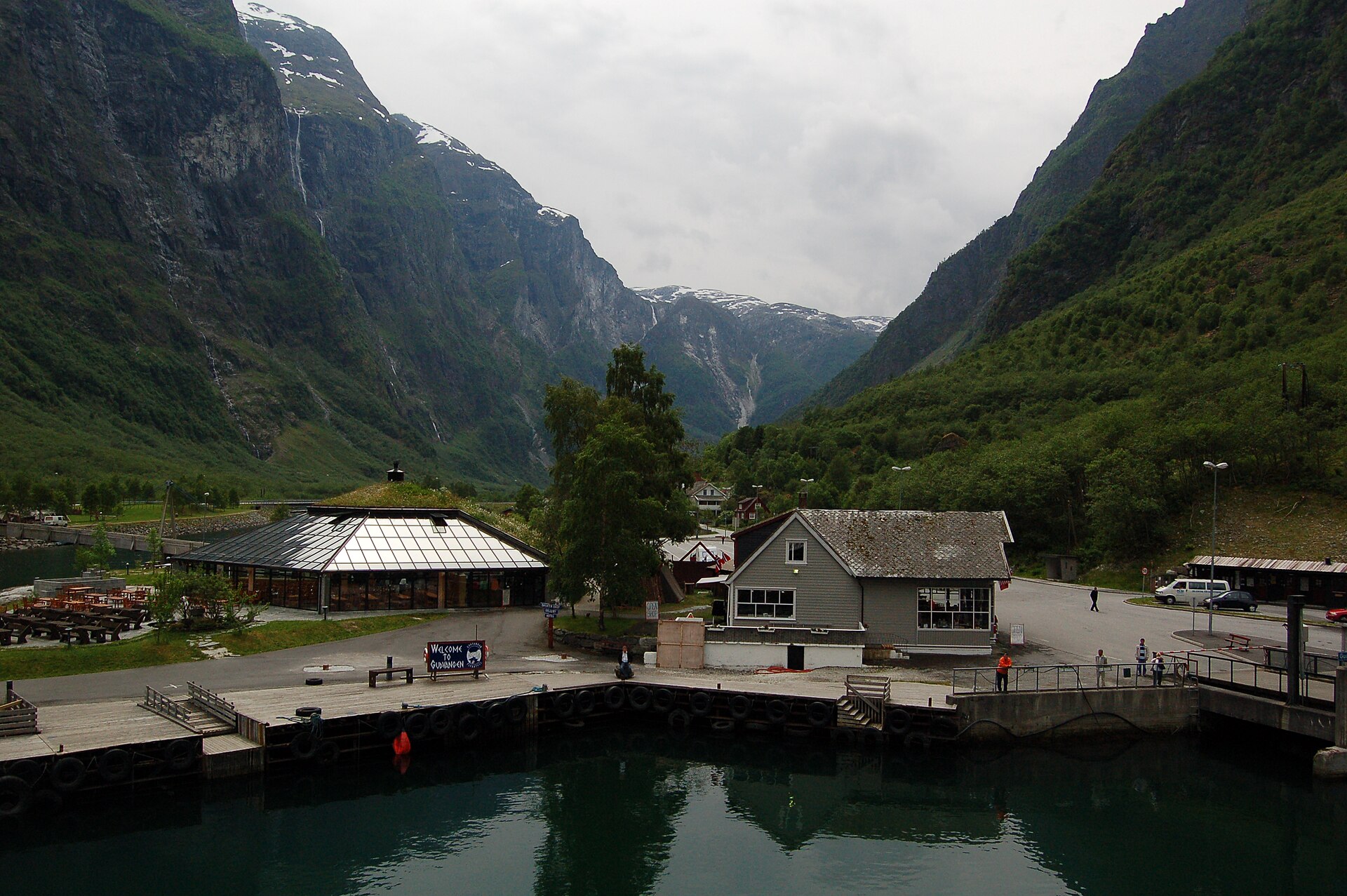
- Gudvangen is the cruise-to-bus transfer on the Nutshell route. — Photo: raisin bun / CC BY-SA 2.0 via Wikimedia Commons.
All fares and journey times were checked in September 2026. Norwegian rail fares move with demand and the petrol figure reflects the fuel-duty rise of 1 September 2026, so confirm current prices with Vy, Skyss and the airlines before you book.