I’ve lost count of how many times I’ve stood on the old wharf at Bryggen in the drizzle, watching the light shift across the harbour, and thought: this might be my favourite city in Norway. Bergen does that to people. It’s a working port wrapped around a medieval core, hemmed in by seven steep green mountains, and somehow both grand and cosy at the same time. It also rains here. A lot. We’ll get to that.
The best things to do in Bergen start with riding the Fløibanen funicular up Mount Fløyen for the view, wandering the UNESCO-listed Bryggen wharf, browsing the Fish Market, and taking a fjord cruise straight from the harbour. Bergen is Norway’s “gateway to the fjords,” so it’s also the launch pad for day trips to the Nærøyfjord and the Flåm Railway. Two to three days covers the city comfortably.
This guide is the version I wish I could hand to friends before they go: every major sight with current-ish prices in kroner (and rough US-dollar equivalents), how long to spend, how to skip the tourist traps, four ready-made itineraries, the honest verdict on the Bergen Card, and what to do when the forecast is, inevitably, “rain.” If you’re still mapping out the wider trip, pair this with our guide to the best things to do in Norway and our overview of the Norwegian fjords.

Bergen at a glance
Bergen is Norway’s second-largest city, with roughly 290,000 people, founded around 1070 as Bjørgvin (“the green meadow among the mountains”). It was Norway’s capital in the Middle Ages and, for some four centuries, a powerful Hanseatic League trading post — that legacy is the colourful row of wooden merchant houses at Bryggen, Norway’s first UNESCO World Heritage Site (listed in 1979). Today it’s a UNESCO Creative City of Gastronomy, a major cruise port, and the most popular base for exploring the western fjords.
| Quick facts | Detail |
|---|---|
| Population | ~290,000 (Norway’s 2nd city) |
| Airport | Bergen Airport, Flesland (BGO), ~20 min from centre by light rail |
| Currency | Norwegian krone (NOK); ~10.5 NOK ≈ 1 USD as of 2026; nearly cashless |
| Language | Norwegian; English spoken almost everywhere |
| Rain | One of Europe’s wettest cities — count on 200+ rainy days a year |
| Ideal stay | 2–3 days for the city; 3–4 with a fjord day trip |
| Famous for | Bryggen, the fjords, Mount Fløyen, seafood, Edvard Grieg, seven mountains |
Here’s the shortlist most visitors build their trip around. Prices are adult, full-price, and current as of 2026 — always double-check the operator’s site, since Norwegian attractions adjust fares seasonally.
| Attraction | Price (NOK / approx USD) | Time to allow |
|---|---|---|
| Bryggen wharf (walk around) | Free | 1–2 hrs |
| Fløibanen funicular (return) | ~200 / $19 (summer); ~145 winter | 2–3 hrs incl. the top |
| Mount Ulriken cable car (return) | ~435 / $41 | Half day with a hike |
| KODE Art Museums (all four) | ~200 / $19 (under 18 free) | 2–3 hrs |
| Bergen Aquarium | Family ~700 / $67 | 2–3 hrs |
| Gamle Bergen open-air museum | ~170 / $16 (under 18 free) | 1.5–2 hrs |
| Fjord cruise to Mostraumen (Rødne) | ~890 / $85 | 3–3.5 hrs |
| Norway in a Nutshell (round trip) | from ~1,595 / $152 | Full day (10–12 hrs) |
| Fish Market & Bergenhus grounds | Free to browse/walk | 1 hr |
How many days do you need in Bergen?
Two full days is the honest minimum to enjoy Bergen without speed-walking. That’s enough to do Bryggen, ride up Fløyen, eat your way through the Fish Market and a couple of cafés, see one or two museums, and still have an evening to wander Nordnes at golden hour. Add a third day and you can climb Ulriken, visit Grieg’s home at Troldhaugen, or simply slow down — Bergen rewards dawdling.
If the fjords are why you came (and for many people they are), give yourself three to four days: two for the city, one or two for a fjord day trip like the Mostraumen cruise or Norway in a Nutshell. Cruise passengers with a single port day can still hit the highlights — I’ve put a tight one-day plan in the itineraries section below. And if Bergen is one stop on a bigger loop, our Norway itinerary guide shows how it slots into 7-, 10- and 14-day routes.
Best time to visit Bergen
Short version: May to September for the long days and the best odds of dry weather, with May and September the sweet spot for thinner crowds and lower hotel prices. But let’s talk honestly about the rain, because it’s the single thing that surprises people most.
The rain (yes, really)
Bergen is one of the rainiest cities in Europe. Depending on how you count, it sees somewhere around 230 days of precipitation a year and well over 2,000 mm of rain — locals quote the figure with a kind of weary pride. The upside: it keeps everything impossibly green, the waterfalls thunder, and a moody, mist-wrapped Bryggen is genuinely beautiful. The practical takeaway is to pack a proper waterproof jacket and shoes, skip the umbrella (the wind eats them), and never let a grey forecast cancel your plans. Bergeners certainly don’t.
Summer (June–August)
Peak season. Daylight stretches to nearly 19 hours around the solstice — sunrise just after 4 a.m., light until past 11 p.m. — and temperatures sit around 15–20°C (59–68°F) on a good day. Everything is open, the outdoor Fish Market is in full swing, fjord cruises run most frequently, and the city hums. The trade-off is crowds (especially on cruise-ship days) and the highest hotel rates of the year. Book accommodation well ahead for July and August.
Shoulder season (May & September)
My favourite time. May is statistically the driest month, the hillsides are vivid green, and 17 May (Norway’s Constitution Day) fills the streets with marching bands and national dress — a wonderful, slightly chaotic spectacle. September brings crisp air, autumn colour, and noticeably cheaper rooms. Some seasonal sights (Gamle Bergen, parts of Troldhaugen, Fantoft) wind down from mid-September, so check dates if those are priorities.
Winter & Christmas
Bergen in winter is dark and wet more than snowy — the coast rarely freezes hard — but it has real charm. Days are short (under six hours of light around the December solstice), the Fløibanen runs year-round, and from late November the city stages Pepperkakebyen, claimed as the world’s largest gingerbread town, plus a cosy Christmas market. For the northern lights you’d do far better farther north; see our guide to the northern lights in Norway for why latitude matters. For a region-by-region breakdown of timing across the whole country, our guide to when to visit goes deeper.
Bergen is also the practical launch point for two fjords that work as day trips on scheduled public transport. The Nærøyfjord boat from Flåm is the reliable one, while the orchards and cider farms of Hardanger are barely ninety minutes away by bus.
The best things to do in Bergen
Bergen packs an unusual amount into a small, walkable centre. You could tick off the marquee sights in a focused day, but the city is more fun if you let it breathe. Here’s everything worth your time, roughly in the order most people tackle it.
Wander Bryggen, the Hanseatic Wharf
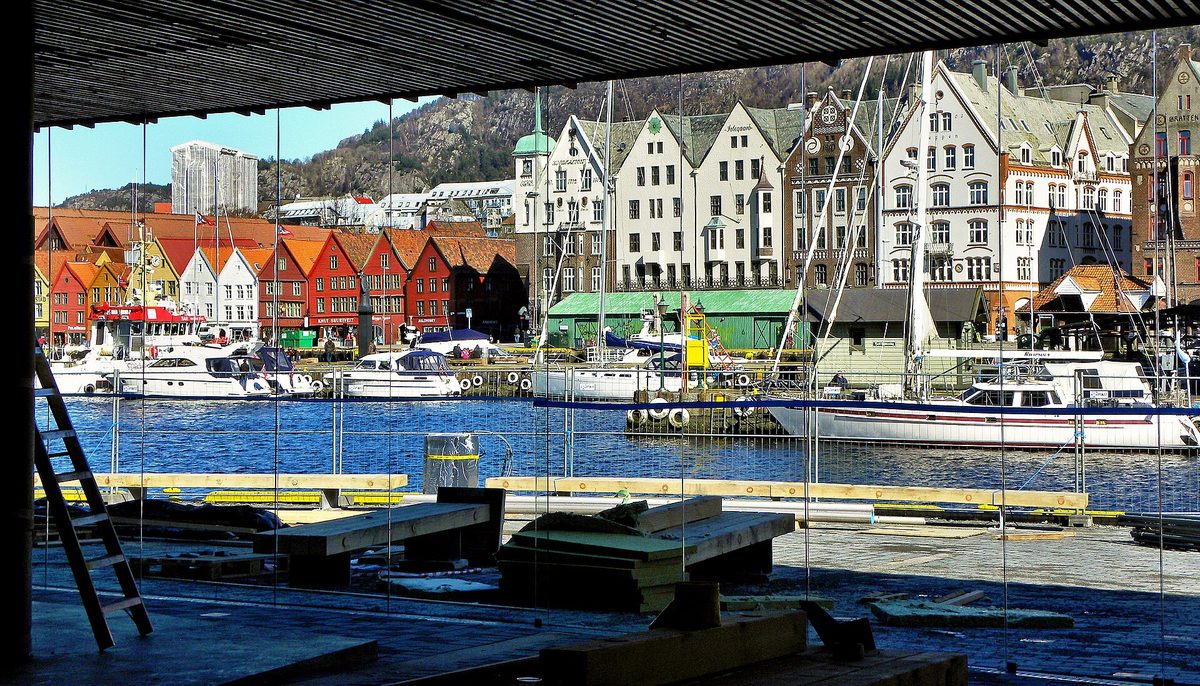
Start where Bergen started. Bryggen is the row of tilting, timber merchant houses along the eastern side of the harbour, painted in ochre, oxblood and mustard, and it’s the reason Bergen made the UNESCO World Heritage list in 1979. German Hanseatic traders ran their dried-cod empire from here for the better part of 400 years, from around 1360 until 1761. What you see today largely dates from after the great fire of 1702, rebuilt on the medieval foundations — about 62 buildings survive. It’s free to wander, and you should: duck into the narrow wooden passageways between the buildings, where the floors slope and creak and tiny galleries, ceramicists and woodworkers have set up shop. Go early or late to beat the cruise crowds, and don’t skip the back alleys — that’s where Bryggen still feels like a living place rather than a postcard.
Ride the Fløibanen funicular up Mount Fløyen
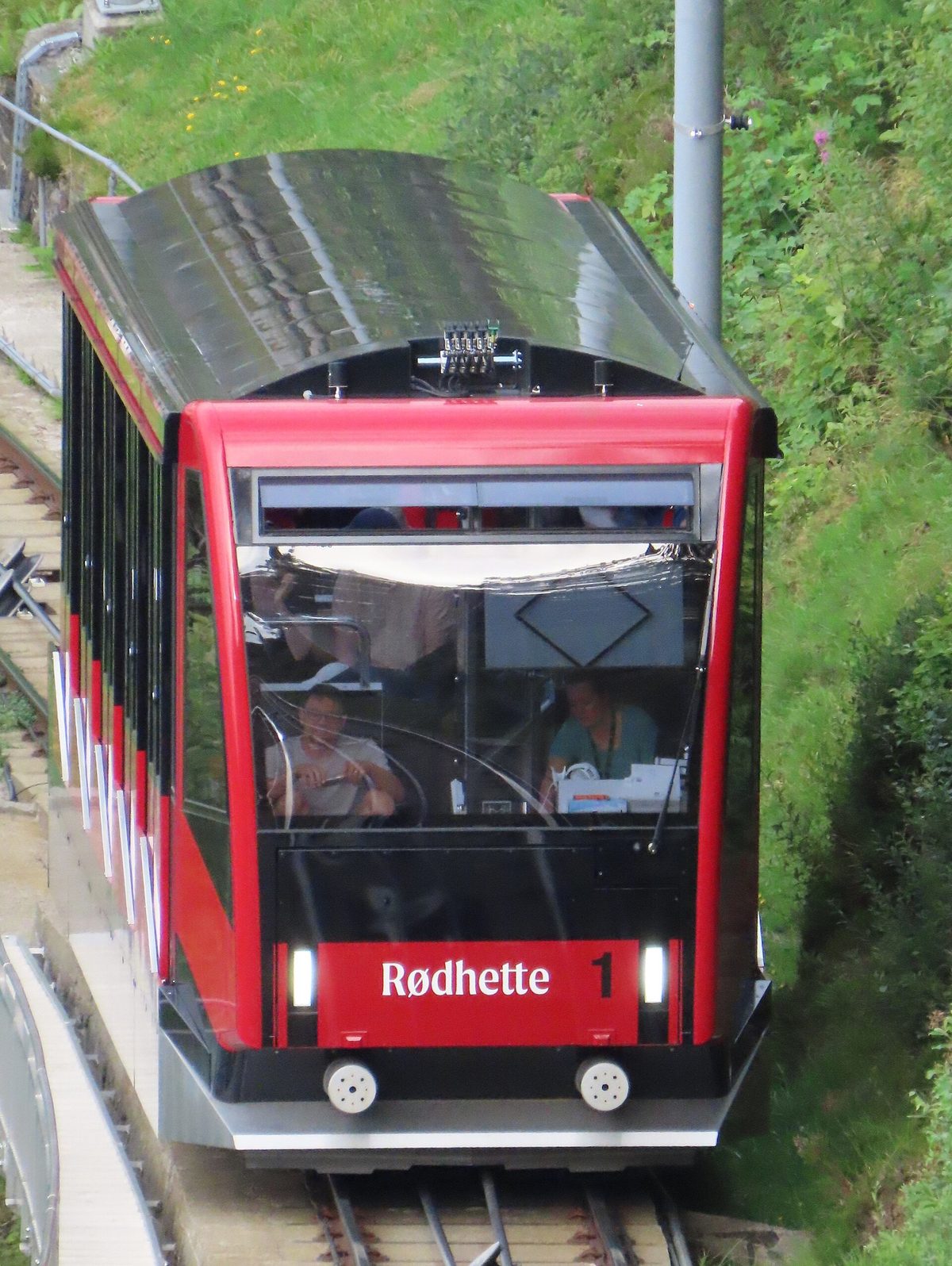
If you do one “paid” thing in Bergen, make it this. The Fløibanen funicular has been hauling people up Mount Fløyen (320 m) since 1918, and the cherry-red carriages climb from a station a two-minute walk behind the Fish Market to the summit in about six minutes. A return ticket is around 200 NOK (about $19) in summer and roughly 145 NOK in winter; the Bergen Card knocks 50% off the return fare. At the top you get the classic panorama — the whole city, the harbour and the islands laid out below — plus a café, a big adventure playground, resident goats, the little Skomakerdiket lake, and a web of forest trails.
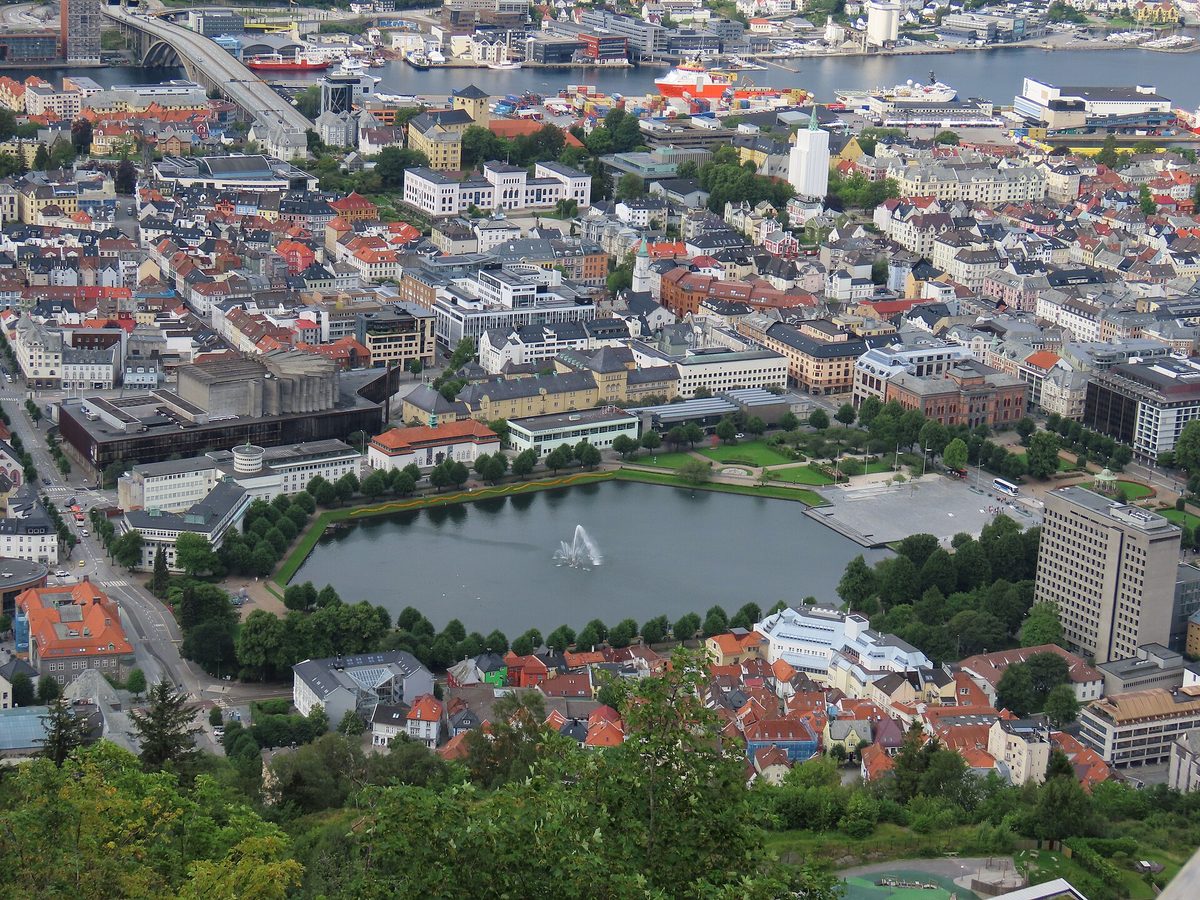
Here’s my favourite trick: ride up, then walk down. The signposted path through the trees back to the city takes 30–45 minutes, is free, and is genuinely lovely. Fitter walkers can climb up the Fjellveien or Skredderdalen routes and ride down instead. Either way, the view at the top is the photo you’ll come home with.
Take the cable car up Mount Ulriken
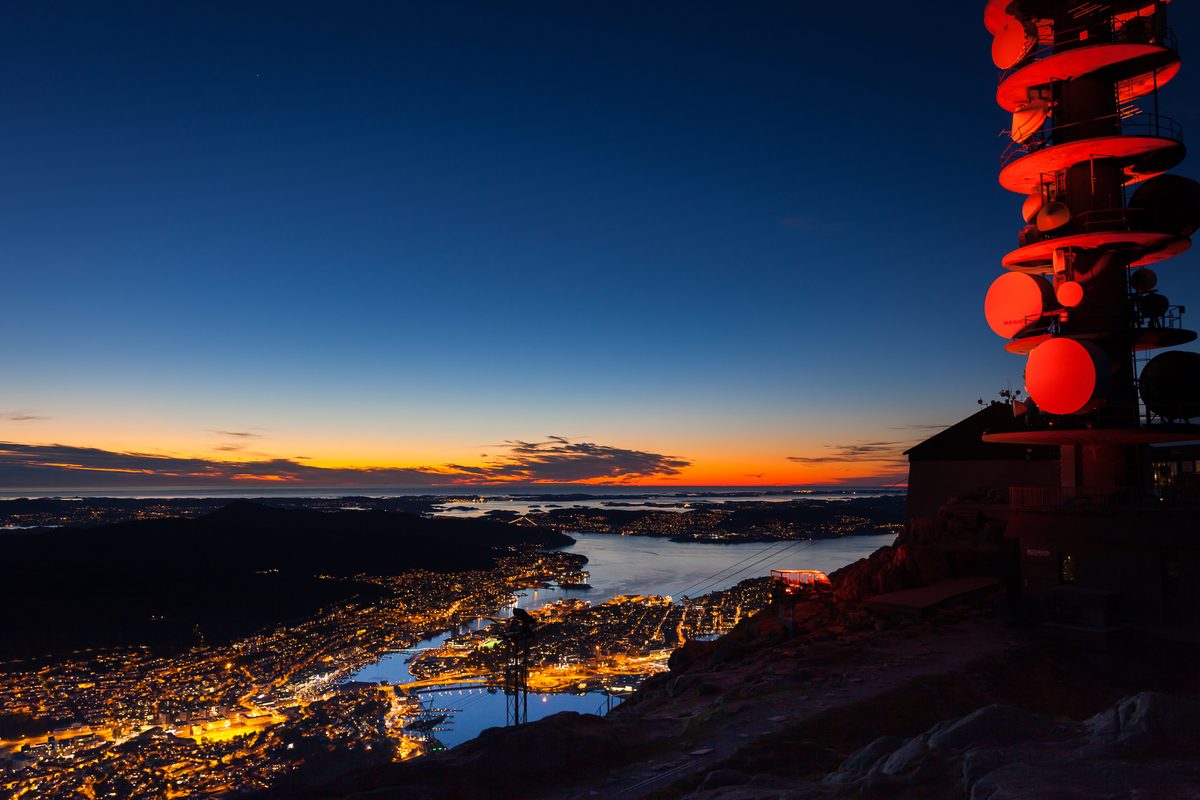
Fløyen gets the crowds; Ulriken gets the altitude. At 643 m, Ulriken is the tallest of Bergen’s seven mountains, and the Ulriksbanen cable car whisks you up in about seven minutes for a more dramatic, wide-open view than Fløyen’s. A return ticket runs around 435 NOK (about $41); you can add the Ulriken Express shuttle bus from the city centre for roughly 150 NOK return if you don’t want to figure out the local bus. There’s a restaurant at the top (Skyskraperen) and, for the brave, a zipline.
The reason serious walkers come, though, is the Vidden hike — the high plateau traverse from Ulriken across to Fløyen. It’s around 13–15 km and takes most people four to six hours, and you finish by riding the Fløibanen back down into town. Do it only in clear summer weather and with proper shoes; the plateau is exposed and the fog rolls in fast. On a good day it’s one of the best half-day hikes you can do straight from a European city. For more routes across the country, see our things to do in Norway guide.
Graze the Bergen Fish Market (Fisketorget)
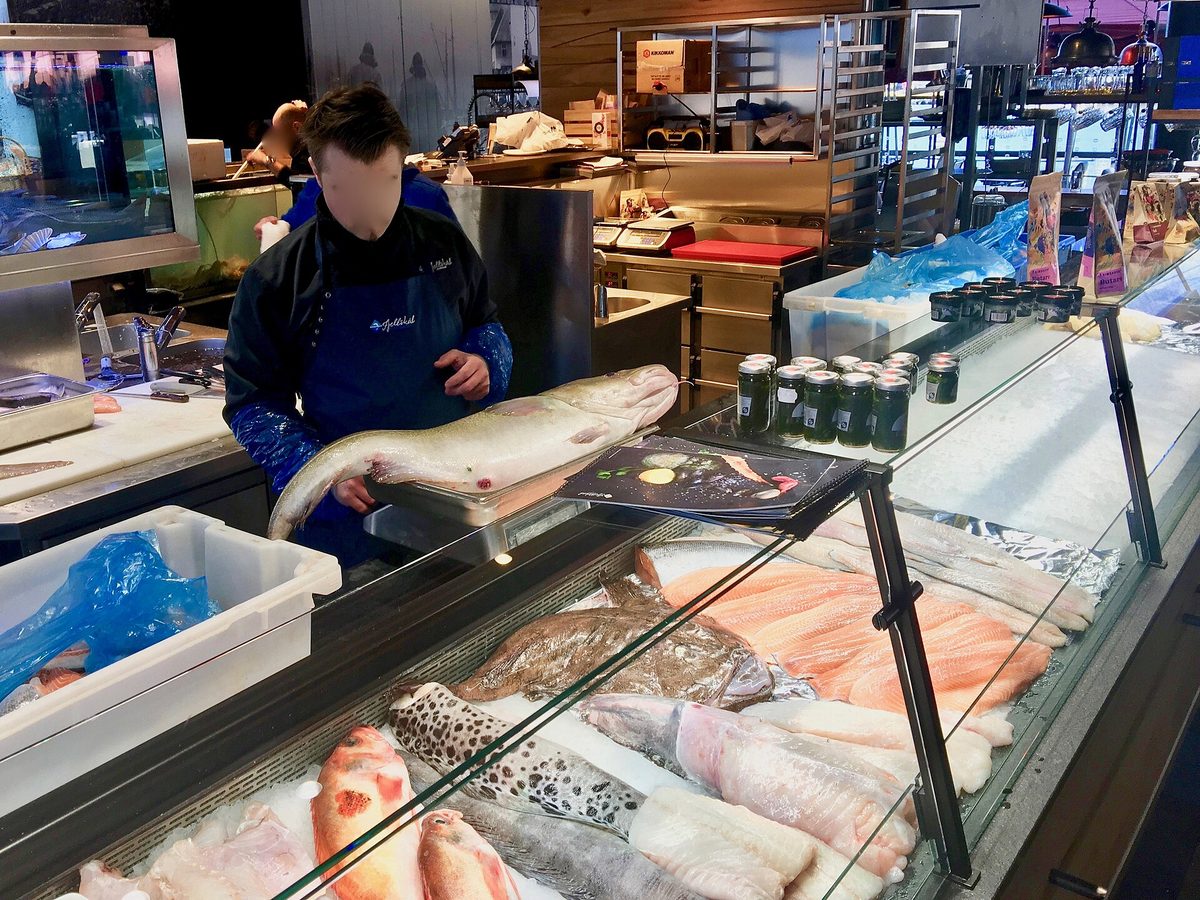
The Fish Market has stood at the head of the harbour for centuries, and it now comes in two flavours. The year-round indoor Mathallen is a smart food hall of fishmongers and small restaurants; the open-air stalls outside run roughly May to September. Let me be straight with you: the outdoor market is touristy and not cheap — a plate of king crab or a seafood sampler can sting. But it’s still a fun browse, the vendors are happy to let you taste, and trying a sliver of whale, a fresh prawn, or a bowl of creamy Bergen fish soup is part of the experience. For better value, buy from the indoor counters or eat your seafood at one of the harbourside restaurants nearby. The city’s tourist information office is right here too, which makes it a handy first stop.
Climb Rosenkrantz Tower at Bergenhus Fortress
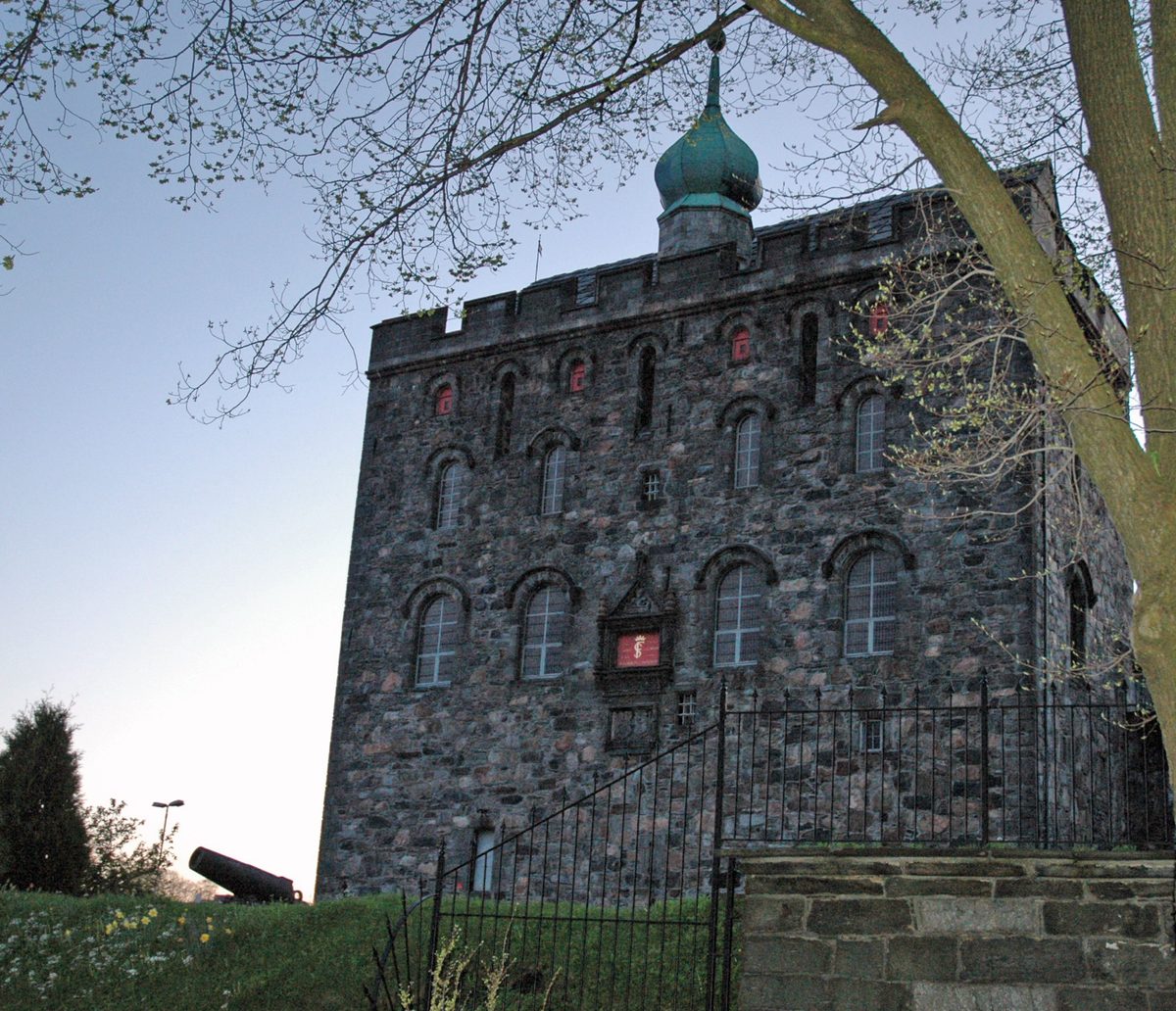
At the mouth of the harbour sits Bergenhus, one of Norway’s oldest and best-preserved fortresses. Two buildings anchor it: Håkon’s Hall, a vast stone royal banqueting hall built between 1247 and 1261 under King Håkon Håkonsson, when Bergen was the seat of the Norwegian crown; and the Rosenkrantz Tower, a 1560s fortified residence you can climb via tight stone staircases to cannon-lined ramparts with harbour views. Entry to each is modest (around 120–150 NOK; under-16s free), and the grassy fortress grounds are free to stroll — a popular spot for a picnic on a rare sunny afternoon. Hours shift around concerts and events, so check before you go.
See the KODE Art Museums
KODE is one of the Nordic region’s largest art and design museum groups — four buildings in a row along the Lille Lungegårdsvann lake in the centre. The headline is the art: KODE holds one of the world’s largest collections of Edvard Munch outside Oslo, plus rooms of Norwegian greats like Nikolai Astrup, Harriet Backer and J.C. Dahl, and a scattering of Picasso. One ticket — around 200 NOK (about $19), under-18s free — covers all four buildings on the same day, and the Bergen Card gets you in free from October to April. Allow two to three hours, more if it’s raining and you want to linger. KODE also runs the composer homes, including Grieg’s Troldhaugen (below).
Visit Troldhaugen, Edvard Grieg’s home
Norway’s most famous composer, Edvard Grieg, built a villa on a wooded hill above Lake Nordås, about 8 km south of the centre, and lived there for the last 22 years of his life. Troldhaugen is now a lovely museum: the preserved house, his tiny lakeside composing hut, his and Nina’s graves cut into the rock, and a modern concert hall, Troldsalen, with a glass wall behind the stage looking out over the very landscape that inspired him. The summer lunchtime piano recitals are the thing to time your visit around. You can reach it by Bybanen light rail toward Nesttun plus a walk, or buy KODE’s all-inclusive ticket (around 700 NOK) that bundles round-trip transport with entry to the composer homes and art museums. Note the villa itself usually closes for preservation around mid-August, though the park, café and concerts continue.
Step back in time at Gamle Bergen
A short bus ride north in Sandviken, Gamle Bergen (“Old Bergen”) is an open-air museum of around 55 historic wooden houses relocated and arranged into cobbled lanes, staffed in summer by costumed guides who play shopkeepers and townsfolk. It’s gentle, atmospheric and great with kids. The buildings are open roughly 20 May to mid-September (adults around 170 NOK, under-18s free); the surrounding park is free and open year-round if you just want the stroll.
Take a fjord cruise straight from the harbour
Bergen calls itself the gateway to the fjords, and the easiest way to feel it without committing to a full day is the Mostraumen cruise. Rødne’s catamaran leaves from Zachariasbryggen right by the Fish Market, sails up the narrowing Osterfjord to the tight Mostraumen strait — waterfalls close enough to touch, steep walls, the odd sea eagle — and is back in about three to three and a half hours. It’s around 890 NOK (about $85) for adults, 20% off with the Bergen Card, and it runs year-round, rain or shine. If you have a full day and want the famous fjords, jump to the day-trips section below; for the bigger picture, our Norwegian fjords guide covers them all.
Detour to Fantoft Stave Church
South of the centre near the Bybanen line, Fantoft is a dark, dragon-gabled stave church straight out of a Norse fever dream. Important context: what you see is a faithful 1997 reconstruction. The original medieval church that stood here (moved to Fantoft in 1883) was destroyed by arson in 1992, during the notorious wave of church burnings linked to Norway’s black-metal scene. It was painstakingly rebuilt and reconsecrated in 1997. The interior is open to visitors roughly mid-May to mid-September (around 70–100 NOK); the brooding exterior is free to admire any time.
Pick a museum for a rainy hour
Bergen has a museum for every interest, which is handy given the weather. The Leprosy Museum, in the old St. Jørgen’s Hospital, tells a genuinely fascinating, sobering story — it was here in 1873 that Dr. Gerhard Armauer Hansen identified the leprosy bacillus (hence “Hansen’s disease”); it’s open seasonally, roughly mid-May to early September. The Hanseatic Museum‘s main building (Finnegården) is closed for a major restoration expected to run until around 2027, but its story is told in the meantime at the atmospheric Schøtstuene assembly rooms nearby. The Bergen Maritime Museum, the University Museum with its natural-history halls, and the hands-on VilVite science centre (great for kids) round out the wet-weather options.
Bring the kids to the Bergen Aquarium
Out on the tip of the Nordnes peninsula — a pleasant 20-minute harbourside walk from the centre, or a short hop on the little Beffen ferry — the Akvariet is one of Europe’s older aquariums and a reliable family win. Penguins, sea lions, seals, snakes and crocodiles, plus daily feedings. A family ticket is around 700 NOK; the Bergen Card gets you in free from November to February and discounted the rest of the year. It’s open almost every day of the year.
Sweat and swim like a local
Here’s the thing most guidebooks miss: Bergeners love a sauna-and-sea-dip, and you can join them. Floating saunas and harbour swimming spots have popped up around the city — Nordnes Sjøbad on the peninsula has an outdoor heated seawater pool in summer, and various community saunas let you roast, then plunge into the cold fjord. In a city this rainy, embracing the water rather than hiding from it is exactly the right mindset, and it’s a brilliant, very local way to spend a grey afternoon.
Hunt for street art
Bergen is, quietly, one of Europe’s best street-art cities — this is the town that produced Dolk, and the scene is taken seriously enough that the city has a street-art plan. Wander the lanes around Kong Oscars gate, Skostredet and the alleys behind the centre and you’ll find stencils, murals and the occasional Banksy-adjacent surprise. It costs nothing and turns a wander into a treasure hunt.
Free (and cheap) things to do in Bergen
Bergen has a reputation as an expensive city, and it’s earned. But some of its best experiences cost nothing. Walking Bryggen and its hidden passages is free. So is browsing the Fish Market, strolling the Bergenhus fortress grounds, and the lovely downhill forest walk from the top of Fløyen. You can climb any of the seven mountains on free public trails, wander the Nordnes peninsula to the aquarium point at sunset, admire Fantoft’s exterior, and hunt down street art for the price of a coffee. The Bergen Public Library and the cathedral (with a cannonball still lodged in its wall from a 1665 naval battle) are free to enter. If you’re watching the budget, build your days around these and treat the funicular and one museum as your splurges.
What to eat in Bergen
Bergen earned its UNESCO Creative City of Gastronomy title in 2015 — the only Norwegian city on that list — and seafood is the heart of it. A few things you shouldn’t leave without trying:
Bergen fish soup (bergensk fiskesuppe) is the local signature: creamy, delicately sweet, full of fish and root vegetables. Order it at least once. Skillingsboller, the giant Bergen cinnamon bun, is the city’s beloved pastry — buy one warm from a bakery and eat it by the harbour. Beyond that, look for persetorsk (pressed, salted cod), raspeballer (potato dumplings, traditionally eaten on Thursdays), fresh prawns by the bag, and, if you’re adventurous, whale or king crab from the market.
For sit-down meals across budgets: Bryggeloftet & Stuene is the classic, slightly old-school spot on Bryggen for traditional Norwegian fare; Pingvinen serves homely Norwegian comfort food to a local crowd; Søstrene Hagelin is a cheap, much-loved counter for fishcakes and fish soup; and the indoor Fish Market hall is your best bet for fresh seafood without full restaurant prices. To drink well on a budget, remember that wine and spirits are sold only at state Vinmonopolet shops and that a beer out can easily run 100+ NOK.
Best day trips from Bergen
This is where being in Bergen really pays off. Some of Norway’s most spectacular scenery is within a few hours, and you don’t need a car for most of it.
Norway in a Nutshell & the Flåm Railway
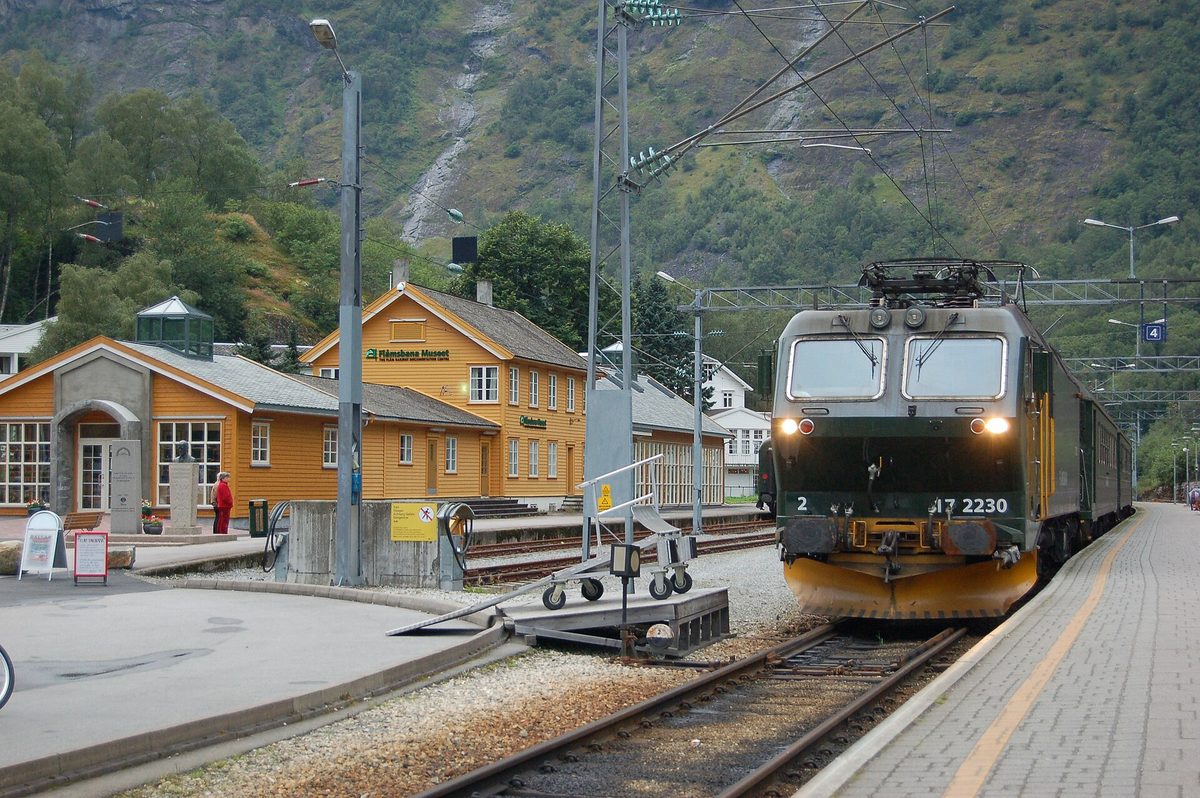
The classic. “Norway in a Nutshell” is a self-guided combo ticket from Fjord Tours that strings together the scenic Bergen Railway, the famous Flåm Railway, a fjord cruise and a bus into one big day. From Bergen the usual round trip runs you out by train to Voss and Myrdal, down the Flåmsbana — about 20 km of switchbacks and waterfalls from the mountain station at Myrdal (867 m) to the fjord village of Flåm at sea level, with a photo stop at the Kjosfossen waterfall — then onto a cruise through the narrow, UNESCO-listed Nærøyfjord to Gudvangen, and back. Budget from around 1,595 NOK (about $152) for the round trip and a full 10–12 hours. You can also do it one-way all the way to Oslo, which makes a stunning way to cross the country.
Sognefjord, the Nærøyfjord & Aurland
The Nærøyfjord is an arm of the mighty Sognefjord, Norway’s longest and deepest. Beyond the Nutshell route, Flåm and nearby Aurland are worth an overnight if you can spare it, with the vertiginous Stegastein viewpoint cantilevered out over the Aurlandsfjord. It’s classic big-fjord country.
Hardangerfjord & Rosendal
South of Bergen, the Hardangerfjord is gentler and famous for spring fruit blossom, thundering waterfalls like Vøringsfossen and Steinsdalsfossen, and the Barony at Rosendal. Rødne runs an express boat from Bergen to Rosendal (around two hours each way) that makes a doable day out. The serious hike to Trolltunga starts in this region, but it’s a long, strenuous outing better given its own day from a closer base, not a casual trip from Bergen.
Voss & Folgefonna
Adrenaline seekers head to Voss, about 75 minutes away by train and Norway’s unofficial extreme-sports capital (skydiving, rafting, paragliding, a gondola). Farther south, the Folgefonna glacier offers guided blue-ice walks in summer for those who want crampons in the picture. For the full menu of fjord-country options, our Norwegian fjords guide is the companion to read next.
Bergen is also the practical gateway to the fjords: the village of Flåm is about two and a half hours away by coach, and it is the only major fjord destination reachable from here year-round without a car.
Suggested Bergen itineraries
However long you’ve got, here’s how I’d spend it. Mix and match to taste, and don’t over-schedule — half the pleasure of Bergen is unplanned wandering.
1 day in Bergen (and the cruise-passenger version)
Start early at Bryggen before the crowds, then walk two minutes to the Fløibanen and ride up Mount Fløyen for the view. Walk back down through the forest, browse the Fish Market for lunch, and spend the afternoon on the Bergenhus grounds and Rosenkrantz Tower, or in the KODE museums if it’s wet. If you’re off a cruise ship, this exact loop works — everything is within a 15-minute walk of the port, so skip transport and just move on foot. Squeeze in a skillingsbolle and you’ve done Bergen proud in a day.
2 days in Bergen
Day one as above, unhurried. On day two, go higher and wider: take the cable car up Ulriken (or hike the Vidden plateau back to Fløyen if the weather’s clear), then spend the afternoon at Troldhaugen for Grieg’s house and a lunchtime concert. Finish with dinner on Nordnes and a sauna-and-swim if you’re game.
3 days in Bergen
With a third day, add a half-day Mostraumen fjord cruise from the harbour in the morning, then use the afternoon for the things the first two days squeezed out — Gamle Bergen, the Leprosy Museum, more KODE, or simply café-hopping and shopping for a Norwegian sweater. Three days is the comfortable sweet spot for the city.
4 days (city + a fjord day trip)
Devote your extra day to a full-day fjord trip — Norway in a Nutshell to Flåm and the Nærøyfjord, or the express boat to Rosendal on the Hardangerfjord. You’ll come back to Bergen in the evening having seen the city and the scenery that made western Norway famous. If you’re continuing onward, this is the natural point to take the Bergen Railway east toward Oslo; see our Oslo travel guide for the other end of that line.
Bergen also works as a springboard along the coast: express boats and buses run south to Stavanger and the Lysefjord, while the coastal voyage sails north past the Lofoten Islands to the Arctic.
Where to stay in Bergen
Stay central. Bergen’s core is compact, and being able to walk to Bryggen, the Fish Market and the funicular is worth a lot, especially in the rain. The area around Bryggen and the harbour (Vågen) is the most atmospheric and convenient; Nordnes, the peninsula just west, is quieter and charming, near the aquarium; and the streets around Skostredet behind the centre put you close to bars and cafés.
| Budget level | Rough nightly rate (NOK / USD) | What you get |
|---|---|---|
| Budget / hostel | ~800–1,300 / $75–125 | Dorms or simple rooms (e.g. Citybox, Marken Gjestehus) |
| Mid-range | ~1,300–2,100 / $125–210 | Comfortable harbourside hotels (e.g. Clarion Admiral) |
| Luxury | ~2,500–4,000+ / $240–430 | Design hotels on Bryggen (e.g. Opus XVI, Det Hanseatiske) |
Rates swing hard with season — peak summer can be 50–80% more than a quiet week in November — so book early for July and August. For how to think about accommodation across the whole country, we’ll be expanding our dedicated Norway lodging guide soon.
Getting to and around Bergen
From Bergen Airport (Flesland) to the city
The easy, cheap answer is the Bybanen light rail (Line 1), which runs from right outside the terminal to the city centre in about 45 minutes for a single fare of roughly 51 NOK (about $5). The Flybussen airport coach is a touch faster (~30 minutes) but costs more, around 149–179 NOK. A taxi is quick but pricey, and there’s no Uber. If you’ve bought a Bergen Card, the light rail — including the airport line — is already included, which is a neat way to start the clock.
| Airport option | Price (NOK) | Time |
|---|---|---|
| Bybanen light rail (Line 1) | ~51 | ~45 min |
| Flybussen airport coach | ~149–179 | ~30 min |
| Taxi | ~400+ | ~20–25 min |
From Oslo to Bergen by train
If you have the time, arriving by the Bergen Railway (Bergensbanen) is an experience in itself — about 6.5 to 7.5 hours and 471 km across the wild Hardangervidda plateau, one of the great scenic rail journeys of the world. Fares run roughly 800–1,100 NOK one-way, much less if you book early “minipris” tickets through Vy. There’s a night train too.
Getting around the city
Bergen’s centre is best on foot — almost everything is within a 15-minute walk. For the outlying sights (Troldhaugen, Fantoft, Gamle Bergen, the airport), the Bybanen light rail and Skyss buses cover you; a single adult ticket is around 51 NOK and a 24-hour ticket about 136 NOK. The tiny Beffen passenger ferry hops across the harbour to Nordnes for a few kroner and a bit of fun. You really don’t need a car unless you’re road-tripping beyond the city.
Is the Bergen Card worth it?
Often, yes — if you’ll actually use it. The Bergen Card bundles free public transport (buses and light rail, including the airport line) with free or discounted entry to most museums and discounts on the big-ticket experiences.
| Bergen Card | Adult (NOK / USD) | Child 3–15 |
|---|---|---|
| 24 hours | ~400 / $38 | ~100 |
| 48 hours | ~500 / $48 | ~125 |
| 72 hours | ~600 / $57 | ~150 |
| 96 hours | ~700 / $67 | ~175 |
Do the maths on your plans. If you’ll ride in from the airport on the light rail (saving the fare both ways), take the funicular (50% off), and visit two or three museums (several free), a 48- or 72-hour card usually pays for itself and saves queuing. If you’re a cruise passenger in town for under nine hours and mostly walking, it probably won’t — buy individual tickets instead. Buy it online and activate it only when you’re ready, since it counts down from first use.
How much does a trip to Bergen cost?
Norway is expensive, and Bergen is no exception — but it’s manageable if you know where the money goes. Some rough 2026 reference prices to set expectations:
| Item | Typical price (NOK / approx USD) |
|---|---|
| Cappuccino | ~45 / $4.30 |
| Casual takeaway meal | ~120–170 / $11–16 |
| Sit-down dinner (mains) | ~200–350 / $19–33 |
| Beer (0.5 L, bar) | ~100 / $9.50 |
| Single transit ticket | ~51 / $5 |
| Hostel dorm bed | ~300–400 / $29–38 |
| Mid-range hotel (double) | ~1,300–2,100 / $125–210 |
To keep costs sane: cook or picnic some meals (groceries are reasonable), drink tap water (it’s excellent), buy any wine or spirits at Vinmonopolet, lean on the free sights, and let the Bergen Card cover transport and a couple of museums. Tipping isn’t expected — service is included, and rounding up for great service is plenty.
Bergen travel tips & FAQ
Is Bergen worth visiting?
Absolutely. Between the UNESCO wharf, the mountain views, the seafood and the fjords on its doorstep, Bergen is one of Norway’s most rewarding cities — and compact enough to enjoy in a couple of days. The rain is real, but it’s part of the character, not a dealbreaker.
How many days do you need in Bergen?
Two days for the city highlights, three to be comfortable, and four if you want to add a full-day fjord trip. Cruise passengers can cover the central sights in a single well-planned day on foot.
Is Bergen expensive?
Yes — Norway is one of the pricier countries to travel in, and Bergen is no bargain. But you can keep it reasonable by leaning on free sights (Bryggen, the mountains, fortress grounds), self-catering some meals, drinking tap water, and using the Bergen Card for transport and museums.
What is the best time to visit Bergen?
May to September for the long days and best weather, with May and September offering thinner crowds and cheaper rooms. July and August are busiest. Winter is dark and wet but has its own cosy, gingerbread-town charm.
What is there to do in Bergen when it rains?
Plenty. The KODE art museums, the Hanseatic story at Schøtstuene, the Leprosy Museum, VilVite science centre, the indoor Fish Market hall, and a sauna-and-swim session are all great wet-weather options. And honestly, Bryggen and a fjord cruise are atmospheric in the rain too — just dress for it.
Can you see the northern lights in Bergen?
Rarely. Bergen is too far south and too cloudy for reliable aurora. For a real shot at the northern lights you want Tromsø or the Arctic north in winter — our northern lights guide explains where and when to go.
How do you get from Bergen to the fjords?
Easily. The Mostraumen cruise leaves right from the city harbour (about 3.5 hours). For the big-name fjords, the Norway in a Nutshell route combines train, the Flåm Railway and a Nærøyfjord cruise into a full day, and the express boat reaches the Hardangerfjord at Rosendal in around two hours.
Is Bergen walkable and safe?
Very walkable — the centre is small and most sights are within a 15-minute stroll — and Bergen is very safe by international standards, with the usual big-city common sense around nightlife areas late at night.
What food is Bergen known for?
Seafood above all: Bergen fish soup, fresh prawns, salted cod and the catch at the Fish Market. Save room for a skillingsbolle, the city’s giant cinnamon bun. Bergen has been a UNESCO Creative City of Gastronomy since 2015.
More in this series
This guide is the hub for our Bergen coverage. The pieces below go deeper than this page can:
- One day in Bergen — a timed plan for cruise and train arrivals, with 2026 funicular and Bergen Card prices and a wet-weather contingency.
- Two days in Bergen — the four mutually exclusive second days compared on cost and time, from the Vidden ridge to Troldhaugen.
- Where to stay in Bergen — every neighbourhood priced in kroner by season, plus the three cruise terminals and how far each is on foot.
- Day trips from Bergen — every option on one table by hours out, transport and 2026 price, including the ones that are not day trips at all.
- Bryggen and the old town — what survived the fires, what was rebuilt, current museum prices, and the building that stays shut until 2027.
- Mount Fløyen and the Fløibanen — the correct 2026 fares, the cheap intermediate-station ticket, and the Vidden ridge to Ulriken.
- Fjord tours from Bergen — which boat leaves from which quay, what each costs, and which fjord you are actually sailing on.
- Bergen to Flåm — train, boat, car and Norway in a Nutshell priced against each other, with the last departures home.
- Best time to visit Bergen — the full monthly rainfall and rain-day table, and why the data points to May rather than July.
About this guide
This guide was researched and written by the Norway Tourism Guide editorial team, drawing on official sources including Visit Bergen, Visit Norway, and individual attraction operators, cross-checked against current 2026 pricing and opening information. Prices and hours in Norway change with the season — we’ve flagged figures as approximate and dated them, but always confirm directly with operators before you travel. We update this guide regularly as fares and seasonal details change.
Last updated: June 2026.
Sources & further reading
- Visit Bergen — official Bergen tourist board (attractions, Bergen Card, weather)
- Visit Norway — Bergen
- Fløibanen / Mount Fløyen — funicular prices and times
- Ulriken643 — cable car and the Vidden hike
- KODE Art Museums & Composer Homes (incl. Troldhaugen)
- Rødne Fjord Cruise — Mostraumen and Rosendal
- Fjord Tours — Norway in a Nutshell & the Flåm Railway
- Skyss (light rail & buses) and Vy (Bergen Railway)
- Bymuseet i Bergen — Bergenhus, Gamle Bergen, Leprosy Museum
- UNESCO World Heritage — Bryggen
For the practical layer — money, weather-proof packing, transport apps — our Norway travel tips guide is the read-before-you-fly companion to this one.
Photo credits
All images are freely licensed via Wikimedia Commons. Full attribution below.
- The colorful wooden Hanseatic houses of Bryggen, one of the top things to do in Bergen, Norway — Photo: Anna Anichkova (CC BY-SA 3.0) via Wikimedia Commons. Source
- A red Floibanen funicular car climbing toward Mount Floyen above Bergen — Photo: [[User:Ad Meskens|Ad Meskens
You are free to use this picture for any purpose as (CC BY-SA 4.0) via Wikimedia Commons. Source - Panoramic view over Bergen and its harbour from the top of Mount Floyen — Photo: [[User:Ad Meskens|Ad Meskens
You are free to use this picture for any purpose as (CC BY-SA 4.0) via Wikimedia Commons. Source - The Ulriken cable car and Bergen’s city lights at dusk, seen from the highest of the seven mountains — Photo: Svein-Magne Tunli – tunliweb.no (CC BY-SA 4.0) via Wikimedia Commons. Source
- Fresh seafood on display at Bergen’s Fish Market (Fisketorget) — Photo: Wolfmann (CC BY-SA 4.0) via Wikimedia Commons. Source
- Rosenkrantz Tower and Bergenhus Fortress beside Bergen harbour — Photo: Tor-Egil Farestveit (Public domain / CC0) via Wikimedia Commons. Source
- The Flam Railway at Flam station, a classic fjord day trip from Bergen — Photo: Alasdair McLellan (Public domain / CC0) via Wikimedia Commons. Source
- Bergen’s colorful Bryggen wharf and harbour seen across the water — Photo: Odd Roar Aalborg (CC BY-SA 4.0) via Wikimedia Commons. Source