Most Norway bucket lists are a photo album with captions. Twenty gorgeous places, no prices, no seasons, and no warning that half of them are physically impossible in the month you’ve booked. I’ve watched people fly to Tromsø in June expecting the northern lights, and drive to Kjeragbolten in April to find the road under two metres of snow.
So this Norway bucket list is built differently. Twenty-five experiences, each with what it actually costs in 2026, the window when it’s genuinely possible, how long it eats out of your trip, and an honest line on whether it earns the detour. Some of the most famous entries here come with caveats. Two of them I’d skip.
The short version: Norway splits cleanly into a summer country and a winter country, and the single biggest mistake is trying to have both on one trip. Pick your season first, then pull from this list. If you want the wider view of what there is to do across the country, that’s the parent guide this one sits under.
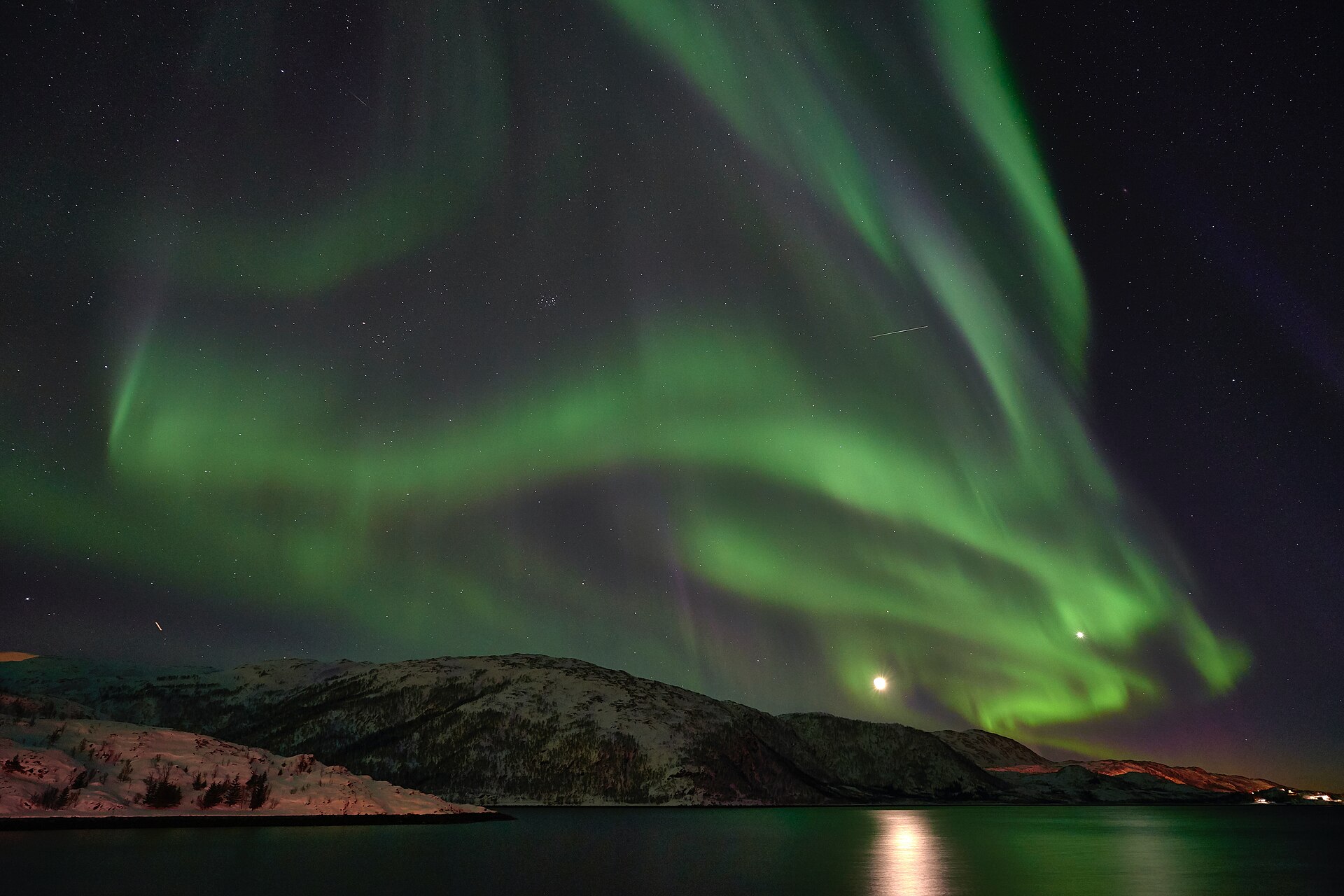
The Norway bucket list at a glance
Prices are 2026, per adult, in Norwegian kroner with a rough dollar conversion at the late-July 2026 rate of about 9.5 NOK to 1 USD. The krone moves — treat dollars as indicative. “Free” means genuinely free, which in Norway happens more than you’d expect.
| # | Experience | When it’s possible | Time needed | 2026 cost |
|---|---|---|---|---|
| 1 | Northern lights chase, Tromsø | Late Sep–early Apr | 6–8 hrs, evening | NOK 1,300–2,500 |
| 2 | Midnight sun | Late May–late Jul | One late night | Free |
| 3 | Drive your own dog team | Dec–Apr | Half day | NOK 3,000–3,500 |
| 4 | Sleep in an ice hotel | Late Dec–early Apr | One night | From NOK 4,070 |
| 5 | Sámi reindeer sledding | Nov–Apr | 3–4 hrs | From NOK 1,655 |
| 6 | Orcas and humpbacks | Nov–late Jan (Skjervøy) | Full day | ~NOK 1,990 |
| 7 | King crab safari, Kirkenes | Year-round | 3–3.5 hrs | NOK 1,950–3,000 |
| 8 | Svalbard | Year-round | 3–5 days | Flights + NOK 2,000/day |
| 9 | Stand at Nordkapp | Road open ~Apr–Oct | Half day | Plateau free; hall NOK 350 |
| 10 | Nærøyfjord by electric boat | Year-round | 2 hrs | ~NOK 600–800 |
| 11 | Geirangerfjord from Dalsnibba | Road ~late May–Oct | 2–3 hrs | NOK 175 toll road |
| 12 | The coastal voyage, Bergen–Kirkenes | Year-round | 6–12 days | From ~$1,900 |
| 13 | Fjord sauna and cold plunge | Year-round | 1–2 hrs | NOK 350–600 |
| 14 | Vøringsfossen footbridge | Road ~Jun–Oct | 1 hr | Free |
| 15 | Flåm Railway | Year-round | 2 hrs return | NOK 620–730 return |
| 16 | Bergen Line, Oslo–Bergen | Year-round | 7 hrs | From ~NOK 400 (Lowfare) |
| 17 | Drive Trollstigen | 27 Apr–Oct/Nov 2026 | 2 hrs | Free |
| 18 | Drive the Atlantic Road | Year-round | 1–2 hrs | Free |
| 19 | Hike Preikestolen | Year-round; easiest May–Oct | 4–5 hrs | NOK 275 parking |
| 20 | Hike Trolltunga | Mid-Jun–mid-Sep unguided | 10–12 hrs | NOK 550–820 parking |
| 21 | Stand on Kjeragbolten | ~Late May–Oct | 6–7 hrs | NOK 250–300 parking |
| 22 | Climb Reinebringen, Lofoten | ~Jun–Sep | 2–3 hrs | Free |
| 23 | Bryggen and the Bergen fish market | Year-round | Half day | Free to walk |
| 24 | Vigeland Park and Munch, Oslo | Year-round | Half day | Park free; Munch NOK 180 |
| 25 | A stave church | Roughly May–Sep | 1 hr | NOK 120–160 |
Arctic Norway: the nine that justify the flight north
Everything genuinely rare about Norway is above the Arctic Circle. This is also where the seasons are least forgiving — the same fjord that delivers 24-hour daylight in June is in permanent twilight in December.
1. Chase the northern lights out of Tromsø
Not “look up from your hotel.” Book a minibus chase with a guide who reads cloud radar and is willing to drive three hours to Finland if that’s where the hole in the cloud is. That willingness is the entire product, and it’s why a NOK 1,300–2,500 (roughly $135–265) tour beats standing on a bridge for free.
The season runs late September to early April. September and March are the sweet spot: aurora-dark skies but still enough daylight to do something with your day. Nobody can promise you a sighting, and any operator who does is selling something — but over three nights in Tromsø in season, your odds are good. Our complete guide to the aurora in Norway covers the forecasting side properly, and the Tromsø guide handles bases and operators.
Verdict: the single best reason to come to Norway in winter. Give it three nights, not one.
2. Watch the sun refuse to set
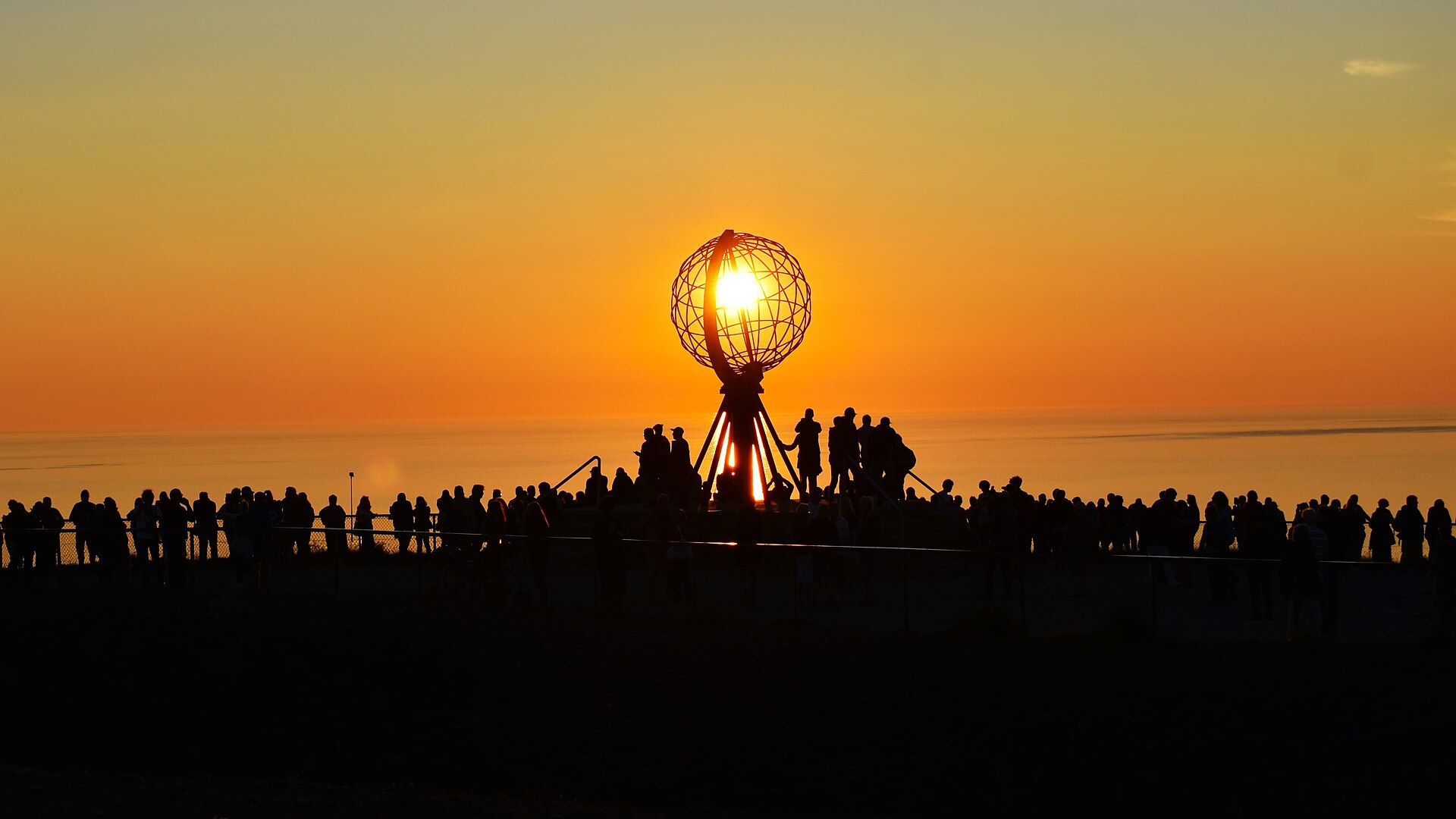
The midnight sun is the free one, and the one people underrate because there’s no ticket. Above the Arctic Circle the sun simply doesn’t go below the horizon: roughly 25 May to 17 July in Lofoten, 20 May to 22 July in Tromsø, and mid-May to the end of July at Nordkapp.
What nobody warns you about is what it does to your body clock. You’ll start a hike at 10pm because the light is better, eat dinner at midnight, and feel oddly fine about it. Bring a sleep mask; Norwegian curtains are not up to the job.
Verdict: costs nothing, reorganises your sense of time. Non-negotiable if you’re north in June.
3. Drive your own dog team
There’s a real difference between sitting in a sled as a passenger and standing on the runners driving eight dogs yourself, and it’s worth paying for. Self-drive half-days run around NOK 3,090 at Tromsø Villmarkssenter and about NOK 3,500 at Trasti & Trine near Alta — call it $325–370.
Season is December to April, sometimes later inland where the snow holds. A word on the dogs: reputable kennels are transparent about how the teams live, and the good ones will show you the yard without being asked. If nobody offers, ask.
Verdict: the most physically fun thing you can do in the Norwegian Arctic. Book the self-drive, not the passenger seat.
4. Sleep in a hotel made of ice
Sorrisniva outside Alta rebuilds its igloo hotel every winter, open roughly 20 December to early April, from about NOK 4,070 a night. If you’d rather not commit to sleeping in a sub-zero room, the day visit is NOK 395. Snowhotel Kirkenes runs year-round thanks to refrigeration, at around NOK 9,900.
One 2026 note that most lists haven’t caught up with: Tromsø Ice Domes is paused for the 2026/27 winter, so if an ice hotel is on your list, plan around Alta or Kirkenes instead. Honest expectation setting: you sleep in a thermal bag on a reindeer hide at about -4°C, most people sleep badly, and everyone’s glad they did it. One night is plenty.
Verdict: a brilliant one-night novelty, an expensive two-night one.
5. Go reindeer sledding with a Sámi herder
The version worth doing isn’t the sled ride — it’s the couple of hours around it: feeding the herd, being taught how a lasso actually works, and hearing joik sung in a lavvu by someone whose family has done this for generations. Tromsø Arctic Reindeer starts around NOK 1,655 and reopens for the season on 31 October 2026.
Choose Sámi-owned and Sámi-run operators. The difference between a cultural experience and a costume is entirely down to who’s telling the story.
Verdict: the most quietly memorable half-day in the Arctic, if you pick the right operator.
6. Get in the water with orcas and humpbacks
Norway’s whale season is a moving target because it follows the herring. In recent winters the action has been around Skjervøy, north of Tromsø, from November to late January — a long, cold, occasionally brutal day at sea for roughly NOK 1,990 ($210). Andenes in Vesterålen runs sperm-whale trips more reliably across the year.
Manage your expectations: you’re on a boat in an Arctic winter, the swell is real, and the whales owe you nothing. On a good day you’ll watch a pod of orcas work a herring ball fifty metres away and forget you’re frozen.
Verdict: go if you’re already north in winter. Don’t build a trip around it.
7. Pull king crab out of the Barents Sea
Kirkenes, almost on the Russian border, is where you do this. Summer runs by RIB boat (roughly May–November, NOK 1,950–2,500); winter swaps the boat for a snowmobile across a frozen fjord (December–April, NOK 2,800–3,000). Either way it’s about three hours, the crab comes up in a pot the size of a kitchen table, and you eat it twenty minutes later.
Verdict: the best food-and-adventure combination in the country. Worth the flight to Kirkenes on its own.
8. Go to Svalbard
At 78°N, Longyearbyen is as far as most people will ever get toward the pole, and it doesn’t feel like anywhere else in Europe. Glacier hikes, snowmobile expeditions, boat trips past walrus haul-outs — and the standing rule that you cannot leave the settlement without someone carrying a rifle, because of polar bears.
Two things changed recently and are worth knowing before you book. Since January 2025, only ships carrying 200 or fewer passengers may enter Svalbard’s protected areas, landing sites in those areas have been cut to 43, and drones are banned in conservation zones. That has pushed genuine wildlife voyages toward small expedition ships — better experience, higher price.
Verdict: the most expensive entry on this list and the least like anywhere else. Three to five days minimum.
9. Stand at Nordkapp
Here’s the thing almost every guide still gets wrong: reaching the Nordkapp plateau is free. A court ruling established that the outdoor plateau is public land under Norway’s right to roam, so you can drive the E69, park, and walk to the globe monument without paying anything. Only the Nordkapphallen visitor centre charges — NOK 350 for adults, NOK 90 for children, valid 24 hours.
Also true: it’s a car park on a windy cliff, it’s frequently fogged in, and it isn’t quite mainland Europe’s northernmost point (that’s Knivskjellodden, a two-hour walk away). Come for the midnight sun in summer and it’s genuinely moving. Come in fog at 2pm in August and you’ve driven a very long way to see grey.
Verdict: worth it if the forecast is clear and you time it for midnight. Otherwise the drive up through Finnmark is the better half of the experience.
Fjords and water: five ways to actually meet them
The mistake here is treating “see the fjords” as one item. A fjord from a viewpoint, a fjord from a small boat, and a fjord from a sauna window are three genuinely different experiences, and the water-level one is the one people remember. The full fjords guide compares the individual fjords properly.
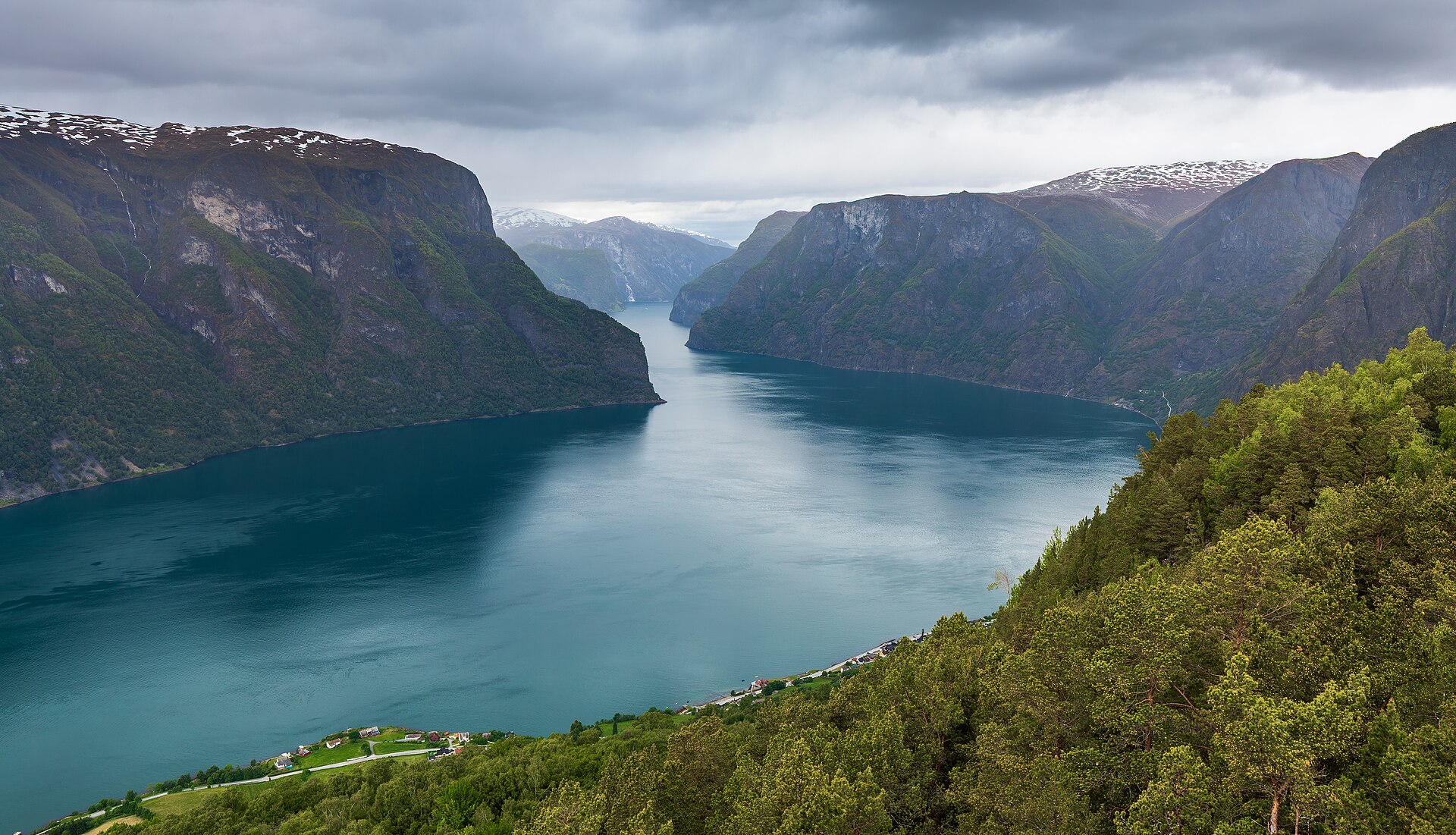
10. Sail the Nærøyfjord on a silent electric boat
The Nærøyfjord narrows to about 250 metres with walls over a kilometre high, and since 1 January 2026 the smaller vessels working the World Heritage fjords have had to be emission-free. The practical result is that the Flåm–Gudvangen crossing is now done on quiet electric catamarans, and the difference is startling — you hear waterfalls and sheep instead of a diesel engine. Around two hours, roughly NOK 600–800.
Verdict: the best two hours in western Norway, and better now than it was five years ago.
11. Look down on the Geirangerfjord
Geiranger is the fjord everyone photographs, and the view from above beats the view from the water. Dalsnibba climbs to 1,500 metres on a toll road (about NOK 175 per car, open roughly late May to October); Ørnesvingen on the Eagle Road is free and nearly as good; Flydalsjuvet is where the postcard comes from.
If you’d rather be on the water without paying tour prices, the Geiranger–Hellesylt car ferry runs the full length of the fjord and costs a foot passenger somewhere between NOK 150 and 390. It is, straightforwardly, public transport that happens to be one of the great boat rides in Europe.
Verdict: do the viewpoints and take the ferry. Skip the dedicated sightseeing cruise unless you’re short on time.
12. Take the coastal voyage north
Hurtigruten and Havila have run the Bergen–Kirkenes mail route for over a century: 34 ports, 12 days round trip, six or seven one way, from roughly $1,900–2,700. It isn’t a cruise in the resort sense — it’s a working ship with cargo, locals getting on at midnight, and no waterslide.
Winter sailings are the cheapest and, between late September and late March, double as one of the best aurora platforms anywhere. Our guide to Norway’s cruises and coastal voyages breaks down the three very different things sold under the word “cruise.”
Verdict: the best way to see the coastline if you have a week and don’t need entertainment.
13. Sweat in a fjord sauna, then jump in
This has gone from Norwegian habit to full-blown national pastime in about five years, and it’s the cheapest genuinely local thing on this list — NOK 350–600 for a session. Oslo’s harbour saunas at Bjørvika and Aker Brygge are the easy introduction; the floating sauna at Flåm gives you the Aurlandsfjord out the window while you cook.
The plunge is the point. The fjord sits somewhere between 4°C and 14°C depending on the season, you will make an undignified noise, and ninety seconds later you’ll feel better than you have in months.
Verdict: do it in any city you pass through. Best value on the entire list.
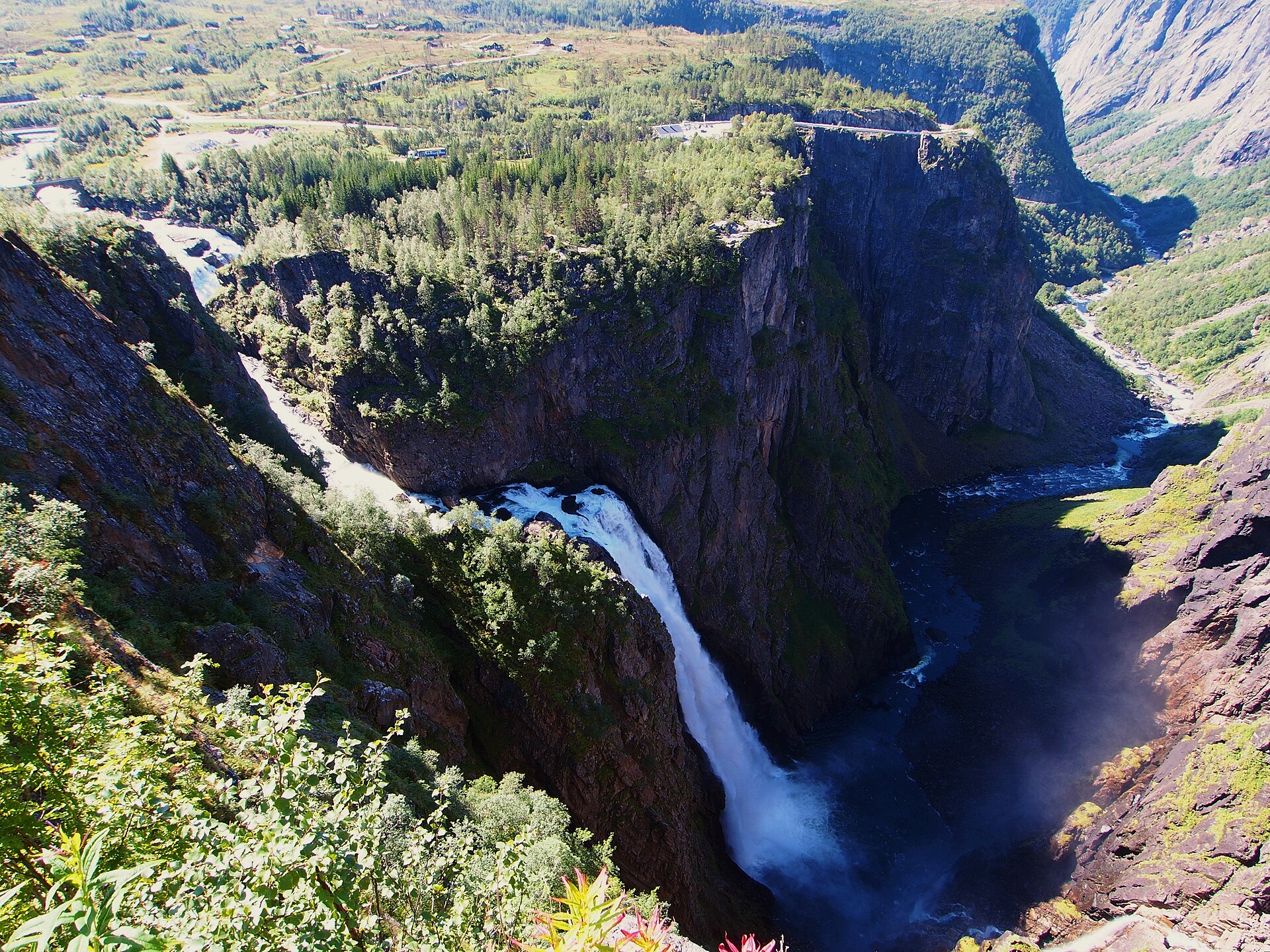
14. Walk out over Vøringsfossen
A 182-metre drop into the Måbødalen canyon, with a stepped footbridge that puts you directly above the lip. It’s free, it takes an hour, and it’s right on the Hardangervidda road between Oslo and Bergen — which makes it the easiest spectacular thing to add to a drive you were doing anyway. The road over the plateau is generally clear from around June.
Verdict: free, ten minutes off the route, genuinely dizzying. No reason not to.
Great roads and railways: four journeys worth the seat
Norway is one of the few countries where the transport is the attraction. If you’d rather not drive at all, the transport guide lays out how far you can get on trains, buses and ferries alone — which is further than most people assume.
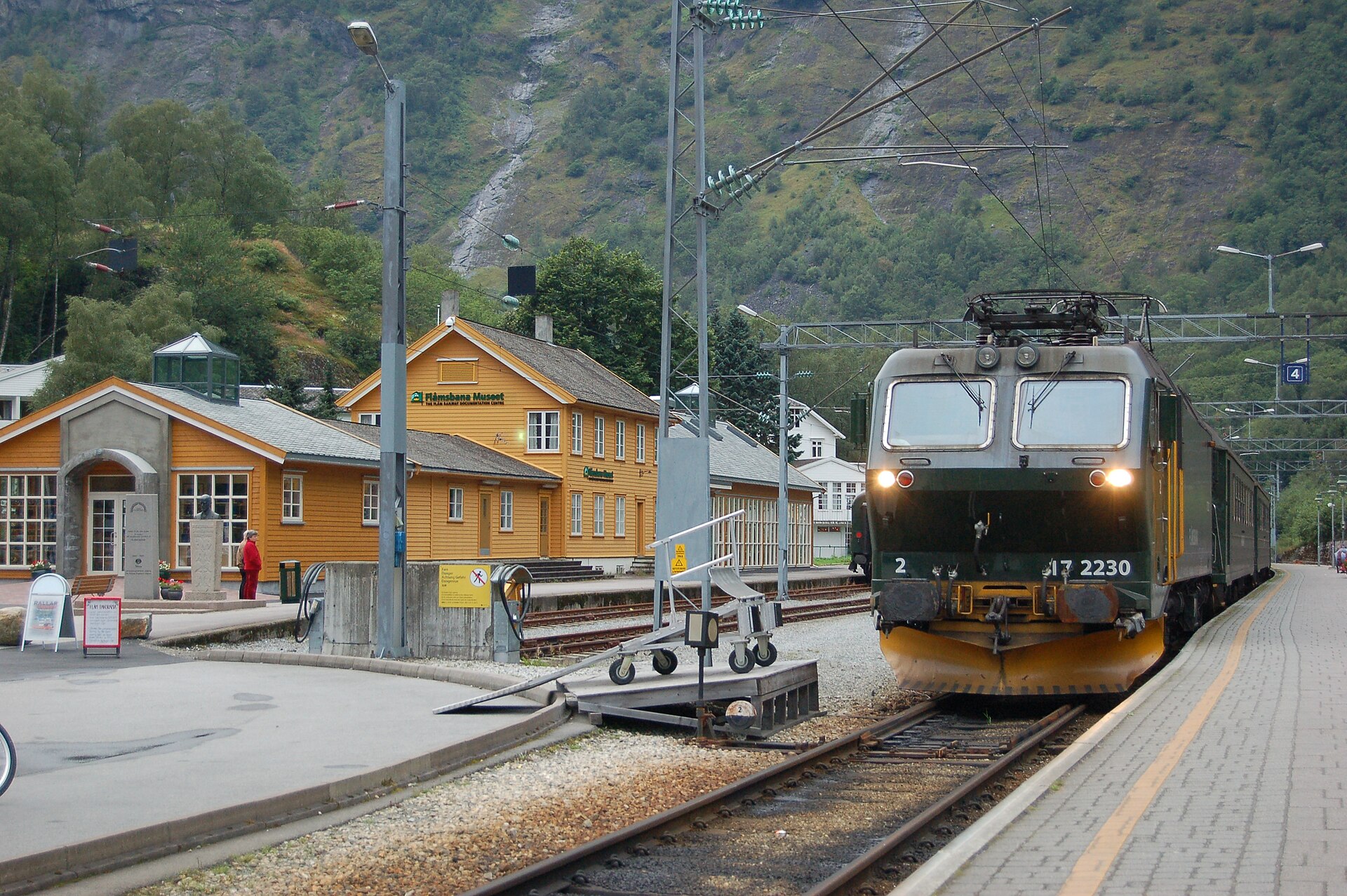
15. Ride the Flåm Railway
Twenty kilometres, 863 metres of climb, a gradient of 1 in 18, and no cogwheel — just very good brakes. Return tickets run NOK 620–730 depending on season (one-way NOK 430–510), and Eurail and Interrail holders get 30% off singles. It stops at the Kjosfossen waterfall for the famous, slightly ridiculous, and completely enjoyable dancing-huldra performance.
Verdict: a tourist ride that’s genuinely worth it. Ride up, take the boat back down to Gudvangen if you can.
16. Cross the country on the Bergen Line
Seven hours from Oslo to Bergen, over the Hardangervidda plateau at 1,222 metres, through snow that lingers into July. Book early and Lowfare tickets (the fares formerly called Minipris) start around NOK 400 — cheaper than the bus and vastly better. Book on the day and you’ll pay three times that.
Verdict: the best-value spectacular journey in Norway. Sit on the right leaving Oslo.
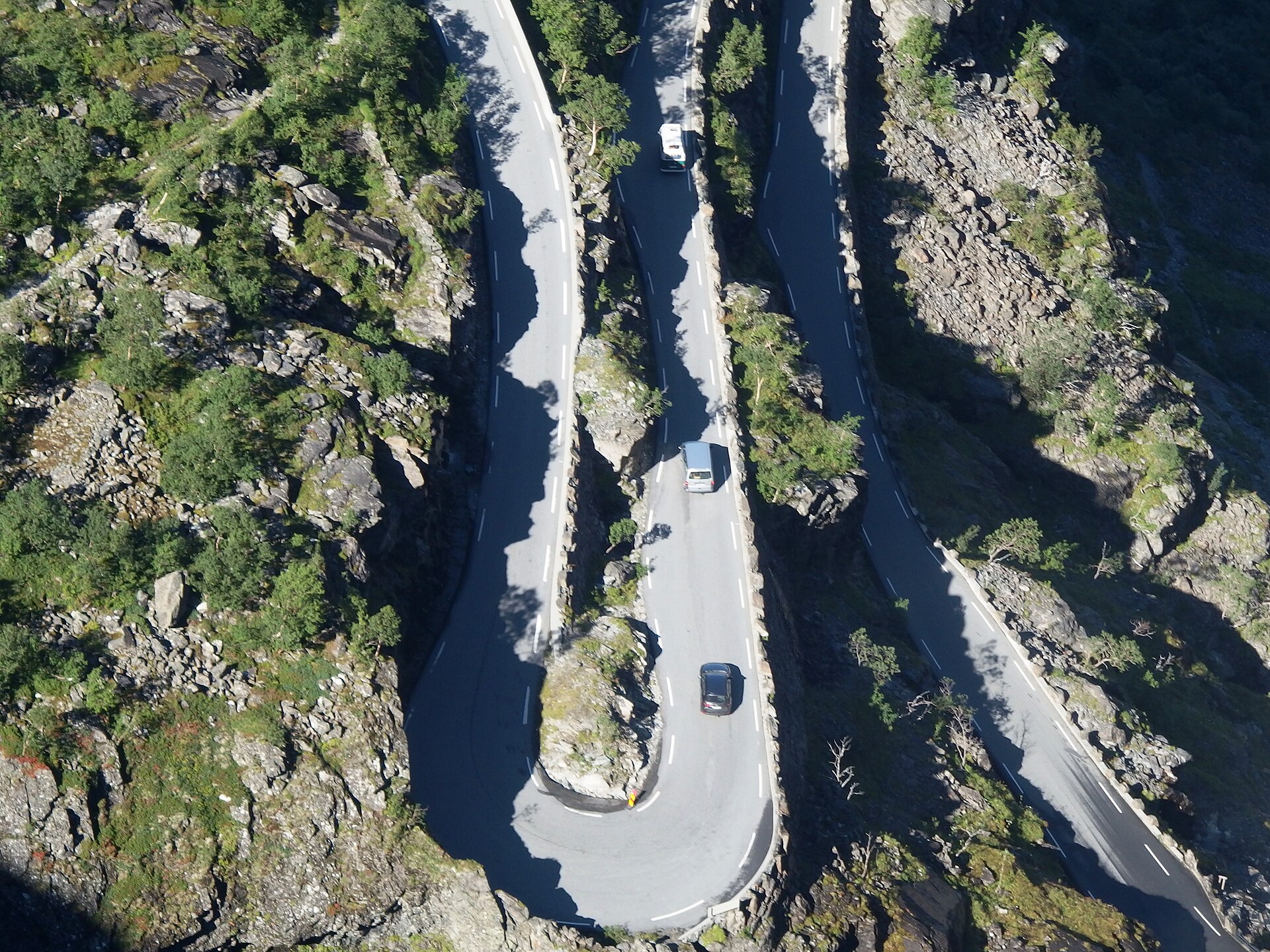
17. Drive Trollstigen
Eleven hairpins climbing a near-vertical wall, with the Stigfossen waterfall running alongside. Worth flagging because the internet is still full of stale information: Trollstigen was closed for two seasons after a 2024 rockslide and reopened on 27 April 2026. It’s open through October or November, weather permitting, with occasional short closures in heavy rain.
Verdict: back, and still the best road in the country. Drive up rather than down for the views.
18. Skim the sea on the Atlantic Road
Eight kilometres of bridges hopping between skerries between Molde and Kristiansund, most famously the Storseisundet bridge that appears to launch cars into the sea. New rest areas and shelters went in for 2026. Counter-intuitively, the best time to drive it is a storm — clear blue days are pretty; autumn gales are the reason people talk about it.
Verdict: a short detour, not a destination. Combine it with Trollstigen and Ålesund or skip it.
The big walks: four cliffs and ridges
Norway’s famous hikes are famous for good reason, and dangerous for a boring one: people arrive in trainers with a phone and no water. All four below are day hikes on marked trails, and all four have needed rescues in the last few seasons. The hiking guide covers conditions, gear and the DNT hut system in detail.
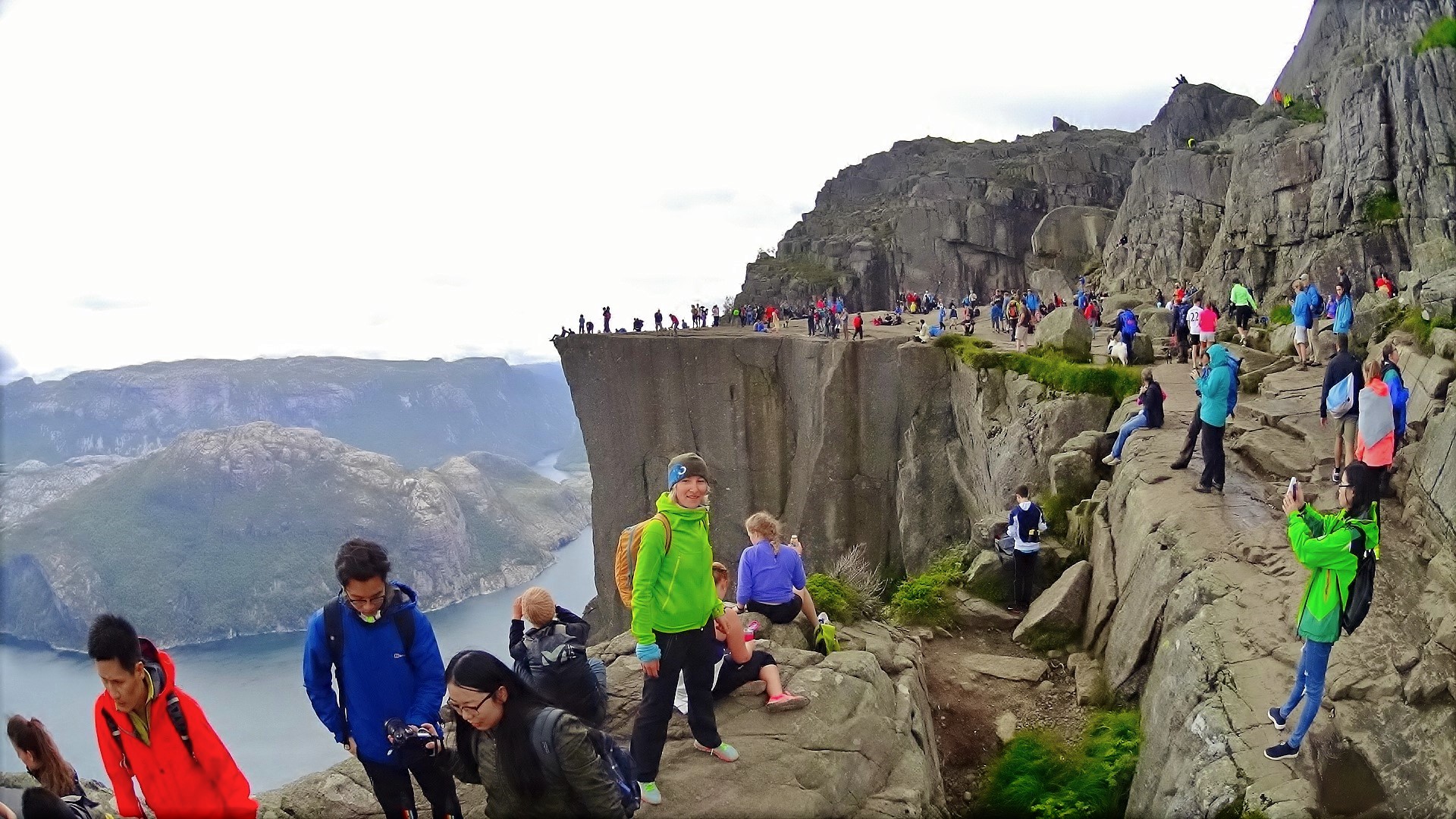
19. Hike Preikestolen
Eight kilometres round trip, about 500 metres of ascent, four to five hours, and a flat 604-metre cliff at the end that looks computer-generated. Parking is NOK 275; the shuttle from Stavanger is around NOK 498 return. It’s doable year-round with microspikes in winter, and 2026 brought better signage and maintenance.
It is also very busy. Start before 8am or after 3pm in summer, or accept a photo queue. The Stavanger guide has the logistics.
Verdict: the most accessible of the big three, and the one to pick if you’re doing exactly one.
20. Hike Trolltunga
Twenty-eight kilometres and 10–12 hours for the round trip from the lowest car park — this is a serious mountain day, not a photo stop. Parking is tiered: P2 at NOK 500 a day, P3 at NOK 600, both plus a NOK 220 pre-booked toll, which shortens the walk considerably. The P1–P2 road reopened on 8 June 2026. Outside the 8 June to 30 September 2026 unguided season it’s guided-only territory, with winter snowshoe trips running NOK 1,550–1,950.
Verdict: spectacular, and wildly underestimated. If you can’t comfortably walk 28 km, pay for the higher car park or take a guide.
21. Stand on Kjeragbolten
A boulder wedged in a chasm 984 metres above the Lysefjord, and the photograph everyone wants. Eleven kilometres, roughly 750 metres of climbing with chain-assisted sections, six to seven hours. Parking is NOK 250–300, and the Lysevegen road up typically opens around mid-May and closes in October — the single most common trip-wrecker on this list.
Verdict: harder than Preikestolen, emptier, and more fun. Check the road before you commit.
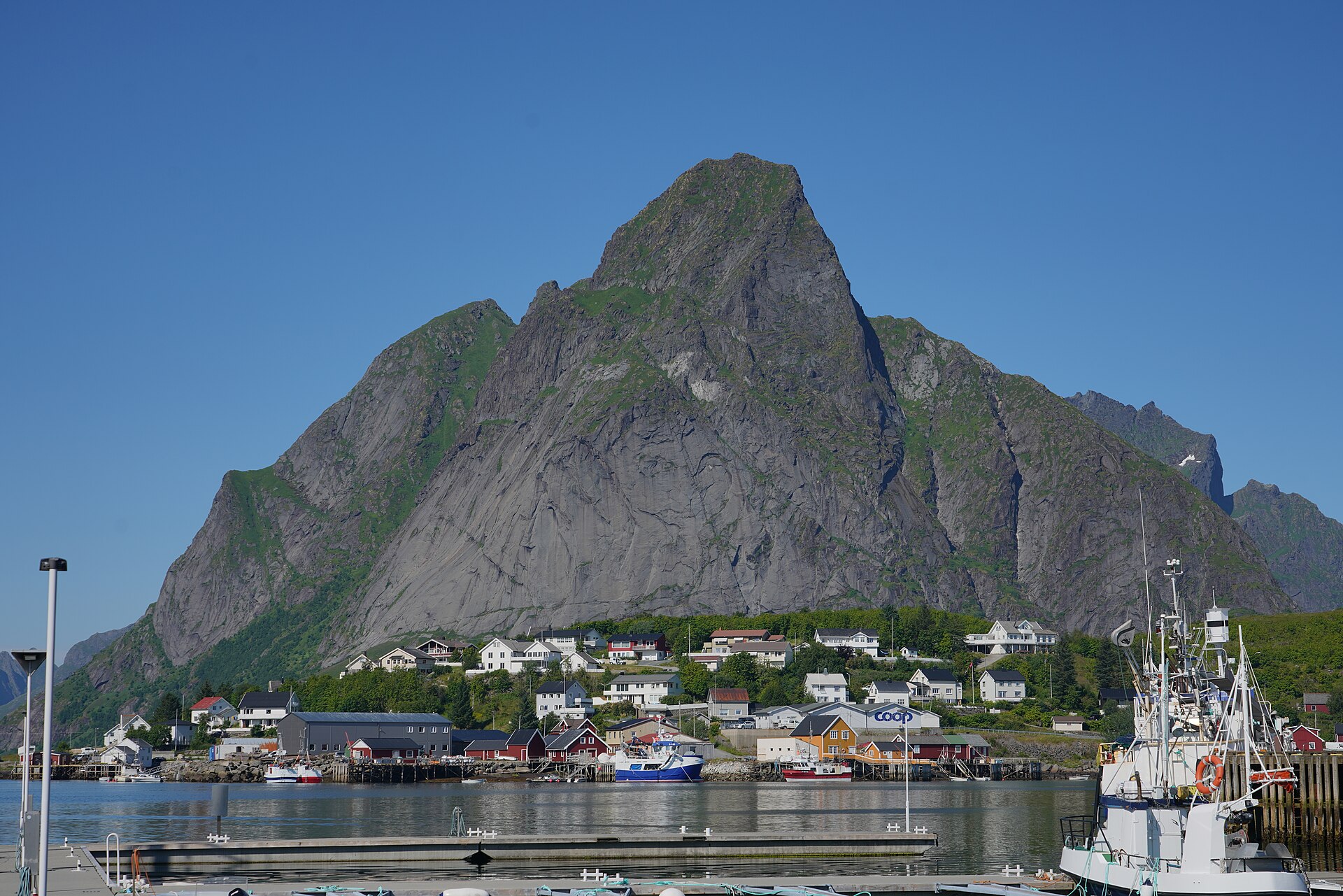
22. Climb Reinebringen for the Lofoten view
Nepalese sherpas built 1,900 stone steps up this thing, which turned a mud scramble into a steep but manageable two-to-three-hour climb. At the top: Reine scattered across turquoise water, ringed by granite spires — the most photographed panorama in northern Norway, and worth every one of those steps. It’s free.
The stairs are emphatically not a winter route; the official season is roughly May to September with closure advisories when ice arrives. The Lofoten guide covers bases, ferries and rorbu cabins.
Verdict: the best effort-to-view ratio in Norway. Two hours for a lifetime photograph.
Cities and culture: three that aren’t filler
Norwegian cities get treated as airports with restaurants attached, which is a mistake — but only three of them earn a place on a list this size.
23. Walk Bryggen and graze the Bergen fish market
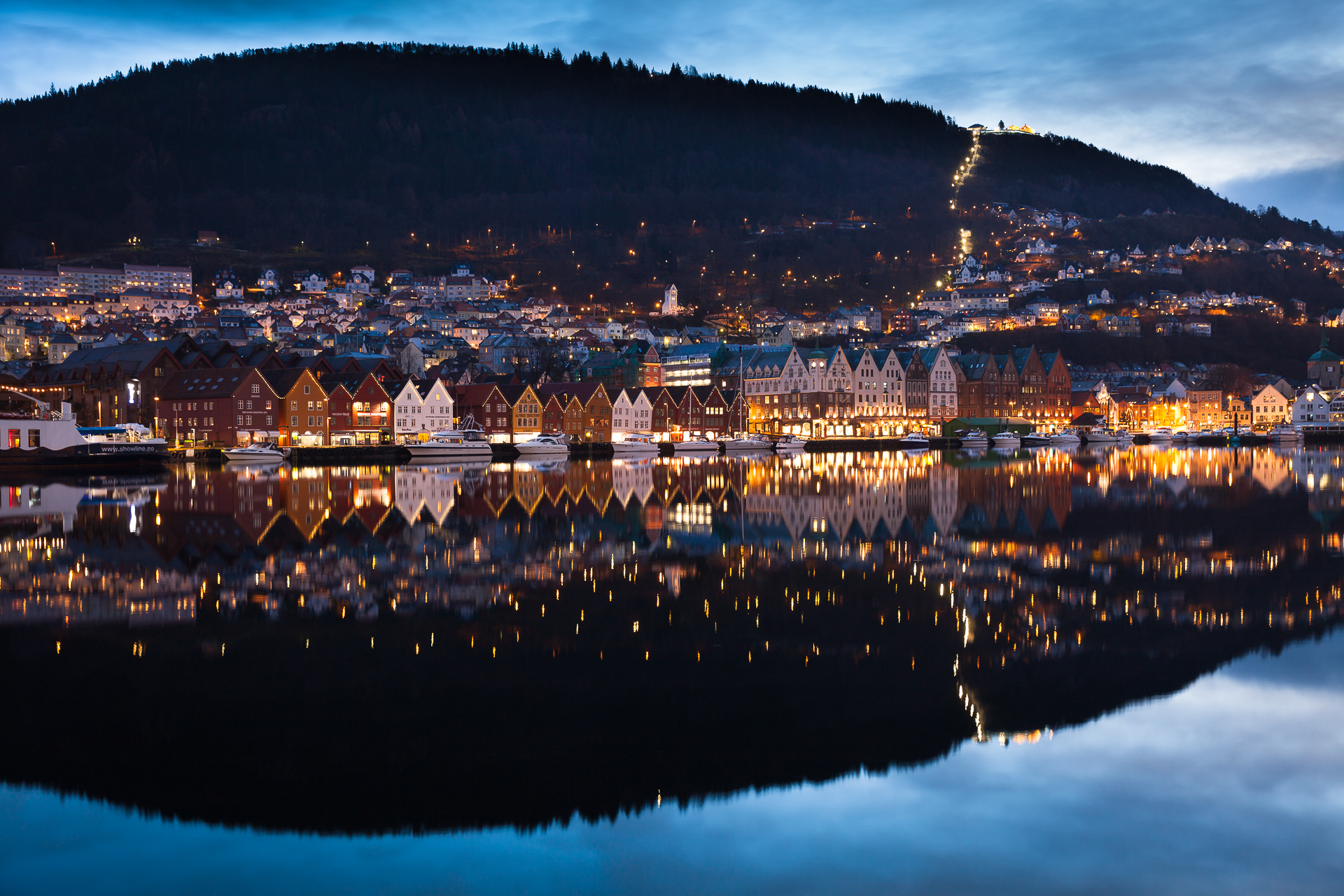
The colourful Hanseatic wharf is a UNESCO site and the most photographed row of buildings in Norway. The trick is to stop photographing the front and walk into the wooden alleys behind it, where the buildings lean into each other at angles that shouldn’t hold and the floors slope like a ship’s deck. It’s free.
Then eat. The indoor Mathallen at the fish market does proper shellfish rather than tourist-priced samples, and Bergen is a genuinely serious seafood city. Add the Fløibanen funicular (around NOK 200 return in summer, NOK 145 in winter) for the view. More in the Bergen guide.
Verdict: the one Norwegian city centre that’s a destination rather than a staging post.
24. Do Oslo’s art one-two: Vigeland and Munch
Vigeland Sculpture Park is free, open around the clock, and holds more than 200 Gustav Vigeland sculptures of human beings doing nothing more remarkable than existing — arguing, carrying children, growing old. The Monolith at the top is 17 metres of intertwined figures carved from a single block. It’s the best free attraction in the country.
Then the Munch museum on the waterfront (around NOK 180), which has far more than The Scream and is better for it. Together they’re a half day. The Oslo guide covers the rest, including the Opera House roof, which is also free to walk on.
Verdict: gives Oslo a real reason to exist on your itinerary beyond the airport.
25. Stand inside a stave church
Twenty-eight survive out of what was once well over a thousand. Borgund, on the road between Lærdal and Flåm, is the best preserved and the easiest to reach; Urnes, across the Lustrafjord, is the UNESCO-listed one and the oldest. Entry runs roughly NOK 120–160, and most open only from around May to September.
What gets you is the smell and the dark — tarred pine, almost no windows, dragon heads on the roof ridge that are pure Norse hangover in a Christian building. Nine hundred years of continuous use, and the timber is still doing its job.
Verdict: the most underrated cultural stop in Norway, and a ten-minute detour from a road you’re already on.
What I’d cut from most Norway bucket lists
Being honest about what doesn’t earn its place is more useful than another entry. Three things regularly appear on lists like this one that I’d think twice about.
The full “Norway in a Nutshell” package. The route is superb — Bergen Railway, Flåm Railway, Nærøyfjord, the Stalheim road. The packaged ticket just charges you a premium to book four things you can book yourself, and doing it independently typically saves NOK 400–700. One thing to know: the famous Stalheimskleiva hairpins have been closed to vehicles since 2020, so no bus drives them any more, whatever the old photos suggest. Our tours and excursions guide explains where a guide genuinely earns their fee.
Chasing polar bears. They appear on every Norway list and you will almost certainly not see one. Wild polar bears live in Svalbard, sightings are luck on a multi-day expedition voyage, and the new 200-passenger cap has made those voyages both better and pricier. Go to Svalbard for the landscape and the light; treat a bear as a bonus.
A dedicated trip to Trondheim. Nidaros Cathedral is magnificent and Bakklandet is lovely, but it’s a long way north for a half-day of sightseeing unless you’re already passing on the train or the coastal voyage. Worth a stop; not worth a detour.
Turning this into an actual trip
Nobody does 25 of these. The realistic question is which cluster fits your season and your days. The itinerary guide has full routes; here’s the short version.
| Trip | Season | Realistic picks from this list |
|---|---|---|
| 7 days, first visit | Jun–Aug | Bergen and Bryggen, Flåm Railway, Nærøyfjord, Vøringsfossen, Preikestolen, a fjord sauna |
| 7 days, winter | Dec–Mar | Tromsø aurora chase, dog sledding, Sámi reindeer, ice hotel, whales if the herring cooperate |
| 10 days, summer | Jun–Aug | The above plus Trollstigen, Geiranger, the Atlantic Road, and one big hike |
| 10 days, north | Jun–Jul | Lofoten and Reinebringen, midnight sun, Tromsø, Nordkapp, king crab at Kirkenes |
| 14 days | Jun–Aug | South and west without rushing, then fly north for Lofoten — don’t drive it |
Two structural rules, learned the hard way. First, aurora and midnight sun are mutually exclusive — the darkness that makes one possible is the thing the other removes. Second, Norwegian distances lie: the roads are slow, beautiful and full of ferries, so budget about 60 km/h on anything scenic. If you’re still choosing a month, the month-by-month seasons guide is the place to start.
What a bucket-list trip actually costs in 2026
Norway’s reputation for being unaffordable is roughly a decade out of date. On Numbeo’s 2026 cost-of-living index Norway sits at 83.7 — below Switzerland at 110.7 and Iceland at 97.2. It’s expensive; it is no longer the most expensive.
Where the money actually goes on a trip like this is guided Arctic experiences. Four of them in Tromsø will cost more than a week of hotels. The workable approach is to pick two or three that genuinely excite you and fill the rest with the free tier, which in Norway is unusually rich: every trail, every viewpoint, Vigeland Park, the Opera House roof, Bryggen, wild camping under the right to roam.
| Daily spend | What it buys |
|---|---|
| NOK 900–1,200 ($95–125) | Hostel or campsite, self-catering, trails and free sights, public transport |
| NOK 1,600–2,200 ($170–230) | Mid-range hotel, one restaurant meal, a paid attraction most days |
| NOK 3,500+ ($370+) | Good hotels and a guided Arctic experience daily |
Two 2026 details worth knowing. A temporary fuel excise holiday running from April to September has pushed petrol down to roughly NOK 20–21 a litre, which is unusually cheap for Norway and will snap back. And a national tourist tax became law on 1 July 2026 — capped at 3% of accommodation, decided municipality by municipality, with collection realistically starting in 2027. Full detail in the costs and budget guide, and practical prep in the know-before-you-go guide.
Frequently asked questions
What should be number one on a Norway bucket list?
If you come in winter, a properly guided northern lights chase from Tromsø. If you come in summer, the Nærøyfjord on an electric boat followed by the Flåm Railway. Those two answers rarely swap, because the seasons don’t overlap.
How many days do you need to do Norway justice?
Seven days covers one region well — either the western fjords or the Arctic, not both. Ten to fourteen lets you combine the south with a flight north. Anything under five days should be a single base with day trips.
Can you see the northern lights and the midnight sun on the same trip?
No, and it’s the most common planning mistake we see. The aurora needs dark skies (late September to early April); the midnight sun is the absence of darkness (late May to late July). They’re opposite ends of the same calendar.
Is Nordkapp worth the drive?
If the forecast is clear and you can be there near midnight in summer, yes. In fog it’s an expensive car park. Note that reaching the plateau itself is free — only the Nordkapphallen visitor centre charges, at NOK 350.
What’s the best free thing on this list?
The midnight sun, closely followed by Vigeland Sculpture Park and the Reinebringen stairs. Norway’s right to roam means every trail, beach and viewpoint in the country is legally open to you at no cost.
Do you need a car to tick these off?
Not for most of them. Trains, buses, ferries and the coastal voyage reach Bergen, Flåm, Preikestolen, Tromsø, Lofoten and Nordkapp. A car mainly buys you Trollstigen, the Atlantic Road, Kjeragbolten and the freedom to stop.
Which of these should I book in advance?
Anything with a small boat, a guide, an animal or a bed: aurora chases, dog sledding, reindeer, ice hotels, Trolltunga’s upper car park, and summer accommodation in Lofoten and the fjord villages. Three to six months for peak summer; earlier for anything unique. Viewpoints and trails need nothing.
Is Norway too expensive for a bucket-list trip?
Less than its reputation suggests, and less than Switzerland or Iceland in 2026. Guided Arctic activities are the real cost driver at NOK 1,500–3,500 each. Budget for two or three, not one a day, and lean on the enormous free tier for everything else.
Before you book
The thing that separates a good Norway trip from a frustrating one isn’t money or fitness — it’s accepting that the country only does one season at a time, and building around that instead of fighting it. Choose winter and you get aurora, huskies, ice and blue light at noon; the winter guide lays out what runs when. Choose summer and you get midnight sun, open mountain roads and every trail on this list; you’ll pay peak rates and share the famous viewpoints.
Then book the beds early. Norway’s most photogenic places are tiny — Reine, Flåm, Geiranger, Henningsvær — and their bed capacity is measured in dozens, not hundreds. Three to six months out for peak summer is normal, and the accommodation guide covers rorbu cabins, DNT huts and glass igloos.
Everything else you can improvise. Norwegian trails are marked with red Ts, the weather forecast is unusually accurate, buses turn up, and the right to roam means you’re legally welcome almost everywhere outdoors. Pick five things off this list, leave a buffer day for weather, and let the country do the rest.
Photo credits
All photographs are used under their respective Creative Commons or public-domain licences.
- Northern lights near Tromsø — Photo: Sebastian Kowalski / CC0 via Wikimedia Commons.
- Midnight sun at the Nordkapp globe monument — Photo: Stjepko Krehula / CC BY 4.0 via Wikimedia Commons.
- Aurlandsfjord from Stegastein — Photo: Ximonic (Simo Räsänen) / CC BY-SA 4.0 via Wikimedia Commons.
- Vøringsfossen — Photo: rheins / CC BY 3.0 via Wikimedia Commons.
- Flåmsbana train at Flåm station — Photo: Alasdair McLellan / public domain via Wikimedia Commons.
- Trollstigen hairpins — Photo: Palickap / CC BY-SA 4.0 via Wikimedia Commons.
- Preikestolen above the Lysefjord — Photo: Fuchs Robert / CC BY 3.0 via Wikimedia Commons.
- Reine and Olstinden, Lofoten — Photo: Lukas Beck / CC BY 4.0 via Wikimedia Commons.
- Bryggen, Bergen — Photo: Svein-Magne Tunli / CC BY-SA 4.0 via Wikimedia Commons.
Prices, opening dates and road openings were checked in July 2026 and are given per adult in Norwegian kroner, with dollar conversions at roughly 9.5 NOK to 1 USD. Mountain roads, ferry timetables and tour schedules change with the weather and the season — confirm with the operator before you commit.