Every 2-week Norway itinerary tells you to hire a car. Not one of them tells you what the car costs.
I read five of the longest — two of them over 7,000 words — looking for a toll figure, a ferry fare, a fuel price, or a one-way drop-off charge. Between them I found one sentence saying the campervan “has a barcode” for the toll gates. Nothing on how a foreign plate gets invoiced. Nothing on the prepayment scheme that halves ferry fares. Nothing on which mountain passes were open this year.
Fourteen days is the length at which driving finally beats the train in Norway, so the driving is the article. Below is the route, and then every cost the route generates, with numbers.
Why two weeks is the road-trip threshold
| Trip length | Better by | Why |
|---|---|---|
| 5 days | Train and boat | One base. A car is parked most of the time and parking is paid |
| 7 days | Train and boat | Oslo–Flåm–Bergen is a rail corridor. Driving it is slower |
| 10 days | Either | Depends whether you add the Arctic |
| 14 days | Car | Enough time to reach the places rail cannot: Geiranger, Trollstigen, the National Scenic Routes, the inner Sognefjord |
The crossover happens because Norway’s best driving is on roads that go nowhere useful. Trollstigen, Aurlandsfjellet, Gamle Strynefjellsvegen and Sognefjellet exist for the view, and no bus runs them on a schedule you can build a day around. Under two weeks you cannot justify the detours; at two weeks the detours are the trip. The shorter, car-free versions are in our seven-day and ten-day itineraries.
The route: a 14-day loop from Oslo
| Day | Route | Driving | Highlight |
|---|---|---|---|
| 1 | Arrive Oslo | — | City. Collect the car on day 2, not day 1 |
| 2 | Oslo → Rjukan or Dalen | 3 h | Telemark, Heddal stave church |
| 3 | → Stavanger | 4–5 h | Ryfylke scenic route |
| 4 | Stavanger | — | Preikestolen or the Lysefjord cruise |
| 5 | → Odda / Hardanger | 4 h | Låtefossen, Trolltunga country |
| 6 | Hardangerfjord | 2 h | Vøringsfossen, the step bridge, Hardanger scenic route |
| 7 | → Bergen | 3 h | Bryggen, Ulriken |
| 8 | → Flåm / Aurland | 3 h | Nærøyfjord cruise |
| 9 | → inner Sognefjord | 2–3 h | Stegastein, Aurlandsfjellet, Lustrafjord |
| 10 | Sogndal → Loen | 3 h | Nigardsbreen glacier, Urnes stave church |
| 11 | → Geiranger | 3–4 h | Gamle Strynefjellsvegen, Dalsnibba |
| 12 | Geiranger → Åndalsnes | 3 h | Ørnevegen, the ferry, Trollstigen |
| 13 | → Lom / Jotunheimen | 4 h | Sognefjellet, Norway’s high country |
| 14 | → Oslo, depart | 5 h | Gudbrandsdalen |
Total driving: about 45 hours over 13 days. That is a little over three hours a day, which is the right load — enough to cover ground, not so much that you spend the holiday looking through a windscreen. Any two-week plan that includes Lofoten breaks this, and I will come to why.
Returning the car in Oslo avoids the one-way fee. If you would rather fly out of Bergen, cut days 12 to 14 and end there instead — you lose Trollstigen and Jotunheimen and save around €200–300. If you have a week or ten days and want to drive anyway, the shorter loops from Oslo are planned leg by leg.
What the driving actually costs
This is the table no competitor has. Figures for a two-week loop of roughly 2,500 kilometres in a standard petrol car, converted at 9.35 NOK to the dollar.
| Cost | Amount (NOK) | USD | Notes |
|---|---|---|---|
| Car hire, 13 days | ~13,000 | ~$1,390 | At the roughly $109/day average. Small cars nearer $57/day |
| Fuel, ~2,500 km | 3,500–4,500 | $375–480 | See the price warning below |
| Tolls | ~1,470 | ~$157 | For a comparable Oslo–Stavanger–Bergen–Trondheim loop. An EV pays ~960 |
| Ferries | 800–1,500 | $85–160 | Depends on route; halved with AutoPASS prepayment |
| Toll roads and parking at sights | 1,500–2,500 | $160–270 | Nibbevegen NOK 330, Preikestolen NOK 275, Trolltunga NOK 550 |
| One-way drop-off, if applicable | 2,000–3,000 | $215–320 | €200–300. Avoid by looping |
| Driving total, looped | ~20,500–23,000 | $2,190–2,460 | Before accommodation and food |
Split between two people that is roughly NOK 10,000–11,500 each for fourteen days of complete freedom, which is defensible. Split across one person it is the largest single line in the trip.
Tolls, and how a foreign plate gets billed
Norway has around 200 automated toll points and no booths at all. Every one is a camera reading your plate. You cannot pay cash, you cannot stop, and there is nothing to do as you drive through.
What happens next depends on the car.
A Norwegian rental normally carries an AutoPASS tag and the rental company bills you afterwards, usually with an administration fee per rental or per toll. Ask what that fee is at pickup, because it varies enormously between companies and is where the surprise lives.
A foreign-plated car you drove in yourself gets invoiced by post through Euro Parking Collection, typically one to three months later. Registering free on Epass24 in advance avoids a vehicle-owner lookup fee and gets the invoice to you electronically.
A tag gives a 20% discount in the standard rate group for vehicles under 3,500 kg, and electric vehicles get between 30% and 100% off depending on the specific project. A representative 2,000-kilometre loop taking in Oslo, Stavanger, Bergen and Trondheim comes to about NOK 1,470 in tolls for a petrol car and around NOK 960 for an EV.
Ferries: the half-price trick nobody mentions
Norwegian car ferries are public transport and they are unavoidable. The E39 coastal highway runs about 1,100 kilometres from Kristiansand to Trondheim and crosses seven of them; the full drive takes around 21 hours today, and the long-running project to make it ferry-free targets about 13.
Here is the part worth knowing: AutoPASS for Ferry. Prepay NOK 2,200 into an account for a car or camper under eight metres and you get 50% off every ferry fare until it runs out. On a two-week loop with six or eight crossings, that pays for itself and keeps paying.
| Crossing | Time | Car under 6 m | Prepaid | EV |
|---|---|---|---|---|
| Lavik–Oppedal (E39, Sognefjord) | 20 min | NOK 81 | NOK 40.50 | NOK 57 / 28.50 |
| Bodø–Moskenes (Lofoten) | 3 h 30 | NOK 605 | NOK 302.50 | NOK 424 |
| Kaupanger–Gudvangen (Nærøyfjord) | 2 h 30 | ~NOK 625 pp + 675 car | — | — |
| Geiranger–Hellesylt | ~1 h | from ~NOK 390 | Not in the scheme | — |
Two warnings. The Geiranger–Hellesylt crossing is a tourist ferry rather than a standard public one, and it sits outside the AutoPASS discount scheme; its fare is also quoted inconsistently across sources, with figures from NOK 390 to NOK 800 one way. Check on the day. And Bodø–Moskenes carries foot passengers free, which is worth remembering if you ever want the crossing without the car.
Queue behaviour
No route planner accounts for this and it is the main reason driving days overrun. On summer afternoons a full ferry leaves cars behind for the next sailing. On the busy crossings that is twenty minutes; on a rural one it can be two hours or the next morning.
Two habits fix it: arrive at least twenty minutes early on anything in July or August, and check the sailing frequency before you plan a late arrival. The Bodø–Moskenes ferry runs up to eight or nine times a day in summer and drops to one or two a day from September — enough to destroy a shoulder-season plan built on summer information.
Fuel, and a 2026 complication
Fuel prices in Norway right now are unusually confusing, and the reason is policy rather than markets. The road-use excise duty was set to zero from 1 April to 1 September 2026, which pushed pump prices down for five months. That holiday has just ended.
Sources checked in August 2026 gave figures between NOK 18.97 and NOK 22.40 per litre for petrol, and around NOK 20.36 to NOK 21.29 for diesel — a spread that reflects the excise change working through rather than any of them being wrong. Budget NOK 22–24 per litre for autumn 2026 and check on arrival. Do not trust a figure from a blog written in July.
Electric charging is more stable: roughly NOK 8–9 per kilowatt-hour on public fast chargers, and NOK 2–5 on slower public units. Norway has the best charging network in Europe and an EV rental genuinely costs less to run here — lower fuel, lower tolls, cheaper ferries.
Mountain passes: the 2026 dates
This is what breaks copied itineraries. The high roads are the point of a Norwegian road trip and they are closed for much of the year.
| Pass | 2026 opening | Note |
|---|---|---|
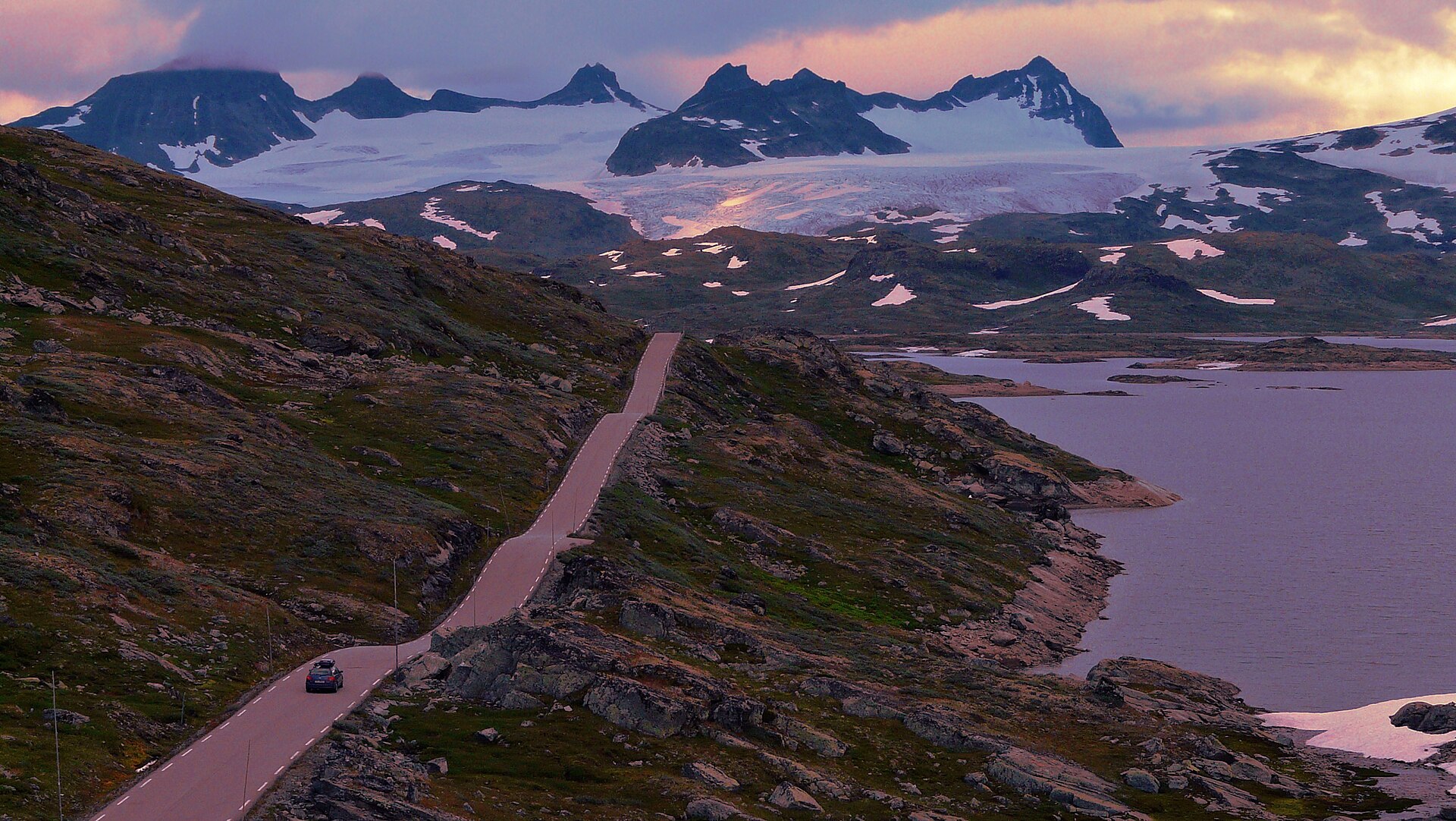
| Sognefjellet | 2 April 2026 | Night closures 20:00–08:00 until late May |
| Trollstigen | 27 April 2026, 12:00 | Earliest ever. First reopening after rockfall closure and stabilisation work |
| Aurlandsfjellet (Snow Road) | 1 June 2026 | Historic openings range 7 May to 3 June |
| Gamle Strynefjellsvegen | 1 June 2026 | Restricted hours: 12:00–18:00 in June, 12:00–20:00 from 1 July to 16 Aug |
| Nibbevegen (Dalsnibba) | Second half of May, snow-dependent | NOK 330 toll per car |
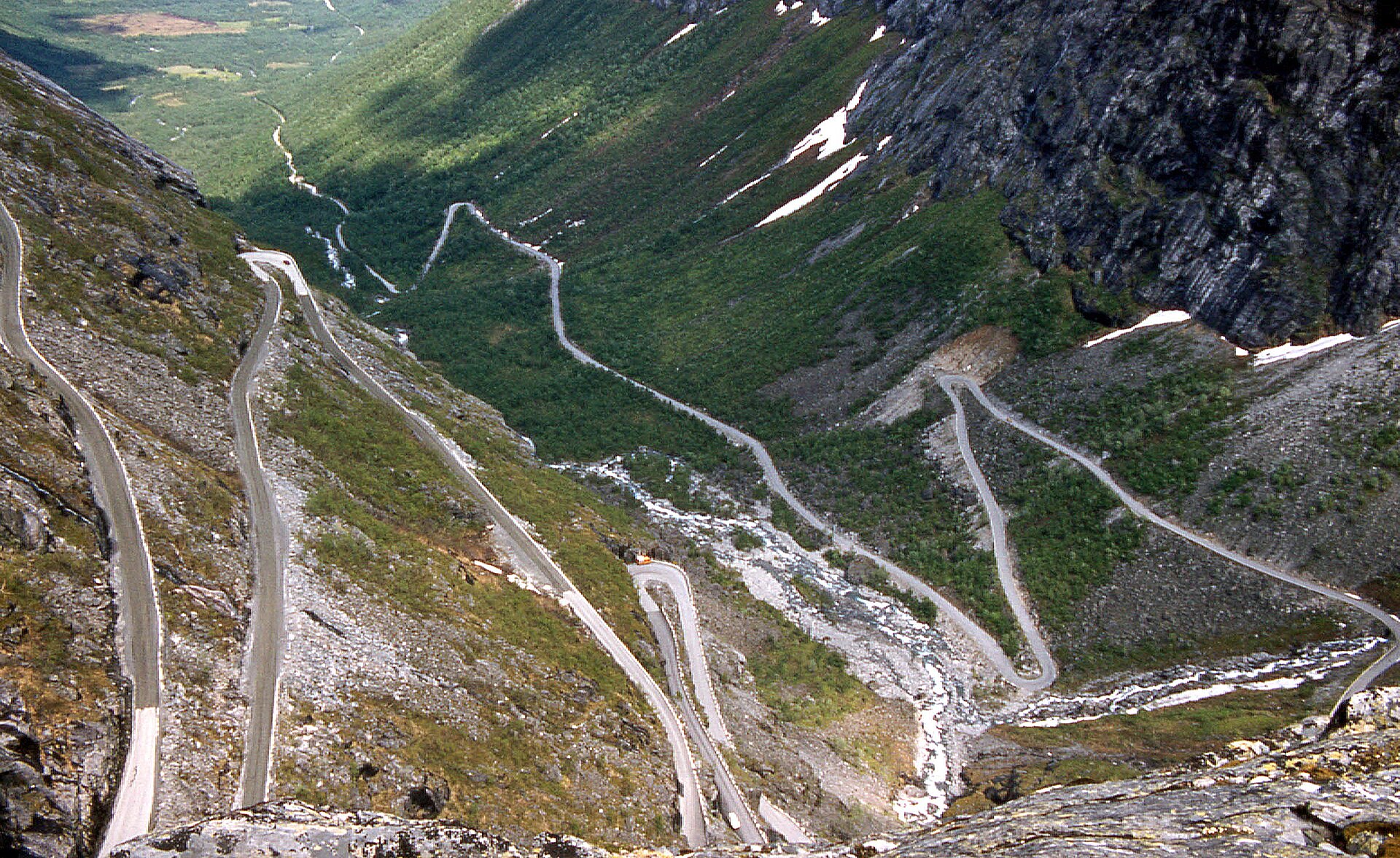
Trollstigen’s reopening is the headline. It was closed by a landslide in 2024 and spent 2025 under stabilisation work; opening on 27 April this year was the earliest on record and makes the Geiranger–Åndalsnes leg viable across a much longer season than it has been.
The Sognefjellet night closures are the trap. It opened on 2 April, which sounds generous, but a road that shuts at 20:00 until late May will not accommodate an evening drive. Check hours, not just dates. The routes themselves are covered in our viewpoint guide.
Speed limits and what a mistake costs
Limits run from 30 to 110 km/h and enforcement is automated and unforgiving. The fines are among the highest in Europe:
- 5 km/h over: NOK 1,150 ($123)
- 16–20 km/h over in a 60 zone or lower: NOK 8,650 ($925)
- 36–40 km/h over on a 90+ road: up to NOK 16,700 ($1,786)
- Extreme speeding: licence revoked for 3 to 36 months
There is no informal tolerance and average-speed cameras are common in tunnels. The practical point is that speeding in Norway saves you almost nothing anyway — the roads are winding, the tunnels are limited, and the ferries leave when they leave.
Camping and campervans: the rule people get wrong
Norway’s right to roam, allemannsretten, lets you pitch a tent in open country — utmark — free of charge, at least 150 metres from any inhabited house, for a maximum of two nights in one spot.
It does not cover motor vehicles. This is the single most common misunderstanding among visiting campervan drivers. The right to roam is a right of people on foot. A camper needs legal parking or a campsite, and where parking is unsigned the general convention is around 24 hours.
In practice Norway is tolerant and there are many places to stop, but “the right to roam means I can park anywhere” is wrong, and it is the belief behind most of the friction between locals and camper traffic in fjord villages.
Winter tyres
If you are driving between October and April, the rules are specific. Winter tyres need a minimum tread depth of 3 millimetres. Studded tyres are permitted from 1 November until the first Sunday after Easter Monday in southern and central Norway, and from 16 October to 30 April in Nordland, Troms and Finnmark. If you run studs, all four wheels must be studded.
Rentals collected in winter come fitted appropriately. Bringing your own car from continental Europe is where people get caught.
The National Scenic Routes, and how to use them
Statens vegvesen designates 18 National Scenic Routes — Nasjonale turistveger — running to about 2,240 kilometres in total. You will see 1,850 km and around 2,100 km quoted elsewhere; 2,240 is the official figure.
They are not toll roads or attractions. They are ordinary public roads, chosen for scenery and fitted with architect-designed viewpoints, rest stops and service buildings. Using them costs nothing and they are the single best route-planning tool for a Norwegian road trip, because somebody has already worked out which roads are worth driving.
The ones that matter on the fourteen-day loop above:
| Route | Length | Where | Worth the detour? |
|---|---|---|---|
| Ryfylke | Long | Rogaland, day 3 | Yes, and it is on your way |
| Hardanger | 158 km | Days 5–6, past Vøringsfossen | Yes. Best waterfall infrastructure in Norway |
| Aurlandsfjellet | Short, high | Day 9, Aurland to Lærdal | Only from June. Otherwise take the Lærdal Tunnel |
| Gamle Strynefjellsvegen | Historic gravel | Day 11 | Yes, but check the daily hours |
| Geiranger–Trollstigen | Two halves | Days 11–12 | The best driving in the country |
| Sognefjellet | High mountain | Day 13 | Yes. Norway’s highest mountain pass road |
Six of the eighteen, on one loop, without a single detour longer than an hour. That is the argument for this particular route.
Stops worth building the route around
Five places on the loop where I would spend longer than a photograph. For places off this loop, see the wider shortlist of Norwegian destinations.
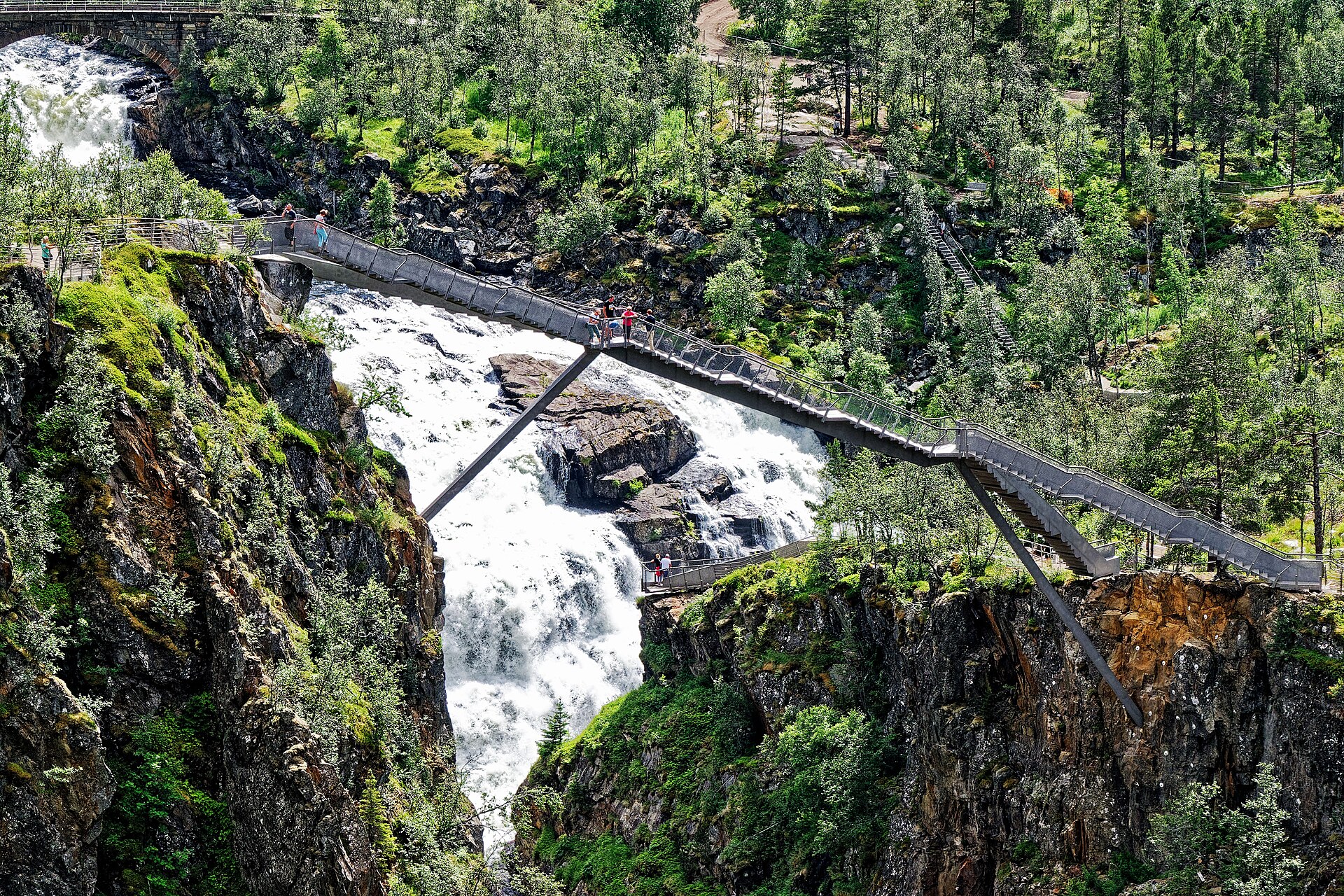
Vøringsfossen, day 6. A 182-metre fall with a 145-metre free drop into Måbødalen, and since 2020 a step bridge across the gorge — 47 metres, 99 steps, climbing 16 metres end to end. Free, roadside, and it turns a two-minute stop into twenty. The rest of the region is in the Hardangerfjord guide.
Preikestolen or the Lysefjord boat, day 4. Choose one, not both. The hike is 8 kilometres and about four hours with NOK 275 parking; the boat is three and a half hours for NOK 890 and shows you the same cliff from 604 metres below, which is the only way to grasp the height. If you have a full day, the combined ticket exists. Stavanger covers the city.
Nigardsbreen, day 10. An outlet of Jostedalsbreen, the largest ice cap in mainland Europe at 458 square kilometres. You walk from the car park to the snout across bedrock the glacier left within living memory — polished, scratched, with grey meltwater beside you.
Ørnesvingen and Flydalsjuvet, days 11–12. The two free viewpoints over the Geirangerfjord. Ørnesvingen at 620 metres is open all year and looks straight down the fjord; Flydalsjuvet is five minutes above the village. Between them they beat the NOK 330 Dalsnibba toll on a cloudy day. If you are sleeping down in the village, our guide to staying in Geiranger covers parking and the cruise-ship hours.
Trollstigen, day 12. Eleven hairpins climbing a wall, with a viewing platform at the top cantilevered over the drop. Reopened 27 April 2026 after two seasons of closure and stabilisation work. Drive it upward from Åndalsnes if you can — the sequence reads better in that direction.
If you are still deciding which regions to string together, the geography is in our fjord map guide.
Can you drive to Lofoten in two weeks?
Almost every two-week itinerary either dismisses this in a sentence or ignores it. Here is the arithmetic.
Oslo to Lofoten is about 1,195 kilometres and roughly 16 hours of driving. From Bergen it is worse. Add the Bodø–Moskenes ferry at NOK 605 and three and a half hours, or drive round via Narvik. Return, that is over 30 hours of pure driving — a third of a fourteen-day trip spent on the E6, most of which is forest and lakes rather than fjord.
Two honest options:
Drop Lofoten from the driving route. Do the southern loop above, which is 45 hours of driving across 13 days and never feels like a slog. Save the Arctic for its own trip.
Fly and drive. Fly Oslo or Bergen to Bodø, Evenes, Svolvær or Leknes and pick up a second car for four days. You will pay a one-way fee or two rentals, but you buy back four days of your holiday. This is what people who have done it once do the second time. For how to spend those four days, follow the four-day core of our Lofoten itinerary.
What does not work is bolting a 30-hour drive onto a fjord itinerary and expecting either half to survive. More on the Arctic decision in our ten-day itinerary and the Lofoten guide.
What to skip
Skip collecting the car on day one. Oslo is walkable and well served by transit, and a car in the city is parking fees and stress. Pick it up on the morning you leave.
Skip the one-way rental if you can loop. €200–300, and on northern routes more. Looping back to Oslo costs you a day of driving through Gudbrandsdalen, which is pleasant. Do the maths for your dates rather than assuming either way.
Skip Nordkapp. It is 500 kilometres beyond Tromsø, which is already beyond a two-week southern loop. It is a cliff with a globe sculpture and a paid visitor centre, and people who go mostly report being glad it is over.
Skip driving more than four hours in a day. The temptation on a fourteen-day plan is to add one more region. Norwegian roads average around 60 km/h in practice once you count tunnels, hairpins and ferry waits, so a “300 km day” is five hours, not three.
Skip Trolltunga unless you have committed a whole day to it. Seven to twelve hours of walking, NOK 550–800 to park, and a pre-booking requirement at the upper car park. It is a serious mountain day dressed up as a photo stop. Our hiking guide is blunt about what it involves.
Skip planning around a road you have not checked. Aurlandsfjellet opened on 1 June this year. Gamle Strynefjellsvegen runs on restricted daily hours through the summer. A route copied from a July blog post does not exist in May.
The campervan question
A camper looks like it solves Norway’s biggest cost, which is accommodation. Sometimes it does.
| Car + hotels | Campervan | |
|---|---|---|
| Vehicle, 13 days | ~NOK 13,000 | NOK 22,000–35,000 |
| Accommodation | NOK 13,000–20,000 | NOK 3,000–5,000 (campsites) |
| Ferries | Standard car rate | Higher above 6 m; AutoPASS covers under 8 m |
| Food | Restaurants add up fast | Self-catering saves a lot |
| Flexibility | Book ahead in summer | High, within the parking rules |
| Driving | Easy | Harder on hairpins and in tunnels |
Roughly break-even for two people on cost, and the real difference is temperament. A camper is better if you want to cook and stop where you like; a car and hotels is better if you want a shower and a bed after ten hours outdoors. Note that vehicles over six metres pay more on ferries and are genuinely awkward on Trollstigen.
What two weeks costs in total
Two people, sharing, excluding international flights. Converted at 9.35 NOK to the dollar.
| Per couple | Per person | |
|---|---|---|
| Car, fuel, tolls, ferries, parking | NOK 21,000 | NOK 10,500 ($1,120) |
| Accommodation, 13 nights mid-range | NOK 20,000 | NOK 10,000 ($1,070) |
| Food | NOK 14,000 | NOK 7,000 ($750) |
| Boats, cable cars, entries | NOK 5,000 | NOK 2,500 ($270) |
| Total | NOK 60,000 | NOK 30,000 ($3,210) |
The lever with the biggest effect is food. Two people eating out twice a day in Norway will spend more on restaurants than on the car. Self-catering half your meals saves NOK 6,000–8,000 across two weeks — more than any optimisation of the route. Our cost guide has the daily breakdown.
Frequently asked questions
Is 2 weeks enough to see Norway?
Enough for the whole southern half properly — the fjords, the scenic routes, three or four cities, and the high mountain passes. Not enough to add Lofoten or Tromsø by road without gutting the rest. Two weeks and one flight north works; two weeks of driving to the Arctic and back does not. If you are weighing two weeks against less, see how long a Norway trip needs to be.
Do you need a car for a 2-week Norway trip?
Not strictly — trains, coaches and boats reach most towns. But two weeks is the length where a car earns its cost, because it unlocks the scenic routes and viewpoints that public transport does not serve. Under ten days, the train usually wins. See our transport guide for the comparison.
How much does a 2-week Norway road trip cost?
Around NOK 30,000 ($3,210) per person for two people sharing, excluding international flights. The vehicle and its running costs come to roughly NOK 20,000–23,000 for the whole trip before it is split.
How do tolls work in Norway for a rental car?
Automatically. There are no booths — around 200 camera-read toll points bill the plate. A Norwegian rental usually has an AutoPASS tag and the company invoices you afterwards, often with an administration fee worth asking about at pickup. A foreign plate is invoiced by post through Euro Parking Collection, and registering on Epass24 first avoids a lookup fee.
Do you need to book Norway car ferries in advance?
On the standard public crossings, no — turn up and queue. In July and August arrive at least twenty minutes early, because a full sailing leaves cars behind. Longer crossings like Bodø–Moskenes are worth booking, and their frequency collapses from September.
Can you drive to Lofoten in 2 weeks?
You can, and it costs over 30 hours of driving round trip plus a ferry — about a third of the holiday. Flying north and hiring a second car for four days is the better trade almost every time.
What’s the best month for a Norway road trip?
Late June to early September, because that is when all the mountain passes are open. September is the sweet spot: everything still running, autumn colour, and the summer traffic gone. Before mid-June, expect Aurlandsfjellet and Gamle Strynefjellsvegen to be shut or restricted.
Is it hard to drive in Norway?
No. The roads are excellent, drivers are calm, and signage is clear. What catches people out is the average speed — around 60 km/h in practice — plus ferry timetables, tunnel lengths and single-lane sections on the older scenic roads. Plan for three to four hours of driving a day, not six.
Which is better, Geiranger or the Sognefjord, if I only have time for one?
Geiranger for scenery and roads; the Sognefjord for depth and variety across more days. On a two-week loop you can have both, which is exactly the argument for driving — the head-to-head is in which fjord to visit in Norway, and the wider route options are in the main Norway itinerary guide.
Photo credits
- Trollstigen reopened on 27 April 2026, the earliest date on record, after two seasons of closure. — Photo: W. Bulach / CC BY-SA 4.0 via Wikimedia Commons.
- Sognefjellet opened on 2 April 2026 but ran with 20:00–08:00 closures until late May. Check hours, not just dates. — Photo: Ximonic, Simo Räsänen / CC BY-SA 3.0 via Wikimedia Commons.
- Vøringsfossen: 182 metres in total with a 145-metre free fall, and a step bridge across the gorge since 2020. — Photo: Holger Uwe Schmitt / CC BY-SA 4.0 via Wikimedia Commons.
Prices, tolls, ferry fares and 2026 pass opening dates checked 1 September 2026 and converted at 9.35 NOK to the US dollar. Fuel prices are unusually unstable this year because Norway’s road-use excise duty was zeroed from 1 April to 1 September 2026 and has just been reinstated — verify at the pump rather than trusting any published figure, including this one. One-way drop-off fees are quoted by rental companies rather than published centrally, and the Geiranger–Hellesylt ferry fare varies widely between sources.