Ten days is the first length at which a Norway itinerary gets a genuinely difficult decision attached to it. Below ten days you do the south and that is that. Above two weeks you can have everything. At ten days you have to choose: fly north to Lofoten or Tromsø, or stay in the fjords and go deeper.
Nobody costs that decision. I read five ten-day itineraries. Two of them cover only southern Norway and never mention Lofoten or Tromsø. Two assume you are flying north without ever arguing for it. One opens by half-recommending you not read it. Not one states plainly what the flight north takes from you in hours and kroner, or compares Tromsø and Lofoten side by side for someone with ten days.
So that is what this is. The decision first, with numbers. Then three itineraries — one with Lofoten, one with Tromsø, one that stays south — and an honest account of which I would take, in which month.
The decision, in one table
| Add Lofoten | Add Tromsø | Stay south | |
|---|---|---|---|
| Days consumed by transit | 1.5–2 | 1 | 0 |
| Extra flight cost pp | NOK 1,400–3,700 | NOK 1,200–2,800 | None |
| Nights actually there | 3 | 3–4 | — |
| Aurora chance | Good, Sep–Mar | Best in Norway, Sep–Mar | Poor |
| Best in | June–Sept for hiking, Feb–Mar for lights | Nov–Feb | May–Sept |
| What you give up | Geiranger or two fjord days | The same, slightly less | The Arctic entirely |
| Failure mode | Weather delays on a small airport | Cloud on every aurora night | None. It just works |
The short answer: if you are travelling between late September and March, fly north — the aurora is worth a day of transit and the southern fjords are half shut anyway. If you are travelling between May and August, stay south, because the fjords are at their best and the Arctic’s headline attraction is not available.
That is the opposite of what most itineraries assume, which is that summer is when you go north.
What the flight north actually costs you
Three costs, and only one of them is the fare.
Money
Oslo to Tromsø takes 1 hour 55 minutes and is flown by Norwegian, SAS and Widerøe, with around 26 flights a week. Advertised one-ways start as low as $44 and average returns sit near $230, but the figure that matches what people actually pay is closer to $125–150 per leg once you are booking for specific dates.
Lofoten is more complicated. There is no year-round direct flight from Oslo — Widerøe runs Oslo–Svolvær and Oslo–Leknes direct in summer only, and Bergen–Leknes in summer only. The rest of the year you route via Bodø. Bodø–Svolvær is a 25-minute hop with around 27 flights a week; Bodø–Leknes was selling from about $25 one way for July 2026.
Then there is baggage. SAS’s cheapest fare allows only an underseat item; a full cabin bag is €12–20 booked online and €45–55 at the gate, and a checked bag €20–105 each way, cheapest when prepaid at least eight days ahead. On two internal flights for two people, that is easily NOK 1,500 of surprise.
Time
This is the cost people underestimate. Tromsø from Oslo is about half a day door to door once you add airport time. Lofoten from the southern fjords, outside the summer direct season, is realistically a full travel day each way — get to an airport, fly to Oslo or Bodø, connect, fly again, then drive from Svolvær or Leknes to wherever you are staying.
One competitor gives the transfer as “3.5 to 5 hours” in one section and “5 to 7 hours” in another, in the same article. Neither includes getting to the first airport.
Flexibility
Small northern airports have weather. Widerøe’s Lofoten routes are reliable by the standards of Arctic aviation and unreliable by the standards of a tightly planned itinerary. If you have a flight home from Oslo the day after you leave Lofoten, build a night’s buffer in.
Tromsø or Lofoten?
No competing article compares these. They are genuinely different trips.
| Tromsø | Lofoten | |
|---|---|---|
| Getting there | Direct from Oslo, 1 h 55, several daily | Via Bodø or Evenes most of the year |
| Need a car? | No. Tours pick you up | Effectively yes. The islands are 150 km end to end |
| Aurora | The best-organised chase infrastructure in Norway | Good, but fewer operators and more coastal cloud |
| Daytime, winter | Dog sledding, whales Nov–Jan, cable car, museums | Beaches, villages, very short days |
| Daytime, summer | Midnight sun, hiking, whale season over | The best hiking and coastline in Norway |
| Cost | Higher. Tours from NOK 1,200 on a bus, NOK 2,300 small group | Higher accommodation, lower activity spend |
| Best for | A 3-night winter add-on with no car | A 4-night summer or September add-on with a car |
My verdict: Tromsø in winter, Lofoten in September. Tromsø is a city with an aurora industry attached and it works beautifully as a car-free three-night block in the dark months. Lofoten is a landscape, and a landscape you cannot walk in is only half a visit — which is why February in Lofoten is worse value than February in Tromsø, and September in Lofoten beats both. The head-to-head on aurora specifically is in the best place to see the northern lights in Norway.
Itinerary A: fjords plus Lofoten (best May–September)
| Day | Where | Moving |
|---|---|---|
| 1–2 | Oslo | Arrive, city |
| 3 | Bergen Line to Flåm | ~6 h |
| 4 | Flåm — Nærøyfjord cruise, Stegastein | ~3 h |
| 5 | Flåm to Bergen | ~2.5 h |
| 6 | Bergen | — |
| 7 | Fly Bergen → Lofoten (via Oslo or Bodø) | Most of a day |
| 8–9 | Lofoten — Reine, Reinebringen, Kvalvika, Henningsvær | Local driving |
| 10 | Fly Lofoten → Oslo, depart | Half a day |
Two nights in Lofoten out of ten days, and two travel days to get them. That is the honest ratio, and it is why I would only take this version if the summer direct flights are running or if you can extend to eleven days.
The ferry alternative. Fly to Bodø and take the car ferry to Moskenes — three and a half hours across open water into the Lofoten wall, and foot passengers travel free. A car under six metres is NOK 605 ($65), or NOK 302.50 prepaid through AutoPASS; an electric car is NOK 424. In summer there are up to eight or nine sailings a day. From September it drops to one or two, which kills the plan for shoulder-season travellers. Nobody warns you about that.
Evenes is the forgotten gateway. Harstad/Narvik airport connects to Svolvær by direct bus in about three hours, twice daily, year-round, for roughly $20–28. It is often the cheapest and most reliable route into Lofoten in winter and no competing itinerary mentions it.
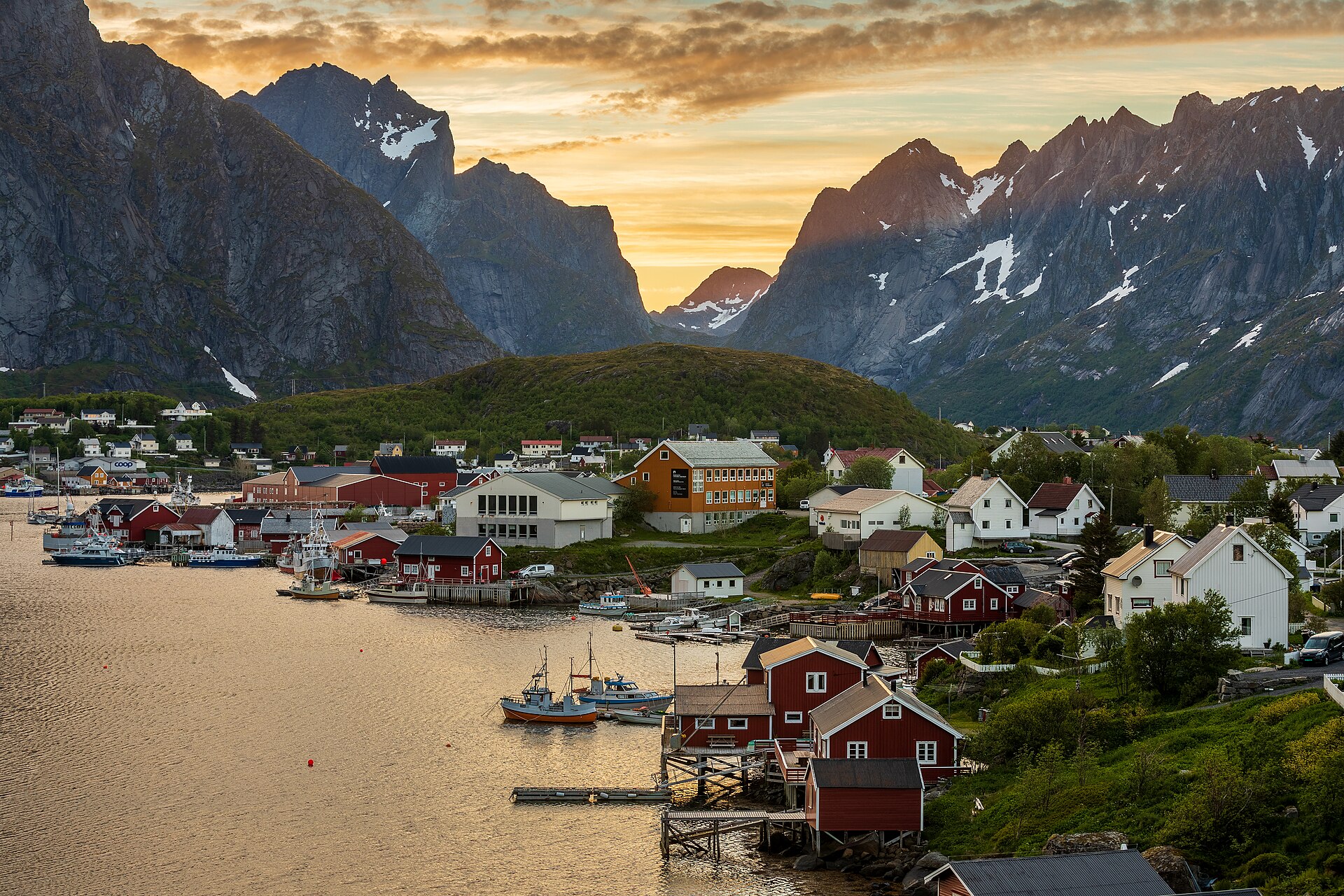
Lofoten in September gives you 14 to 15 hours of daylight at the start of the month, falling to 11 or 12 by the end, with daytime temperatures of 5 to 13°C. Hiking season runs from mid-June to early September. Full detail in the Lofoten guide.
Itinerary B: fjords plus Tromsø (best October–March)
| Day | Where | Moving |
|---|---|---|
| 1–2 | Oslo | Arrive, city |
| 3 | Bergen Line to Flåm | ~6 h |
| 4 | Flåm — Nærøyfjord cruise | ~3 h |
| 5–6 | Bergen | ~2.5 h then local |
| 7 | Fly Bergen or Oslo → Tromsø | Half a day |
| 8–9 | Tromsø — aurora chases, dog sledding, cable car | Evening tours |
| 10 | Fly Tromsø → Oslo, depart | Half a day |
This is the better ten-day trip for anyone travelling in the dark half of the year, and the reason is arithmetic rather than taste. Aurora is a probability game and you need multiple attempts. Three nights in Tromsø gives you three chances; one night gives you almost nothing.
Operator-published success rates should be read as marketing, but the shape is right: December and January are the strongest months, February close behind, and March still good with more daylight to fill. The season runs roughly September to early April. Tours start around NOK 1,200 ($128) on a large coach and NOK 2,300 ($246) for a small group; dog sledding runs NOK 2,890 to NOK 3,395 depending on length.
Tromsø’s real advantage for a short add-on is that you do not need a car. Every tour collects from central hotels. See the Tromsø guide and our overview of the northern lights in Norway.

Itinerary C: no flight, deeper south (best May–September)
| Day | Where | Moving |
|---|---|---|
| 1–2 | Oslo | Arrive, city |
| 3 | Bergen Line to Flåm | ~6 h |
| 4 | Nærøyfjord cruise, Stegastein | ~3 h |
| 5 | Into the inner Sognefjord — Balestrand or Sogndal | ~2 h |
| 6 | Nigardsbreen glacier, Urnes stave church | ~3 h driving |
| 7 | North to Loen and Nordfjord, or south to Hardanger | ~3 h |
| 8 | Vøringsfossen, Hardangerfjord | ~3 h |
| 9–10 | Bergen, depart | ~2.5 h |
This is the itinerary nobody writes and the one I would take in July. It uses the ten days on the thing Norway is actually best at, needs a car only from day 5, and involves no airports at all.
The inner Sognefjord is the piece almost everyone misses. The fjord runs 205 kilometres and 1,308 metres deep, and the standard trip touches its far tip at Flåm and turns round. Behind that are Balestrand, the Lustrafjord, the Urnes stave church, Nigardsbreen coming off the largest ice cap in mainland Europe, and Jotunheimen rising behind it. Three days there is better than three days anywhere else in Norway and it is nearly empty.
If you want the region-by-region map of how these connect, it is in the fjord geography guide.
The car question
Itineraries A and B are car-free until the Arctic leg. Itinerary C needs one from day 5.
Rental in Norway averages around $109 a day, with small cars nearer $57 and November the cheapest month at roughly $42. The cost to watch is the one-way drop-off fee, which runs €200–300 and can be higher on northern routes. Reports of $500 charges on short one-way rentals exist, though those are forum accounts rather than published rates.
Practical rule: pick the car up and drop it in the same city, or accept the fee as a line item and stop being surprised by it. The mechanics of ferries, tolls and AutoPASS are in our two-week road trip guide, which is where driving really pays off.
What ten days cannot do
Both Lofoten and Tromsø. They are 300 kilometres apart with a flight or a long drive between them, and each needs three nights to be worth the transit. Pick one.
Geiranger plus a northern leg. Geiranger is eight hours from Bergen by road or a flight to Ålesund plus a bus. Adding it to a trip that already includes an internal flight north means you spend four of ten days moving.
Nordkapp. It is another 500 kilometres beyond Tromsø, most of a day each way, and it is a cliff with a globe sculpture on it. People do it because it is the northern point, and then wish they had spent the two days in the Lyngen Alps.
The full Hurtigruten voyage. The coastal ship calls at 34 ports over 12 days round trip. There are shorter port-to-port legs — Svolvær to Kirkenes is about four days, Tromsø to Bergen about four — and they are a real alternative to flying south again. But the full route needs its own trip, covered in our coastal voyage guide.
Preikestolen and the fjords and the north. Stavanger is five hours from Bergen. Something has to go.
Booking the internal flights without getting stung
Three airlines fly domestically in Norway and they behave differently.
Norwegian and SAS run the trunk routes — Oslo to Tromsø, Bergen, Stavanger, Trondheim, Bodø. Competitive fares, jet aircraft, and the cheapest tickets carry aggressive baggage restrictions. SAS’s lowest fare allows an underseat item only; a cabin bag is €12–20 added online and €45–55 if you turn up with it at the gate, and checked bags run €20–105 each way with the best prices at least eight days ahead.
Widerøe flies everything else: Bodø–Svolvær, Bodø–Leknes, Bergen–Ålesund, Oslo–Sogndal, and the summer-only direct services into Lofoten. Turboprops, short runways, and the only operator on most of these routes — which means fares are what they are. It is also, in my experience, more generous with hand baggage than the low-cost fares on the big two.
Four practical rules:
- Book the northern leg first. Widerøe’s Lofoten routes have limited seats and the price climbs steeply. The Bergen Line and the fjord boats will still be there.
- Buy baggage at booking. Adding a cabin bag at the gate costs roughly four times what it costs online, and on two flights for two people that is real money.
- Do not book a same-day international connection out of a small northern airport. Build a night in Oslo or Bergen at the end. Weather delays in the Arctic are routine rather than exceptional.
- Check whether the summer direct is running for your dates. Oslo–Svolvær and Bergen–Leknes exist in summer only, and the difference between a direct flight and a Bodø connection is about three hours.
If you can find an eleventh day
Ten days is an awkward number and eleven fixes most of its problems. If you can stretch it, here is where the extra day is worth most.
On Itinerary A, put it in Lofoten. Three nights instead of two changes the ratio from “two travel days for two nights” to something defensible, and gives you a weather buffer for the one hike you actually wanted.
On Itinerary B, put it in Tromsø. A fourth aurora night meaningfully raises your odds. This is the single highest-value extra day in Norwegian travel — one more roll of the dice on the only thing you cannot reschedule.
On Itinerary C, put it in the inner Sognefjord. Balestrand and the Lustrafjord reward slowness and there is nowhere in Norway with a better ratio of scenery to visitors.
What I would not do is use the eleventh day to add a destination. Ten days with three regions is worse than ten days with two.
The winter version, in practice
If you are running Itinerary B between November and February, four things change.
The southern half shrinks. Geiranger is shut, the mountain roads are shut, and the hiking is gone. What survives is the Bergen Line — arguably better in snow — the Flåm Railway, the Nærøyfjord boats on a reduced timetable, and the cities. That is still a good four days. See Norway in winter for what stays open.
Daylight becomes the constraint. In Tromsø the sun does not rise at all between late November and mid-January. That is not a problem for aurora and it is a serious problem for anything you wanted to look at. Dog sledding and whale watching happen in blue twilight, which is beautiful and is not daylight.
Book aurora tours across multiple nights, not one. Operators will happily sell you a single chase. Clear sky is the binding constraint and it is not correlated night to night, so three separate attempts beat one long one.
Prices fall in the south and rise in the north. Bergen and Oslo are noticeably cheaper in January. Tromsø in aurora season is the most expensive accommodation market in Norway. Budget accordingly — and note that our month-by-month guide lays out where those curves cross.
One more thing for the southern leg: Flåm in winter has no cruise ships at all, which is the single biggest quality-of-experience difference between January and July anywhere on this route.
Costs, compared
Per person, ten days, mid-range, excluding international flights. Converted at 9.35 NOK to the dollar.
| A: with Lofoten | B: with Tromsø | C: south only | |
|---|---|---|---|
| Accommodation, 9 nights | NOK 15,000 | NOK 14,500 | NOK 13,500 |
| Internal flights | NOK 2,800 | NOK 2,400 | None |
| Rail, coach, boats | NOK 2,800 | NOK 2,800 | NOK 2,200 |
| Car hire | NOK 3,500 (3 days, Lofoten) | None | NOK 6,500 (6 days) |
| Tours and activities | NOK 1,500 | NOK 5,500 (aurora, sledding) | NOK 2,000 |
| Food | NOK 6,500 | NOK 6,500 | NOK 6,000 |
| Total | ~NOK 32,100 ($3,430) | ~NOK 31,700 ($3,390) | ~NOK 30,200 ($3,230) |
The striking thing is how close they are. Adding the Arctic costs about NOK 2,000 ($210) more than staying south, because the flight is offset by not renting a car for six days. The real cost of going north is not money, it is the day and a half of transit. That is the whole decision, and it is why the season should drive it rather than the budget.
The broader cost breakdown is in our guide to what Norway costs.
Which one I would actually book
Late September to March: Itinerary B, Tromsø. The southern fjords lose their boats and their mountain roads, the days shorten, and the aurora becomes available. Three nights in Tromsø is enough attempts to have a real chance.
May to August: Itinerary C, deeper south. The fjords are at their peak, the mountain roads are open, everything runs, and the north’s headline attraction — darkness — does not exist. Going to Tromsø in June to look at the midnight sun is fine, but you can see the midnight sun from Lofoten with better scenery.
September: Itinerary A, Lofoten. This is the sweet spot and it is a narrow one. Early September still has 14 hours of daylight and the hiking season just about holds; by the end of the month you have proper darkness for aurora and autumn colour. It is the only time you get both.
For the shorter version of the same route, see the seven-day itinerary; for the version where driving finally makes sense, the two-week road trip.
Frequently asked questions
Is 10 days enough for Norway?
Enough for the southern fjords done properly plus one Arctic destination, or for a deep exploration of the west coast. Not enough for both Lofoten and Tromsø, and not enough to add Nordkapp to anything.
Can you see the fjords and Lofoten in 10 days?
Yes, at the cost of a day and a half in transit and only two or three nights in Lofoten. It works well when the summer direct flights from Oslo or Bergen are running and much less well in winter, when you are routing via Bodø or Evenes.
Should I fly to Tromsø or Lofoten with 10 days?
Tromsø if you are going for the northern lights and do not want to drive. Lofoten if you want landscape and are travelling between June and September. Tromsø is easier; Lofoten is more beautiful.
How many internal flights do I need for 10 days in Norway?
Two, if you add an Arctic leg — one up, one back to your departure airport. Zero if you stay south. Any itinerary with three or more internal flights in ten days is spending too much time in airports.
Is it worth flying north for only 3 days?
In the aurora season, yes, because there is no southern substitute and three nights gives you three chances at clear sky. In summer, no — you are spending a day and a half of transit to see a landscape that, however good, is not categorically better than the fjords you are already in.
Do I need a rental car for a 10-day Norway itinerary?
Not for the Oslo–Flåm–Bergen–Tromsø version, which is entirely public transport plus flights. Yes for Lofoten, where the islands run 150 kilometres end to end with sparse buses, and yes for the inner Sognefjord. Our transport guide covers what connects without one.
What is the best month for a 10-day Norway trip?
September, for the widest range of workable itineraries — the fjords are still fully open, the crowds have gone, and by the end of the month the aurora season has started. June and July are better for hiking and worse for everything else. February is best if the lights are the entire point.
How much does 10 days in Norway cost?
Around NOK 30,000–32,000 ($3,200–3,430) per person at a mid-range level excluding international flights, and the three itineraries here land within NOK 2,000 of each other. Aurora tours are the single biggest variable — they can add NOK 5,000 on their own.
Can I take the coastal ship instead of flying back?
Yes, and it is underrated. Hurtigruten and Havila sell port-to-port legs, and Tromsø to Bergen takes about four days calling at 22 ports. It turns two transit days into four days of travelling that is itself the trip. It only works if you have the time to give it.
Photo credits
- Lofoten in September: 11 to 15 hours of daylight, 5 to 13°C, and the last of the hiking season. — Photo: Ximonic (Simo Räsänen) / CC BY-SA 4.0 via Wikimedia Commons.
- Tromsø’s advantage for a short add — Photo: Andi Gentsch / CC BY-SA 2.0 via Wikimedia Commons.
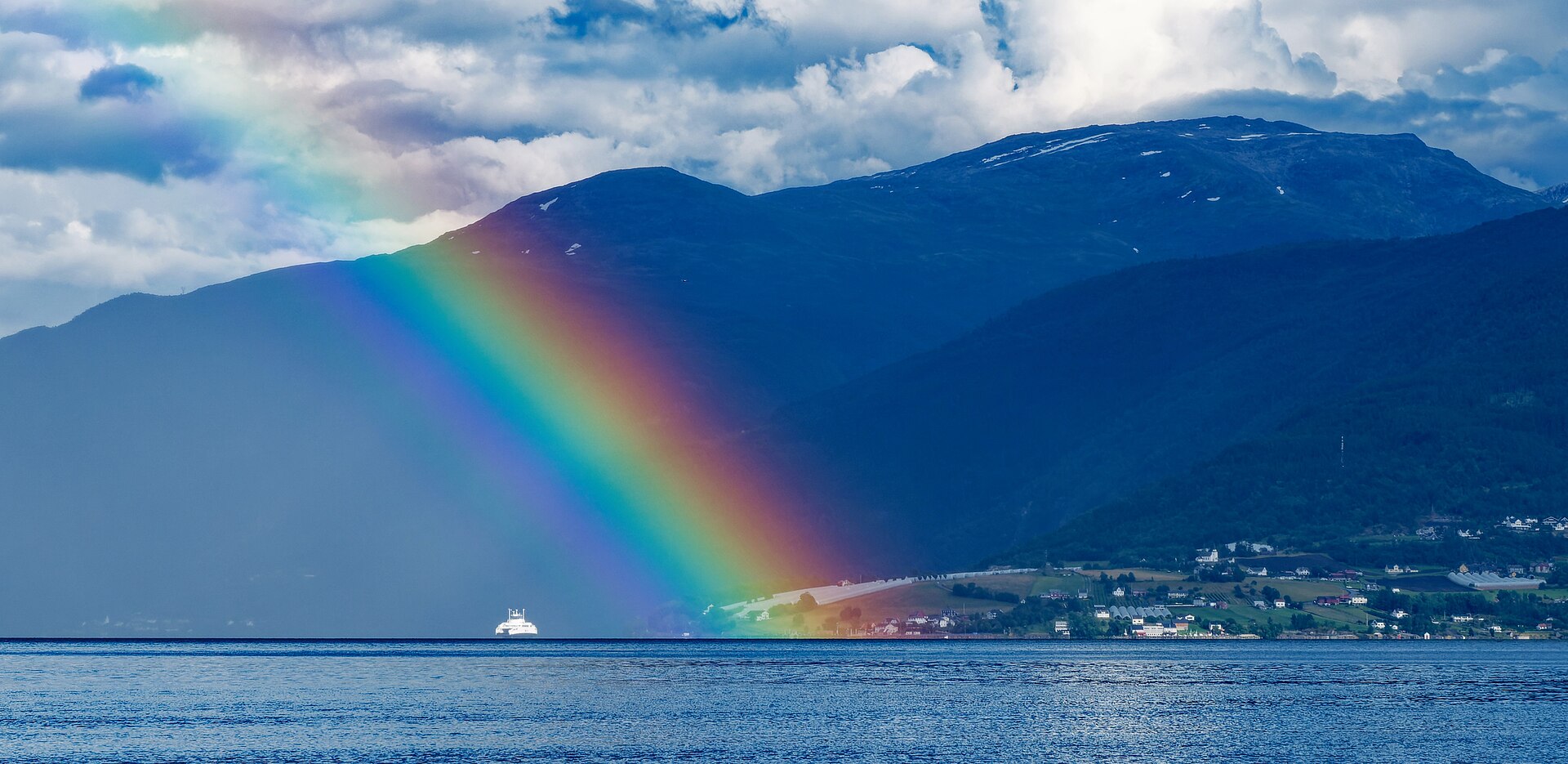
- The inner Sognefjord: the itinerary nobody writes, and the one I would take in July. — Photo: Holger Uwe Schmitt / CC BY-SA 4.0 via Wikimedia Commons.
Fares, flight frequencies and ferry schedules checked 1 September 2026 and converted at 9.35 NOK to the US dollar. Widerøe’s direct Oslo and Bergen services to Lofoten are seasonal and the winter routing changes; the Bodø–Moskenes ferry drops from up to nine daily sailings in summer to one or two from September. Aurora success rates quoted by operators are their own figures and should be treated as indicative.