Every guide that answers how many days in Norway starts from the wrong end. It picks a number, then fills it. Five days, here’s your five days. Seven days, here’s your seven. Nobody asks the question that actually determines the answer, which is what you came to see, and nobody does the arithmetic that turns that into a day count.
I went through the five pages currently ranking for this query. Between all of them I counted three real journey durations. Three. None mentions that Norway’s railway stops at Bodø and never reaches Tromsø, that driving Bergen to Tromsø is 28 hours before you stop for anything, or that there is no sensible direct route from Bergen to Lofoten. Those three facts rewrite most people’s plans.
So this page runs backwards. You tell me what you want, I give you the minimum number of days that survives contact with Norwegian transit times, and I tell you when a combination doesn’t fit and you should drop something. I’m not writing day-by-day plans here. Once you have your number, the route-by-route planning guide has the schedules. If you do not yet know what you want, start with the destinations worth the most days.
One principle underneath all of it: a travel day is not a sightseeing day. If your flight lands at 15:40 and you reach the hotel at 16:30 in November darkness, that was a transfer, not a day in Norway. Count it honestly and your trip stops disappointing you.
The minimum-days table, ordered by what you want
Take the number from your row, then check the transit section to see where it comes from. “Nights on the ground” excludes arrival and departure days.
| What you want | Realistic minimum | Nights on the ground | Comfortable length |
|---|---|---|---|
| Oslo only | 3 days | 2 | 3 nights |
| Bergen and one fjord arm | 4 days | 3 | 5 days |
| Oslo plus Bergen plus fjords | 6 days | 5 | 7-8 days |
| Deep fjords, two systems plus hiking | 7 days | 6 | 9-10 days |
| Northern lights, Tromsø base | 5 days | 4 | 5-6 days |
| Lofoten, summer | 6 days | 5 | 7-8 days |
| Lofoten, winter | 7 days | 6 | 8 days |
| Lofoten plus Tromsø | 8 days | 7 | 9-10 days |
| Fjords plus northern lights | 9 days | 8 | 11-12 days |
| Midnight sun in the Arctic | 5 days | 4 | 7 days |
| Oslo, Bergen, fjords, Lofoten, Tromsø | 14 days | 13 | 16 days |
The transit arithmetic nobody publishes
These numbers set every floor above. Norway is 1,750 km long and the population supporting its transport network is smaller than Ireland’s, so the gaps are wide and the frequencies thin.
| Journey | Duration | Frequency | Costs you |
|---|---|---|---|
| Oslo to Bergen, train | 6h30m-7h30m (496 km) | 5 westbound daily in summer, 4 in winter | Most of a day |
| Oslo to Bergen, night train | 23:05 dep, 06:47 arr | Nightly | A night’s sleep |
| Oslo to Bergen, flight | Just over 1h gate to gate | Frequent | Half a day door to door |
| Oslo to Bergen, driving via E16 | 464 km, about 7h30m clear | Any time, but not in winter | A full day, plan 7-10h |
| Oslo to Tromsø, flight | 1h50m-1h52m | 5-12 nonstop daily | Half a day |
| Oslo to Bodø, flight | About 1h25m | Multiple daily | Half a day |
| Bodø to Svolvær or Leknes, flight | Under 25 minutes | Several daily | An hour plus airport time |
| Oslo to Svolvær, direct | 2h25m shortest | Widerøe, mainly summer | Half a day |
| Oslo to Leknes, direct | About 2h15m | 7 Widerøe flights weekly | Half a day |
| Bodø to Moskenes, car ferry | 3h15m-3h30m | Up to 9 daily 18 May-6 Sep; 1-2 daily 1 Oct-17 May | Most of a day in winter |
| Bergen to Lofoten | No practical direct routing | Bergen-Bodø is Widerøe-only, very limited | A connection via Oslo, a full day |
| Bergen to Tromsø, driving | 28 hours without stops | n/a | Do not |
| Norway in a Nutshell, Oslo to Bergen | 10-12 hours active travel | Year-round, reduced in winter | A whole day, from 1,595 NOK ($171) |
Two of those lines do more damage to itineraries than the rest combined. The rail network ends at Bodø and does not continue north, so anyone imagining a train up the spine of the country flies the last leg. And Bergen to Lofoten has no workable direct option, so a west-coast-to-Arctic hop is a full travel day rather than a hop. The mechanics of ferries, passes and internal flights are covered properly in the domestic transport guide.
Start with the desire, not the number
“I want to see a fjord and I don’t have long”
Minimum: 4 days. Comfortable: 5.
The shortest honest fjord trip: fly into Bergen, sleep, spend a full day on the water and the Flåm branch, sleep again, fly out. Three nights, four calendar days, and it works because you skipped Oslo. With the comfortable fifth day added, the five-day Bergen and fjord route is the one to follow.
The core fjord day is about six hours of moving parts: the Flåm Railway from Myrdal down to Flåm is 55 minutes to an hour each way, the Nærøyfjord cruise runs roughly two hours across a 17 km fjord, and the Gudvangen to Flåm bus is 20 minutes. Bundled, that’s a six-hour package before you’re back at your bed. A real day, not an afternoon.
Verdict: four days gets you a genuine fjord. It does not get you Geirangerfjord, a hike above the tree line, or Oslo. Accept that and the trip is excellent. Bolt anything on and it collapses. The Flåm and Aurlandsfjord area is the right target at this length because everything sits inside a 40 km radius.
“I want the fjords properly, more than one arm”
Minimum: 7 days. Comfortable: 9-10.
Once you want two distinct fjord systems the arithmetic changes shape. Sognefjord and Geirangerfjord are not neighbours in any useful sense, and connections between the western towns are slow because roads go around water rather than through it. Add a hiking day and you need weather insurance: one clear day in three is normal on the west coast, so a schedule with no slack means you hike in cloud or not at all.
Seven days buys Bergen, two nights on a fjord, a transfer day, a second region and a buffer. Nine or ten adds Ålesund or a mountain day without sprinting. The overview of the fjord regions lays out which arm is which.
Verdict: the single best use of a week in Norway, and the trip I recommend most often. Skip the capital entirely if the fjords are the point.

“I want to see the northern lights”
Minimum: 5 days. Comfortable: 5-6.
This is where every competing article goes soft. They tell you the season runs roughly late September to late March and stop, as if arriving inside the season were the same as seeing something. Aurora viewing is a per-night coin flip weighted by cloud, and the only lever you control is how many nights you buy.
Do the maths with a deliberately conservative assumption. Say any given night in Tromsø is a 50/50 once you account for cloud, activity and your willingness to be driven two hours to find a hole in the sky. One night is 50%. Two is 75%. Three is 87.5%. Four is 94%. The curve is steep at the start and nearly flat after four, which tells you exactly where to stop spending.
One Tromsø operator’s own figures put the minimum at three to four nights for a 60-80% cumulative sighting probability, rising to 95-98% with four or more nights and at least two chase tours. Those come from a company selling chase tours, so treat them as marketing arithmetic. The same operator publishes something more interesting: across eight Tromsø operators, 1,346 tours over 81 nights between 1 September and 20 November 2025, they report 89.4% overall sighting success, strong or medium activity on 61% of nights, and skies under 30% cloud found on 93% of tours. The method is at least stated, which beats most claims in this space, but it remains an operator’s dataset about its own industry.
What both agree on, and what my own experience matches, is the shape rather than the value. One night to three is an enormous jump. Four to six is small. Three nights on the ground is the floor; four is where I’d put my own money. Three nights plus arrival and departure is a five-day trip. Oslo to Tromsø is only 1h50m with five to twelve nonstop departures daily, so the transfer is cheap in time, but a winter arrival still eats the day. For when the dark hours are long enough, see the month-by-month aurora timing breakdown.
Verdict: a two-night aurora trip is a lottery ticket, not a holiday. If two nights is all you can spare, spend the money elsewhere and come back. Five days is the entry price. Wider country-level options are in the national northern lights guide, but Tromsø is still the highest-percentage base for a short trip.
“I want Lofoten”
Minimum: 6 days in summer, 7 in winter. Comfortable: 7-8.
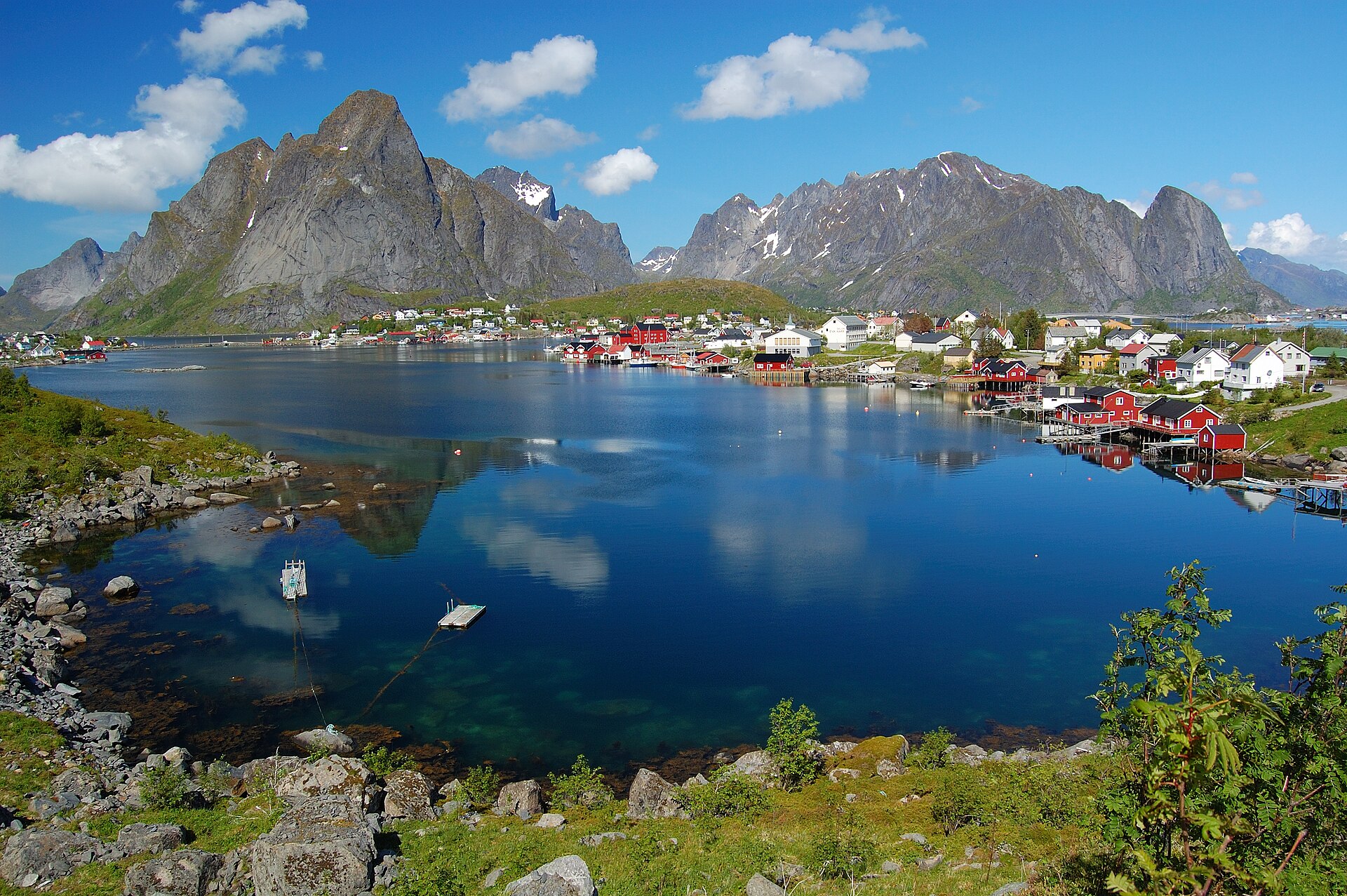
Lofoten is further and more awkward than the map suggests, and the seasonal difference in access is bigger than anywhere else in Norway. In summer you can fly Oslo to Svolvær direct in 2h25m, or Oslo to Leknes in about 2h15m on one of seven Widerøe flights a week. Those services are thin and mainly seasonal, so most people route Oslo to Bodø in 1h25m then take a sub-25-minute hop, or the Bodø to Moskenes car ferry at 3h15m to 3h30m.
That ferry is the trap. From 18 May to 6 September it runs up to nine departures a day and is a flexible way in with a car. From 1 October to 17 May it drops to one or two sailings daily, and at that frequency a missed connection is not an inconvenience, it is a lost day.
Then there’s the archipelago itself: roughly 150 km of single carriageway between Svolvær and Å, with the good bits at both ends. Two nights means one end, three means the chain. In winter add a day for weather.
Verdict: six days in summer and I wouldn’t go lower. Seven in winter, flying in and out rather than trusting the ferry. The Lofoten regional guide covers which village to base in, which matters more here than almost anywhere else.
“I want Lofoten and Tromsø together”
Minimum: 8 days. Comfortable: 9-10.
The best-value northern combination, and almost nobody sells it, because the itinerary industry is anchored to Oslo. Both sit north of the Arctic Circle, both are reachable via Bodø or short hops, and pairing them means your aurora nights and your landscape days overlap instead of competing.
Build it as three nights Lofoten, three or four in Tromsø, plus travel at each end and one internal transfer. Eight days is tight but honest; ten is relaxed. Crucially, Lofoten does not cost you aurora nights, because it sits at a similar latitude and your cumulative probability keeps accruing while you’re there. You are buying six or seven aurora nights for the price of a Tromsø-only trip’s four, which is the strongest argument in this whole article.
Verdict: going north in winter with eight days? Do this instead of a Tromsø-only week. More interesting, better odds. Context on the dark months is in the Norway winter travel guide.
“I want the fjords and the northern lights in one trip”
Minimum: 9 days. Comfortable: 11-12.
Yes, possible. No, not efficient. The fjords are on the southwest coast, the aurora is best around 69 degrees north, and there is no good land link. Driving Bergen to Tromsø is 28 hours without stops, so you fly, and thin direct services mean routing via Oslo and losing a full day.
The ledger for the shortest version: day 1 arrive Bergen, days 2-3 fjords, day 4 fly north via Oslo and do nothing else, days 5-8 Tromsø for four aurora nights, day 9 fly home. Nine days for six days of content, two full days burned in transit, and it only fits because the fjord section is cut to the bone.
There’s a season problem too. The aurora window is roughly late September to late March, which is exactly when the fjord region is wettest and darkest, when Flåm and Nærøyfjord services run reduced schedules, and when the light is gone by mid-afternoon. You are seeing the fjords in their worst season to catch the lights in their best. The seasonal timing guide details that trade-off.
Verdict: with nine days, do it, but go late February or March so the fjords still have usable daylight. With seven days, pick one. Forcing both into a week produces a trip that is 40% airports.
“I want the midnight sun”
Minimum: 5 days. Comfortable: 7.
The midnight sun is the one thing in Norway with a guaranteed outcome, which changes the maths entirely. It isn’t a probability, it’s astronomy. Above the Arctic Circle from roughly late May to late July the sun does not set. Cloud can hide it, but the light stays workable all night, so you get more usable hours per day than at any other time of year.
Hence the short minimum: one flight north, three nights, one flight back. You are not buying repeat attempts. Tromsø, Lofoten and Bodø all qualify. Dates and locations are in the midnight sun guide.
Verdict: the best days-to-payoff ratio in the country. A five-day midnight sun trip delivers what it promises. A five-day aurora trip is a gamble. That asymmetry should drive your booking more than most people let it.
“I just want the cities”
Minimum: 4 days for both. Comfortable: 5.
Oslo needs two full days, two and a half if you’re serious about museums. Bergen needs a day and a half, and one good day covers Bryggen, the fish market, the funicular and a decent dinner.
The link between them is the interesting part. The Bergensbanen crosses Hardangervidda at 1,237 metres, the highest mainline railway in Northern Europe, in 6h30m to 7h30m over 496 km, with five westbound departures daily in summer and four in winter. The night train leaves at 23:05 and arrives at 06:47, converting a travel day into a night.
Verdict: four days covers both cities if you take the night train. But I’d push back gently. Norway’s cities are pleasant and expensive, and they are not why the country is remarkable. With four days, go west. With three, stay in one city and use the one-base three-day plan.
What to skip, and what people get wrong
Skip driving Oslo to Bergen
464 km on the E16, around 7h30m clear and realistically 7 to 10 hours with stops. The train does it in 6h30m to 7h30m while you look out of the window and eat something, and in winter the road crosses high passes and is not recommended at all.
Norway in a Nutshell is a transfer, not a day trip
The one-way Oslo to Bergen version is 10 to 12 hours of active travel, from about 1,595 NOK ($171) per adult in 2026, checked September 2026. On a day you’d have spent travelling anyway it’s good value. As a there-and-back day trip from Oslo it’s a fourteen-hour endurance event to spend two hours on a fjord.
Do not add Lofoten to a seven-day fjord trip
The most common mistake I see. Bergen to Lofoten has no practical direct routing, the Widerøe Bergen-Bodø service is too infrequent to plan around, and you lose a day each way connecting via Oslo. Two days in airports to gain two nights is a bad trade. Go north or go west.
Two nights is not an aurora trip
Worth repeating, because the package market is built on it. Two nights is two attempts, short of the three-to-four-night threshold that even the operators selling the tours name as their own minimum. Weekend aurora breaks sell because they’re cheap, not because they work.
The one-night-per-town pattern
Six towns in eight days sounds thorough and delivers nothing. Transfers are long, the good hours are the early and late ones you spend packing, and single nights mean paying for beds you barely use. Two nights minimum in any base, three in Lofoten or Tromsø. For the first-trip mistakes that have nothing to do with day counts, see what first-timers get wrong in Norway.
“Is two weeks too long?”
No, and here I disagree with the received wisdom. Fourteen days is the first length at which you can see the south, the west and the Arctic without a single day feeling rushed. What two weeks is, is expensive, and that’s a budget question rather than a length one. The breakdown of what Norway actually costs is where to settle it.
How to build the number once you have it
Run your figure through these four checks before booking.
Subtract your travel days first. Write down actual flight times, not dates. A 14:00 arrival into Bergen in June still leaves six good hours. The same arrival into Tromsø in December leaves a hotel room and a dark window. Winter arrivals cost more of a day than summer ones, and the further north you go the more true that gets.
Convert one travel day into a night. The Oslo-Bergen sleeper at 23:05 arriving 06:47 is the highest-leverage decision in Norwegian trip planning: it turns a seven-hour daylight journey into a night you’d have spent horizontal anyway. On a six-day trip that’s a 17% increase in usable time.
Fly the long legs, take the train on the scenic one. Oslo to Bergen is the exception where rail beats the plane on experience. Everything north of Trondheim, fly: the rail network stops at Bodø, and the domestic flight system is the only genuinely dense part of Norwegian transport.
Build one buffer day per week, next to the weather-dependent thing. Not at the end where it becomes a spare airport day, but adjacent to your hike, your fjord cruise or your aurora chase. On the west coast one clear day in three is a normal expectation, not bad luck. A buffer day isn’t slack, it’s your second attempt.
If you land on seven days after all that, it’s the most commonly booked length for good reasons, and the week-long route options set out the two or three ways it can be sequenced. Land on fourteen and the two-week loop by car does the same job.
Frequently asked questions
Is 7 days enough for Norway?
Enough for one region done well, not for two regions in different parts of the country. Seven days is excellent for Bergen plus the fjords, or Lofoten, or a Tromsø aurora trip with days to spare. It is not enough to combine the fjords with the Arctic, which needs nine days minimum with two spent flying via Oslo.
How many days do I need for the fjords?
Four days minimum for one fjord arm, seven for two distinct systems with a hiking day. The core day around Flåm is about six hours of scheduled travel: roughly an hour on the Flåm Railway each way, two hours on the Nærøyfjord cruise, 20 minutes on the Gudvangen bus. Any plan treating the fjords as an afternoon is wrong.
How many nights in Tromsø for the northern lights?
Three is the floor, four is the sensible answer. The probability curve is steep early and flat late, so the third night buys a great deal and the sixth buys very little. One Tromsø operator names three to four nights as its own minimum for a 60-80% cumulative chance, and while that’s a commercial figure, it matches the shape of what happens in practice.
Is 5 days enough for Norway?
Yes, if you pick one thing. Five days works for Bergen and the fjords, for a Tromsø aurora trip with three nights on the ground, or for a midnight sun trip in June. It does not work for Oslo plus Bergen plus fjords, which needs six, and it does not work for Lofoten.
Can you see the fjords and the northern lights on the same trip?
You can, with nine days and a willingness to lose two of them to transit. There is no useful land connection: driving Bergen to Tromsø is 28 hours before stops and the railway ends at Bodø, so you fly, usually via Oslo. Go in late February or March rather than November so the fjord half still has daylight.
How long does it take to get from Oslo to Bergen?
Six and a half to seven and a half hours by train over 496 km, with five westbound departures daily in summer and four in winter, or just over an hour gate to gate by air. The overnight train leaves at 23:05 and arrives at 06:47. Driving the E16 is 464 km and about seven and a half hours clear, but plan seven to ten with stops.
What is the best month to go?
It depends on which half of this article applies to you. For fjords, hiking and long light, June to early September. For the aurora, late September to late March, with February and March giving the best mix of dark hours and workable daylight. For the midnight sun, late May to late July. There is no single best month, only a best one for a specific desire.
Is 2 weeks too long in Norway?
No. Fourteen days is the first length that lets you cover Oslo, Bergen, the fjords, Lofoten and Tromsø without any day feeling like a forced march, and for a country 1,750 km long that isn’t indulgent. The constraint on two weeks in Norway is money, not boredom.
Photo credits
- Lofoten is the single biggest day-count decision you will make. — Photo: User:Sveter (Please credit as “Petr Šmerkl, Wikipedia” in case you use this outside WMF pr / CC BY-SA 3.0 via Wikimedia Commons.
- Aurora viewing is a per-night probability, not a season you can simply book. — Photo: Andi Gentsch / CC BY-SA 2.0 via Wikimedia Commons.
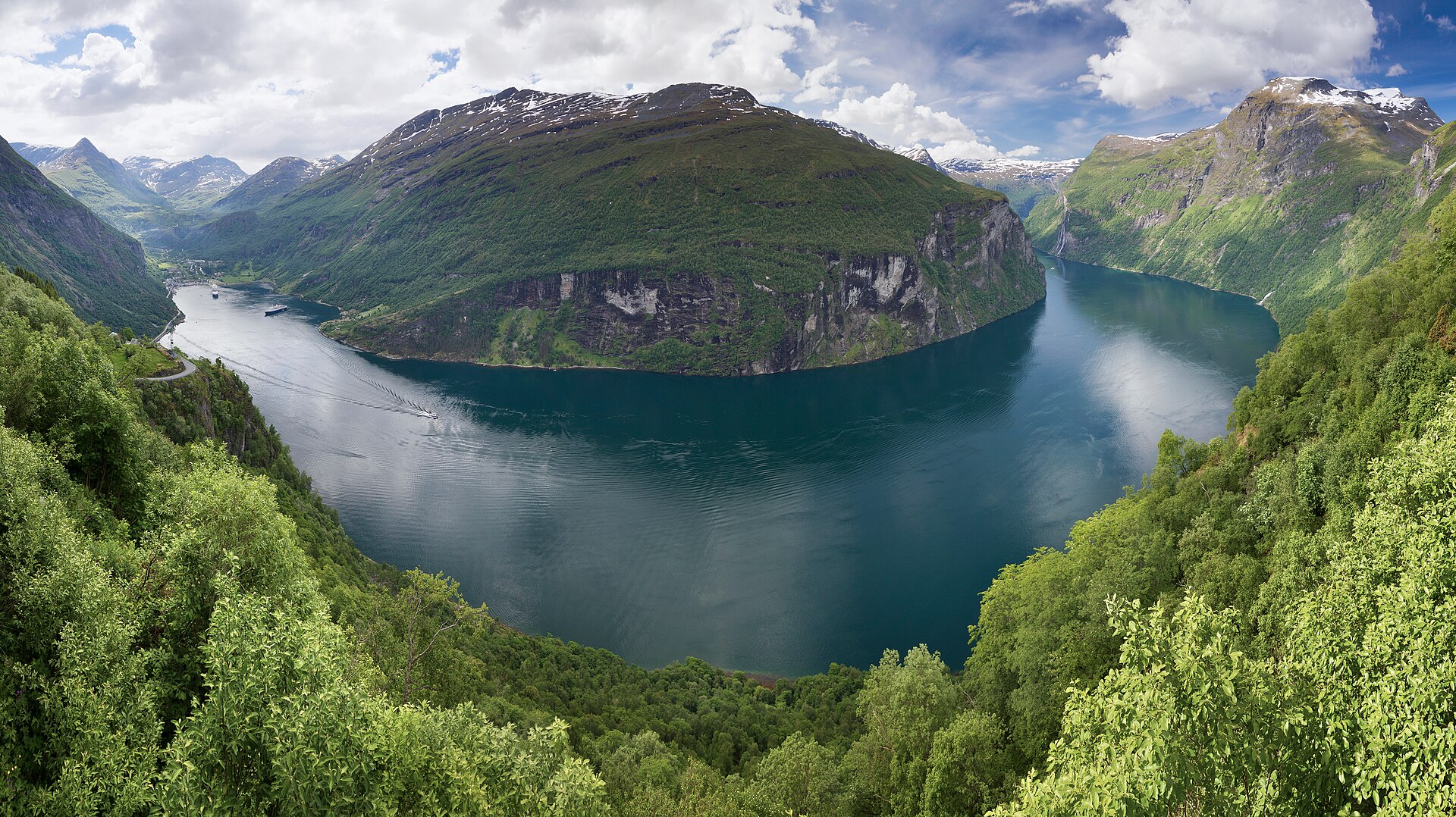
- The classic fjord region needs three days to be worth the transit cost. — Photo: Ximonic (Simo Räsänen) / CC BY-SA 3.0 via Wikimedia Commons.
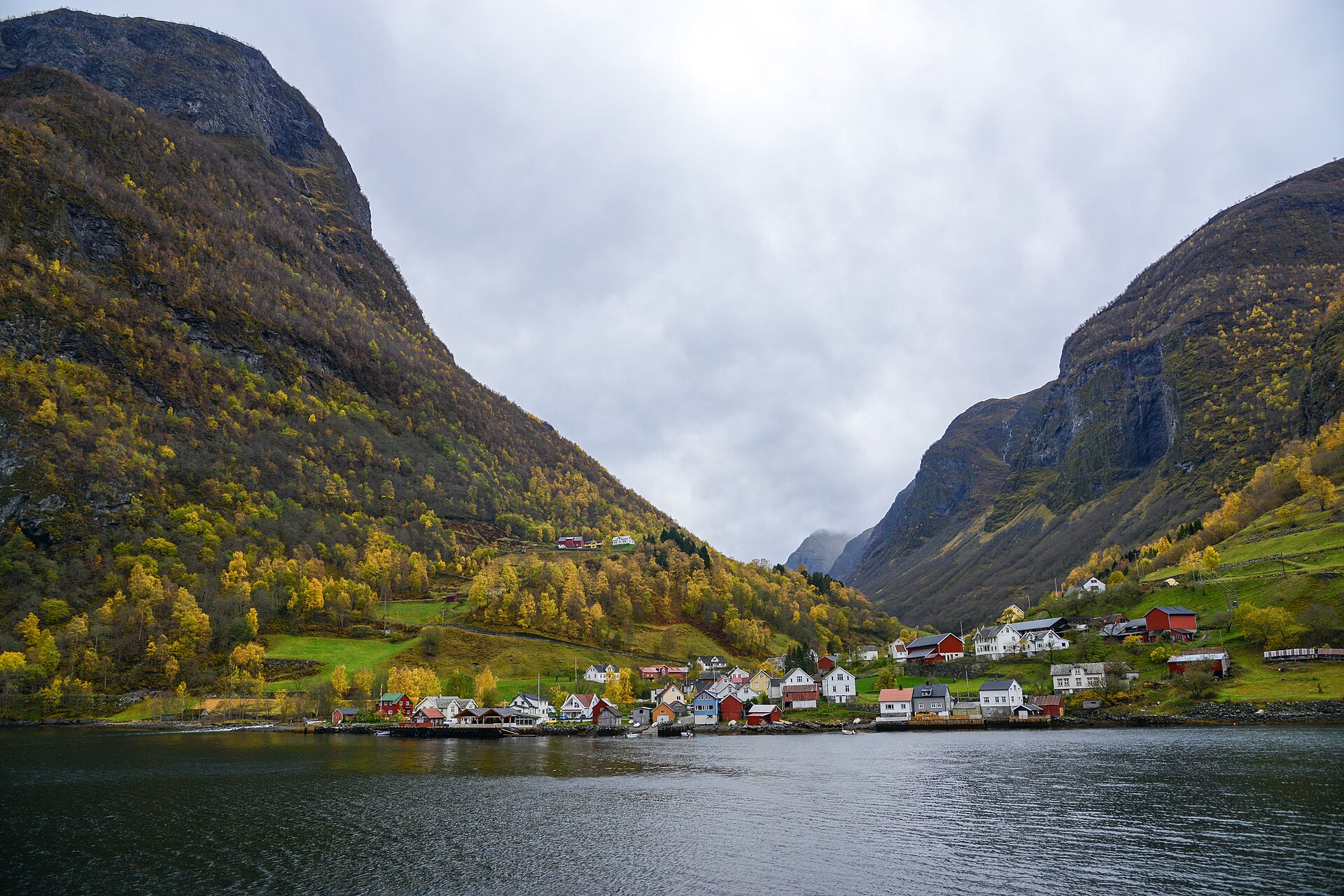
- The Naeroyfjord is reachable in a day from Oslo, but only just. — Photo: Jorge Láscar from Melbourne, Australia / CC BY 2.0 via Wikimedia Commons.
Journey times, frequencies and the 1,595 NOK ($171) Norway in a Nutshell fare were checked in September 2026 at 9.35 NOK to 1 USD. Ferry and flight frequencies change with the seasonal timetable, particularly the Bodø-Moskenes crossing, which drops from up to nine daily sailings to one or two from 1 October. Confirm times with the operator before locking in a plan built around a single connection.