Category: Things to Do in Norway

  • Best Things to Do in Norway: Fjords, Hikes, Cities & the Arctic

    Best Things to Do in Norway: Fjords, Hikes, Cities & the Arctic

    There are more spectacular things to do in Norway than any single trip can hold — which is a wonderful problem to have. If you only have the budget for one big trip in the next few years, Norway makes a strong case for being it. This is a country where the scenery does the heavy lifting: glacier-carved fjords with waterfalls dropping straight into the sea, a coastline that runs all the way into the Arctic, and a summer where the sun simply refuses to set. I’ve spent a lot of time figuring out how to actually see it without going broke or spending the whole trip in a rental car, and this guide is the result.

    So here are the best things to do in Norway, organized the way you’d actually plan a trip — by what you want out of it. Fjords and big-view hikes. Scenic train and road journeys. Cities with real character. The Arctic north, with its Northern Lights and midnight sun. We’ll cover the famous stuff (because it’s famous for a reason) and the quieter corners, and I’ll be honest about what’s worth the effort and what you can skip. There’s a planning section at the end with costs, timing, and how to get around, plus answers to the questions people ask me most.

    The short version: the single most popular thing to do in Norway is cruise a fjord — Geiranger or the Nærøyfjord are the headline acts — ideally paired with a scenic train like the Flåm Railway. Add a clifftop hike (Pulpit Rock is the accessible one), a couple of days in Bergen and Oslo, and, if you can reach the north, the Northern Lights in winter or the midnight sun in summer. Do that and you’ve seen the best of the country.

    Norway at a glance: the best experiences by season and effort

    Before we get into detail, here’s a quick-pick table of the marquee experiences. Use it to sketch a rough shape for your trip; every row gets a full write-up below.

    Experience Region Best season Time needed Effort
    Geirangerfjord cruise Western Norway May–Sept Half day Easy
    Nærøyfjord cruise (Norway in a Nutshell) Sognefjord Year-round 1–2 days Easy
    Preikestolen (Pulpit Rock) hike Stavanger / Lysefjord May–Oct 4 hrs Moderate
    Trolltunga hike Hardanger / Odda Jun–Sept 8–12 hrs Very hard
    Flåm Railway Sognefjord Year-round 1 hr each way Easy
    Northern Lights Tromsø / Lofoten / Alta Late Sept–Mar 2–4 nights Easy
    Midnight sun Above the Arctic Circle Late May–mid-Jul Easy
    Lofoten Islands road trip Northern Norway Jun–Sept (summer) / Feb–Mar (aurora) 3–5 days Easy–Moderate
    Bergen & Bryggen Western Norway Year-round 1–2 days Easy
    Oslo museums & Opera House Eastern Norway Year-round 2 days Easy
    Atlantic Ocean Road drive Møre og Romsdal Year-round 1–2 hrs Easy

    Experience the fjords (the number-one reason people come)

    The fjords are the thing. For the full rundown, see our complete guide to the Norwegian fjords. Glaciers gouged these deep sea inlets over successive ice ages, leaving sheer rock walls, hanging valleys, and farms clinging improbably to ledges hundreds of metres up. Two of the western fjords — the Geirangerfjord and the Nærøyfjord — are jointly inscribed on the UNESCO World Heritage list, and honestly, photos undersell them. You need the scale of a boat sliding under a 1,400-metre wall to get it.

    A fjord sightseeing boat cruising Norway's narrow fjord country near Flam

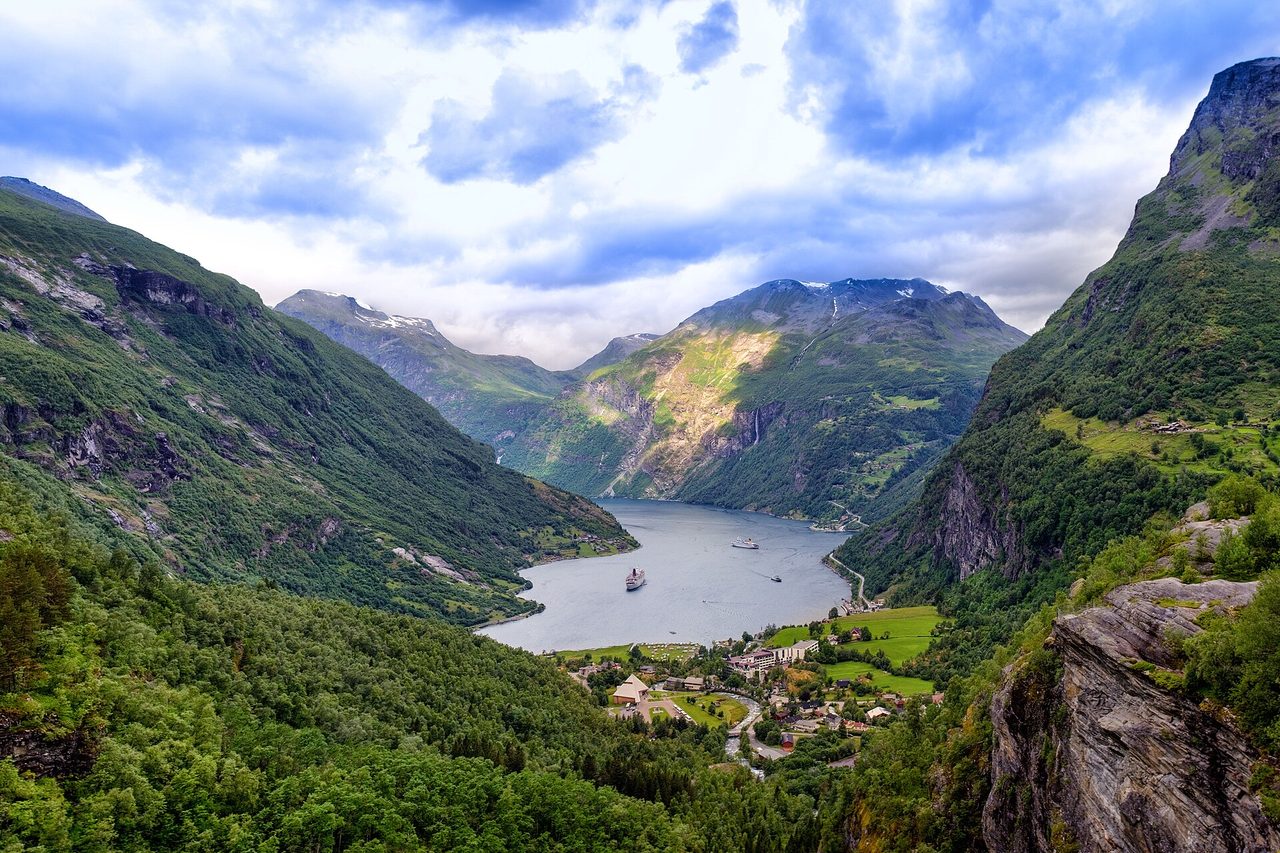
    Geirangerfjord

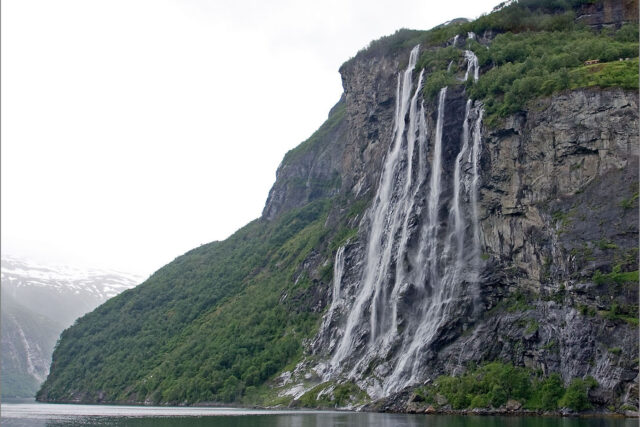
    If you see one fjord, this is the one most people mean. The Geirangerfjord is about 15 km of near-vertical cliffs, with the Seven Sisters waterfall fanning out across the rock face opposite a single cascade the locals nicknamed “the Suitor.” Sightseeing cruises run from Geiranger village from roughly late May into September — there’s a classic 75-minute trip and a quieter hybrid-electric boat. For the postcard view from above, drive up to the Dalsnibba skywalk (around 1,500 m, weather permitting) or stop at the Flydalsjuvet ledge just outside the village.

    My honest take: Geiranger gets swarmed by cruise-ship day-trippers in the middle of the day in July and August. Stay overnight and take an early-morning or evening boat instead — flat water, gold light, and a fraction of the crowd.

    The Nærøyfjord, Aurlandsfjord and Sognefjord

    The Sognefjord is the “King of the Fjords” — one of the world’s longest and deepest at around 205 km, branching into narrower arms as it reaches inland. The most spectacular of those arms is the Nærøyfjord, which pinches down to about 250 m wide with walls towering well over a kilometre. The Flåm–Gudvangen cruise through the Aurlandsfjord and Nærøyfjord (now on quiet electric boats) is the single best fjord cruise most visitors will do, and it’s the centrepiece of the famous “Norway in a Nutshell” route described later.

    Hardangerfjord and Lysefjord

    The Hardangerfjord, the “Queen of the Fjords,” is the closest big fjord to Bergen and the gateway to Trolltunga. Time a visit for fruit-blossom season — usually a few weeks from around mid-May — and the orchards turn the hillsides pink and white. Further south, the Lysefjord near Stavanger is the one with the two famous cliffs above it, Pulpit Rock and Kjeragbolten; sightseeing boats from Stavanger sail right under the 604-metre Preikestolen face.

    How to actually experience a fjord

    You’ve got four good options, roughly in order of cost: take a regular car ferry (cheap, scenic, and you’re on the water like everyone else); ride a dedicated sightseeing cruise; go kayaking for the quiet, low-to-the-water version (half-day guided trips from around 1,200 NOK); or book a fast RIB safari if you want wind-in-your-face speed. If you’re driving anyway, the local ferries are an underrated way to see fjords for the price of a road crossing.

    Norway’s iconic hikes and viewpoints

    Some of the most photographed spots on the planet are Norwegian clifftops, and reaching them on foot is one of the best things to do in Norway if your knees are up for it. A reality check first: these are real mountain hikes with fast-changing weather, and the marquee ones are summer-only (roughly June to September) unless you go with a guide and winter gear. Bring layers, food, water, and proper boots — trainers don’t cut it.

    Hikers on Preikestolen (Pulpit Rock) high above the Lysefjord

    Preikestolen (Pulpit Rock) — the accessible icon

    This flat-topped slab hangs 604 m above the Lysefjord, and it’s the one to do if you want the big-cliff experience without an epic. It’s about 8 km round trip with roughly 500 m of climbing — call it four hours — on a well-built, busy trail. The trailhead is about 40 minutes from Stavanger; parking runs around 250 NOK. Go early or late to dodge the midday rush, and mind your footing near the edge: there are no railings, by design.

    Trolltunga — the big one

    The “Troll’s Tongue” is the slab of rock that launched a thousand vertigo-inducing photos, jutting out about 700 m above a lake near Odda. It’s also a serious undertaking: roughly 20 km round trip from the upper parking, around 800 m of ascent, and 8–12 hours on your feet. The self-guided season is short, roughly June through September. Start at dawn, use the higher P3 parking or shuttle to shorten it, and be ready to queue for the photo in peak summer. If that sounds like a lot, it is — this is a full day of endurance hiking, not a casual walk. For trail-by-trail details on this and every other big Norwegian trail — parking costs, season windows, the DNT hut system — see our complete guide to hiking in Norway.

    The Trolltunga rock ledge jutting out above Ringedalsvatnet lake

    Kjeragbolten — the boulder over the void

    The other Lysefjord icon: a boulder wedged in a crevasse with about 984 m of nothing beneath it. The hike is around 11 km and 6–10 hours, with steep granite slabs and fixed chains that get genuinely treacherous when wet. Stepping onto the boulder is optional and properly exposed — plenty of people enjoy the view without doing it, and you should only attempt it in dry conditions.

    Besseggen and Reinebringen

    For a classic without the cliff-edge fear factor, the Besseggen ridge in Jotunheimen National Park walks a knife-edge between a turquoise lake and a blue one — about 14 km, 6–8 hours, usually done by taking the early boat from Gjendesheim to Memurubu and hiking back. Up in the Lofoten Islands, Reinebringen delivers arguably the best view in the country for far less time: a short but brutally steep climb of nearly 2,000 Sherpa-built stone steps to look down over Reine. It’s only a couple of hours, but skip it in the rain — those steps get slick.

    Not a hiker? You can still get the views. The Stegastein viewpoint near Flåm cantilevers out 650 m above the Aurlandsfjord (reachable by car or an electric-minibus tour), and the Dalsnibba and Flydalsjuvet lookouts hand you the Geiranger panorama for the price of a short drive.

    Legendary scenic journeys

    Half the joy of Norway is the getting-around. The country has turned its railways and roads into attractions in their own right, and several deserve a spot on any best-of list.

    The Flam Railway descending through the mountains toward the fjord

    The Flåm Railway and “Norway in a Nutshell”

    The Flåm Railway (Flåmsbana) drops from the mountain station at Myrdal down to the fjord at Flåm — 20 km, about an hour, through 20 tunnels and past the thundering Kjosfossen waterfall, where the train pauses for photos. It’s touristy and brief, but it earns the hype; sit on the left going down for the best waterfall views. Expect to pay roughly 570 NOK one-way (around 850 round trip). The “Norway in a Nutshell” tour bundles this train with the Bergen Railway and the Nærøyfjord cruise into one self-guided day — the easiest way to string together the greatest hits without a car. For how it stacks up against every other guided and self-guided option — operators, prices, and what’s actually worth booking — see our complete guide to Norway tours and excursions. You can also DIY the exact same legs by booking train and boat tickets separately, often for less, if you don’t mind doing the logistics yourself.

    The Bergen Railway

    The Oslo–Bergen line is one of Europe’s great train rides — 6.5 to 7.5 hours across forests, lakes, and the bare, arctic-feeling Hardangervidda plateau, topping out at the lonely station of Finse (around 1,222 m, reachable only by rail). Book early for “minipris” fares as low as ~290 NOK; walk up on the day and you’ll pay a lot more. The line ends in Bergen — when you arrive, our guide to the best things to do in Bergen has you covered.

    The Atlantic Ocean Road and Trollstigen

    The Atlantic Ocean Road is a short, world-famous stretch of causeways and eight bridges hopping between skerries near Kristiansund — the curving Storseisundet Bridge is the money shot. The drive itself is only about 20 minutes, but give it a couple of hours for the boardwalk viewpoints. It’s open year-round; summer is easy, while autumn storms send waves crashing over the road for the dramatic photos.

    The curving Storseisundet Bridge on Norway's Atlantic Ocean Road

    Trollstigen — the “Troll’s Ladder,” 11 hairpins climbing a sheer mountainside — is Norway’s most thrilling drive, usually open from late spring into October. One important note: after major rockfall problems it was closed for much of 2024, reopened in 2025 after extensive safety work, and was operating normally for the 2026 season. Heavy rain can still trigger short temporary closures, so check the live road status before you commit to driving it.

    The coastal voyage and the great road trip

    For the slow, all-in version of the coast, the Hurtigruten (and newer Havila) coastal ships sail the working route between Bergen and Kirkenes, calling at 34 ports — about 6–7 days one way, or 11–12 round trip. Northbound leans toward cities and excursions; southbound is pitched at nature. It’s transport-with-a-view rather than a luxury cruise, and in winter the sailings double as Northern Lights hunts. If you’d rather drive, Norway’s 18 National Tourist Routes are purpose-built for road-tripping, and the country’s “right to roam” (allemannsretten) even lets you wild camp responsibly almost anywhere.

    Cities and culture

    Don’t let anyone tell you to skip Norway’s cities. They’re small, walkable, and full of character, and the museums punch well above their weight. A day or two in Bergen and Oslo bookends a fjord trip nicely, and our full guide to the best things to do in Oslo shows how to make the most of the capital.

    The colorful wooden Hanseatic houses of Bryggen in Bergen, Norway

    Bergen — gateway to the fjords

    Bergen is the obvious base for the western fjords, and a lovely place in its own right. The headline sight is Bryggen, the UNESCO-listed row of leaning, brightly painted Hanseatic trading houses — duck into the narrow wooden passages behind the facades, where the galleries and workshops are. Ride the Fløibanen funicular up Mount Fløyen for the city-and-fjord panorama and easy walking trails, browse the fish market, and accept that it will probably rain: Bergen gets well over 200 wet days a year, so pack a proper jacket and don’t pin everything on blue sky.

    Oslo — small capital, big museums

    Oslo has quietly become one of Scandinavia’s best city breaks. Walk up the sloping marble roof of the Opera House for free, any time, for harbour views. Wander Vigeland Park, the world’s largest sculpture park by a single artist (over 200 figures, including the famous stamping “Angry Boy”). The waterfront MUNCH museum holds versions of The Scream, and the new National Museum is the largest art museum in the Nordics. One heads-up: the Viking ships are between homes — the old Viking Ship Museum on Bygdøy is closed for a major rebuild, with the new Museum of the Viking Age expected to open around 2027, so check before you plan a trip around them. In the meantime, the Fram polar-exploration and Kon-Tiki museums are open and excellent.

    The sloping white marble roof of the Oslo Opera House

    Stavanger, Ålesund and Trondheim

    Stavanger is the launchpad for Pulpit Rock, but its white-painted old town and the smart Norwegian Petroleum Museum make it worth a night — here’s our full guide to the best things to do in Stavanger, Lysefjord cruises included. Ålesund was rebuilt entirely in Art Nouveau style after a 1904 fire and is one of Europe’s prettiest towns — climb the 418 steps up Mount Aksla at sunset for the view over the islands. Trondheim, the former Viking capital, has Nidaros Cathedral (the northernmost Gothic cathedral in the world) and the colourful, café-filled Bakklandet district by the river.

    The Arctic north and the islands

    Cross the Arctic Circle and Norway changes character entirely: sharper peaks, fishing villages on stilts, reindeer by the roadside, and a sky that does extraordinary things depending on the season. The north is far — budget extra time and probably a domestic flight — but it’s where some of the most memorable things to do in Norway are.

    The fishing village of Reine in the Lofoten Islands

    The Lofoten Islands

    If your social feed has ever shown you red fishing cabins beneath jagged peaks reflected in still water, that was almost certainly Lofoten. The villages of Reine and Hamnøy are the classic shots; you can sleep in a converted rorbu (fisherman’s cabin) right over the water. Summer is for hiking, the midnight sun, and even surfing at Unstad; winter brings the Northern Lights arcing over the peaks, though the short days and snowy roads make it more of a commitment. Either way, it’s a destination in its own right — give it three to five days, and see my complete Lofoten Islands guide for routes, rorbuer and real costs.

    Tromsø and the far north

    Tromsø, at 69°N, is the most accessible Arctic base: an airport, good restaurants, and the widest range of tours anywhere in the north. It’s the hub for Northern Lights chases in winter and whale watching, dog sledding, and Sami experiences year-round. Ride the Fjellheisen cable car for the view over the city and the dramatic Arctic Cathedral below. Further afield, Senja rivals Lofoten with a fraction of the crowds, the North Cape (Nordkapp) marks the road’s end at a 307-metre cliff over the Barents Sea, and Svalbard — a flight beyond the mainland, where polar bears outnumber people — is the ultimate Arctic add-on for those with the time and budget. For everything waiting up there, see our complete guide to things to do in Tromsø and Arctic Norway.

    Natural phenomena: the lights, the sun and the ice

    Two of Norway’s biggest draws are essentially about light, and which one you get depends entirely on when you come.

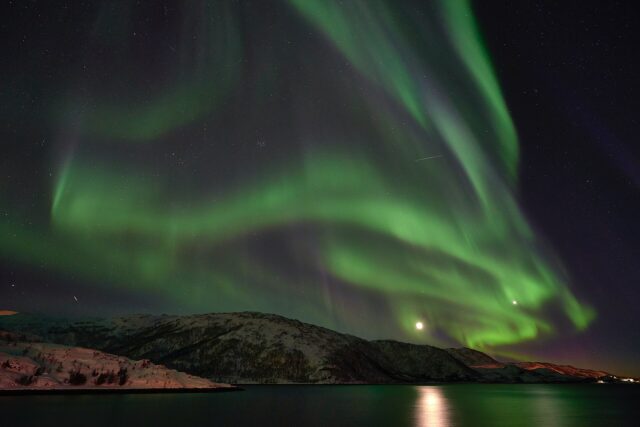
    The northern lights glowing green over the Arctic near Tromso

    The Northern Lights

    The aurora season runs roughly from late September to late March, when the nights are dark enough — peak visibility is November to February in the far north. You need darkness, clear skies, and a bit of luck, so base yourself in the north (Tromsø, Lofoten, or Alta, the self-styled “City of the Northern Lights”) and give it several nights to beat the weather odds. A guided “aurora chase” in a minibus is the sweet spot: the guides drive to wherever the sky is clearest. Activity has been unusually strong the last couple of winters, near the peak of the solar cycle, but never treat a sighting as guaranteed — plan a few nights and enjoy the snowy landscape regardless. For the full guide, see our northern lights in Norway guide.

    The midnight sun

    Flip the calendar and, above the Arctic Circle, the sun simply doesn’t set for weeks — roughly late May to mid-July in Lofoten and Tromsø, and a touch longer at the North Cape. It’s genuinely disorienting and wonderful: you can hike, kayak, or fish at midnight in soft gold light. Bring an eye mask, because the daylight is relentless and not every room has blackout curtains.

    Glaciers and waterfalls

    Mainland Europe’s largest glacier, the Jostedalsbreen, sprawls across the western mountains, and you can walk on its blue ice with a certified guide — Nigardsbreen is the most popular spot, with family-friendly options. Never step onto a glacier without a guide; the crevasses are lethal. For waterfalls, you’re spoiled: the Vøringsfossen near Hardanger has a dramatic stepped viewing platform, and in May the spring snowmelt has every cliff in the country running with water.

    Outdoor adventures and wildlife

    Beyond the big hikes, Norway is a playground for active travellers, and the wildlife is a genuine draw rather than an afterthought.

    • Dog sledding: gliding behind a team of huskies through the Arctic winter (roughly November–April) is unforgettable. You can ride along or, on longer tours, learn to drive your own team. Tromsø, Alta, and Kirkenes are the main bases.
    • Whale watching: match the season to the species. In winter (around November–January), orcas and humpbacks follow the herring into the fjords near Tromsø and Skjervøy. In summer, sperm whales are reliably seen off Andenes in Vesterålen, where deep canyons sit close to shore.
    • Skiing and snowmobiling: Norway is the birthplace of skiing, with reliable cross-country trails and downhill resorts like Trysil and Hemsedal. Guided snowmobile safaris are a fast way to cover the winter backcountry.
    • Wildlife safaris: see Ice-Age musk oxen on a guided safari in Dovrefjell (summer only), puffins and sea eagles on boat trips from Lofoten, Vesterålen, or the bird island of Runde, and semi-wild reindeer almost anywhere in the north.
    • Viking history: with Oslo’s ships in storage until ~2027, the Lofotr Viking Museum in Lofoten — a reconstructed chieftain’s longhouse — is the best place to step into the Viking Age.

    Norwegian food and drink worth trying

    Norway is expensive to eat in, but the quality of the raw ingredients — especially seafood — is exceptional. A few things to seek out: just-caught salmon and Arctic cod (the dried cod, or skrei in season, is a national institution); king crab in the far north, often on a “safari” where you pull the pots yourself; and brown cheese (brunost), the caramel-coloured, slightly sweet cheese Norwegians shave onto waffles and bread. In Sami areas, look for bidos, a hearty reindeer stew. Norwegians are also serious about coffee — they’re among the world’s biggest per-capita drinkers — so the café culture in Oslo, Bergen, and Trondheim is excellent. To save money, do what locals do and assemble picnics from the supermarket (Rema 1000, Kiwi); the tap water is some of the best in the world and completely free.

    The best things to do in Norway by season

    Norway is really two different countries depending on when you visit, so let your season pick your trip rather than the other way around.

    Long golden summer light over the peaks of the Lofoten Islands

    Summer (June–August): midnight sun and open roads

    This is peak season for good reason — all the mountain roads and hikes are open, fjord cruises run at full tilt, the landscapes are green, and above the Arctic Circle the sun never sets. The trade-off is crowds and the highest prices, especially in July. Book accommodation and the marquee experiences well ahead.

    Winter (December–March): aurora and snow

    Winter is for the Northern Lights, dog sledding, snowmobiling, skiing, and ice hotels, with the moody half-light of the polar night in the far north. The high mountain passes (Trollstigen, Sognefjellet) close, and daylight is short, so plan a focused trip — usually built around the Arctic — rather than a big driving loop. February and March often bring clearer skies and a little more daylight.

    Shoulder season (May, September–October): the value sweet spot

    If I had to pick, I’d often go in May or September. You get roaring waterfalls from the snowmelt (May) or fall colour (September), far fewer crowds, and prices noticeably below peak. The catch is that some high roads and hikes may still be snowbound in early May or closing by late October — so build in a little flexibility.

    Plan your trip: timing, costs and getting around

    The experiences above are the fun part; this section is the homework that makes them happen smoothly.

    The best time to visit Norway

    There’s no single best time — it depends on what you’re after. For a full month-by-month breakdown, see our guide to the best time to visit Norway. Come June to August for fjords, hiking, and the midnight sun; late September to March for the Northern Lights; and May or September for the best balance of decent weather, lower prices, and elbow room. For a month-by-month breakdown, the official Visit Norway weather guide is a useful reference.

    How many days do you need?

    Here’s a rough guide based on how trips usually shake out:

    • 4–6 days: Bergen plus the fjords (Norway in a Nutshell and a fjord base) — the classic short trip.
    • 7–10 days: the southern loop — Oslo, the fjords, Bergen, and one marquee hike. A week is enough to see the highlights without rushing.
    • 10–14+ days: add the Arctic — Tromsø or Lofoten for the lights or the midnight sun. The north is far, so give it the time it deserves.

    How much does a trip to Norway cost?

    Let’s be straight: Norway is one of Europe’s most expensive countries, especially for alcohol, restaurants, and fuel. As a rough per-person daily budget excluding flights, plan on around $85/day if you’re backpacking (hostels, self-catering, free hikes), $125–140/day mid-range (a 3-star hotel or rental, one restaurant meal, some paid activities), and $300+/day at the luxury end. The big money-savers: cook some of your own meals, drink the free tap water, hike instead of paying for attractions, book trains early for cheap “minipris” fares, and take advantage of the right to roam for free wild camping. Tipping isn’t expected, which softens the blow a little.

    Getting around

    Your main choice is car versus public transport. A rental car is best for the fjords, the Atlantic Road, and Lofoten — anywhere you want flexibility — but budget for tolls (automatic, via AutoPASS), frequent car ferries, and slow average speeds on winding roads; rentals run roughly 500–1,200 NOK/day plus fuel. Trains are scenic and comfortable on the main lines (book early for cheap fares), though there’s no rail north of Bodø. Ferries and express boats are essential — and beautifully scenic — in fjord country. To reach the Arctic, you’ll likely fly (Tromsø, Bodø for Lofoten, Alta). The free Entur app plans trains, buses, and ferries nationwide in one place.

    Entry requirements and a note on responsible travel

    Norway is in the Schengen Area but not the EU. US, UK, Canadian, and Australian visitors don’t need a visa for short stays, but a new European travel authorization called ETIAS (around €20, valid up to three years) is expected to take effect in late 2026 — check the official EU ETIAS site before you book, as the exact start date may shift. Finally: a few honeypot spots (Geiranger, parts of Lofoten, Trolltunga) now get genuinely overwhelmed in peak summer. Visiting in shoulder season, going early or late in the day, and treading lightly under the right-to-roam rules all help keep these places special.

    Frequently asked questions

    What is Norway best known for?

    Norway is best known for its fjords — deep, glacier-carved sea inlets like the Geirangerfjord and Nærøyfjord — along with the Northern Lights, the midnight sun, dramatic clifftop hikes such as Pulpit Rock and Trolltunga, Viking heritage, and scenic journeys like the Flåm Railway. It’s a nature-first destination above all.

    How many days do you need in Norway?

    For complete day-by-day routes, see our Norway itinerary guide.

    For the fjord highlights around Bergen, four to six days is enough. To add Oslo and a marquee hike, plan seven to ten. If you want to reach the Arctic for the Northern Lights or midnight sun, give yourself ten days to two weeks, since the north is a long way from the south.

    Is Norway expensive to visit?

    Yes — it’s one of the priciest countries in Europe, particularly for eating out, alcohol, and fuel. A mid-range traveller should budget roughly $125–140 a day excluding flights. You can cut costs significantly by self-catering, hiking (free), drinking the excellent tap water, booking trains early, and wild camping under the right-to-roam rules.

    What is the best time of year to visit Norway?

    June to August for fjords, hiking, and the midnight sun; late September to March for the Northern Lights; and May or September for the sweet spot of fewer crowds and lower prices. Your ideal season depends entirely on whether you’re chasing summer scenery or winter lights.

    When can you see the Northern Lights in Norway?

    The aurora season runs from roughly late September to late March, with the best odds from November to February in the far north (Tromsø, Lofoten, Alta). You need dark, clear skies, so stay several nights to improve your chances and consider a guided chase that drives to the clearest weather.

    Which fjord should I visit?

    For the most dramatic, classic scenery, the Geirangerfjord is the headline. For the best cruise experience, the narrow Nærøyfjord (part of “Norway in a Nutshell”) is hard to beat. If you’re near Stavanger, the Lysefjord pairs with Pulpit Rock; near Bergen, the Hardangerfjord is closest and lovely in blossom season.

    Is Pulpit Rock or Trolltunga the better hike?

    Choose Pulpit Rock (Preikestolen) if you want a spectacular clifftop with a manageable four-hour round trip — it’s the accessible icon. Choose Trolltunga only if you’re a fit, experienced hiker ready for an 8–12 hour day. They’re in different regions (Stavanger versus Odda), so most trips realistically do one or the other.

    What is “Norway in a Nutshell” and is it worth it?

    It’s a self-guided combination ticket linking the Bergen Railway, the Flåm Railway, and a Nærøyfjord cruise into one greatest-hits route between Oslo and Bergen. It’s genuinely scenic and saves you planning headaches. If you’re comfortable booking each leg yourself, you can usually replicate it for less — but the packaged version handles the timing for you.

    Do you need a car in Norway?

    Not necessarily. The classic fjord route (Oslo–Flåm–Bergen) is easily done by train and boat, and the Arctic is reached by plane plus local tours. A car shines for the Atlantic Road, remote fjord country, and a Lofoten road trip, where flexibility matters most. Many travellers happily do a southern trip car-free.

    Is Norway safe for tourists?

    Norway is consistently ranked among the safest countries in the world, with very low crime. The real risks are outdoors: fast-changing mountain weather, unfenced clifftops, and slippery winter roads. Respect the conditions, check trail and road status, and don’t push a summit hike in bad weather.

    Can you drink the tap water in Norway?

    Yes — Norwegian tap water is clean, cold, and among the best in the world. Skip the bottled water and refill your own; it’s one of the easiest ways to save money in an expensive country.

    Final thoughts

    Norway rewards a bit of planning more than almost anywhere I’ve travelled. Pick your season first — summer for fjords and the midnight sun, winter for the aurora — then build around one or two anchor experiences and leave room to slow down. The country’s real magic tends to happen in the quiet moments: an evening fjord with the cruise ships gone, a ridge to yourself before the crowds, the sky going green over a snowy fjord. Get the timing right and almost everything on this list delivers. Use the planning section above to shape your days, and start with the experience that made you want to come in the first place.

    This guide will be kept up to date as seasons, prices, and access change. Always confirm current opening dates, road status, and ticket prices with official sources before you travel.


    About this guide

    Written and maintained by the NorwayTourism.org editorial team — travelers and writers focused on practical, first-hand Norway trip planning. We cite official tourism, transport, and heritage sources and refresh our guides regularly. Last updated: June 2026.

    Sources & further reading

    • Visit Norway — the official tourism board (seasons, regions, activities)
    • UNESCO — West Norwegian Fjords (Geirangerfjord & Nærøyfjord) World Heritage listing
    • Norwegian Scenic Routes — National Tourist Routes and live road status (Trollstigen, Atlantic Road)
    • European Union — official ETIAS travel authorization information

    Photo credits

    All photos are used under their respective Creative Commons or public-domain licenses.

    • The Geirangerfjord, one of the most popular things to do in Norway — Photo: Andreas Trepte / CC BY-SA 2.5 via Wikimedia Commons. Source
    • A fjord sightseeing boat cruising Norway’s narrow fjord country near Flam — Photo: Fosgate at Norwegian Wikipedia (CC0) via Wikimedia Commons. Source
    • Hikers on Preikestolen (Pulpit Rock) high above the Lysefjord — Photo: Svein-Magne Tunli / CC BY-SA 3.0 via Wikimedia Commons. Source
    • The Trolltunga rock ledge jutting out above Ringedalsvatnet lake — Photo: Tanya Tulupenko tulutanya (CC0) via Wikimedia Commons. Source
    • The Flam Railway descending through the mountains toward the fjord — Photo: W. Bulach / CC BY-SA 4.0 via Wikimedia Commons. Source
    • The colorful wooden Hanseatic houses of Bryggen in Bergen, Norway — Photo: scott1346 from Mechanicsville, MD, USA / CC BY 2.0 via Wikimedia Commons. Source
    • The sloping white marble roof of the Oslo Opera House — Photo: Pudelek (Marcin Szala) / CC BY-SA 4.0 via Wikimedia Commons. Source
    • The fishing village of Reine in the Lofoten Islands — Photo: Virtual-Pano / CC BY-SA 4.0 via Wikimedia Commons. Source
    • The northern lights glowing green over the Arctic near Tromso — Photo: Adithya Ananth hashinclude (CC0) via Wikimedia Commons. Source
    • The curving Storseisundet Bridge on Norway’s Atlantic Ocean Road — Photo: CHG / CC BY 3.0 via Wikimedia Commons. Source
    • Long golden summer light over the peaks of the Lofoten Islands — Photo: Ximonic (Simo Räsänen) / CC BY-SA 4.0 via Wikimedia Commons.