Last updated: June 2026
I have slept in a fisherman’s cabin on stilts over the Norwegian Sea, in a chain hotel by Oslo Central with a breakfast buffet the length of a bowling lane, in a self-service mountain hut I opened with a borrowed key, and in a tent pitched free on a fjord-side meadow because Norwegian law says I can. Each one taught me something about this country that the others couldn’t.
Wondering where to stay in Norway? The short answer: base yourself in Oslo for culture, Bergen for the fjords, Tromsø for northern lights, and Lofoten for scenery — then mix hotels with at least one cabin, rorbu, or unique stay. Expect roughly 1,200–2,500 NOK (about $125–260) per night for a mid-range double, breakfast almost always included.
That’s the answer-box version. The honest version is longer, because Norway punishes lazy accommodation planning more than almost any country I know. Distances are huge, the best places sell out six to twelve months ahead, and the price difference between a smart booking and a panicked one can fund three extra days of travel.
This guide covers the whole decision: which region to base yourself in, what each accommodation type actually is (hytte, rorbu, glass igloo, snow hotel, DNT hut), the neighbourhoods worth paying for in Oslo, Bergen, Tromsø and Stavanger, real 2026 prices in NOK and USD, and when to book what. I’ll also tell you where I think the money is wasted.
Where to Stay in Norway at a Glance
Norway rewards the base-camp approach: pick two or three regions, stay several nights in each, and do day trips — rather than changing beds every night. Here’s the country in one table.
| Region / base | Best for | Typical mid-range double (2026) | Signature stay |
|---|---|---|---|
| Oslo | Museums, food, easy arrival | 1,400–2,200 NOK ($145–230) | Historic grand hotel or harbour-view room |
| Bergen | Fjord gateway, wooden-city charm | 1,400–2,400 NOK ($145–250) | Converted warehouse by Bryggen |
| Fjord villages (Flåm, Geiranger, Balestrand) | Classic fjord scenery | 1,500–2,800 NOK ($160–295) | Victorian-era fjord hotel |
| Stavanger | Lysefjord, Preikestolen, food scene | 1,200–2,000 NOK ($125–210) | Harbour hotel by the old town |
| Ålesund | Art Nouveau streets, Hjørundfjord | 1,400–2,500 NOK ($145–260) | Waterfront warehouse conversion |
| Trondheim | Nidaros Cathedral, student energy | 1,200–2,000 NOK ($125–210) | Riverside wharf hotel |
| Lofoten Islands | Drama per square metre | 1,500–3,500 NOK ($160–370) | Rorbu fishing cabin on the water |
| Tromsø & the Arctic | Northern lights, midnight sun | 1,500–2,800 NOK ($160–295) | Aurora dome or snow hotel night |
Prices are my realistic planning ranges for 2026, converted at roughly 9.5 NOK to the dollar. They swing hard with season — a 1,500 NOK Tromsø room in May can cost double in February.
How to Choose Your Base Region
Most first-timers try to see all of Norway in a week. You can’t — the country is 1,750 km top to bottom, and the good stuff hides at the end of slow, beautiful roads. Choose your bases by what you came for, not by how the map looks.
Oslo: culture, food and the easiest landing
Nearly everyone flies into Oslo, and I’d argue for giving it two nights rather than the zero many fjord-chasers allow. The museum cluster on Bygdøy, the Munch and National Museums, and a genuinely exciting food scene make it more than a transit stop — my full list is in the Oslo travel guide. Hotels concentrate around Karl Johans gate and Oslo Central station, which is exactly where you want them: the city is built for walking and the airport train takes 20 minutes. Budget brands like Citybox run self-service doubles from around 800–900 NOK; the grand old pair — the Continental and the Bristol — start around 3,000–3,500 NOK and earn it.
Bergen and the western fjords: the classic first-timer base
If this is your first trip and fjords are the goal, Bergen is the smart base. It’s a postcard city in its own right — the wooden Bryggen wharf, the Fløibanen funicular, the fish market — and it sits at the mouth of the fjord network, with the Bergen Railway, the Flåm spur and the express boats radiating out of it. I’ve broken down the day-trip logic in my Bergen guide and the wider Norwegian fjords guide.
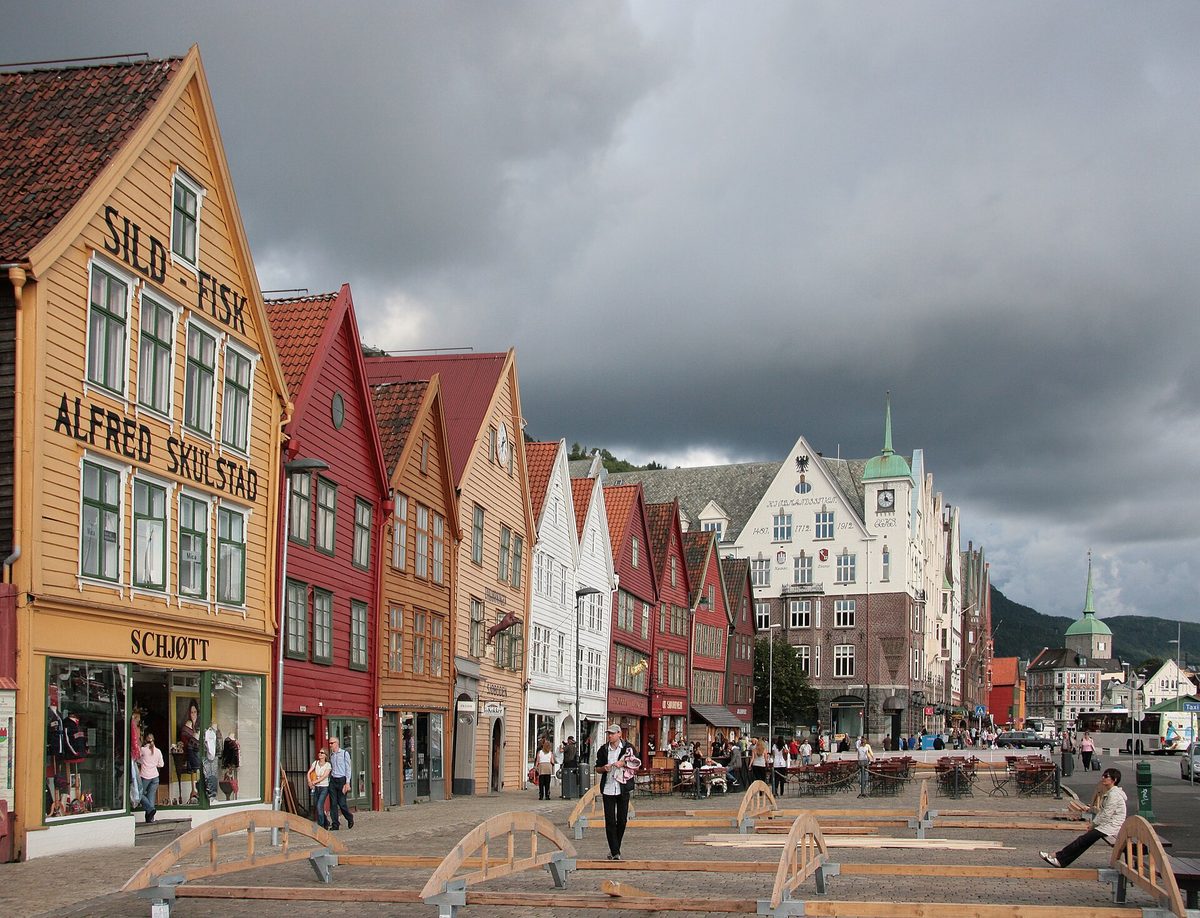
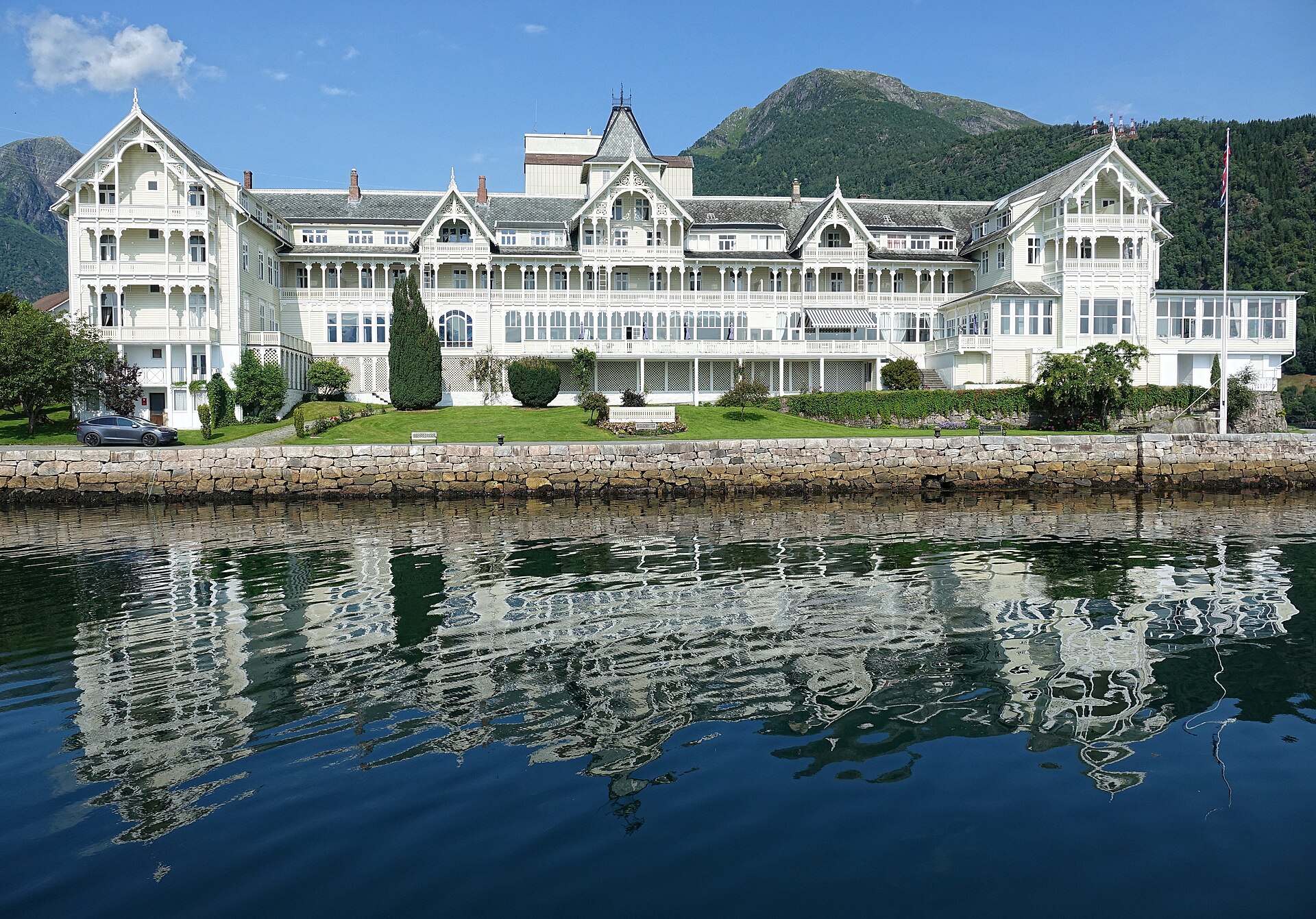
The deeper question is whether to sleep in the city or out in a fjord village. My answer: both. Bergen for two or three nights, then at least two nights somewhere the tour buses leave by 5pm. Flåm has the famous railway and feels like a theme park at midday in July; it empties beautifully by evening. Geiranger has the single most dramatic setting in Norway and the venerable Hotel Union, with spa packages for two from around 4,700 NOK in summer 2026. Balestrand, my personal pick, is the quiet one — a Sognefjord village with express-boat connections to Bergen and Flåm, and the family-run Kviknes Hotel, hosting travellers since 1877, right on the quay.
Stavanger: Lysefjord, Preikestolen and an underrated food city
Stavanger gets treated as a hiking launchpad — it’s the base for Preikestolen and the Lysefjord, both covered in my hiking in Norway guide — but it’s also one of the country’s best eating cities, with oil money and a culinary school keeping standards high. Stay near Vågen harbour: you get the cobbled white lanes of Gamle Stavanger (old town) on one side and the restaurant strip on the other. Doubles run noticeably cheaper than Oslo or Bergen, often 1,200–2,000 NOK mid-range.
Ålesund and the northwest: Art Nouveau and the connoisseur’s fjord
Ålesund burned down in 1904 and was rebuilt all at once in Art Nouveau style, which makes it the prettiest town centre in Norway — turrets and spires wrapped around a working harbour. Stay on the Brosundet channel if you can. Hotel Brosundet, a converted warehouse, is the address; it even rents out the tiny Molja lighthouse on the breakwater as what’s reportedly Norway’s most unusual hotel room. From here you reach Geirangerfjord and the quieter, arguably more beautiful Hjørundfjord, where the 1891 Hotel Union Øye once hosted Arthur Conan Doyle and assorted royalty.
Trondheim and central Norway
Trondheim rarely makes the first-trip shortlist, and that’s fair — but if you’re driving the length of the country or riding the Trondheim–Bodø train north, it’s a rewarding overnight: Nidaros Cathedral, the wharf-lined Nidelva river, and a big student population keeping the bars honest. Wharf-conversion hotels along the river are the characterful choice, and prices sit below the Oslo/Bergen level.
Lofoten Islands: rorbu country
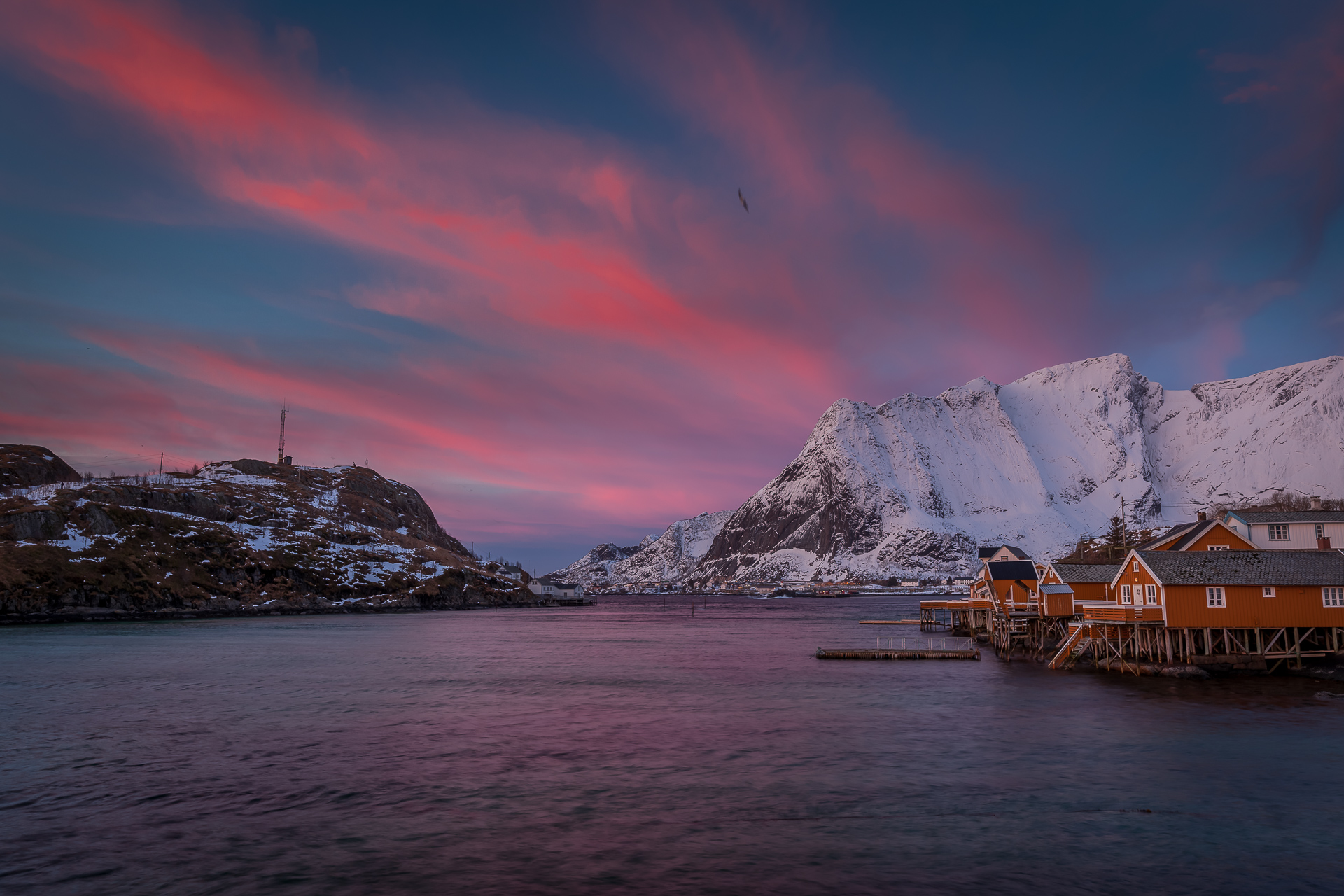
Nowhere in Norway does accommodation matter more than Lofoten, because here the place you sleep is the experience: a red-painted rorbu — a fisherman’s cabin on stilts over the water — with Olstinden’s spire filling the window. The islands’ bases each have a personality, which I cover properly in my Lofoten Islands guide: Svolvær is the practical town with the most tours and restaurants; Henningsvær is the stylish village with galleries and the best food; Reine and Hamnøy are the scenery superlatives; unglamorous Leknes sits in the middle, about an hour from both ends, which makes it a shrewd base for short trips. Book Lofoten before anywhere else on your itinerary — the famous rorbuer sell out 6–12 months ahead for summer.
Tromsø and the Arctic north: aurora and midnight sun
Tromsø is the Arctic’s de facto capital — 350 km north of the Arctic Circle, with proper restaurants, a university crowd, and the country’s densest cluster of northern-lights infrastructure. From September to early April it’s aurora central (the full strategy is in my northern lights guide); in summer the midnight sun keeps the hiking trails lit at 1am. Stay central on the island — the cathedral-side Tromsdalen neighbourhood is cheaper but leaves you a bridge away from everything, a point I expand on in the Tromsø guide. Further out, Alta, Senja and Kirkenes are where the serious aurora stays live: igloo hotels, glass domes, snow hotels. More on those below, because they deserve their own section.
How to combine bases: one week vs two
With a week, I’d pick one of these proven combinations rather than inventing a five-base sprint — my Norway itinerary guide maps each one day by day.
| Trip length | Combination | Nights | Season logic |
|---|---|---|---|
| 5–7 days | Oslo + Bergen + one fjord village | 2 + 3 + 2 | May–September |
| 7 days, winter | Oslo + Tromsø | 2 + 5 | September–March for aurora |
| 10 days | Oslo + Bergen/fjords + Lofoten | 2 + 4 + 4 | June–August (midnight sun) |
| 14 days | Oslo + fjords + Ålesund + Lofoten + Tromsø | 2 + 4 + 2 + 4 + 2 | Summer, with internal flights |
Notice what’s missing: one-night stays. Every bed change in Norway costs you half a day of packing, driving and checking in. Three nights somewhere beats one night in three somewheres, every time.
Every Type of Accommodation in Norway, Explained
Norway’s accommodation vocabulary confuses people, so let me translate it properly — what each thing is, what it costs in 2026, and who it suits.
Hotels and the Norwegian chains
Three chains dominate: Thon, Scandic and Strawberry (the company formerly known as Nordic Choice, rebranded in 2023, running Comfort, Quality, Clarion and Clarion Collection hotels). They’re reliable, mostly mid-range, and they all understand the one non-negotiable of Norwegian hotel culture: breakfast. A proper included buffet — eggs, smoked salmon, pickled herring, fresh bread, brown cheese — is standard at virtually every mid-range hotel and above. Eat like it’s your main meal; in Norway’s price climate, it effectively is.
Two insider notes. First, Clarion Collection properties (Havnekontoret in Bergen, With in Tromsø) include a free light evening meal as well as breakfast — soup, a hot dish, salads. On a week-long trip that quietly saves a couple of thousand kroner. Second, the chains’ own loyalty rates routinely undercut the booking sites by around 5%, and Norwegian hotels often discount weekends in cities — business towns empty out on Friday.
At the top end, Norway finally got its own Michelin hotel Keys in 2025: eleven properties made the first list, with the timber-built Storfjord Hotel near Ålesund and the historic Walaker Hotell in Solvorn taking two Keys each. Notably, most of the winners are small fjord and island places, not city towers — which tells you where Norway’s real hotel magic lives.
Hytte: the Norwegian cabin
The hytte is not a tourism product; it’s a national institution. Norway counts more than 450,000 holiday cabins — roughly one for every twelve people — and renting one is the closest you’ll get to living like a Norwegian: wood stove, drying rack, a view, and blessed silence.
You’ll meet two kinds. Campsite cabins are the budget workhorses — simple four-bunk huts at holiday parks from roughly 500–900 NOK a night, shared bathrooms, perfect for road trips. Private rental cabins, booked through Norwegian platforms like Norgesbooking and Inatur (or Airbnb, though the same cabin is often cheaper elsewhere), run about 1,500–3,500 NOK a night for something genuinely nice, and they swallow families and groups whole.
One thing catches foreigners out every time: Norwegian self-catering means self-catering. At many cabin rentals you bring your own bed linen and towels (or rent a set, typically 100–200 NOK per person), and you’re expected to clean the place yourself before leaving or pay a cleaning fee of several hundred kroner. Read the listing’s fine print; the “cheap” cabin with mandatory fees sometimes isn’t.
Rorbu: the Lofoten fishing cabin
A rorbu (plural rorbuer) is a traditional fisherman’s cabin, typically red, typically on wooden stilts over the shoreline, built for the seasonal cod fishery and now converted into Norway’s most atmospheric self-catering stays. The real concentration is in Lofoten. Eliassen Rorbuer at Hamnøy — the cabins in the most photographed shot in northern Norway — start around 1,500–2,000 NOK; Svinøya Rorbuer in Svolvær from about 1,700 NOK; and Nusfjord Arctic Resort, a whole preserved fishing village, runs roughly 2,000–3,700 NOK. Most sleep two to six and have kitchens, which matters when a modest restaurant dinner for two costs 800 NOK.
Are they “authentic”? Some are 19th-century originals upgraded inside; many are modern rebuilds in the old style. I’ve stayed in both and honestly: with the sea slapping the pilings under your floor at 2am, you will not care.
Glass igloos and aurora domes
The pitch is irresistible — lie in bed, watch the northern lights through a glass ceiling — and northern Norway has quietly built a whole category around it. The benchmark is Lyngen North on the Lyngenfjord about two hours from Tromsø, whose 360-degree glass igloos face the Lyngen Alps across the water; expect roughly 6,500–7,500 NOK a night in aurora season. Cheaper variations get you most of the magic: GLØD’s heated Aurora Canvas Domes outside Alta run around 2,300 NOK with breakfast, and Arctic Dome operates glamping domes across the country from about 2,000–4,400 NOK. Near Oslo, Wonderinn’s mirrored-glass cabins (3,100–4,400 NOK) do the architecture without the aurora odds.
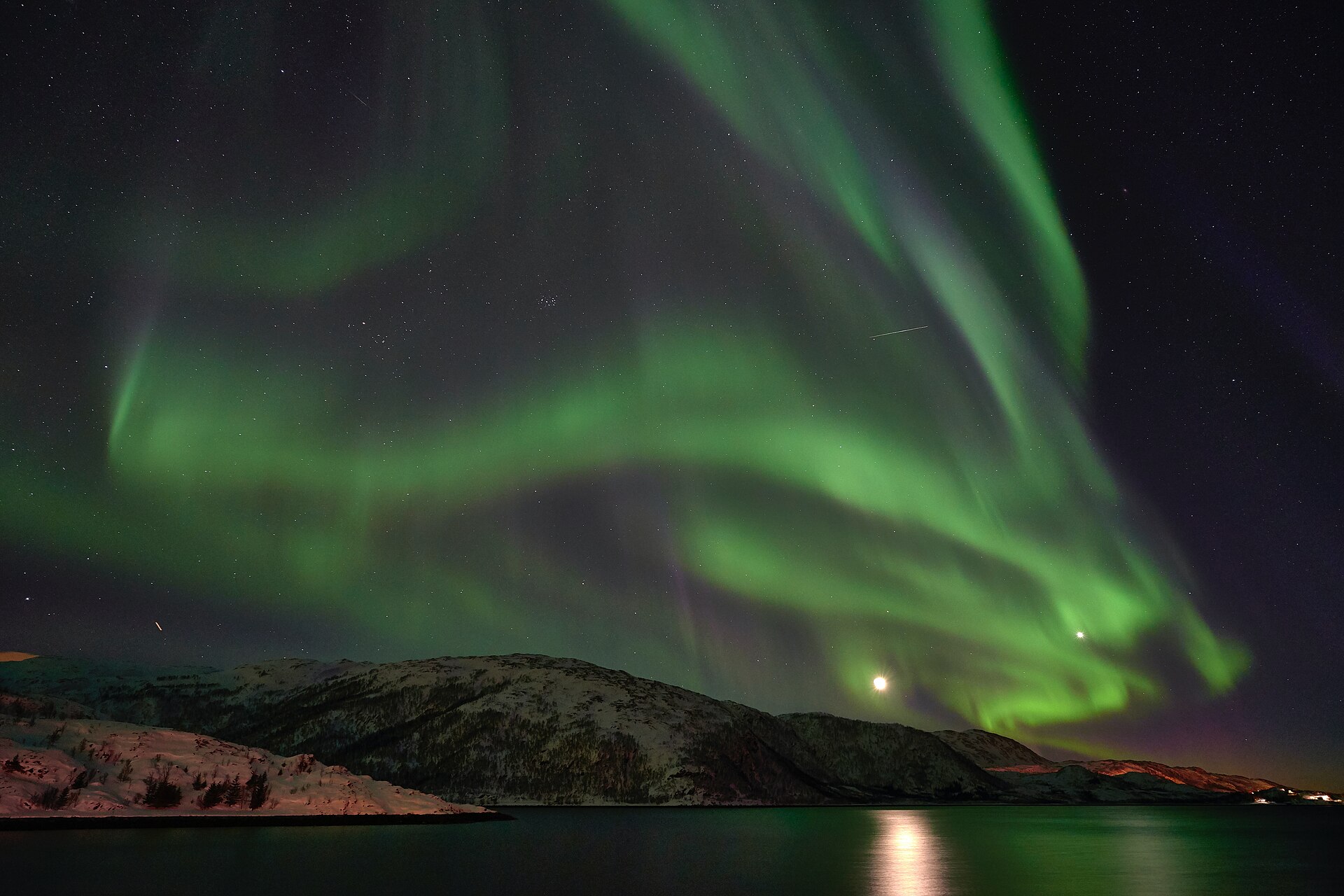
My honest advice: treat a glass igloo as a one- or two-night splurge attached to a cheaper Tromsø or Alta base, not as your whole Arctic accommodation plan. You’re paying for a roof you can see through; if it’s cloudy — and it often is — you’ve bought a very expensive skylight. Two nights gives you two chances.
Ice hotels and snow hotels
Norway runs two of the world’s great sleep-on-ice experiences, and they’re genuinely different from the glass-igloo crowd: here the building itself is carved from winter.
Sorrisniva Igloo Hotel outside Alta — the world’s northernmost ice hotel — is rebuilt from scratch every December: around 250 tonnes of ice and 7,000 cubic metres of snow, sculpted into a new theme each year, open roughly 20 December to early April. Overnights start around 3,700 NOK including breakfast and sauna; day visitors can tour it for about 395 NOK, which I’d actually recommend if you’re aurora-focused — see the art, sleep somewhere warm.
Snowhotel Kirkenes, way out by the Russian border, claims a different superlative: it’s open 365 days a year, kept at a constant minus four degrees. The package includes a thermal sleeping bag, sauna, breakfast and a three-course dinner — typically 4,000–6,000 NOK for two — and they sensibly won’t let you book the snow rooms two nights running. One flag for winter 2026–27 planners: Tromsø Ice Domes, the third big name, has paused overnight bookings for the coming season, so don’t build plans around it.
Hostels and budget hotels
Norway’s hostel scene is thin by European standards — high wages make dorm economics hard — but what exists is clean and safe. Dorm beds in Oslo and Bergen run about 270–480 NOK (Anker Hostel in Oslo and Marken Gjestehus in Bergen are the dependable names), with Tromsø from around 400 NOK and spiking hard in aurora season. Watch the linen trick: many Norwegian hostels charge 70–100 NOK extra for sheets if you don’t bring your own.
Honestly, though, the better budget play in cities is the no-frills hotel: Citybox and Comfort Hotel Xpress sell compact private doubles with self-service check-in from roughly 800–1,000 NOK. Split two ways, that beats two dorm beds and gets you a private bathroom. Breakfast at these brands is an optional add-on (110–140 NOK) rather than included — the one tier of Norwegian hotels where the buffet rule breaks.
Camping and allemannsretten: the free option
Norway’s allemannsretten — the right to roam, written into law since 1957 — lets you pitch a tent free on uncultivated land, provided you stay at least 150 metres from inhabited houses and cabins and move on after two nights in one spot. It is the single best accommodation deal in Europe: the fjord view that costs 4,000 NOK through a hotel window costs nothing through a tent flap. Mind the open-fire ban near forest from 15 April to 15 September, pack out everything, and note that heavily visited corners — parts of Lofoten especially — now restrict wild camping locally, so use campsites there.
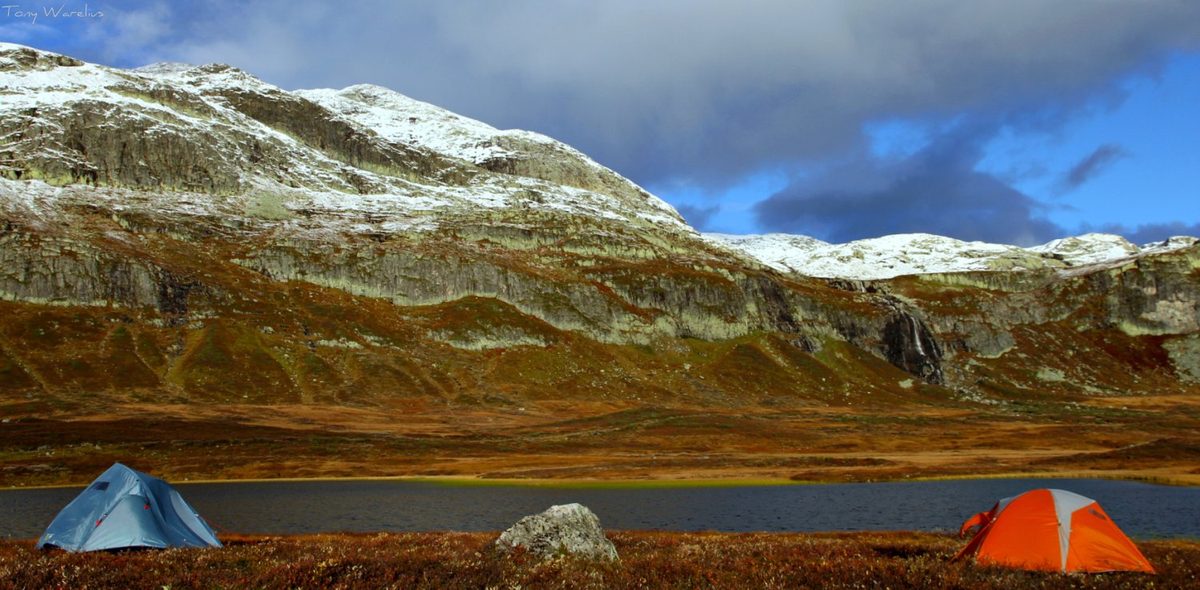
Organised campsites (a thousand-plus across the country) charge about 150–350 NOK for a tent pitch and around 330–400 NOK for a motorhome with electricity, and almost all rent those budget hytter I mentioned. Campervanning, incidentally, is how a large share of Norwegians do Norway — and tents, campervans and boats are explicitly exempt from the new tourist tax coming in 2027.
DNT mountain huts: Norway’s best-kept accommodation secret
The Norwegian Trekking Association (DNT) runs a network of around 550–600 mountain cabins threaded along marked trails through the country’s best walking country. They come in three flavours: staffed lodges with meals and made beds; self-service cabins stocked with food you log and pay for by app; and no-service cabins where you bring everything. Access to the unstaffed ones comes via the famous DNT key, available to members for a small deposit.
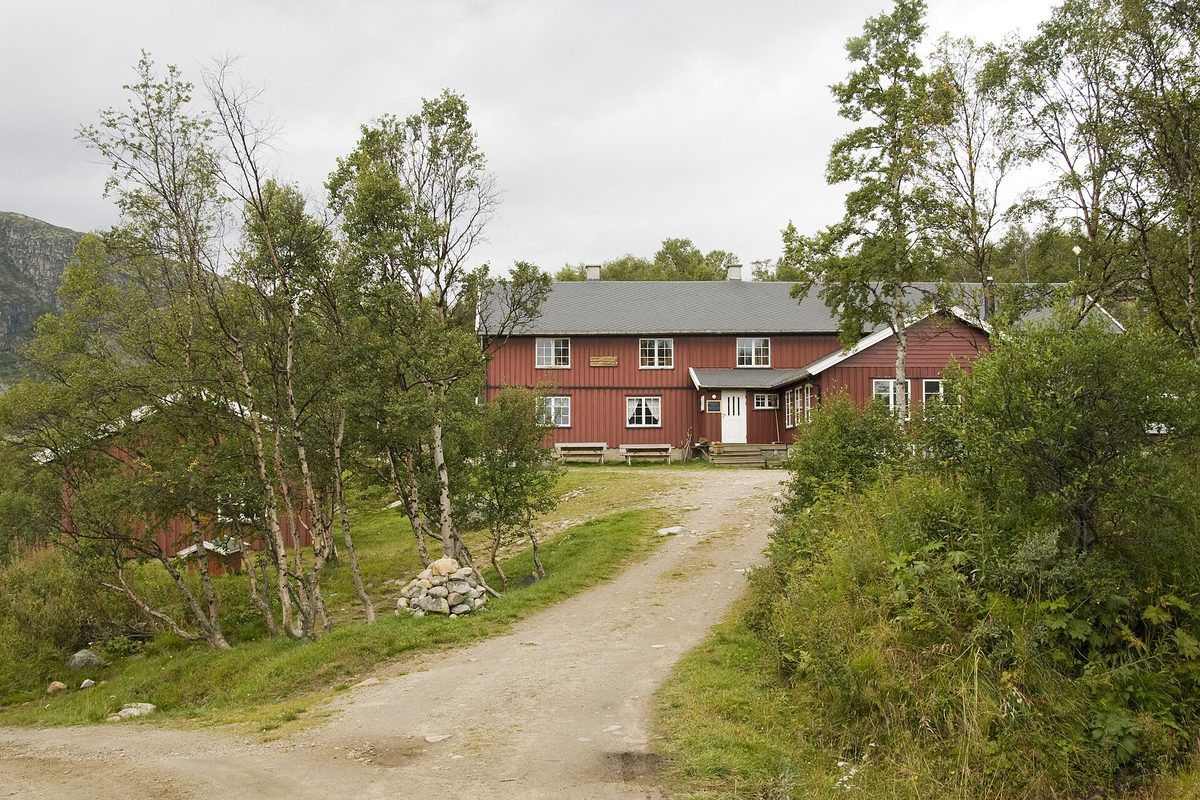
The 2026 numbers: adult membership costs 860 NOK and immediately pays for itself — a member’s dorm bed in a staffed lodge is about 290 NOK versus 382 for non-members, and full board (bed, breakfast, packed lunch and a proper three-course dinner that will astonish you at 1,200 metres) runs roughly 1,095–1,315 NOK. Self-service cabins charge members around 200–315 NOK a night on trust. If your Norway includes multi-day hiking — Jotunheimen, Hardangervidda, Rondane — the hut-to-hut system is the trip, and I’ve mapped the classic routes in my hiking guide.
Farm stays, historic hotels and lighthouses
Three smaller categories deserve a mention. Farm stays (gardsovernatting) put you in working fjord-side farms, often with extraordinary food — the Hjørundfjord and Hardanger areas are rich in them. The De Historiske collection gathers Norway’s historic hotels — places like Kviknes in Balestrand, Union Øye, and Walaker, run by the same family since the 1600s — where the building is half the reason you came. And along the southern and western coasts, decommissioned lighthouses rent simple rooms with absurd sea views for surprisingly reasonable money; they’re booked through local foundations and sell out summer weekends fast.
The one-of-a-kind splurges
Norway specialises in singular architecture in extreme landscapes, and a few addresses justify the pilgrimage. Juvet Landscape Hotel near Valldal — the glass-walled rooms from Ex Machina, later borrowed by Succession — scatters minimalist cubes through birch forest above a rushing river; from about 3,500 NOK including breakfast and packed lunch, communal three-course dinner around 1,100 NOK, open March to early November, and read the cancellation terms carefully (free only until 30 days out). Manshausen, polar explorer Børge Ousland’s private island in Steigen, cantilevers its sea cabins over the water; tower cabins run 6,900–8,900 NOK with meals built into the package. PAN’s steel treetop cabins in Finnskogen and the Birdbox pods above the Førde fjords do remote minimalism for somewhat less. And the famous ring-shaped Svart hotel at the Svartisen glacier, billed as the world’s first energy-positive hotel? Still not open as of mid-2026, after repeated delays — ignore any listicle that tells you to book it.
Where to Stay in Oslo: Neighbourhoods That Make Sense
Oslo’s hotel map is mercifully compact. Here’s how I’d choose, district by district.
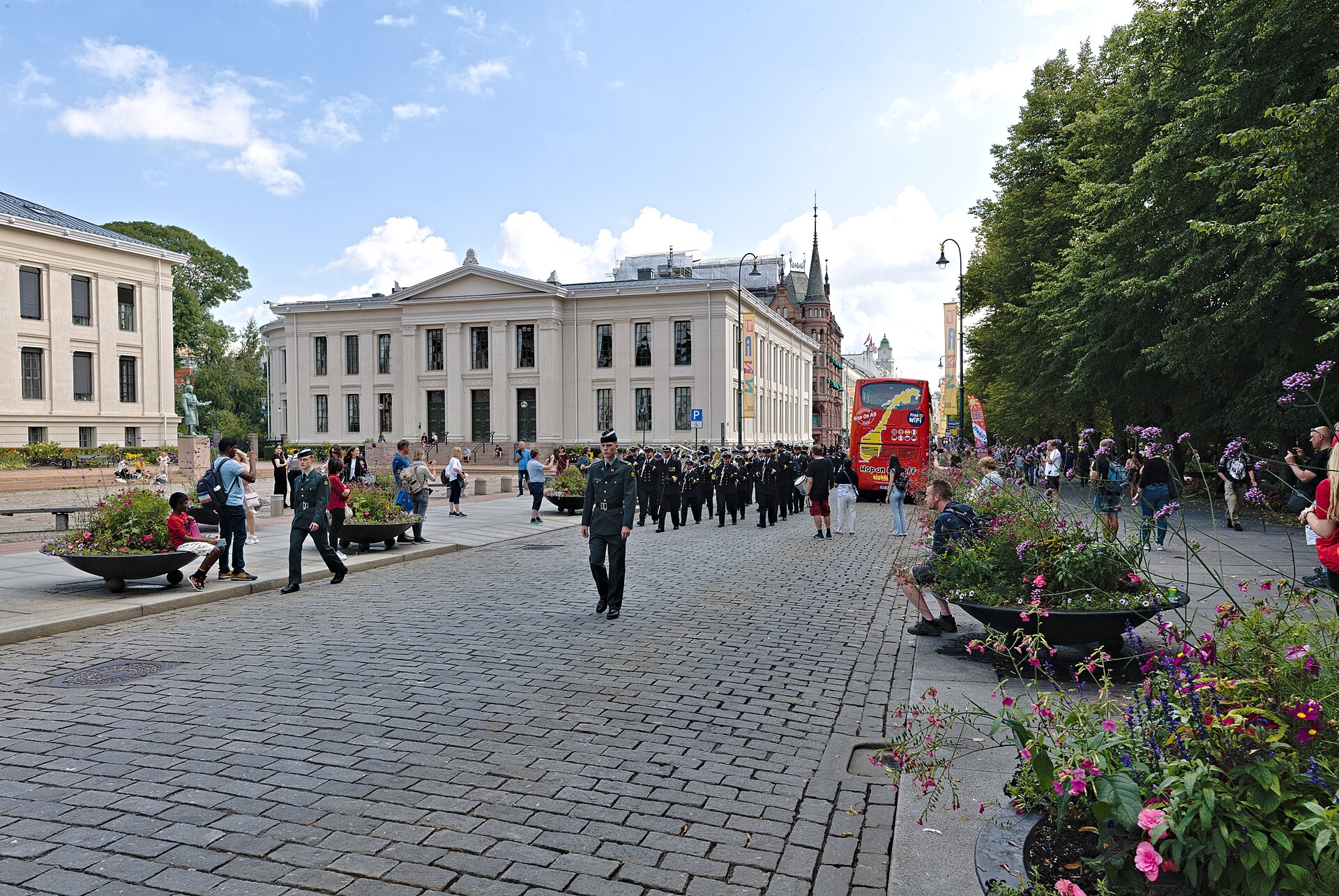
Sentrum and Karl Johans gate. The default, and rightly so: you’re walking distance from the palace, the harbour, the National Museum and Oslo Central’s airport train. This is where the landmark hotels live — the Continental (the grande dame, from roughly 3,000–3,500 NOK), the Bristol with its Moorish-fantasy lobby, and Amerikalinjen, the 1919 shipping-line headquarters turned boutique hotel that’s my pick for style per krone. Mid-range Thon and Scandic properties fill the side streets at 1,400–2,200 NOK. There’s a fuller district-by-district comparison for the capital with walking times to Oslo S and the districts I’d avoid.
Aker Brygge and Tjuvholmen. The redeveloped harbourfront: fjord views, the Astrup Fearnley museum, Oslo’s glossiest restaurants. The Thief, on Tjuvholmen’s tip, is the city’s design-hotel statement. Worth it if the waterfront is your Oslo; a 12-minute walk from the centre either way.
Grünerløkka. Oslo’s Brooklyn — vintage shops, coffee roasters, the Mathallen food hall, the Akerselva river path. Few proper hotels (PS:hotell is the interesting one, a social enterprise) but strong apartment options. Stay here if you’re more interested in Oslo’s Sunday self than its postcard self.
Around Oslo S and Grønland. The cheapest central beds, the most diverse food, and the handiest transit. Citybox and Comfort Xpress sit here, and it’s fine — just know that the blocks immediately east of the station are scruffy in a way that surprises people expecting Scandinavian polish.
Where to Stay in Bergen: Harbour First
Bergen is smaller and rainier, and the rule is simple: stay within ten minutes of the harbour and you can’t go wrong.
Bryggen and the harbour. The dream address. The Clarion Collection Havnekontoret occupies the old harbour office beside the Hanseatic wharf (free evening meal, remember); Bergen Børs, in the 1862 stock exchange opposite the fish market, is the luxury play, typically 1,800–2,800 NOK. Light sleepers: rooms over the fish market are lively on summer mornings.
Sentrum by the lake. Around Torgallmenningen square and the Lille Lungegårdsvannet lake sit the dependable mid-rangers — Thon Orion, Scandic strikes, the art museums. Two minutes’ more walking, often 300 NOK less per night.
Sandviken. North of Bryggen, a hillside of white wooden houses that feels like Bergen a century ago. Quieter, prettier, slightly uphill; good guesthouses and apartments.
One Bergen-specific warning: on big cruise-ship days (the city is Norway’s busiest port of call), the centre heaves until late afternoon and hotel prices spike to match — if your dates are flexible, check the cruise calendar before booking. The city’s full sights-and-seasons picture is in my Bergen guide.
Where to Stay in Tromsø, Lofoten and Stavanger
Tromsø. Stay on the island, in the compact centre between the harbour and Storgata — that’s where the aurora-tour pickups, the restaurants and the Ølhallen brewery pub all are. The Clarion Edge and Hotel With anchor the waterfront; budget options thin out fast in winter. Tromsdalen, across the bridge by the Arctic Cathedral, saves maybe 20% and costs you convenience every single day. If the lights are the whole point, split your stay: city base, then one or two nights at a dark-sky property out on Kvaløya or up the Lyngenfjord.
Lofoten. Covered above, but the one-line version: Svolvær for logistics, Henningsvær for charm, Reine/Hamnøy for drama, Leknes for central economy. In high summer I’d accept whichever rorbu I could get — by March they’re nearly gone.
Stavanger. Cluster around Vågen harbour. The Clarion Collection Skagen Brygge sits right on the water; Gamle Stavanger’s white wooden lanes rise directly behind. Eilert Smith, the 11-room design property with the Michelin-starred RE-NAA attached, is the splurge. From any of these you’re ten minutes from the Lysefjord ferries.
What It Really Costs: 2026 Prices in NOK and USD
Norway is expensive, but it’s predictably expensive, which means you can plan around it. Here are my realistic 2026 nightly figures, at about 9.5 NOK to the dollar.
| Accommodation type | NOK per night | Approx USD | Notes |
|---|---|---|---|
| Wild camping | 0 | $0 | Allemannsretten rules apply |
| Campsite tent pitch | 150–350 | $16–37 | Per tent, facilities included |
| Hostel dorm bed | 270–550 | $28–58 | Linen often 70–100 NOK extra |
| DNT hut (member) | 200–670 | $21–70 | Self-service to private room |
| Campsite cabin (hytte) | 500–900 | $53–95 | Shared facilities, sleeps 2–4 |
| Budget hotel double | 800–1,200 | $85–125 | Citybox, Comfort Xpress; breakfast extra |
| Mid-range hotel double | 1,200–2,500 | $125–260 | Breakfast buffet included |
| Rental cabin / rorbu | 1,500–3,500 | $160–370 | Sleeps 2–6; linen/cleaning fees common |
| Boutique / historic hotel | 2,500–5,500 | $260–580 | Continental, Børs, Union, Brosundet |
| Glass igloo / aurora dome | 2,300–7,500 | $240–790 | GLØD canvas dome to Lyngen North glass |
| Ice / snow hotel | 3,700–6,000 | $390–630 | Seasonal; meals often included |
| Iconic splurge (Juvet, Manshausen) | 3,500–8,900 | $370–940 | Often minimum stays, strict cancellation |
The hidden costs to watch: city hotel parking (200–500 NOK per 24 hours — never assume it’s free), cabin cleaning and linen fees, and the breakfast add-on at budget brands. The hidden savings: included breakfasts big enough to carry you to dinner, free EV charging at a growing number of hotels, and weekend city-hotel discounts. For the full trip budget — food, transport, activities — see my itinerary guide‘s cost tables and the fjord-region specifics in the fjords guide.
When and How to Book: Seasonal Strategy
Timing your booking matters more in Norway than almost anywhere, because capacity in the famous places is tiny and the seasons are short. (For when to actually travel, my guide to timing a Norway trip covers the month-by-month case.)
| What you’re booking | Book ahead | Why |
|---|---|---|
| Lofoten rorbuer, June–August | 6–12 months | Tiny supply, global demand; iconic ones go first |
| Tromsø/Alta, aurora season | 4–8 months | Sept–March is now peak; ice hotels are capacity-capped |
| Fjord village hotels, July | 4–6 months | Flåm, Geiranger and Balestrand have few beds each |
| Oslo/Bergen city hotels | 1–3 months | Big supply; watch cruise days and conferences in Bergen |
| DNT staffed lodges | Days–weeks | Members are never turned away at most huts — you may sleep on a mattress, but you’ll sleep |
| Shoulder season (May, Sept–Oct) | Weeks | Prices drop 30–40% and availability opens up |
On platforms: Booking.com is the most-used site for Norway and has the deepest cabin inventory; Airbnb often lists the same properties at higher all-in prices once fees land. For cabins, go Norwegian — Norgesbooking and Inatur list places the international sites never see. For chain hotels, check the member rate on the chain’s own site before you commit anywhere; for the one-of-a-kind properties, book direct and early, and read the cancellation terms — the small places play hardball (Juvet charges in full 28 days out).
And the tax question I now get asked constantly: Norway’s new visitor-contribution law took effect on 1 July 2026, letting high-pressure municipalities add up to 3% to overnight bills — but no town actually charges it yet, and collection starts in 2027 at the earliest, with Tromsø and the Lofoten communes the likeliest first movers. Tents, campervans and boats are exempt. As of mid-2026, you won’t see it on a single bill; from 2027, expect a few percent in the hotspots.
Honest Budget Advice: How I’d Do Norway on Less
If your budget is tight, don’t shrink the trip — change the accommodation mix. A realistic formula I’ve used: city nights in budget hotels (900 NOK split two ways), fjord and mountain nights in campsite cabins (700 NOK split four ways), one DNT hut stretch (290 NOK a bed), one free wild-camping night when the weather smiles, and one splurge — a rorbu night or a glass dome — because a Norway trip with zero magic is a false economy.
The other levers: travel in May or September, when everything costs a third less and the country is arguably prettier; self-cater aggressively (cabin kitchens save 600–1,000 NOK a day for two versus restaurants — but shop on Saturday, because most supermarkets close on Sundays); take the night train between Oslo and Bergen or Trondheim and save a hotel night; and treat the Hurtigruten coastal ferry as a moving hotel — a cabin on the Bergen–Kirkenes run replaces six nights of accommodation and most of your transport in one booking. If you’d rather have the logistics handled entirely, my Norway tours guide covers when a package actually beats DIY on price. And for every price in one place — hotels, food, transport, tours, plus a worked 7-day budget — see my guide to Norway travel costs.
Norway Accommodation FAQ
Where should I stay when visiting Norway for the first time?
Split the trip: two nights in Oslo, three or four in Bergen as your fjord gateway, and two in a fjord village like Balestrand or Geiranger. That combination covers culture, the classic scenery and the small-town Norway most first-timers actually remember best — with only two bed changes. The seven-hour Bergen Railway between Oslo and Bergen is itself one of the best things you’ll do in Norway.
Is it expensive to stay in Norway?
Yes — plan on it being among Europe’s priciest — but the spread is wide. A dorm bed runs 270–550 NOK ($28–58), a decent hotel double 1,200–2,500 NOK ($125–260) with a big breakfast included, and free wild camping is legal almost everywhere. Norwegians themselves mix cabins, huts and tents precisely because hotels every night adds up.
What is a rorbu, and is it worth staying in one?
A rorbu is a traditional fisherman’s cabin on stilts over the water, mostly found in Lofoten and now converted into self-catering accommodation. Emphatically worth it for at least a night or two: 1,500–3,500 NOK gets you a kitchen, a couple of bedrooms and the kind of view luxury hotels can’t manufacture. Book six months or more ahead for summer.
Do Norwegian hotels include breakfast?
Almost all mid-range and upmarket hotels include a generous buffet — hot dishes, smoked salmon, herring, breads, brown cheese — and it’s the best food value in the country. The exceptions are the no-frills budget brands (Citybox, Comfort Xpress), which sell breakfast as a 110–140 NOK add-on.
Can you really camp anywhere in Norway for free?
On uncultivated land, yes: the right to roam (allemannsretten) lets you tent at least 150 metres from houses and cabins for up to two nights in one spot, free, no permission needed. Respect the seasonal fire ban (15 April–15 September near woodland) and local restrictions in busy areas like Lofoten, where signs will point you to campsites instead.
How far in advance should I book accommodation in Norway?
For July anywhere scenic: four to six months. For Lofoten’s famous rorbuer in summer and the Arctic’s aurora-season hotspots: six to twelve. For Oslo and Bergen city hotels: one to three months is usually fine outside cruise and conference spikes. Shoulder-season trips can be booked weeks out, often 30–40% cheaper.
Where should I stay in Norway to see the northern lights?
Tromsø is the practical base — most tours, flights and restaurants — ideally with a night or two somewhere genuinely dark: a glass igloo on the Lyngenfjord, a canvas dome outside Alta, or the snow hotel in Kirkenes. The strategy, camera settings and month-by-month odds are all in my northern lights in Norway guide.
Is Airbnb worth using in Norway?
Sometimes, but check alternatives first: the identical cabin or apartment frequently lists cheaper on Booking.com once Airbnb’s fees land, and Norwegian platforms like Norgesbooking carry cabins the global sites don’t. Self-catering itself is absolutely worth it — that’s non-negotiable Norway budget wisdom.
What’s the deal with two duvets on one bed?
Norwegian hotels give each sleeper their own single duvet, and many “double” rooms are two 90 cm beds pushed together. It looks odd the first night and then you’ll wonder why the rest of the world tolerates blanket warfare. If you specifically want one large bed, request it — don’t assume.
Should I rent a cabin or stay in hotels?
For city stops, hotels win on convenience. For everywhere else, a cabin for three-plus nights usually wins on price, space and experience — especially for families and groups, where one 2,500 NOK cabin replaces two hotel rooms. Just budget for linen and cleaning fees and remember Sunday supermarket closures when you plan the shop.
About This Guide
The NorwayTourism.org team has spent years travelling Norway in every season — by rental car, coastal ferry, night train and on foot between DNT huts. We’ve slept in most of the accommodation types in this guide, from Hamnøy rorbuer to Alta’s ice rooms to campsite cabins that smelled gloriously of pine and woodsmoke, and we update our guides as prices and rules change. We tell you what we’d genuinely book, not what pays the highest commission.
Sources & Further Reading
- Visit Norway — Accommodation — official overview of stay types
- The Norwegian Trekking Association (DNT) — hut network, 2026 membership and cabin prices
- Visit Norway — The right to roam — allemannsretten camping rules
- Sorrisniva Igloo Hotel, Alta — season dates and rates
- Snowhotel Kirkenes — year-round snow hotel details
- Juvet Landscape Hotel — rates, seasons and booking terms
- Norgesbooking — Norwegian cabin rentals
- Norwegian Government — visitor contribution (tourist tax) framework, in force July 2026
- Statistics Norway (SSB) — holiday cabin statistics
Photo Credits
- Rorbu cabins at Sakrisøy, Lofoten — Photo: Svein-Magne Tunli (tunliweb.no) / CC BY-SA 4.0 via Wikimedia Commons (source)
- Bryggen wharf, Bergen — Photo: Anna Anichkova / CC BY-SA 3.0 via Wikimedia Commons (source)
- Northern lights at Lauklines, Kvaløya — Photo: Sebastian Kowalski / CC0 via Wikimedia Commons (source)
- Tents at Lake Gjende, Jotunheimen — Photo: Tony Warelius / CC BY 2.0 via Wikimedia Commons (source)
- Mogen turisthytte, Hardangervidda — Photo: Jaknudsen / CC BY 3.0 via Wikimedia Commons (source)
- Kviknes Hotel, Balestrand — Photo: Bjørn Christian Tørrissen / CC BY-SA 4.0 via Wikimedia Commons (source)
- Royal guards on Karl Johans gate, Oslo — Photo: Leonhard Lenz / CC0 via Wikimedia Commons (source)