Four articles currently rank for Norway landmarks. Between them they run to about 11,600 words and contain exactly one entry price. Two of them send readers to the Viking Ship Museum in Oslo, which has been shut since 2021. One describes Vigeland Park as “open late May to early August” — it’s free and open every hour of every day. Another calls Lom the oldest stave church; it’s Urnes, by about 120 years.
Norway’s landmarks are unusually well documented and unusually badly written about. What follows is the corrected version: what each one costs in 2026, when it’s actually open, how long it takes, and which ones cluster together so you’re not driving back and forth.
I’ve split them into built and natural, because they need completely different planning. The built ones have opening hours; the natural ones have seasons, and the seasons are far less forgiving.
Norway’s landmarks at a glance
| Landmark | Where | 2026 entry | Open | Time needed |
|---|---|---|---|---|
| Bryggen | Bergen | Free | Always | 1–2 hrs |
| Nidaros Cathedral | Trondheim | ~NOK 120–150 | Year-round | 1–2 hrs |
| Oslo Opera House | Oslo | Free to walk the roof | 24/7 | 30 min |
| Vigeland installation | Oslo | Free | 24/7/365 | 1–2 hrs |
| Akershus Fortress | Oslo | Grounds free | 06:00–21:00 | 1 hr |
| Holmenkollen ski jump | Oslo | NOK 185 | Year-round | 2 hrs |
| Borgund stave church | Lærdal | NOK 150 | 15 Apr–14 Oct | 1 hr |
| Urnes stave church | Lustrafjord | NOK 150 | May–Sep | 1 hr + ferry |
| Heddal stave church | Telemark | Ticketed | Jun–Sep | 1 hr |
| Arctic Cathedral | Tromsø | Small fee | Year-round | 30 min |
| Sverd i fjell | Stavanger | Free | Always | 30 min |
| Preikestolen | Lysefjord | Parking NOK 275 | Year-round | 4–5 hrs |
| Trolltunga | Hardanger | Parking NOK 500 + 220 | 8 Jun–30 Sep unguided | 10–12 hrs |
| Kjeragbolten | Lysefjord | Parking NOK 300 | ~Late May–Oct | 5–7 hrs |
| Nordkapp | Finnmark | Plateau free; hall NOK 350 | Road ~Apr–Oct | Half day |
| Atlantic Road | Møre og Romsdal | Free, no toll | Year-round | 1–2 hrs |
| Trollstigen | Møre og Romsdal | Free | 27 Apr–Oct/Nov 2026 | 2 hrs |
The built landmarks
Bryggen, Bergen
The most recognisable row of buildings in Norway, UNESCO-listed in 1979. Sixty-two of the old Hanseatic trading houses survive, rebuilt after the great fire of 1702 on the original medieval plot lines — which is why the alleys are so narrow and the floors slope.
Free, always open. The mistake everyone makes is photographing the painted facade from the harbour and leaving. Go into the wooden passages behind it, where the buildings lean into each other and the timber has been worn concave by three centuries of feet. See the Bergen guide.
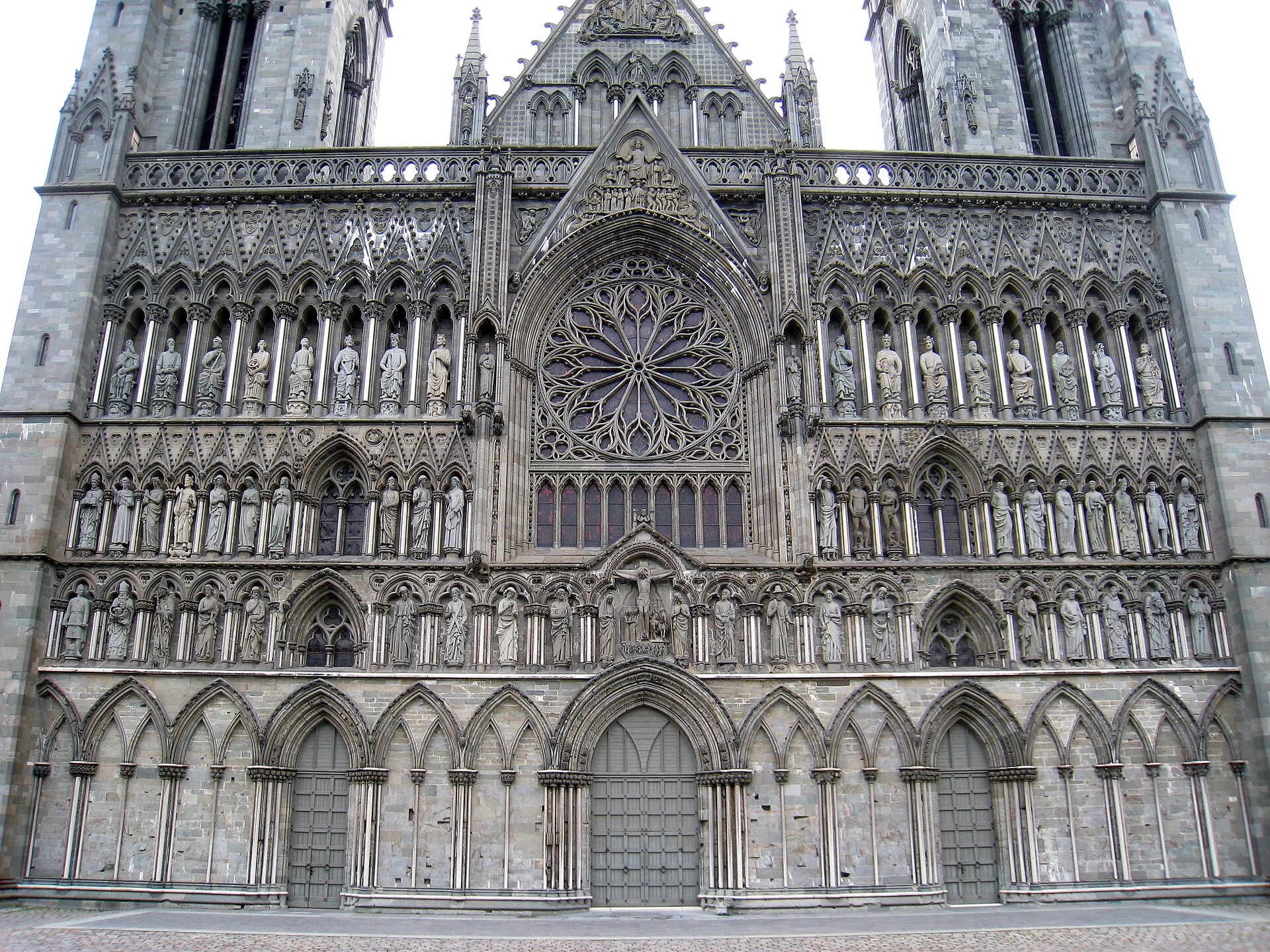
Nidaros Cathedral, Trondheim
Begun in 1070 and finished around 1300, built over the grave of St Olav, and the northernmost medieval cathedral in the world. The west front — a wall of statuary — was restored between 1905 and 1983, which is to say the restoration took longer than most cathedrals take to build.
Reckon on around NOK 120–150 for the cathedral, more for a combined ticket with the Archbishop’s Palace and the crown regalia. It is, straightforwardly, the most impressive building in Norway.
The Oslo Opera House
Snøhetta, 2008, 38,500 square metres, and it cost NOK 4.4 billion. The whole point of it is the roof: Italian Carrara marble sloping straight out of the Bjørvika water, designed so the public can walk up and over it. Free, accessible at any hour. Wear shoes with grip when it’s wet — the marble is genuinely treacherous.
The Vigeland installation, Frogner Park
212 sculptures by Gustav Vigeland, and the Monolith at the top is 17 metres of intertwined figures — 121 of them — carved from a single block of granite. Free, unfenced, open every hour of every day of the year. The best free attraction in Scandinavia, and the fact that competing articles list opening hours for it tells you how little they checked.
Akershus Fortress
A medieval castle turned Renaissance royal residence on the Oslo waterfront. The grounds are free and open daily 06:00 to 21:00; the castle interior and the military museums are ticketed separately. Good for an hour and the ramparts have the best harbour view in the city. The Oslo guide has the rest.
Holmenkollen
The most famous ski jump in the world, visible from most of Oslo. The ski museum and the tower observation deck are NOK 185 for adults, NOK 110 for children 6–15, free under 6, and NOK 500 for a family of four. The zipline from the top — 361 metres long with a 107-metre drop — is separate at around NOK 800 and runs roughly April to October.
The stave churches
Twenty-eight survive from what was once well over a thousand. The three that matter:
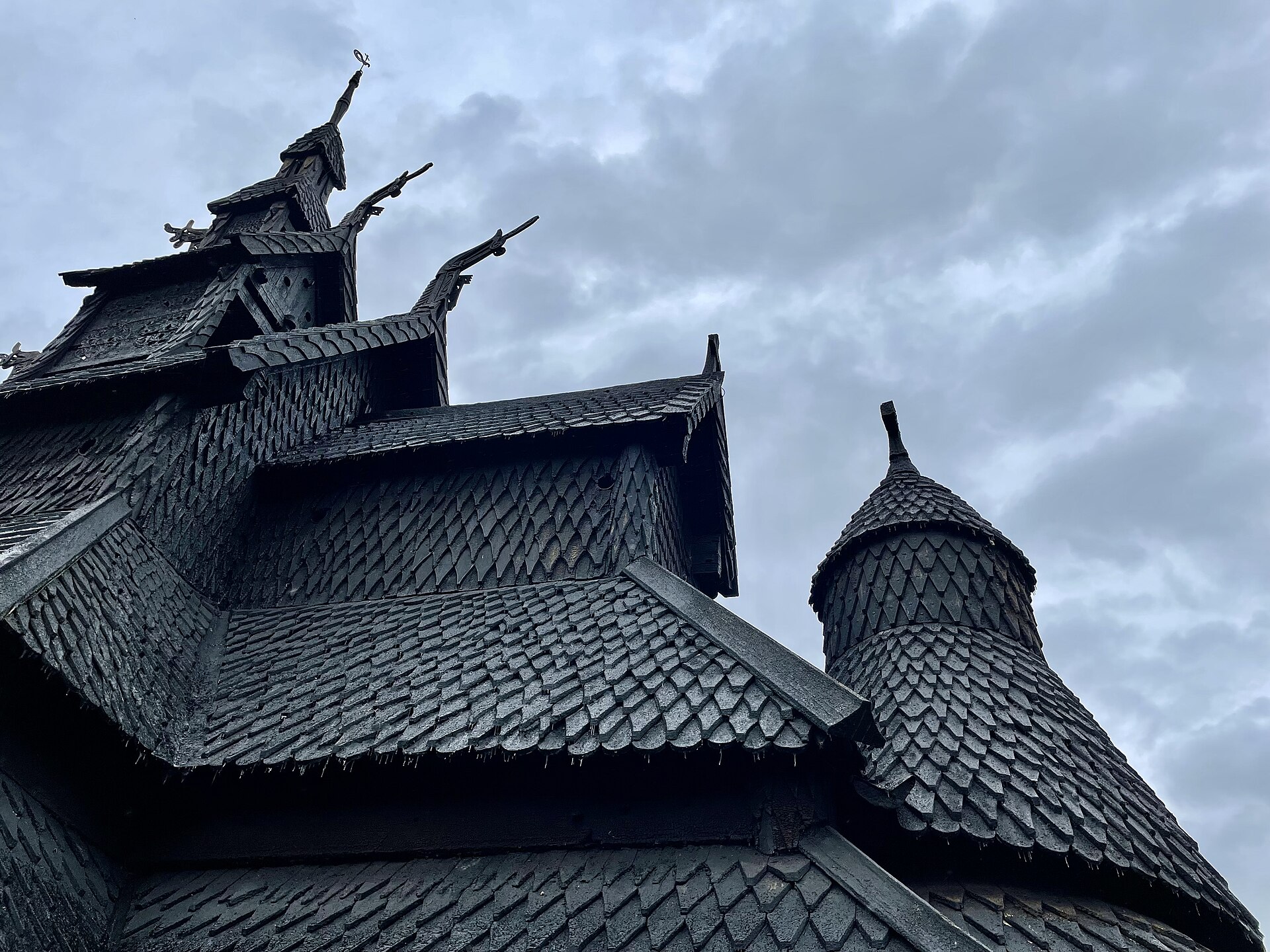
Urnes, on the Lustrafjord, is the oldest — built around 1130 — and was UNESCO-inscribed in 1979. Open May to September, around NOK 150. It requires a ferry, which is why it’s the quietest.
Borgund, between Lærdal and Flåm, is the best preserved and by far the easiest to reach. In 2026 it’s open 15 April to 14 October, daily 09:30 to 17:00, at NOK 150 for adults, NOK 100 for students and children, NOK 350 for a family.
Heddal in Telemark is the largest — 25 by 17 metres, 29 metres tall, three turrets — built around 1250, and open June to September.
What gets you is the interior: tarred pine, almost no windows, and dragon heads on the roof ridge that are pure Norse hangover in a Christian building.
Sverd i fjell and the Arctic Cathedral
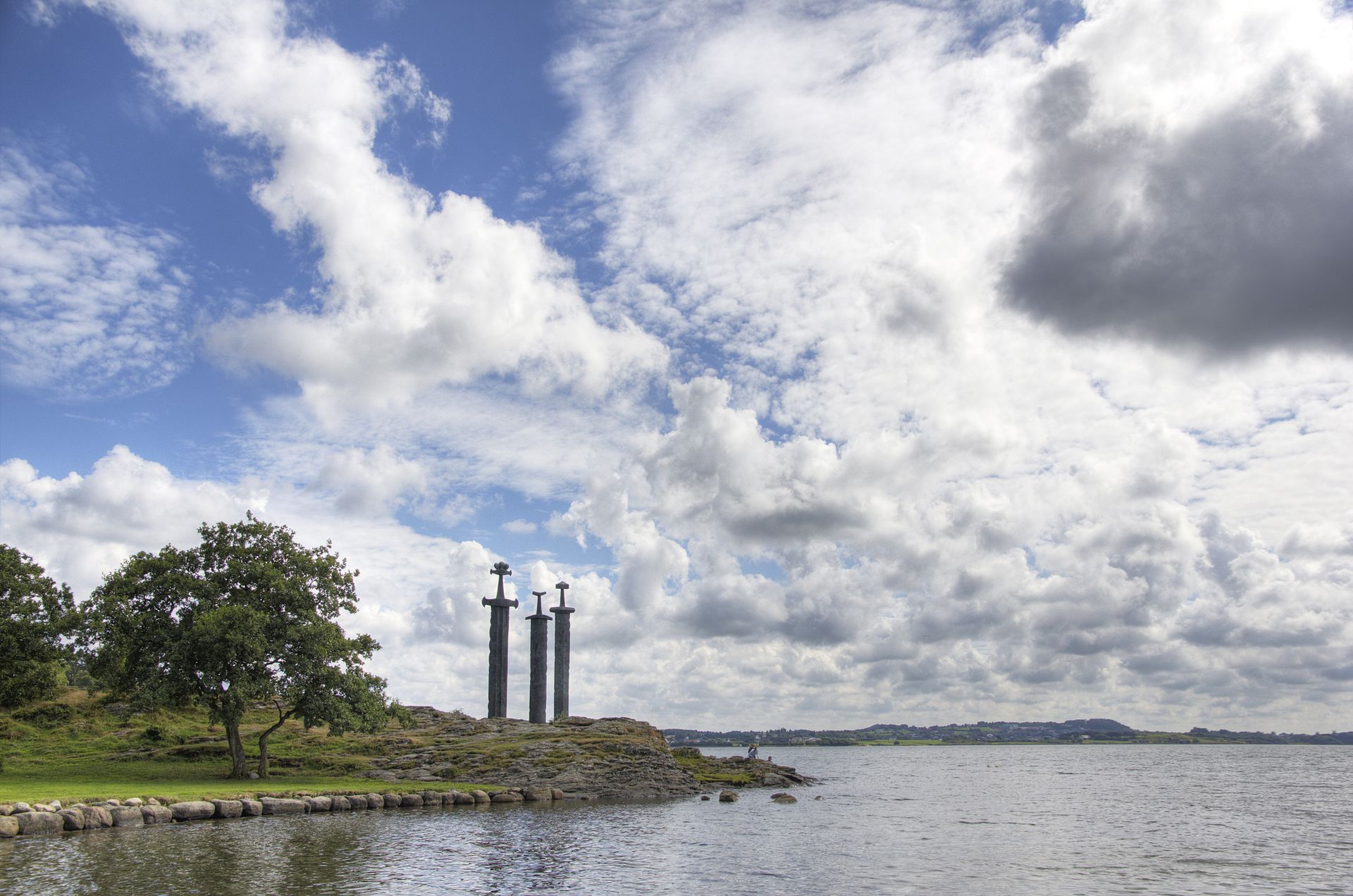
Sverd i fjell outside Stavanger: three bronze swords, ten metres tall, driven into the rock by Fritz Røed and unveiled by King Olav V in 1983, marking the battle of Hafrsfjord in 872 that unified Norway. Free, unstaffed, and best at sunset. See the Stavanger guide.
The Arctic Cathedral in Tromsø, built in 1965, is the white concrete wedge you’ve seen in every aurora photograph. Small entry fee, free during services, and the stained glass at the eastern end is the reason to go in rather than just photograph it from the bridge.
The second tier: landmarks worth the detour
These don’t make the postcards but several are better visits than the ones that do.
The Fram Museum, Oslo. Built around the actual polar ship Fram, which went further north and further south than any other wooden vessel, and you can walk around inside her. Given the Viking ships are unavailable until 2027, this is the Bygdøy museum to prioritise — and with children it lands better anyway.
Lofotr Viking Museum, Borg. A reconstructed chieftain’s longhouse 83 metres long and 12 wide, the largest Viking longhouse ever excavated. Adults NOK 265, children 6–15 NOK 170, family NOK 750, plus about NOK 100 to row a reconstructed Viking ship yourself. This is the real Viking experience in Norway in 2026. See the Lofoten guide.
The Alta rock art. UNESCO-listed since 1985, thousands of carvings between 2,000 and 7,000 years old, on boardwalks above the rock. The northernmost UNESCO site in the country and one of the few places you get a sense of pre-Viking Norway.
Maihaugen, Lillehammer. One of Europe’s largest open-air museums — around 200 relocated historic buildings including a stave church, staffed in period costume.
Gamle Stavanger. Roughly 170 white wooden houses on cobbled lanes, lived in rather than preserved. Free, and quietly one of the prettiest streetscapes in Scandinavia.
Kristiansten Fortress, Trondheim. The 17th-century fort above the city, free to walk around, with the best view over Nidaros and the river bend.
Steilneset Memorial, Vardø. Peter Zumthor and Louise Bourgeois, commemorating the 91 people burned for witchcraft here in the 1600s: a 125-metre timber-and-fabric corridor with 91 lit windows, each carrying one person’s story. Free, unstaffed, and at the far eastern edge of Europe. The most affecting piece of architecture in Norway and almost nobody sees it.
Haraldshaugen, Haugesund. The national monument marking Harald Fairhair’s burial place, raised in 1872 for the millennium of the unification. Free.
The Nobel Peace Center and Oslo City Hall. The Peace Prize is awarded in the City Hall every December, and its interior murals are extraordinary. The carillon plays free on the hour from 07:00 to midnight.
Landmarks by season: what’s actually open
This is where landmark lists fail people. Roughly half of Norway’s famous sights are seasonal, and the built ones are seasonal in a different way from the natural ones.
| Season | Open | Closed or inaccessible |
|---|---|---|
| Dec–Mar | Bryggen, Nidaros, Oslo sights, Arctic Cathedral, Preikestolen with spikes | Stave churches, Trollstigen, Kjeragbolten, Nordkapp road unreliable |
| Apr–May | Borgund from 15 April, Trollstigen from 27 April 2026 | Trolltunga, Kjeragbolten until ~mid-May |
| Jun–Sep | Everything | Nothing — but book beds early |
| Oct–Nov | Cities, Bryggen, Nidaros, Atlantic Road | Stave churches from mid-Oct, high passes |
The blunt rule: the built landmarks are a year-round proposition; the natural ones are not. If you’re coming outside June to September, plan around cities and coast and treat any mountain landmark as a bonus. The seasons guide has the month-by-month picture and the itinerary guide has routes that respect it.
What a landmarks trip costs
Norway’s landmarks are cheap by European standards, because most of the famous ones have no gate at all. The money goes on getting to them.
A week hitting Bryggen, the Oslo sights, Borgund, Preikestolen and the Atlantic Road costs roughly NOK 900–1,200 in entry fees and parking for one adult. That’s less than a single day of tickets in several European capitals. Against that, reckon on NOK 1,600–2,200 a day for a mid-range hotel, food and transport — the costs guide breaks it down.
Two 2026 notes. Fuel is temporarily cheap — around NOK 20–21 a litre thanks to an excise holiday running April to September — which makes a landmarks road trip unusually affordable this year. And although Norway’s 3% visitor levy became law on 1 July 2026, no municipality is charging it during 2026, so it won’t appear on your hotel bill this year.
Getting the famous ones to yourself
Norway’s landmarks are heavily concentrated in time rather than space. Preikestolen took 348,000 hikers in a single summer; Trolltunga takes around 80,000 a year; Bergen caps cruise arrivals at four ships and 8,000 passengers a day and still feels full at noon in July.
Three things work. Start early or go late — before 8am or after 3pm transforms every trailhead in this guide. Sleep where the day-trippers leave: Geiranger, Flåm and Reine at 8pm are different places entirely. And shift a month — September has autumn colour, thin crowds, lower prices and almost everything still open, which makes it the most underrated month in the Norwegian calendar. Where you stay matters for this; the accommodation guide covers the small-village options.
The natural landmarks
Preikestolen (Pulpit Rock)
A flat cliff top 604 metres above the Lysefjord that looks computer-generated. Eight kilometres round trip, roughly 500 metres of ascent, four to five hours. Parking is NOK 275 for stays over two hours, NOK 40 under two hours, and you pay on the way out. The car park holds 1,000 vehicles and still closes temporarily on peak days, reopening after two or three hours.
It’s doable year-round with microspikes in winter, and 2026 brought improved signage and maintenance. There is no fence at the top. The hiking guide covers conditions.
Trolltunga
A sliver of rock jutting out roughly 700 metres above Ringedalsvatnet. This is the one people most underestimate: 28 kilometres and 10 to 12 hours from the lowest car park. The 2026 unguided season runs 8 June to 30 September.
Parking is tiered and it matters: P2 Skjeggedal is NOK 500 a day plus a NOK 220 road toll; P3 Mågelitopp is NOK 600 plus the toll and has only about 30 spaces, which sell out weeks ahead in July. A shuttle from P2 to P3 runs from about NOK 150 one way between mid-May and late September, and it shortens the day substantially. Around 80,000 people do it a year.
Kjeragbolten
A boulder wedged in a chasm roughly a thousand metres above the Lysefjord — sources disagree between 984 and 1,084 metres, so treat any precise figure with suspicion. Eleven kilometres, five to seven hours, with chain-assisted sections. Parking is free under two hours and NOK 300 over, which given the hike takes six makes it a NOK 300 hike. The Lysevegen road up typically opens mid-May and closes in October.
Nordkapp
The most misunderstood cost in Norway, so let me be unambiguous: reaching the Nordkapp plateau is free. A Western Finnmark court ruled that the outdoor plateau is public land under the right to roam and barred the operator from charging for access or parking. Only the Nordkapphallen visitor centre is ticketed, at NOK 350 for adults and NOK 90 for children aged 7–15, valid 24 hours.
The cliff sits 307 metres above the sea. It is also frequently fogged in, and it isn’t quite mainland Europe’s northernmost point — that’s Knivskjellodden, a two-hour walk away. Come near midnight in summer and it’s genuinely moving.
Trollstigen and the Atlantic Road
Trollstigen: eleven hairpins climbing a near-vertical wall with the Stigfossen waterfall alongside. Closed for two seasons after a 2024 rockslide and reopened 27 April 2026, the earliest opening on record. Free. Short closures in heavy rain remain possible.
The Atlantic Road: 8,274 metres of road across eight bridges between skerries, opened in 1989, toll-free, and voted Norway’s Construction of the Century in 2005. The Storseisundet bridge is built on a curve that appears, from one angle, to launch cars into the sea. New rest areas went in for 2026. Drive it in a storm rather than on a blue day.
The fjords themselves
Two are UNESCO World Heritage: the Geirangerfjord and the Nærøyfjord, inscribed together in 2005 as the West Norwegian Fjords. Note that the Sognefjord as a whole is not listed — it’s 205 km long and 1,308 m deep, the longest and deepest in the country, but only its Nærøyfjord arm carries the designation. Several competing articles get this wrong. The fjords guide has the detail.
Norway’s eight UNESCO World Heritage Sites
Worth knowing as a set, because they’re a good spine for a trip and most people can name two.
| Site | Inscribed | Where |
|---|---|---|
| Bryggen | 1979 | Bergen |
| Urnes stave church | 1979 | Lustrafjord |
| Røros mining town | 1980 | Trøndelag |
| Alta rock art | 1985 | Finnmark |
| Vegaøyan archipelago | 2004 | Helgeland |
| West Norwegian Fjords | 2005 | Geiranger & Nærøyfjord |
| Struve Geodetic Arc | 2005 | Finnmark points |
| Rjukan–Notodden industrial heritage | 2015 | Telemark |
Which landmarks cluster together
The single most useful thing a landmarks guide can tell you, and none of them do: what you can realistically combine.
- One Bergen day: Bryggen, the fish market, Fløibanen and Bergenhus Fortress — all walkable.
- One Oslo day: Opera House roof, Akershus, Vigeland, and Holmenkollen by metro. Add the Munch museum if it rains.
- One Stavanger day: Sverd i fjell, Gamle Stavanger and the cathedral, with Preikestolen as a separate full day.
- One Sognefjord day: Borgund stave church, the Aurlandsfjellet Snow Road and Stegastein, ending at Flåm.
- One Møre day: Trollstigen, Gudbrandsjuvet and the Atlantic Road, finishing in Ålesund.
- One Trondheim day: Nidaros, the Archbishop’s Palace and Bakklandet, all within a few hundred metres.
Trolltunga, Kjeragbolten and Nordkapp do not cluster with anything. Each of them is a day.
Three landmarks that are commonly got wrong
The Viking Ship Museum, Oslo. Closed since 2021, being rebuilt as the Museum of the Viking Age — roughly 13,000 square metres, three times the old building, with 5,500-plus objects on show against about 350 before. Target reopening is 2027, and no inauguration date has been confirmed. The Oseberg, Gokstad and Tune ships cannot be seen in 2026. Two of the four top-ranking landmark articles still recommend visiting it.
The oldest stave church. It’s Urnes, around 1130, not Lom.
Sognefjord’s UNESCO status. It doesn’t have one. Only the Nærøyfjord arm does.
Frequently asked questions
What is Norway’s most famous landmark?
Preikestolen is the most photographed; Bryggen is the most recognisable built one; Nidaros Cathedral is the most historically significant. If you want one that’s free, walkable and open at any hour, it’s the Oslo Opera House roof.
Do you have to pay to visit Nordkapp?
No. The plateau is free following a court ruling that it’s public land under the right to roam. Only the Nordkapphallen visitor centre charges — NOK 350 for adults, valid 24 hours.
Is the Viking Ship Museum in Oslo open?
No. It closed in 2021 and reopens as the Museum of the Viking Age in 2027 at the earliest. The Fram and Kon-Tiki museums nearby are open and excellent.
How many UNESCO World Heritage Sites does Norway have?
Eight: Bryggen, Urnes stave church, Røros, the Alta rock art, the Vega archipelago, the West Norwegian Fjords, the Struve Geodetic Arc and the Rjukan–Notodden industrial heritage site.
Which is harder, Preikestolen or Trolltunga?
Trolltunga, by a wide margin. Preikestolen is 8 km and four to five hours; Trolltunga is 28 km and 10 to 12. They are not comparable days, and people regularly attempt the second having only done the first.
What is the oldest building in Norway?
Urnes stave church, built around 1130 and UNESCO-listed since 1979, is the oldest surviving stave church. Older stone church fragments exist, but Urnes is the one to see.
Is Trollstigen open in 2026?
Yes — it reopened on 27 April 2026 after two seasons closed for rockfall securing, and runs through October or November. Some official pages still carry the old closure text.
Can you see Norway’s landmarks without a car?
The built ones, easily — Bergen, Oslo, Trondheim, Stavanger and Tromsø are all walkable or on public transport, and Borgund is on the Lærdal bus route. Trollstigen, the Atlantic Road, Kjeragbolten and Urnes realistically need a car. The transport guide covers what’s reachable.
Photo credits
All photographs are used under their respective Creative Commons or public-domain licences.
- Nidaros Cathedral, Trondheim. Begun in 1070; the west front’s restoration alone took from 1905 to 1983. — Photo: Daderot / Public domain via Wikimedia Commons.
- Borgund stave church. The best preserved of the 28 survivors, open 15 April to 14 October in 2026. — Photo: Tulipasylvestris / CC BY-SA 4.0 via Wikimedia Commons.
- Sverd i fjell, Hafrsfjord. Three ten — Photo: TomasEE / CC BY 3.0 via Wikimedia Commons.
Entry prices, opening seasons and road status were checked in July 2026 and are given per adult in Norwegian kroner at roughly 9.5 NOK to 1 USD. Several Norwegian attractions publish prices only through booking engines — confirm before you travel.