I read the five guides currently ranking for one day in Oslo. Between them: roughly 16,000 words, about sixty attractions, and not a single one tells you how many minutes it takes to walk from the Opera House to Akershus Fortress. They give you an order. They do not give you a clock.
That matters more here than in most cities, because Oslo’s sights are genuinely spread out. Bygdøy, where four of the best museums sit, is a twenty-minute ferry or bus ride from the centre. Frogner Park is 3.5 km west of Karl Johans gate. If you treat a one-day list as a checklist you will spend four of your hours in transit and see the inside of nothing.
So this is a timed plan, not a list. Three of them, actually, because “one day in Oslo” means something different depending on whether you arrived by cruise ship at 08:00, are killing a six-hour layover from Gardermoen, or checked into a hotel last night and have the whole day. Every stop below carries what it costs in 2026 kroner, how long it actually takes, and whether I would keep it.
The short version
If you only read one thing: do the centre on foot in the morning, pick one outlying cluster for the afternoon — Bygdøy museums or Frogner Park, not both — and do not buy the Oslo Pass unless you are going into three or more paid museums. The arithmetic is below and it is not close.
| Stop | Adult price (2026) | Time needed | Verdict |
|---|---|---|---|
| Opera House roof | Free | 20–30 min | Keep. Best free thing in the city. |
| Akershus Fortress grounds | Free | 30–40 min | Keep. |
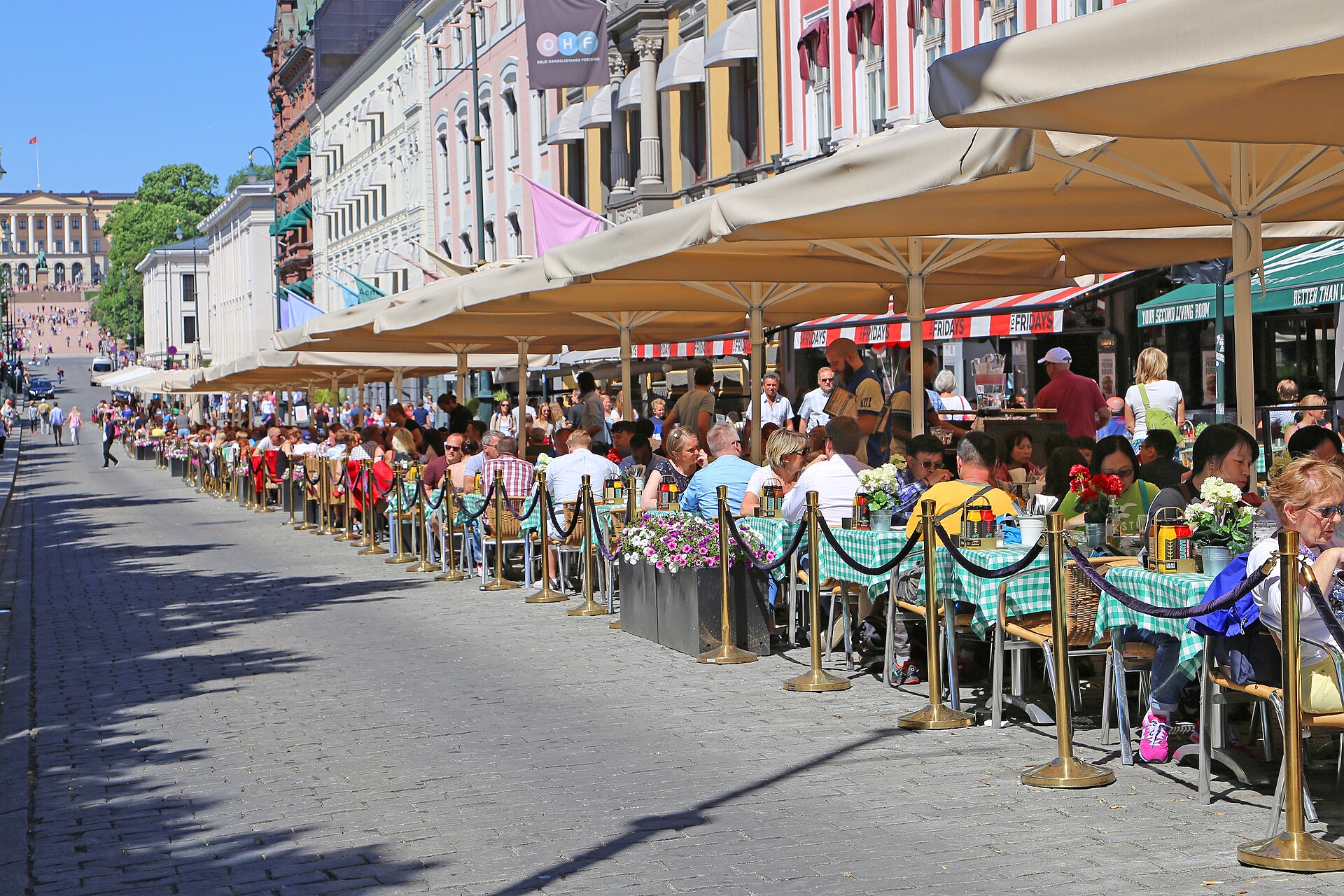
| Karl Johans gate + Royal Palace | Free | 30 min | Keep, but it is a walk, not a destination. |
| Vigeland Sculpture Park | Free | 60–75 min inc. transport | Keep if you skip Bygdøy. |
| MUNCH | 280 NOK (~$30) | 90 min | Keep if you like art. Free some evenings — see below. |
| National Museum | ~180–220 NOK (sources differ) | 2 hr minimum | Too big for a one-day visit. |
| Fram Museum (Bygdøy) | ~180 NOK (~$19) | 75 min + 40 min transport | Keep if you skip Frogner. |
| Kon-Tiki (Bygdøy) | 180 NOK (~$19) | 45 min | Pair with Fram or skip. |
| Holmenkollen ski jump | ~195 NOK (~$21) | 2.5 hr round trip | Cut it. Not on a one-day trip. |
| Fjord sightseeing cruise | 490–690 NOK (~$52–74) | 2.5 hr | Cut it. Take the 42-krone public ferry instead. |
Prices checked August 2026 at a rate of 9.35 NOK to 1 USD. Where I found genuine disagreement between sources I have said so rather than picking one and hoping.
Walking times, because nobody else publishes them
Central Oslo is small. This is the single most useful fact about planning a day here, and it is buried in every other guide. These are real walking minutes at an ordinary pace, not map-app optimism.
| From | To | Walk |
|---|---|---|
| Oslo S (central station) | Opera House | 4 min |
| Opera House | MUNCH | 5 min |
| Opera House | Akershus Fortress | 15 min along the harbour |
| Oslo S | Royal Palace (via Karl Johans gate) | 20 min |
| Akershus Fortress | Aker Brygge / Tjuvholmen | 10 min |
| City Hall | Rådhusbrygge ferry piers | 3 min |
| Royal Palace | Vigeland Park (Frogner) | 25 min, or 10 min on tram 12 |
| Rådhusbrygge | Bygdøy museums | ~10 min by ferry, plus waiting |
The whole harbour-front spine — Opera House, Akershus, City Hall, Aker Brygge — is about 35 minutes end to end if you never stop. That is your morning, and it costs nothing.
Plan A: the full day (roughly 09:00–19:00)
This assumes you slept in Oslo and are starting from somewhere central. If you are still deciding, our guide to choosing an Oslo neighbourhood covers what each district costs and how far it is from here.
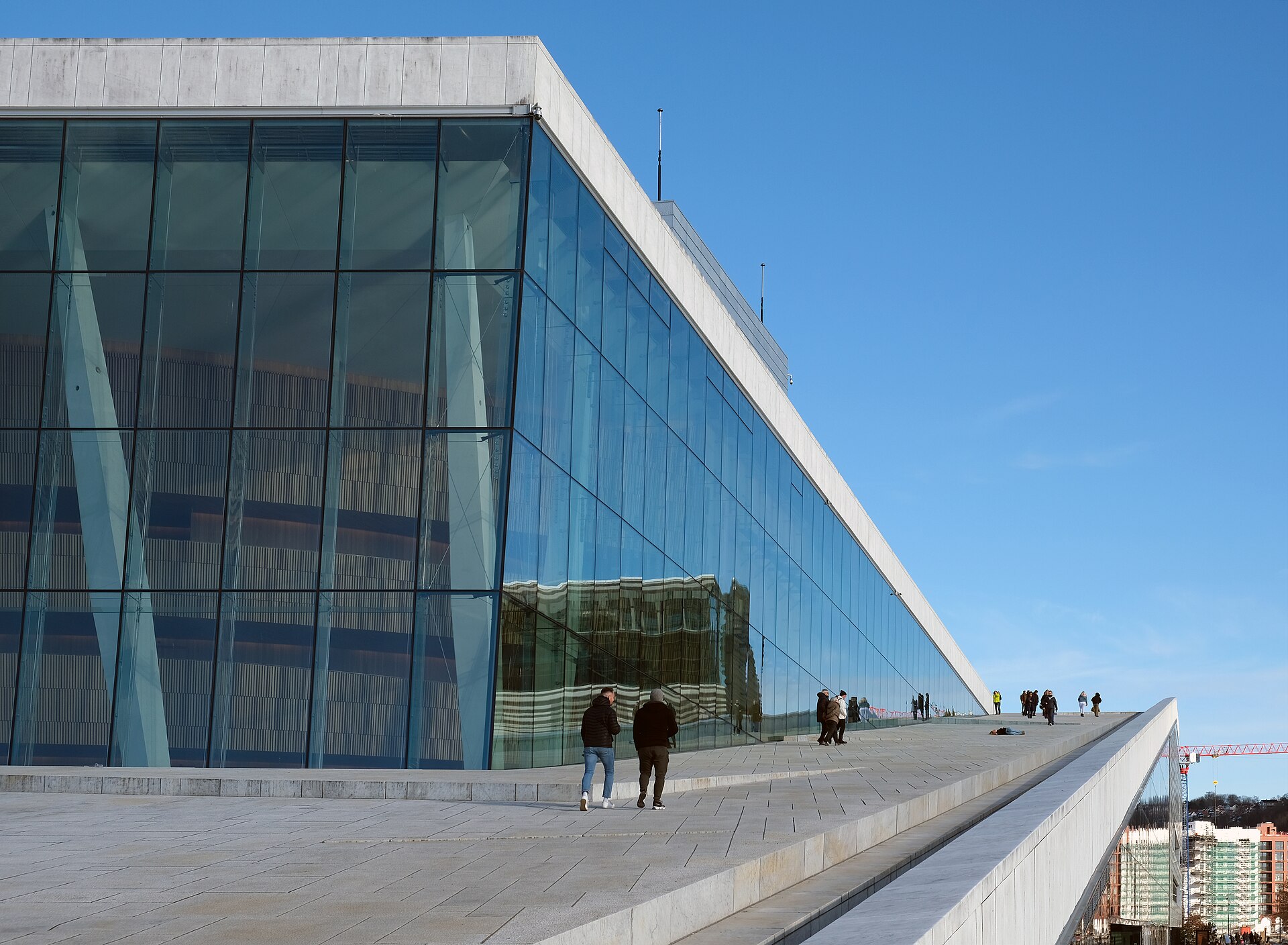
09:00 — Opera House roof
Free, always open, no ticket. You walk up the marble roof from ground level; there is no queue and no barrier. Twenty minutes gets you the view over the fjord and the Barcode towers. Go early because the marble gets slick and crowded after eleven, and in winter parts of the roof are roped off for ice.
Verdict: the single best-value thing in Oslo, and it takes less time than reading about it.
09:30 — MUNCH (optional, 90 min)
Five minutes’ walk east. Thirteen floors, adult entry 280 NOK (~$30), under-18s free, under-25s 100 NOK. Opening hours are Sunday to Tuesday 10:00–18:00 and Wednesday to Saturday 10:00–21:00.
The money-saving detail no competitor mentions: entry is free on the first Wednesday of the month from 18:00 to 21:00, except in July, August and September. If your day happens to land on one, restructure around it. There is also a cheaper 200 NOK evening ticket for the 18:00–21:00 slot on Wednesday to Saturday.
Verdict: worth it if you care about Munch specifically. If you want “a museum” generically, the Fram is more memorable and half the price.
11:15 — the harbour walk to Akershus
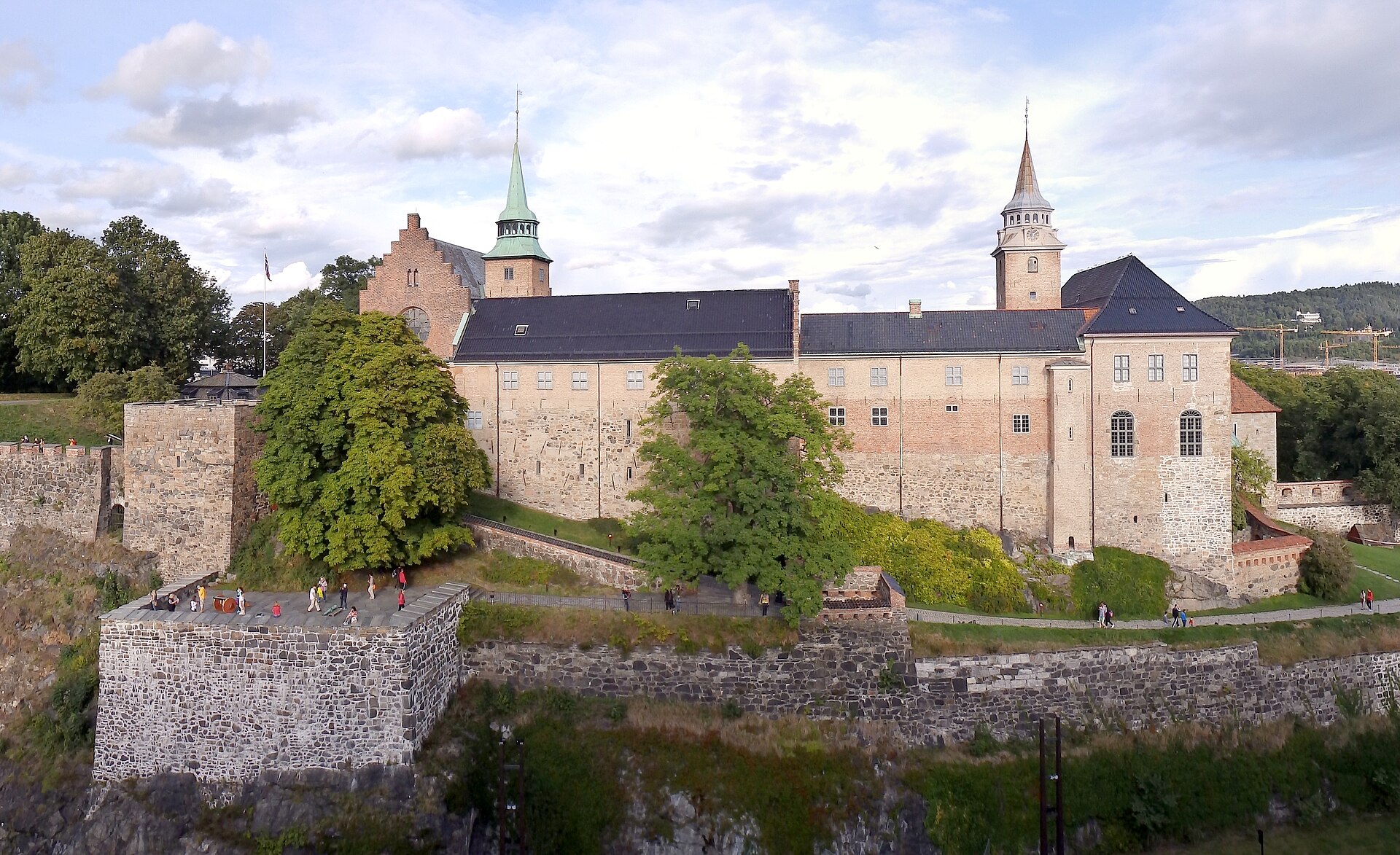
Follow the water west. You pass Bjørvika, the Deichman Bjørvika library (free, and the rooftop is open to anyone who walks in), and the old customs quays before the fortress walls come up on your left. The Akershus grounds are free and open daily from 06:00 to 21:00; the castle interior is a separate ticket at around 100 NOK including audio guide.
Skip the interior on a one-day trip. The grounds, the ramparts and the view back across the harbour are the point, and they are free.
12:15 — lunch, and a warning about it
Oslo restaurant prices are the thing that shocks people. Budget 200 NOK (~$21) for a meal at an inexpensive restaurant, 150 NOK for a fast-food combo, and 110 NOK for a pint of draught beer. A cappuccino runs about 56 NOK. Those are the Numbeo figures for August 2026 and they match what I have paid.
Cheaper options that are actually good: the Mathallen food hall in Grünerløkka, Vippa down by the water, or a supermarket. Tap water is safe everywhere and free — carry a bottle and refill it, because bottled water at a kiosk is absurd here. There is more of this in our broader piece on what a Norway trip actually costs.
13:30 — choose ONE: Bygdøy or Frogner
This is the decision the whole day turns on. Doing both is possible on paper and miserable in practice.
Bygdøy is the museum peninsula: the Fram Museum (polar exploration, around 180 NOK), Kon-Tiki (180 NOK adult, 70 NOK for children 6–18, open 365 days a year), the Norwegian Maritime Museum, and the Norsk Folkemuseum open-air collection. Note that the Museum of the Viking Age — the old Viking Ship Museum — has been closed since 2021 and is not reopening until November 2027. Several guides still list it as a stop. It is not one.
Getting there: the seasonal passenger ferry from Rådhusbrygge 3 takes about ten minutes, or bus 30 runs year-round from the centre. Reported ferry fares are around 70 NOK one way with a day pass near 115 NOK, though I found only one source for that and would check at the pier.
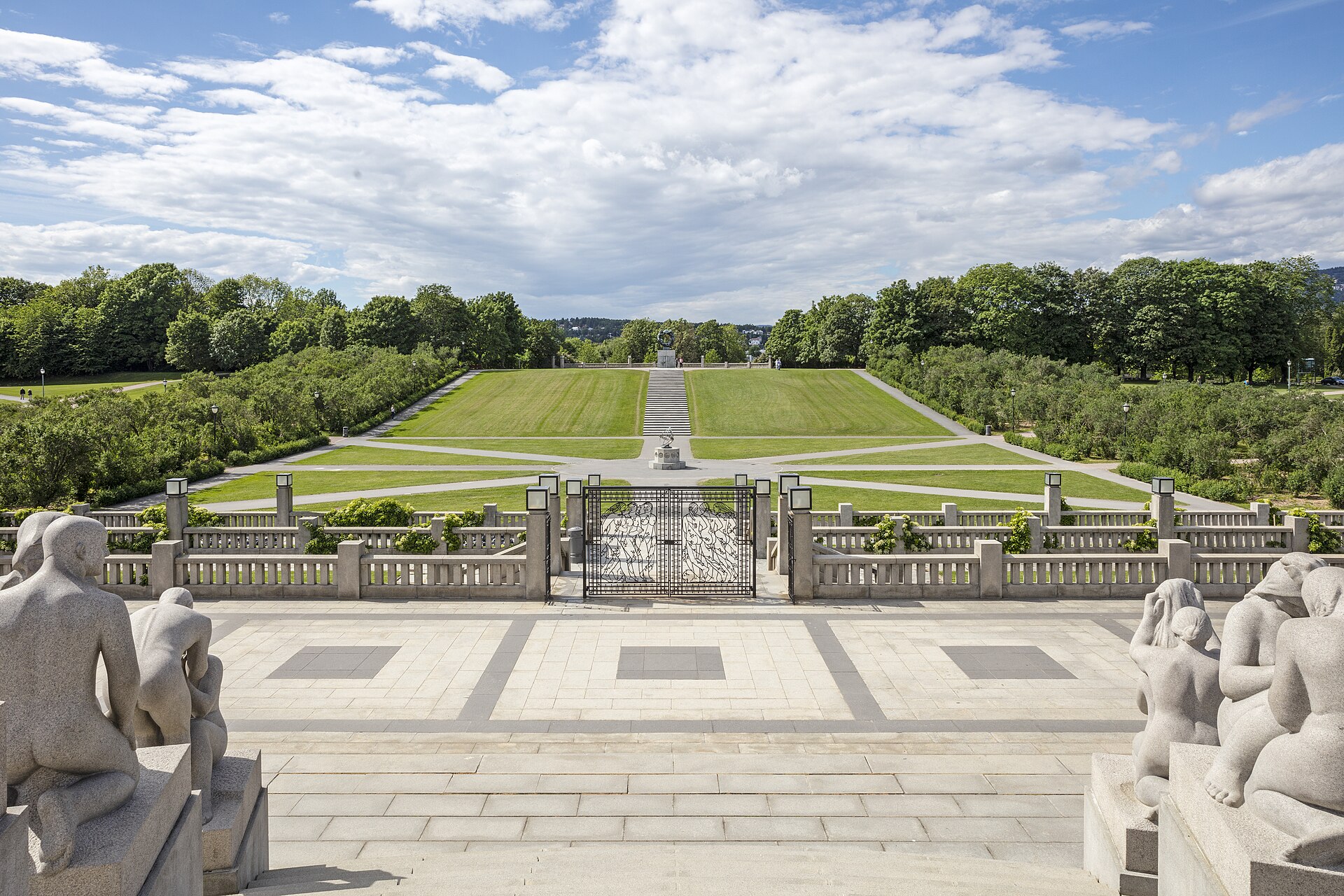
Frogner Park is free, always open, and holds Gustav Vigeland’s 212 sculptures. Tram 12 from the centre drops you at the gates in about ten minutes. An hour walks the whole axis from the gates to the Monolith and back.
How to choose: raining, or travelling with anyone who likes ships? Bygdøy. Good weather, short on money, or you want the thing Oslo is actually famous for? Frogner. Our roundup of Norway’s landmark sights puts the Vigeland installation in national context.
Getting into the city, compared
Your day starts at an airport or a quay, and the choice you make in the first twenty minutes decides how many usable hours you get. Guides tend to name one option. There are four.
| Arrival | Route into the centre | Time | Cost |
|---|---|---|---|
| Gardermoen (OSL) | Flytoget airport express to Oslo S | 19–20 min | ~243 NOK (~$26) |
| Gardermoen (OSL) | Vy local train to Oslo S | ~23 min | Cheaper; included in Oslo Pass |
| Gardermoen (OSL) | Flybussen coach | 45–60 min | Around 149–269 NOK, but I could not confirm the current fare |
| Sandefjord Torp (TRF) | Shuttle bus + Vy train | Well over 1 hr | Varies; treat as a separate journey |
| Cruise terminal | Walk from Akershuskaia / Vippetangen | 10–15 min | Free |
The honest comparison: Flytoget saves you three or four minutes over the Vy local train and costs several times as much. If you are not holding an Oslo Pass and are not in a hurry, take the Vy train. If you are holding a pass, the Vy train is free and Flytoget is not, which settles it.
One thing to note on prices: I could not verify the current Flybussen or Ruter fares from an official source — Ruter’s fare pages are JavaScript-rendered and did not return figures, and the numbers circulating in travel guides range from 42 to 46 NOK for a single zone-1 ticket and from 105 to 137 NOK for a 24-hour ticket. Buy in the Ruter app and you will see the real number before you pay. I would rather tell you that than print a confident figure I could not stand behind.
How the season changes the plan
The same itinerary is a different day in December than in June, and this is where a flat list falls apart. Oslo gets roughly 5 hours 53 minutes of daylight on the winter solstice, and around 18 hours at midsummer. That is not a detail. It is the whole shape of your day.
| Season | Usable daylight | What changes |
|---|---|---|
| Dec–Jan | ~6 hr (roughly 09:20–15:20) | Do outdoor stops first. The Opera roof may be roped off for ice. Frogner Park is bare but atmospheric under snow. Front-load everything. |
| Feb–Mar | 9–12 hr | Coldest months, but the light returns fast. Museums plus one outdoor cluster works comfortably. |
| Apr–May | 14–17 hr | Best value window. Long days, low crowds, hotel rates below summer. |
| Jun–Aug | 17–18 hr | You can genuinely do Bygdøy and Frogner. Island ferries run. Also the priciest hotel nights of the year. |
| Sep–Oct | 10–13 hr | Ferry timetables thin out from September. Check the Bygdøy boat before relying on it. |
In practice: from November to February, treat this article’s Plan A as a Plan B and cut one stop. In June and July, add one. Our seasonal breakdowns of Norway in summer and Norway in winter go further into what each end of the year costs and closes.
One day in Oslo with children
Two facts make this easier than people expect. First, under-18s go free at MUNCH, the National Museum and the Norsk Folkemuseum, and under-20s go free at Astrup Fearnley — the child pricing here is unusually generous by European standards. Second, almost everything worth doing outdoors is free.
The version that works: Opera roof, harbour walk, ferry to Bygdøy, Kon-Tiki (a balsa raft that crossed the Pacific; children 6–18 pay 70 NOK), ferry back. Skip the art. Skip Karl Johans gate, which is a shopping street. Frogner Park is a decent substitute for Bygdøy if the weather holds, and it costs nothing. There is more in our guide to Norway with kids.
16:30 — the fjord, done cheaply
Every guide sells you a sightseeing cruise. Brim Explorer’s silent electric cruise is 2.5 hours and costs 690 NOK (~$74) from April to December, 490 NOK in January to March. It is a good boat. It is also roughly sixteen times the price of the alternative.
The alternative: a Ruter public ferry. The Nesoddtangen boat (line B10) leaves Aker Brygge, takes about 23 minutes each way, runs every half hour, and costs a normal single fare — around 42 NOK. You get the same water, the same skyline, the same islands, and no commentary. Ride out, ride back, forty-six minutes, done.
In summer the island lines from Rådhusbrygge 4 reach Hovedøya, Lindøya, Gressholmen and Nakholmen on the same ticket. We go into the whole waterway — including why it is not technically a fjord — in our guide to the Oslofjord.
Verdict: take the public ferry. Book the cruise only if you specifically want a guided narration or a heated cabin in February.
18:00 — Aker Brygge and finish
Walk back along Tjuvholmen. The Astrup Fearnley Museum sits at the end of the spit: 180 NOK adult, 100 NOK student or senior, free for under-20s. It closes at 17:00 most days, so this is a “look at the Renzo Piano building from outside” stop unless you reorder your day.
Plan B: the cruise passenger (roughly 08:00–16:00)
Ships dock at Akershuskaia or Vippetangen, both a ten-minute walk from the fortress and fifteen from City Hall. You have no hotel and no evening, which changes everything.
- 08:30 Walk off the ship, up through Akershus Fortress grounds. Free, 30 min.
- 09:15 Harbour promenade east to the Opera House roof. 25 min walk, 20 min on the roof.
- 10:15 MUNCH, if art is your thing. 90 min.
- 12:00 Lunch in Bjørvika or Mathallen.
- 13:15 Tram 12 to Frogner Park. Vigeland, 60 min.
- 15:00 Tram back, Karl Johans gate on foot to the ship.
Do not attempt Bygdøy on a cruise day. The ferry timetable plus the museum time plus the return leg is three and a half hours minimum, and missing an all-aboard to see a polar ship is a poor trade.
Plan C: the six-hour layover
Gardermoen to Oslo S is about 19–20 minutes on the Flytoget airport express (roughly 243 NOK one way) or slightly longer and considerably cheaper on a Vy local train. Round trip that is 40–50 minutes of train plus airport time, so a six-hour layover leaves you about three usable hours in the city.
Three hours buys exactly this: Oslo S → Opera House roof → harbour walk → Akershus → Karl Johans gate → Oslo S. All free, all walkable, no tickets, no timetables to miss. Do not add a museum. You will spend the whole visit watching the clock.
If you are flying into Sandefjord Torp instead — which several budget carriers use and no other one-day guide mentions — it is about 110 km south of Oslo and the train takes well over an hour each way. A layover there is not an Oslo layover.
Is the Oslo Pass worth it for one day?
Here is the arithmetic nobody publishes. The 24-hour adult Oslo Pass costs 580 NOK (~$62). The 48-hour is 845 NOK and the 72-hour 995 NOK. It covers Ruter public transport in zones 1, 2, 3, 4V and 4N, plus the Vy local train to and from Gardermoen, and free entry to most museums.
| What you actually do | Paying separately | With the 580 NOK pass | Better option |
|---|---|---|---|
| Free sights only + 2 tram rides | ~84 NOK | 580 NOK | Pay separately |
| MUNCH + transport | ~364 NOK | 580 NOK | Pay separately |
| MUNCH + Fram + transport | ~544 NOK | 580 NOK | Line ball |
| MUNCH + Fram + Kon-Tiki + transport | ~724 NOK | 580 NOK | Buy the pass |
| Three museums + Bygdøy ferry + airport train | ~1,000 NOK+ | 580 NOK | Buy the pass, comfortably |
The break-even is three paid museums. Below that you lose money. Most people doing one day in Oslo manage one museum, which means most people should not buy the pass. Guides that tell you it “always pays for itself” are being paid to say so.
One caveat worth knowing: the pass covers Ruter zones and the Gardermoen local train, but not Vy intercity trains or Vy Express coaches. It will not get you to Fredrikstad.
What to skip
This is the section the other guides don’t write, and it is the useful one.
Holmenkollen ski jump. Around 195 NOK for the museum and tower, plus a 25-minute metro ride each way on line 1 and a steep walk at the top. It is a two-and-a-half-hour commitment for a view. On a three-day trip, sure. On one day, no.
The National Museum. This is heresy, so let me justify it. It opened in June 2022, has 13,000 m² of exhibition space and over 400,000 objects, and is the largest art museum in the Nordic countries. That is precisely the problem: two hours in it is a frustrating skim. Adult entry is somewhere between 180 and 220 NOK depending on which source you believe — I could not confirm a single current figure and neither, evidently, can anyone else writing about it. Save it for a longer trip.
The paid fjord cruise. Covered above. The public ferry is 42 NOK.
Any attempt at the Northern Lights. Oslo is at 59°N with a lot of light pollution. It happens perhaps a handful of nights a decade in a strong storm. If aurora is why you came to Norway, that trip starts at Tromsø, not here.
The Museum of the Viking Age. Closed until November 2027. Guides still listing it are copying each other rather than checking.
Trying to add Bergen. The train is just under seven hours one way. People genuinely ask. The answer is no — see how the Oslo to Bergen route is actually done.
If you have a second day
A great deal opens up. The Bygdøy cluster stops being a trade-off, day trips to Drøbak or Fredrikstad become realistic, and the museums you skipped fit. We have a full plan for two days in Oslo, and if you are working out how the city fits into a longer route, our five-day Norway itinerary gives Oslo two of its five days.
For where the city sits in a bigger picture, the Oslo pillar guide is the parent page for everything here, and getting around Norway covers the train and ferry network beyond the capital.
Frequently asked questions
Is one day enough to see Oslo?
One day is enough to see central Oslo properly and one outlying cluster. It is not enough to see the museums, and it is not enough if you want to leave the city. Two days is the point where Oslo stops feeling rushed.
Is the Oslo Pass worth it for one day?
Only if you will enter three or more paid museums. At 580 NOK for 24 hours, two museums plus transport comes out roughly level and one museum loses you around 220 NOK.
How do I get from Oslo Airport to the city centre?
Flytoget, the airport express, runs Gardermoen to Oslo S in about 19–20 minutes for roughly 243 NOK. Vy local trains cover the same route for less, taking a few minutes longer. The Oslo Pass includes the Vy local train but not Flytoget.
Is Oslo walkable?
The centre is, entirely. Oslo S to the Royal Palace is a 20-minute walk and everything on the harbour front sits along a 35-minute spine. You only need transport for Frogner Park, Bygdøy and Holmenkollen.
What should I skip if I only have one day in Oslo?
Holmenkollen, the National Museum, and any paid fjord cruise. Also anything on Bygdøy if you are visiting Frogner Park the same day — pick one side of the city.
How much does a day in Oslo cost?
Free sights, a supermarket lunch and two tram rides comes to roughly 250 NOK (~$27). Add one museum and a restaurant meal and you are at about 700 NOK (~$75). Numbeo puts Oslo’s cost-of-living index at 90.2 for August 2026, against Zurich at 118.5 and London at 87.5 — expensive, but not the most expensive city in Europe.
Are Oslo museums open on Mondays?
Many are not. Astrup Fearnley closes Mondays outside July and August, the Nobel Peace Center runs Tuesday to Sunday, and the Historical Museum closes Mondays. MUNCH and Kon-Tiki are open daily. Check before you build a Monday around a museum.
Can you see the Northern Lights in Oslo?
Realistically, no. Oslo sits at 59°N, well south of the auroral oval, with a city’s worth of light pollution. Go north.
Photo credits
- The Opera House roof: free, always open, and the best twenty minutes in central Oslo. — Photo: kallerna / CC BY-SA 4.0 via Wikimedia Commons.
- Karl Johans gate is a walk between places rather than a destination in itself. — Photo: W. Bulach / CC BY-SA 4.0 via Wikimedia Commons.
- Frogner Park: free, no gate, no closing time. Go early and you will have it to yourself. — Photo: Godot13 / CC BY-SA 4.0 via Wikimedia Commons.
- Akershus Fortress grounds are free and open from six in the morning to nine at night. — Photo: M(e)ister Eiskalt
derivative work: Hic et nunc, M(e)ister Eiskalt / CC BY-SA 4.0 via Wikimedia Commons.
derivative work: Hic et nunc, M(e)ister Eiskalt / CC BY-SA 4.0 via Wikimedia Commons
Prices and opening hours checked August 2026, converted at 9.35 NOK to 1 USD. Museum admission in Oslo has risen faster than inflation for three years running, so treat every figure here as a floor rather than a ceiling. Norway’s national visitor levy became law on 1 July 2026 but is opt-in for each municipality and Oslo has not adopted it — there is currently no tourist tax on an Oslo hotel night. Where I found sources genuinely disagreeing, I have said so instead of picking one.