Every article answering is Oslo worth visiting says yes, because every article on that search is written by someone who went to Oslo and enjoyed it, which is a selection effect rather than an argument. The interesting question is not whether Oslo is nice. It is whether Oslo is worth your particular days and money against the alternatives, and that is a question with a real answer that varies by person.
Norway’s own tourist board ran a campaign in 2026 built on the line that Oslo is rubbish and you should not come. That is a joke about a real perception: that Oslo is expensive, quiet, and a bit boring next to Copenhagen or Stockholm. Nobody writing about this addresses the criticism with numbers, so this piece does.
Short version: yes for two to three days, no as the centrepiece of a Norway trip, and genuinely no for some people, who are named further down. If you decide to go, our main Oslo guide covers what to do with those days.
The expensive question, with actual data
“Oslo is the most expensive city in Europe” is the most repeated claim about this city and it is false. Numbeo’s cost-of-living index for August 2026:
| City | Cost of living index |
|---|---|
| Zurich | 118.5 |
| Reykjavík | 98.9 |
| Oslo | 90.2 |
| London | 87.5 |
Oslo is expensive. It is not Zurich, it is not Reykjavík, and it is roughly three per cent above London. What it lacks, and what makes it feel more expensive than that, is a cheap tier. London has a £6 lunch. Oslo does not really have the equivalent.
| Item | Oslo, 2026 | In USD |
|---|---|---|
| Meal, inexpensive restaurant | 200 NOK | ~$21 |
| Two-course meal for two, mid-range | 1,200 NOK | ~$128 |
| Fast-food combo | 150 NOK | ~$16 |
| Draught beer, 0.5 L | 110 NOK | ~$12 |
| Cappuccino | ~56 NOK | ~$6 |
| Taxi, start fare | 114 NOK | ~$12 |
| Single transit ticket | ~42–46 NOK | ~$4.50–5 |
| MUNCH admission | 280 NOK | ~$30 |
Those Numbeo figures come with a caveat worth passing on: commenters on Numbeo’s own Oslo page dispute several line items as inflated, and the survey is crowd-sourced rather than measured. The order of magnitude is right; the decimals are not gospel.
The practical shape of it: your accommodation and your restaurant meals are where Oslo hurts. Transport is ordinary European pricing. Museums are high but with generous under-18 exemptions. And a very large amount of the good stuff — the sculpture park, the Opera roof, the fortress, the forest, the swimming — costs nothing at all, which is covered in our list of free things to do in Oslo.
Is Oslo boring?
Here is the fair version of the criticism. Oslo has around 700,000 people in the city proper. It is not dense, the nightlife is thin by Berlin or Copenhagen standards, the city empties out on Sunday, and in winter it is dark by four. If your measure of a city is how much is happening on a Tuesday night, Oslo will disappoint you and Copenhagen will not.
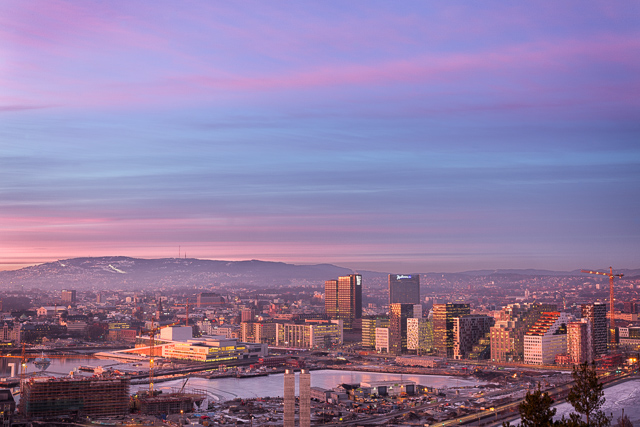
Now the case against that reading. In the last two decades Oslo has built, in sequence:
- The Opera House (2008) — a public building whose roof is a public space, free, with no ticket and no barrier.
- Deichman Bjørvika (2020) — a main library that functions as a free indoor town square.
- MUNCH (2021) — thirteen floors on the waterfront for the collection Munch left the city.
- The National Museum (2022) — 54,600 m², 13,000 m² of it exhibition space, over 400,000 objects. The largest art museum in the Nordic countries.
That is a serious cultural build-out in fourteen years, and it has not filtered into the city’s reputation yet. People still arrive with an impression of Oslo formed around 2005, when the criticism was fair.
Oslo was also European Green Capital in 2019, cited at the time for a carbon footprint of about 1.9 tonnes per person per year. That award is relevant here for a reason nobody connects: the things that make Oslo quiet — reduced car traffic, the forest belt protected from development, the waterfront given over to walking rather than roads — are deliberate policy outcomes, not an absence of ambition. Whether you experience that as calm or as dull is a matter of temperament.
Who should not come to Oslo
Nobody writes this section, so it is the useful one.
Anyone coming to Norway for the fjords, with fewer than five days. This is the big one. Oslo is on the wrong side of the country for the scenery Norway sells itself on. Bergen is seven hours away by train. If you have four days and you want the west coast, fly into Bergen and skip Oslo entirely — our guide on which fjord to visit assumes exactly that.
Anyone coming for the northern lights. Oslo is at 59°N with a capital city’s light pollution. Aurora here needs an exceptional storm. That trip starts in Tromsø.
Anyone whose city break is about nightlife. Copenhagen and Stockholm are better at this and cheaper. That is not close.
Anyone on a very tight budget who has not planned for it. Oslo punishes improvisation. A day of free sights and supermarket food costs almost nothing; a day of turning up hungry and thirsty and taking taxis costs a fortune. The gap between the planned and the unplanned version of this city is wider than anywhere else I have been.
Anyone with one day, in December. Six hours of daylight, high prices, and the outdoor attractions that make Oslo good are cold and dark. Come in March instead.
What a three-day Oslo trip actually costs
Abstract price indices are less useful than a total. Here are three versions of the same three days, per person, excluding flights.
| Careful | Normal | Comfortable | |
|---|---|---|---|
| Accommodation, 2 nights | Hostel dorm, ~$40 | Mid hotel, ~2,500 NOK/night shared = ~2,500 NOK | ~3,500 NOK/night shared = ~3,500 NOK |
| Transport | 24-hr ticket ×2, ~250 NOK | Same, ~250 NOK | Oslo Pass 48-hr, 845 NOK |
| Museums | MUNCH free Wednesday, 0 | MUNCH + Fram, ~460 NOK | Included in pass |
| Food, 3 days | Supermarket + one meal, ~600 NOK | One restaurant meal daily, ~1,000 NOK | ~2,000 NOK |
| Drinks | 0 | 4 beers, ~440 NOK | ~900 NOK |
| Approximate total | ~1,225 NOK (~$130) | ~4,650 NOK (~$500) | ~7,245 NOK (~$775) |
The spread is the point. The careful column is not a deprivation exercise — it includes the best museum in the city, on its free evening, and all of the sculpture park, fortress, opera roof and forest, which cost nothing regardless of your budget. The gap between the columns is almost entirely accommodation, restaurant meals and alcohol.
Which is the real answer to “is Oslo expensive”: Oslo is expensive to consume and cheap to experience. If your holiday style is dinners and bars, this is one of the more punishing cities in Europe. If it is walking, looking and swimming, it is one of the better-value ones. Our breakdown of what a Norway trip costs applies the same logic nationally.
The five complaints, examined
“There’s nothing to do.” Partly fair in 2005, not now. Four major cultural buildings have opened since 2008. What is fair is that Oslo has no single unmissable thing — no Colosseum, no Louvre queue. Its case is cumulative rather than iconic, and cumulative cases do not survive a one-day visit.
“It’s dead in the evening.” Fair. Central Oslo empties after the shops close, and Sunday is very quiet. The fix is structural: stay in Grünerløkka rather than Sentrum and the problem largely disappears. Our guide to where to stay in Oslo covers the difference, which is bigger than people expect.
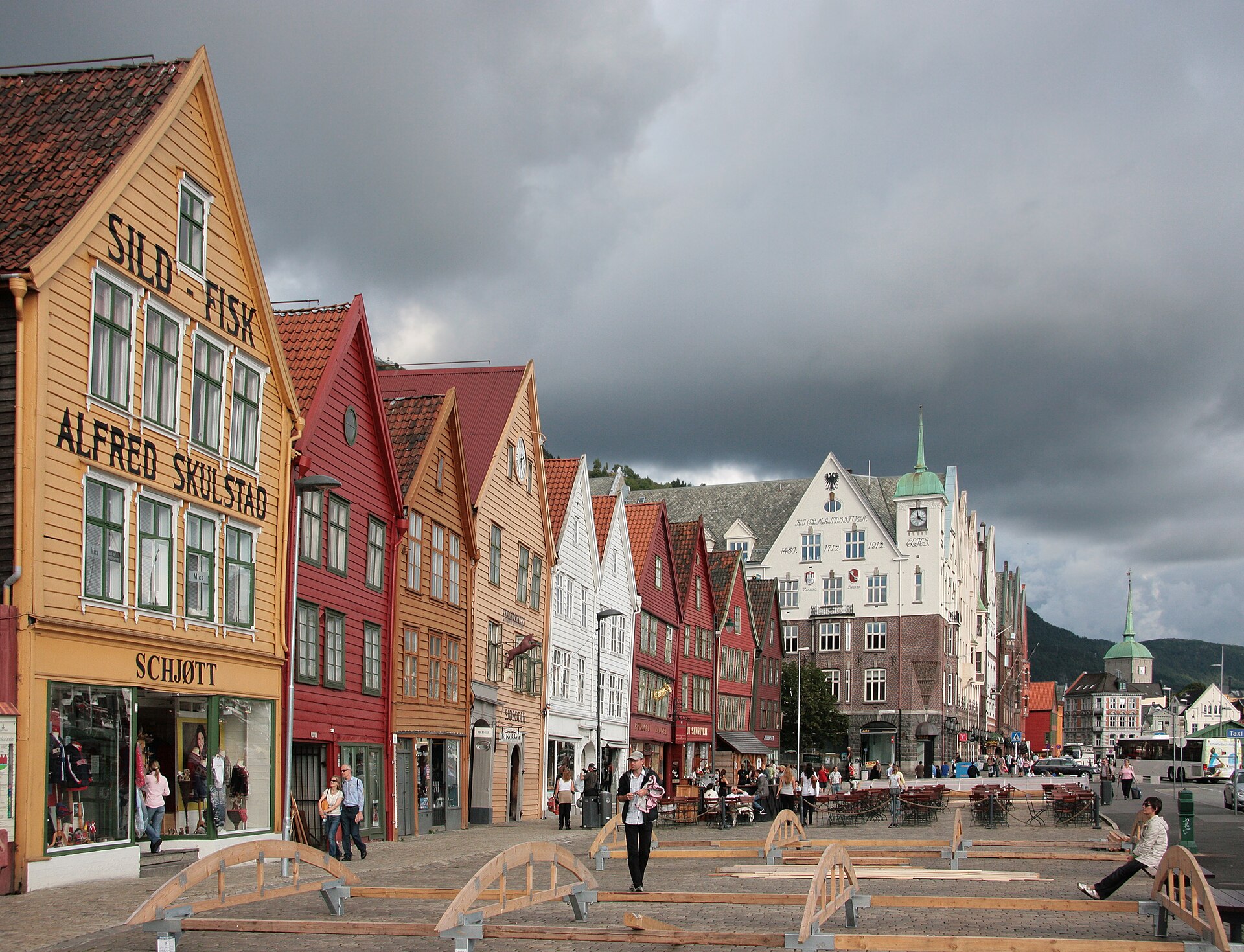
“It’s just modern buildings.” Half fair. Oslo burned repeatedly and was rebuilt, so the medieval fabric that gives Bergen its Bryggen is largely gone here. What survives is scattered — Akershus, Old Aker Church from about 1080, the wooden lanes at Damstredet. If old cities are your thing, Oslo will not satisfy and Fredrikstad, an hour away, will.
“The weather is terrible.” Not really, and this one is a case of mistaken identity — that is Bergen, at 2,495 mm of rain a year. Oslo’s problem is not rain but darkness: about six hours of daylight at the December solstice against seventeen or eighteen at midsummer. Choose your month and the complaint evaporates.
“It’s overpriced for what it is.” This is the one I would push back on hardest. Museum entry at 280 NOK for MUNCH is high; free entry for everyone under 18, free evenings once a month, a free 212-piece sculpture park and free forest access are not. The pricing is lopsided rather than uniformly high, and visitors who only encounter the restaurant and hotel end of it come away with a distorted picture.
Worth visiting if — and reconsider if
Come to Oslo if: you like museums and will visit more than one; you want a city where wilderness is twenty minutes away on public transport; you are travelling with under-18s, who go free almost everywhere; you have a week or more in Norway; you are flying in or out through Gardermoen anyway; or you want to swim in a capital city.
Reconsider if: you have four days or fewer and came for fjords; nightlife is the point; you want a medieval old town; you are visiting in December with only one day; or your budget cannot absorb 200 NOK for a modest restaurant meal and you have not planned around that.
If you land in the second group, the right move is usually not to skip Norway but to skip Oslo — fly straight to Bergen or north to the Arctic and spend the days there instead. There is no obligation to see a capital city, and the Norway itinerary guide has several routes that do not touch it.
Is Oslo safe?
Yes, by any ordinary standard, and worth saying plainly because the question comes up. Violent crime against visitors is rare. The practical caution is property crime — pickpocketing around Oslo S and Karl Johans gate in summer, bike theft everywhere — and some visible drug use around the Grønland and Vaterland area near the station, which looks worse than it is dangerous.
Two things that catch visitors out more often than crime does. Oslo’s pavements ice hard in winter and the city does not salt heavily, which produces more injured tourists than anything criminal. And the city is effectively cashless: cards are accepted everywhere including on buses and at market stalls, and carrying kroner in notes is unnecessary.
Oslo versus Bergen
The comparison most people are actually making. They are not competitors so much as different products, and the mistake is treating them as interchangeable.
| Oslo | Bergen | |
|---|---|---|
| Why you’d go | Museums, architecture, forest, fjord swimming | Fjord access, Bryggen, mountains at the edge of town |
| Days it deserves | 2–3 | 1–2, plus fjord days from it |
| Single transit ticket | ~40–46 NOK | ~40 NOK |
| 24-hour transit pass | ~121 NOK | ~105 NOK |
| 7-day transit pass | ~335 NOK | ~235 NOK |
| Rain | Ordinary | 2,495 mm a year |
| Museums | Far more, and better funded | KODE, and the composer homes |
| Getting to real nature | 20 min on the metro | 7 min on the funicular |
Those transport figures come from a single comparison source, so read them as the ordering rather than the exact numbers. The pattern is real: Bergen is slightly cheaper to move around and considerably wetter.
The honest verdict: if you have four days in Norway and must pick one, pick Bergen, because it is the gateway to the landscape you came for. If you have a week, do both — the train between them is one of the good ones, and we cover the route in Oslo to Bergen. If you have two days total and you are flying into Oslo anyway, stay in Oslo and stop worrying about it.
How busy is it, really?
Norway recorded 40.6 million guest nights at commercial accommodation in 2025, up 5.2 per cent year on year, with foreign guest nights up 14 per cent to 14.2 million. Oslo logged around 571,000 hotel overnight stays in June 2026, the highest of any Norwegian region that month — Vestland, which includes Bergen, was second at 515,000. Oslo Airport handled roughly 27 million passengers in 2025.
Two of those figures come from single sources and I would not build a thesis on them. But the direction is consistent across everything I found: Norwegian tourism is growing, foreign visitors are growing faster than domestic, and Oslo is busier than its “quiet capital” reputation suggests.
What that means in practice is mild. Oslo does not have an overtourism problem the way Bergen’s cruise season or Lofoten’s summer does. You will not queue for Vigeland Park. The July crowds at MUNCH are a normal museum’s crowds. This is still a city where you can walk into things.
What Oslo is genuinely best at
Setting the debate aside, four things here are not just good for Norway but good in absolute terms:
Public space that is actually public. The Opera House roof has no ticket and no rope. Vigeland Park has no gate and no closing time. The Akershus ramparts are open from six in the morning. City Hall lets you walk in and look at the murals for nothing. Very few European capitals are this ungrudging about their best assets.
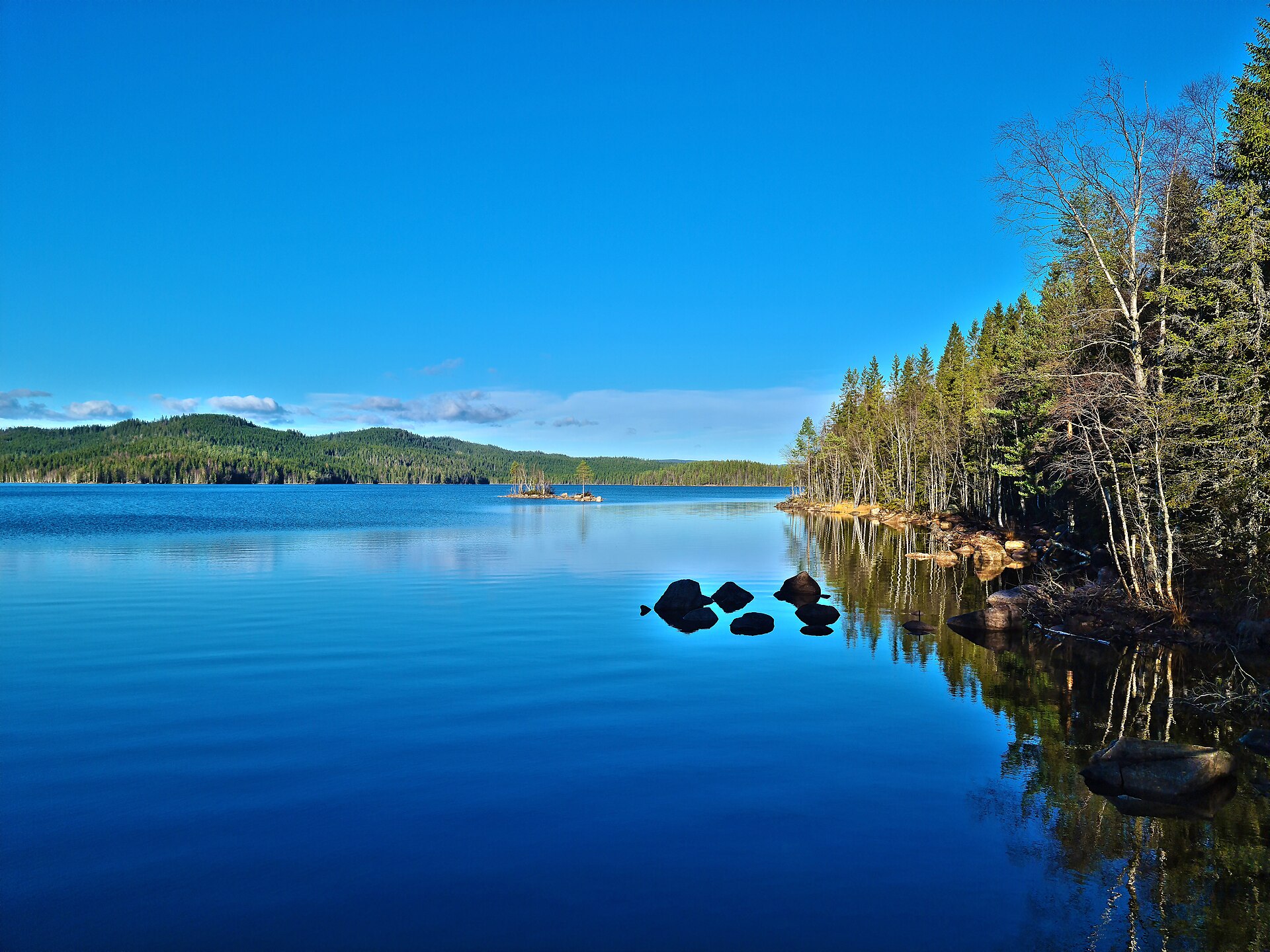
Forest twenty minutes from the centre. Metro line 1 or 3 and you are on marked trails in Nordmarka, on skis in winter and beside swimmable lakes in summer, for the price of a bus fare. No other capital in Europe does this as well.
Swimming in the city. Sørenga’s free seawater pool, the island beaches, water at 18°C in July. A clean swim ten minutes from the main station is not a normal thing for a capital city to have — details in our Oslofjord guide.
The museums, at last. After twenty years of building, the collections are genuinely first-rank, and cheap for anyone under 18. See the museums guide for what each one costs.
So: how many days?
| Days in Oslo | Verdict |
|---|---|
| Half a day / layover | Worth doing. Opera roof, harbour, fortress, all free and walkable. |
| One day | Fine, if you accept you are choosing one cluster. See our timed one-day plan. |
| Two days | The sweet spot. Museums plus outdoors without rushing either. |
| Three days | Adds a day trip, or the forest, or a proper day at the National Museum. |
| Four or more | Diminishing. Move on — go west. |
Two to three days. That is the answer. Below two you are skimming; above three you are repeating yourself in an expensive city while the rest of Norway waits. If you are working out how the whole trip fits together, our guide to how many days you need in Norway puts the capital in proportion.
Frequently asked questions
Is Oslo worth visiting?
For two to three days, yes — for the museums built since 2020, free public space, and forest twenty minutes from the centre by metro. As the main destination of a short Norway trip, no. The landscape most people come to Norway for is on the other side of the country.
Is Oslo boring compared to Copenhagen or Stockholm?
For nightlife and street-level buzz, yes, and both are cheaper. For museums, architecture and access to genuine wilderness from a city centre, Oslo wins comfortably. The reputation for dullness is based on the Oslo of twenty years ago, before the Opera House, MUNCH, Deichman and the National Museum were built.
Is Oslo the most expensive city in Europe?
No. Numbeo’s August 2026 index puts Oslo at 90.2 against Zurich at 118.5 and Reykjavík at 98.9 — and only about three per cent above London. What Oslo lacks is a cheap tier, which makes it feel more expensive than the index suggests.
How many days do you need in Oslo?
Two to three. One day works if you accept you will choose between the Bygdøy museums and Frogner Park. Four or more starts to repeat itself, and Norway is a large country.
Is Oslo or Bergen better for tourists?
Bergen, if you only have four days and want the fjords, because it is the gateway to them. Oslo, if you want museums, architecture and a functioning city. With a week, do both — the train between them is worth taking for its own sake.
What is Oslo known for?
The Vigeland sculpture park, the Munch collection, the Opera House, the Nobel Peace Prize — awarded in the City Hall every December — and unusually easy access to forest and fjord from the middle of the city.
Is Oslo worth visiting in winter?
Yes if you will use the forest, where the cross-country trails and the free floodlit toboggan run are the city’s real winter case. As a purely indoor city break in six hours of December daylight, less so. The full picture is in Oslo in winter.
Can you see the Northern Lights in Oslo?
Realistically no. At 59°N with heavy light pollution, it takes an exceptional geomagnetic storm. If aurora is the reason for the trip, go north.
Photo credits
- Bjorvika: the Opera House in 2008, Deichman in 2020, MUNCH in 2021. A serious build-out in fourteen years. — Photo: Tore Sætre / CC BY-SA 4.0 via Wikimedia Commons.
- Twenty minutes on the metro from Karl Johans gate. No other European capital does this as well. — Photo: Geir Hval (www.MacWhale.eu) / CC BY-SA 4.0 via Wikimedia Commons.
- Bergen, seven hours west by train, is where most people’s Norway trip actually belongs. — Photo: Anna Anichkova / CC BY-SA 3.0 via Wikimedia Commons.
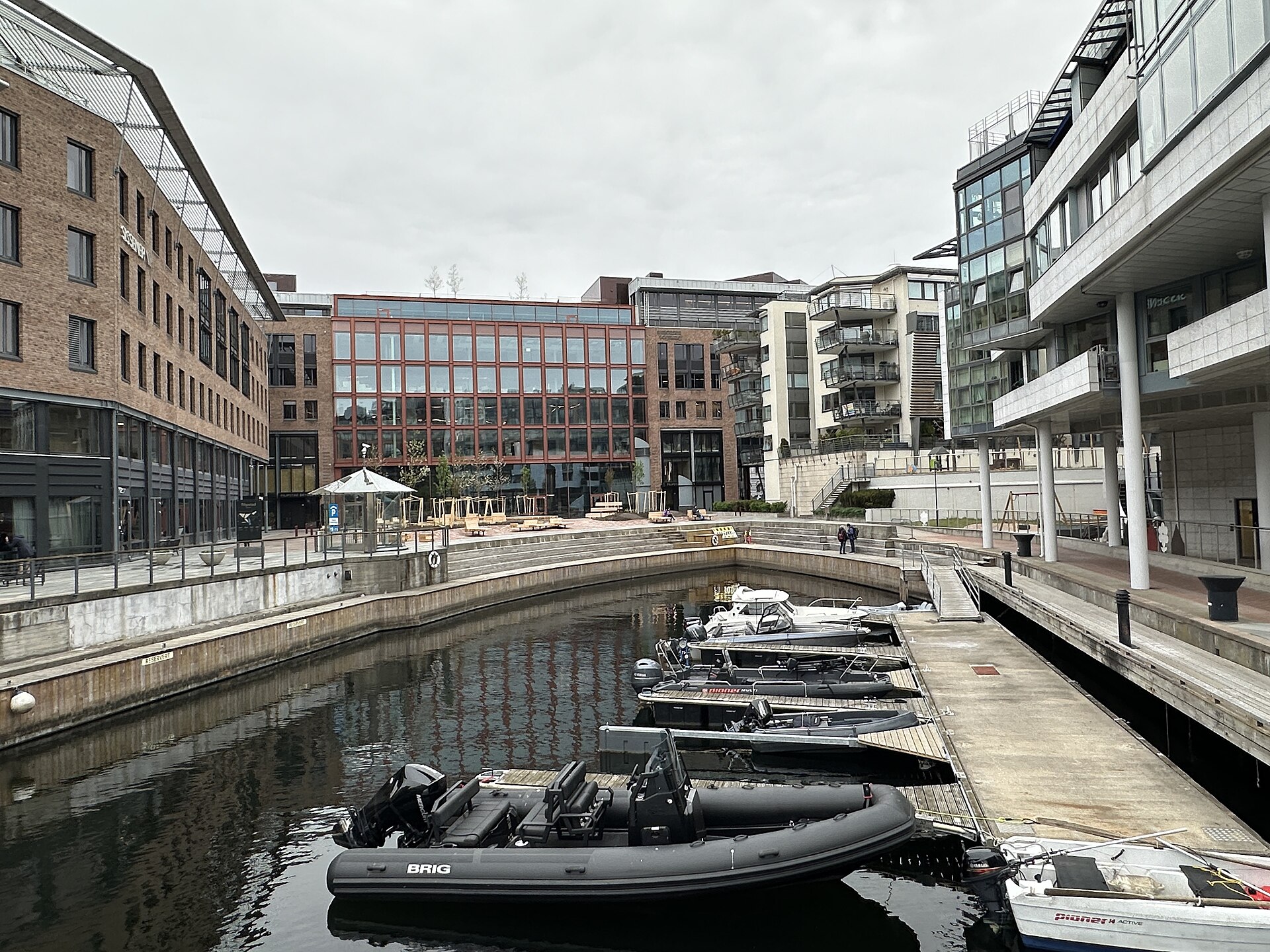
- Oslo is expensive to consume and cheap to experience. The waterfront costs nothing. — Photo: Ssu / CC BY-SA 4.0 via Wikimedia Commons.
Figures checked August 2026 and converted at 9.35 NOK to 1 USD. Cost-of-living indices are Numbeo’s crowd-sourced August 2026 figures and should be read as comparative rather than exact; the Oslo hotel and airport statistics each came from a single source and are flagged as such above. Norway’s visitor levy became law on 1 July 2026 but Oslo has not adopted it, so no tourist tax applies here yet.