The first thing to fix about 2 days in Oslo is the one line that appears in nearly every guide still ranking for this search: go and see the Viking ships. You cannot. The Viking Ship Museum shut in 2023 for a full rebuild, it is now the Museum of the Viking Age, and the current opening date is 1 November 2027. One popular guide still tells readers it “reopens by 2026”. It does not. If a page is that wrong about the single most famous museum in the city, treat its prices as fiction too.
The second thing to fix is the Oslo Pass. Every competing weekend guide says the same vague sentence — worth it if you visit three or four museums — and then declines to do the sum. So I did it. With correct September 2026 prices, a 48-hour adult pass at 845 NOK ($90) beats paying separately by about 89 NOK ($9.50) on a realistic three-museum weekend, and the gap widens the moment you add the Bygdøy ferry or the airport train. For anyone under 18 the pass is a straight loss, because children already walk into the three biggest museums for nothing.
What follows is a working Oslo 2 day itinerary with every price checked, every opening hour listed, and the arithmetic shown rather than asserted. I have kept it deliberately narrow. This is a weekend in Oslo, not a national tour; if you want the longer picture there is a separate country-wide route planner, and a fuller city guide to Oslo covering neighbourhoods and day trips.
Two days in Oslo at a glance
Oslo is small. The centre is walkable end to end in about 25 minutes, and the two outlying clusters you actually want — Bygdøy for the museums, Frognerparken for the sculptures — are 15 to 20 minutes out by tram, bus or boat. That compactness is why 48 hours genuinely works here in a way it does not in, say, Bergen.
| Slot | What you do | Cost without pass | Time needed |
|---|---|---|---|
| Day 1 morning | Opera House roof, harbour walk, National Museum | 200 NOK ($21) | 3-4 hours |
| Day 1 afternoon | MUNCH, Barcode waterfront, Akershus Fortress grounds | 280 NOK ($30) | 3 hours |
| Day 1 evening | Grünerløkka dinner and bars | 350-500 NOK ($37-$53) | 3 hours |
| Day 2 morning | Ferry to Bygdøy, Norsk Folkemuseum, Fram Museum | 450 NOK ($48) | 4-5 hours |
| Day 2 afternoon | Vigeland Sculpture Park, optional Holmenkollen | 0-200 NOK ($0-$21) | 2-4 hours |
| Day 2 evening | Aker Brygge or Mathallen, harbour at dusk | 350-500 NOK ($37-$53) | 2-3 hours |
Add roughly 274 NOK ($29) for two 24-hour transport tickets across the weekend, and food on top. If you want the wider budget picture before booking, the cost breakdown for Norway puts Oslo in context against the rest of the country, and it is not the outlier people expect.
Does the Oslo Pass actually pay for itself?
This is the section every other page skips. Here are the real 2026 figures, checked September 2026.
| Oslo Pass | 24 hours | 48 hours | 72 hours |
|---|---|---|---|
| Adult | 580 NOK ($62) | 845 NOK ($90) | 995 NOK ($106) |
| Senior | 465 NOK ($50) | 675 NOK ($72) | 795 NOK ($85) |
| Child 6-17 | 290 NOK ($31) | 420 NOK ($45) | 495 NOK ($53) |
For a weekend you want the 48-hour version. Note what it includes beyond museum entry, because almost nobody mentions it: unlimited travel on Ruter zones 1, 2, 3, 4V and 4N, and free Vy local trains to and from Gardermoen airport. That airport leg alone is a meaningful chunk of the price, and it is the single most overlooked line in the whole product. If you land at Gardermoen on a Saturday morning and activate the pass at the station, the clock starts working for you immediately.
The worked sum for a normal weekend
Here is the comparison for two adults’ worth of typical behaviour — three museums, both days on public transport, no ferry.
| Item | Paid separately | With 48h pass |
|---|---|---|
| MUNCH, adult daytime | 280 NOK ($30) | Included |
| Norsk Folkemuseum, adult | 200 NOK ($21) | Included |
| Fram Museum, adult | 180 NOK ($19) | Included |
| Ruter 24h zone 1, day one | 137 NOK ($15) | Included |
| Ruter 24h zone 1, day two | 137 NOK ($15) | Included |
| Total | 934 NOK ($100) | 845 NOK ($90) |
So the pass wins by 89 NOK ($9.50). That is a real saving but it is thin, and it means the standard advice — “worth it for three or four museums” — is only just true at three. Swap the Fram for something free and it flips. Two museums plus transport comes to 754 NOK ($81) against 845 NOK ($90), and the pass loses by 91 NOK.
What tips it decisively is the extras. Add the Bygdøy ferry at 70 NOK ($7.50) and the margin goes to 159 NOK. Add a return trip on the airport train and the pass is comfortably ahead, though check Vy’s current Gardermoen fare yourself before you count that saving, because it moves. A fourth museum on day two, such as Kon-Tiki next door to the Fram, pushes the separate-ticket column past 1,100 NOK and the case stops being close.
Ruter tickets if you skip the pass
If the sum says no pass, buy transport properly rather than tapping card readers at random. Oslo runs on Ruter zones, and almost everything a visitor wants sits in zone 1. Gardermoen airport does not, which is the usual trap.
| Ruter ticket, zone 1 | Adult | Child 6-17 | Senior |
|---|---|---|---|
| Single (app or machine) | 46 NOK ($4.90) | 19 NOK ($2.00) | 23 NOK ($2.50) |
| Single bought on board | 66 NOK ($7.10) | – | – |
| 24 hours | 137 NOK ($14.70) | 69 NOK ($7.40) | 69 NOK ($7.40) |
| 7 days | 379 NOK ($41) | 190 NOK ($20) | 190 NOK ($20) |
| 30 days | 655 NOK ($70) | – | – |
The tipping point is three journeys. Two singles cost 92 NOK, three cost 138 NOK, and the 24-hour ticket is 137 NOK, so from the third ride onwards the day ticket is ahead. On a Bygdøy day you will make three or four legs without trying. A single is valid 60 minutes, with 30 minutes added for each extra zone, and the same ticket works on bus, tram, T-bane, the Ruter boats and Vy trains inside Oslo and Akershus. Under-6s ride free. Buying on board costs 66 NOK instead of 46, a 20 NOK penalty for not opening the app. More on the mechanics in the guide to getting around Norway.
One specific comparison nobody publishes: the Bygdøy ferry from Rådhusbrygge 3 to Dronningen costs 70 NOK ($7.50) at the kiosk or 75 NOK ($8) on board, and runs every 20 minutes from 14 March 2026. Bus 30 to the “Folkemuseet” stop is a normal 46 NOK single, or free inside your 24-hour ticket. The ferry is not covered by an ordinary Ruter ticket. It is free with the Oslo Pass. So: pass holders take the boat, everyone else should think about whether the ten-minute crossing is worth 70 NOK on top of transport they have already paid for. In November drizzle it is not. In June it is one of the best cheap things you will do all weekend.
The two-day plan, hour by hour
Day 1, morning: Opera roof and the National Museum
Cost: 200 NOK ($21). Hours: roof open 24/7, foyer Mon-Sat 11:00-22:00 and Sun 12:00-22:00. Verdict: the strongest three hours in the city.
Start at the Opera House and walk up the roof. Yes, you can genuinely walk on it, free, at any hour, and it is not a viewing platform with a queue — the whole white marble slope is a public surface you climb from ground level. Go early. At 08:00 in summer you will share it with joggers; by noon it is full of cruise passengers.
From the top you get the geography of Oslo in one sweep: the Barcode towers east, Akershus Fortress west, the fjord opening south. Ten minutes there saves you an hour of map-reading later.
Then walk west along the harbour to the National Museum, about 20 minutes. Adult entry is 200 NOK ($21), free for under-18s, and students under 30 pay 120 NOK ($13) but only at the counter, not online. If you are in Oslo often, annual membership is 699 NOK ($75), which pays back on the fourth visit. The building is enormous and you will not see it all; go straight to the top floor for the Munch room, including The Scream, then work backwards. Two hours is honest, three if you like 19th-century Norwegian landscape painting, which is better than it sounds.
Day 1, afternoon: MUNCH and the eastern waterfront
Cost: 280 NOK ($30) daytime, 200 NOK ($21) after 18:00. Hours: 10:00-18:00, evening rate 18:00-21:00. Verdict: go, but book the evening slot if you are paying separately.
MUNCH is the tall leaning tower next to the Opera House. Adult entry is 280 NOK ($30) in the day and drops to 200 NOK ($21) from 18:00, under-25s pay 100 NOK ($11), and everyone aged 0-17 is free. That evening discount is worth knowing: it is an 80 NOK saving for shifting your visit by a few hours, and the building is considerably calmer after six.
Thirteen floors, and you do not need all of them. The Munch collection proper sits in the middle; the top-floor bar has the view. Budget 90 minutes to two hours. Note the competitor guides quoting 180 NOK for MUNCH are running on 2022 numbers and are out by a hundred kroner.
Afterwards, walk the Barcode strip behind the station and then back to Akershus Fortress, where the grounds are free and open and the ramparts give you the harbour from the other side. That fortress is one of the older landmarks in Norway that costs nothing to visit, which is a category Oslo has more of than its reputation suggests.
Day 1, evening: Grünerløkka
Cost: 350-500 NOK ($37-$53) per person for dinner and a drink. Hours: kitchens generally to 22:00. Verdict: the right neighbourhood, not the right place for a quiet meal.
Tram 11, 12 or 13 north, or walk 25 minutes up the Akerselva river. Grünerløkka is where Oslo eats when it is not entertaining visitors: Thorvald Meyers gate for the main strip, Mathallen food hall at the southern end for a lower-commitment version. Indicative 2026 prices from secondary sources, so treat them as a range rather than a quote: coffee 45-65 NOK ($4.80-$7), a restaurant main 220-380 NOK ($24-$41), a beer 100-130 NOK ($11-$14). The beer number is the one that surprises people.
If the budget is tight, this is the moment to lean on the fact that Oslo has a genuinely long list of free things to do and to spend the evening on the water instead.
Day 2, morning: Bygdøy museums
Cost: 380 NOK ($41) for two museums, plus 70 NOK ($7.50) if you take the ferry. Hours: see the table. Verdict: the core of the weekend, and the part with the biggest scheduling trap.
Bygdøy is the peninsula west of the centre where four museums sit within a ten-minute walk of each other. Getting there: ferry from Rådhusbrygge 3 by the City Hall to Dronningen, every 20 minutes, or bus 30 from Nationaltheatret to Folkemuseet, roughly 15 minutes and covered by any Ruter ticket. The ferry is prettier, the bus is more reliable in winter and runs year-round.
| Bygdøy museum | Adult | Under 18 | Opening hours |
|---|---|---|---|
| Norsk Folkemuseum | 200 NOK ($21) | Free | 1 May-4 Oct daily 10:00-17:00; 5 Oct-30 Apr Tue-Sun 11:00-16:00, closed Mondays |
| Fram Museum | 180 NOK ($19) | 70 NOK ($7.50) | Daily; 1 May-30 Sep 09:30-18:00, 1 Oct-30 Apr 10:00-17:00 |
| Fram + Kon-Tiki combined | 325 NOK ($35) | – | As above |
| Museum of the Viking Age | Closed | Closed | Planned reopening 1 November 2027 |
Read that Folkemuseum line twice. From 5 October to 30 April it is closed on Mondays, and it opens at 11:00 rather than 10:00. If your weekend runs Sunday to Monday in November, a Monday Bygdøy morning collapses. Not one of the guides ranking for this keyword mentions it. Rebuild the day: do Bygdøy on Sunday and put the city centre museums on Monday instead.
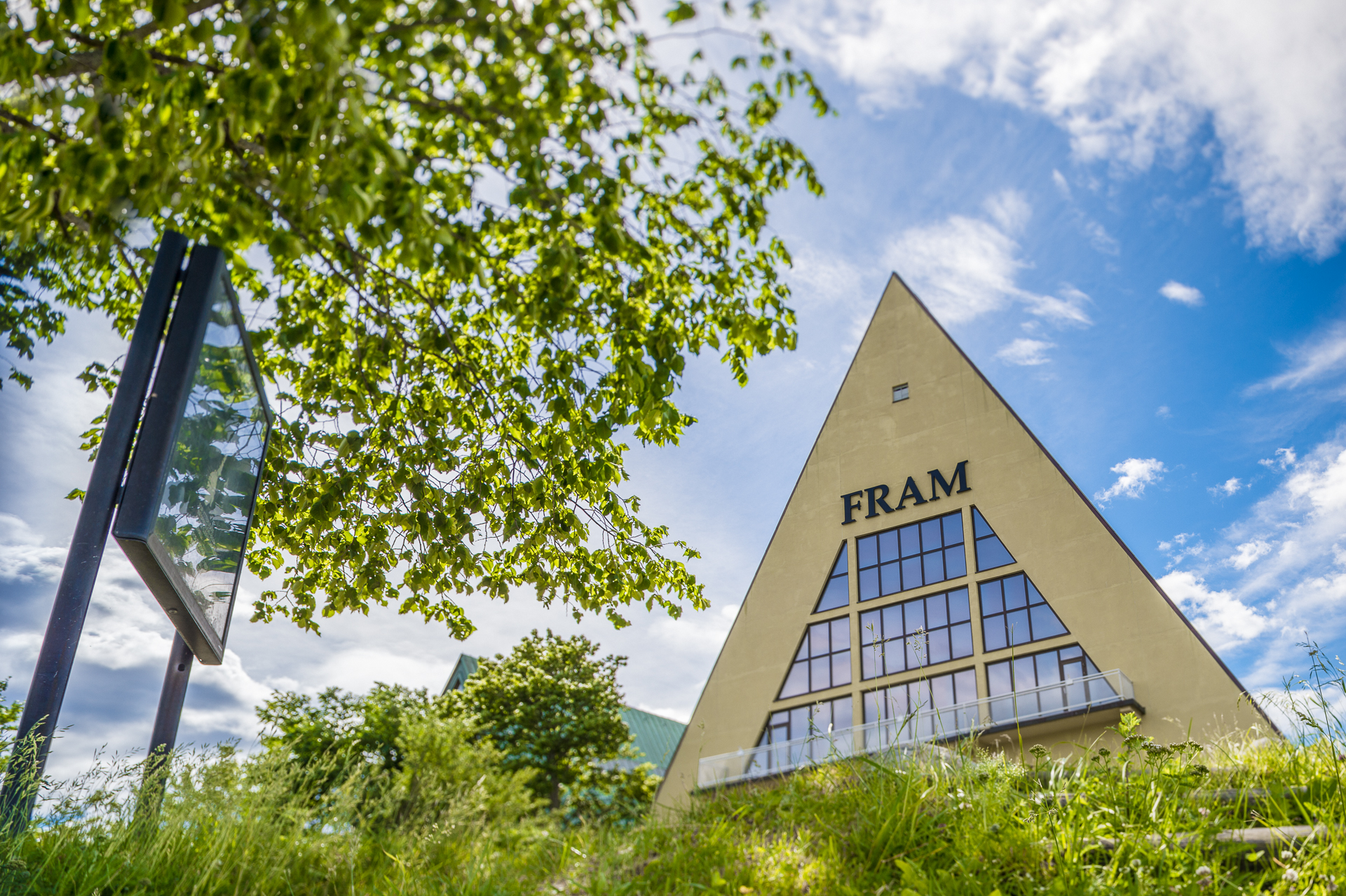
The Folkemuseum is 160-odd relocated historic buildings including the Gol stave church, and it works better in summer when the costumed interpreters are out. The Fram is a genuine polar exploration ship you climb inside, three decks of it, and it is the museum most likely to hold the attention of a bored teenager. Family ticket 2 adults plus 5 children is 400 NOK ($43), student and child 70 NOK ($7.50), senior 140 NOK ($15). If you are travelling as a family the wider notes on Norway with kids apply here more than anywhere else in the city.
Day 2, afternoon: Frognerparken, or the ski jump
Cost: free, or 200 NOK ($21) for Holmenkollen. Hours: park open 24/7 all year; Holmenkollen daily 10:00-17:00 May-Sep, 10:00-16:00 Oct-Apr. Verdict: do the park; only add the ski jump if you are moving fast.
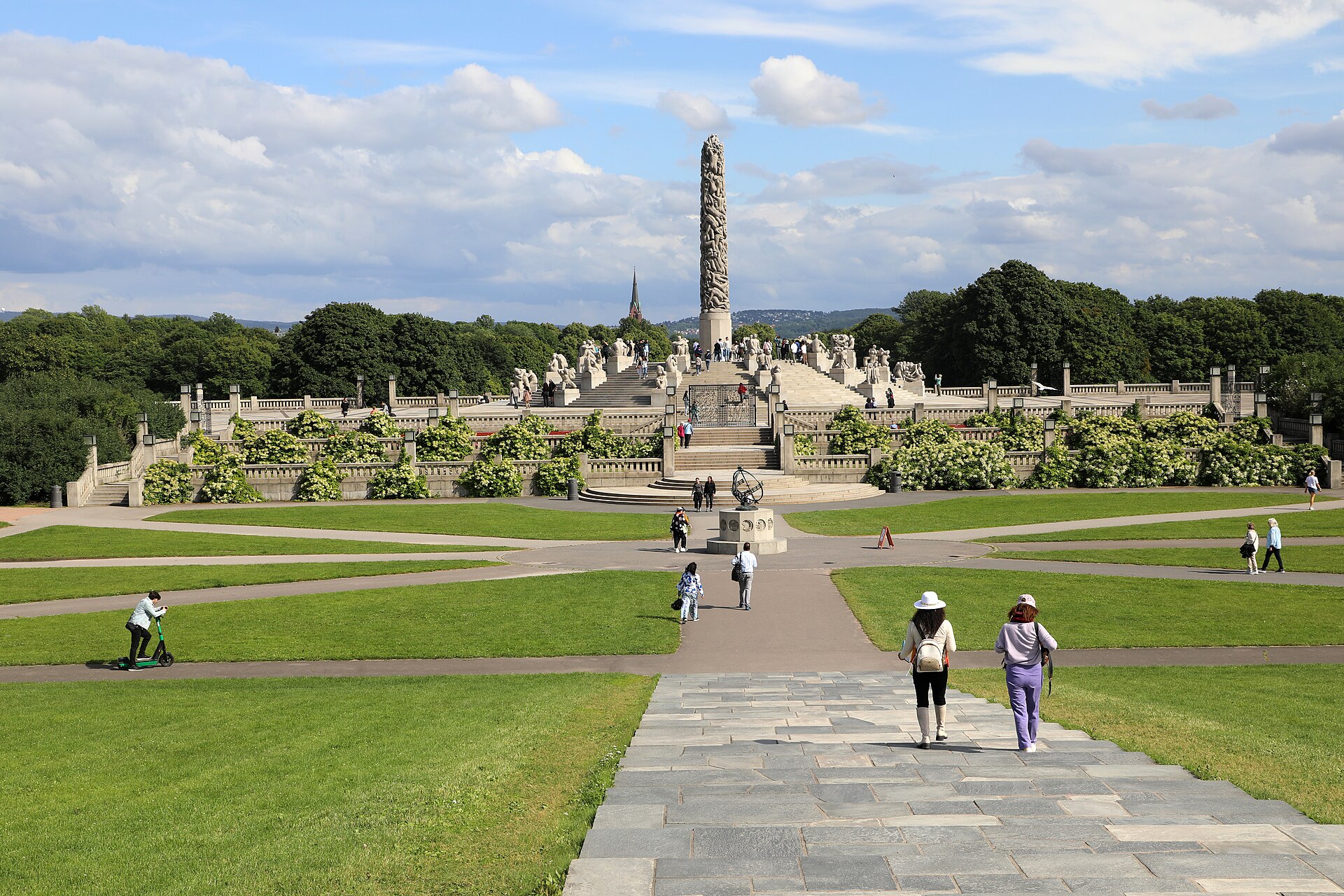
Vigeland Sculpture Park inside Frognerparken is free, open around the clock every day of the year, and holds more than 200 sculptures by one man. Tram 12 from Nationaltheatret takes about 15 minutes and runs every 6 to 10 minutes. Give it an hour, more if the weather is behaving. It is the one thing in Oslo I would tell someone to see if they had ninety minutes and nothing else, and it costs nothing, which makes the second half of day two the cheapest half-day of the weekend.
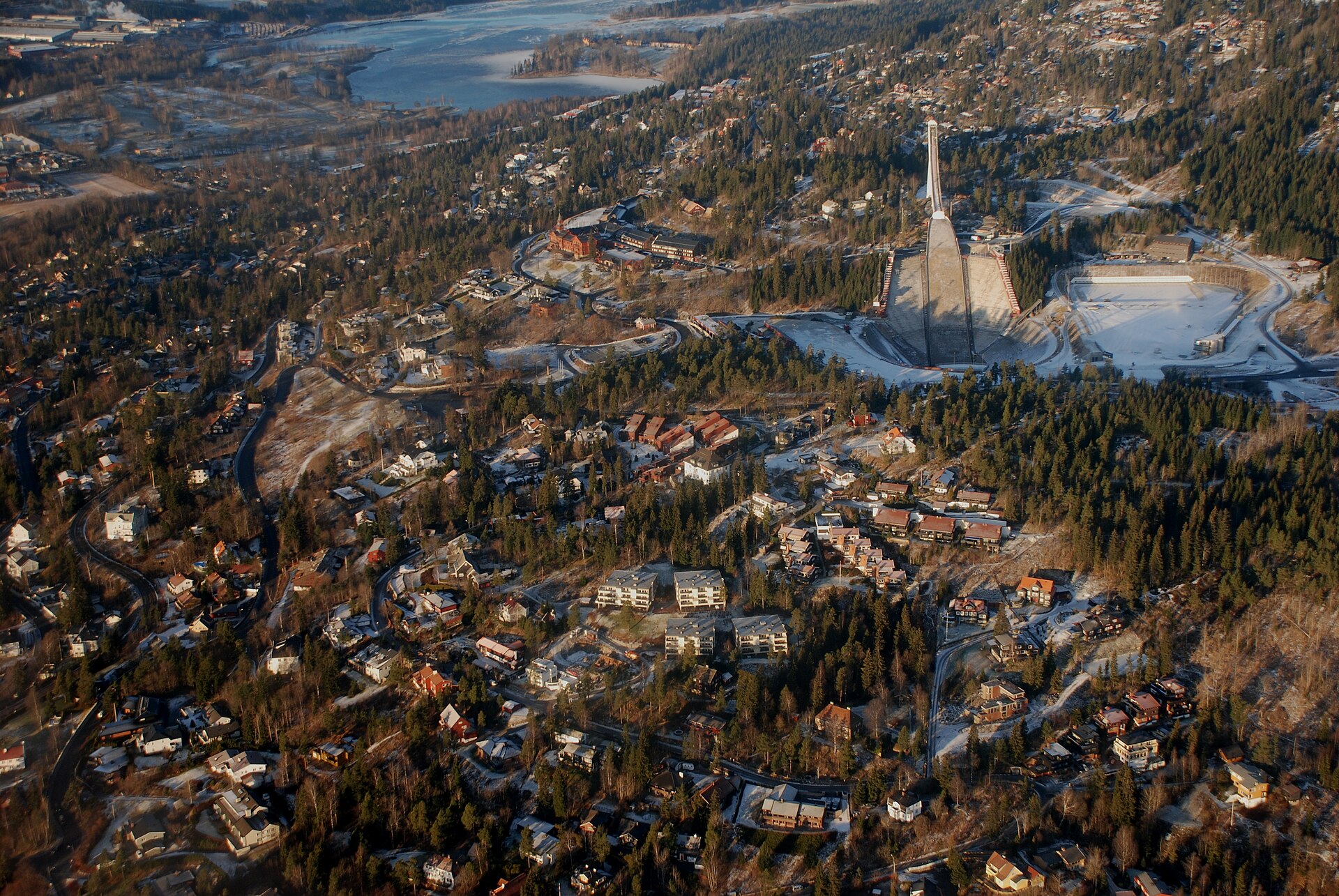
If you still have energy, Holmenkollen is a 25-minute T-bane ride on line 1 from the centre. One ticket at 200 NOK ($21) adult, 100 NOK ($11) for ages 6-17, 150 NOK ($16) under 30, 180 NOK ($19) senior, family 2+2 500 NOK ($53) or 2+3 600 NOK ($64) covers both the Ski Museum and the jump tower. The ski simulator is extra at 130 NOK ($14) adult and 75 NOK ($8) child, and I would skip it. What you are really buying is the view from the top of the jump, which on a clear day is the best in the city. Check whether the current Oslo Pass inclusion list covers it before you assume, because the ownership arrangement has changed over the years and I would not want you to plan around a free entry that is not there.
Doing both the park and the jump in one afternoon is possible but tight. Pick one if your flight is early.
Day 2, evening: the harbour
Cost: 350-500 NOK ($37-$53). Hours: Aker Brygge restaurants typically to 23:00. Verdict: touristy, priced accordingly, still worth an hour at dusk.
Aker Brygge and Tjuvholmen are where Oslo puts its waterfront dining, and the prices reflect that. I would eat somewhere cheaper and come here for the walk instead, out along Tjuvholmen to the sculpture park at the end and the small city beach beside it. In June and July the light does not really leave, and the whole waterfront stays busy past eleven. In January it is dark by half past three and the calculation changes entirely, which is covered properly in the notes on Norway in winter.
What to skip, what is closed, and when the pass loses
The honest part. Not everything on the standard Oslo list earns its slot in 48 hours.
The Viking ships are not available. Full stop. The Museum of the Viking Age has been closed since 2023, the planned reopening is 1 November 2027, and roughly 200 million NOK of the build is still unfunded, so treat even that date as provisional. The Oseberg, Gokstad and Tune ships are in conservation storage and cannot be viewed. What you can do instead is the Historical Museum downtown, which displays Viking-age material and is ten minutes from the National Museum. Any guide that sends you to Bygdøy for the ships in 2026 has not been updated in three years, and you should discount everything else it tells you accordingly.
The pass loses outright for under-18s. Here is the arithmetic nobody runs. A child 48-hour pass is 420 NOK ($45). But under-18s are already free at MUNCH, free at the Norsk Folkemuseum and free at the National Museum. The child’s actual costs on the itinerary above are the Fram at 70 NOK ($7.50) and two 24-hour Ruter tickets at 69 NOK ($7.40) each, so 208 NOK ($22) in total. Buying the child pass costs you an extra 212 NOK ($23) for nothing. If you are a family of four, that is 424 NOK ($45) thrown away, which more than cancels the two adults’ 178 NOK saving. Buy adult passes, buy child transport tickets, walk the kids in free.
Seniors are a marginal yes. A 48-hour senior pass is 675 NOK ($72). Paying separately across the same three museums with senior rates where they exist — MUNCH 280 NOK, Folkemuseum 160 NOK, Fram 140 NOK — plus two senior day tickets at 69 NOK comes to 718 NOK ($77). The pass wins by 43 NOK ($4.60). Thin, but it wins, and it wins by more if you add the ferry.
Skip the ski simulator, skip the 72-hour pass on a two-day trip unless your arrival and departure times straddle a third calendar day, and skip trying to add a fjord day trip. Two days does not stretch to it, and the fjords deserve better than a rushed coach. That is a separate trip, and the case for pairing Oslo with Bergen by rail is much stronger than any day excursion from the capital.
On where to sleep: stay in the centre between the Opera House and the Royal Palace, or just over the river in Grünerløkka. Anything further out and the transport time eats the itinerary. There is more on the trade-offs in the guide to choosing where to stay in Norway.
Frequently asked questions
Is 2 days enough in Oslo?
For the city itself, yes. Oslo is compact enough that two full days covers the Opera House, two or three major museums, Bygdøy and Frognerparken without rushing. What two days does not cover is any excursion outside the city, and it does not cover Oslo in bad weather, when the indoor list runs short. Three days is more comfortable but the fourth adds little.
Is the Oslo Pass worth it for 2 days?
For an adult visiting three or more paid museums and using public transport both days, yes, by roughly 89 NOK ($9.50) on the figures above. For two museums or fewer, no. For anyone under 18, definitively not, because the big three museums are already free for them. Add the airport train or the Bygdøy ferry and the case improves noticeably.
How much is the Oslo Pass in 2026?
Checked September 2026: adult 580 / 845 / 995 NOK for 24, 48 and 72 hours, senior 465 / 675 / 795, child aged 6-17 290 / 420 / 495. Several guides still quoting 445 / 655 / 820 are running on figures that are several years old. The pass also covers Ruter zones 1, 2, 3, 4V and 4N plus Vy local trains to and from Gardermoen.
Is the Viking Ship Museum open?
No. It closed in 2023 and is being rebuilt as the Museum of the Viking Age, with a planned reopening of 1 November 2027 and part of the funding still outstanding. The ships are in conservation storage and are not on display anywhere. Viking-age artefacts are shown at the Historical Museum in the centre of town instead.
How do you get to Bygdøy?
Two ways. The ferry runs from Rådhusbrygge 3 next to the City Hall to Dronningen every 20 minutes from 14 March 2026, costing 70 NOK ($7.50) at the kiosk or 75 NOK ($8) on board, and it is free with the Oslo Pass. Bus 30 from Nationaltheatret to the Folkemuseet stop takes about 15 minutes and costs a standard 46 NOK ($4.90) single, or nothing extra on a 24-hour ticket. The ferry does not run on an ordinary Ruter ticket.
Can you walk on the Opera House roof for free?
Yes, and at any hour. The sloping marble roof is a public space with no ticket and no gate, accessible 24 hours a day, all year. The foyer inside has separate hours, Monday to Saturday 11:00-22:00 and Sunday 12:00-22:00. In winter the roof can be genuinely icy, so wear something with grip.
How much is a day of public transport in Oslo?
A 24-hour zone 1 ticket is 137 NOK ($14.70) for an adult and 69 NOK ($7.40) for a child or senior. Single rides are 46 NOK ($4.90) from the app or a machine, rising to 66 NOK ($7.10) if you buy on board, and each is valid for 60 minutes plus 30 minutes per extra zone. From the third journey onwards the day ticket is cheaper. Under-6s travel free.
What is the best area to stay for a weekend in Oslo?
The central strip between Oslo S and the Royal Palace puts you inside walking distance of the Opera House, MUNCH and the National Museum, and on the tram lines for everything else. Grünerløkka is the better choice if you would rather eat well than shave five minutes off the museum walk. Both work; anywhere beyond zone 1 does not, for a trip this short. General booking advice sits in our Norway travel tips, and the seasonal question of when to come at all is covered in the best time to visit.
Photo credits
- Vigeland Park is free, open around the clock, and the Oslo Pass adds nothing to it. — Photo: Francesco Bini / CC BY-SA 4.0 via Wikimedia Commons.
- Holmenkollen is 200 NOK, and one ticket covers both the museum and the tower. — Photo: Wilhelm Joys Andersen from Oslo, Norway / CC BY-SA 2.0 via Wikimedia Commons.
- The Fram is 180 NOK on its own, or 325 combined with the Kon-Tiki next door. — Photo: Tore Storm Halvorsen / CC BY-SA 4.0 via Wikimedia Commons.
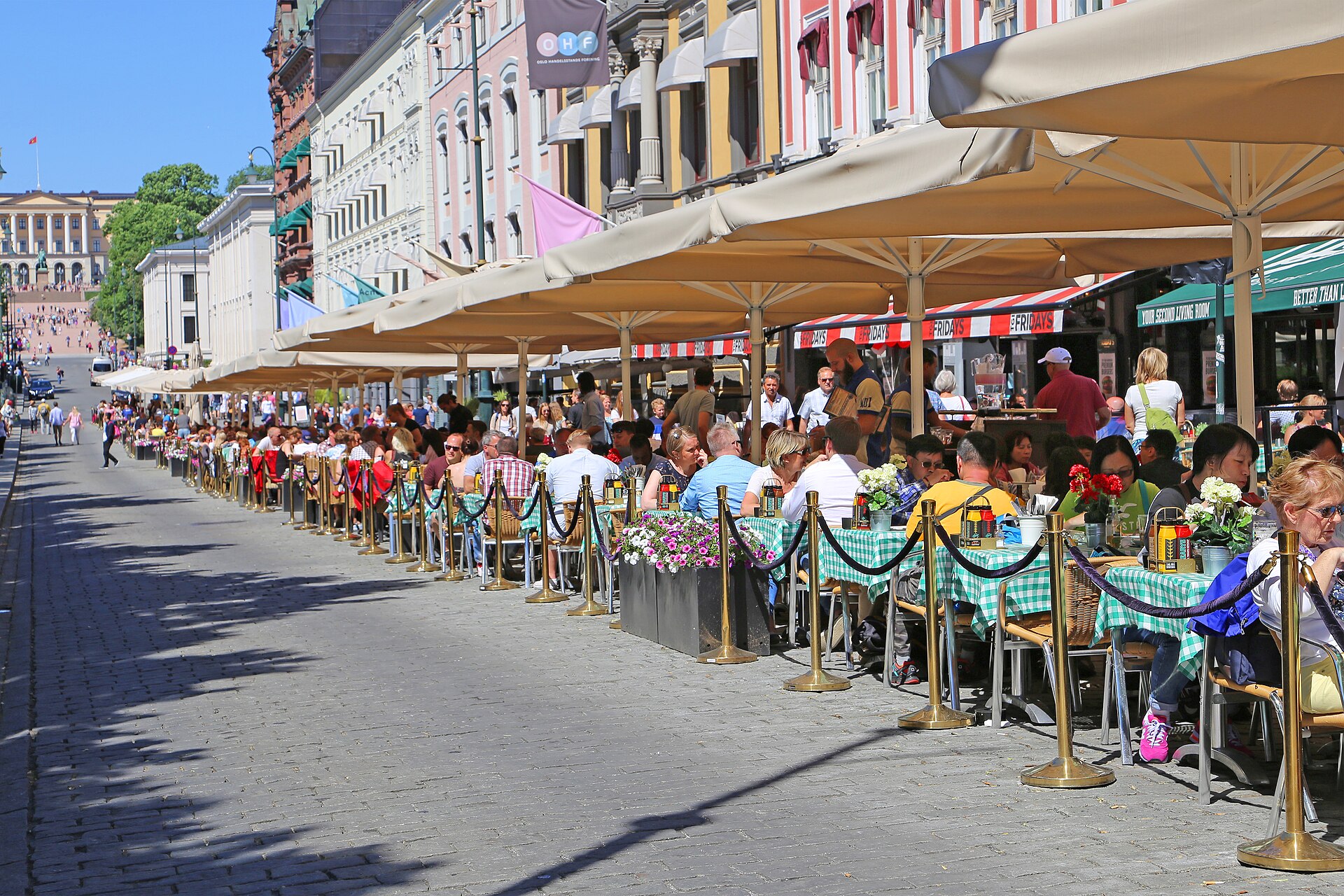
- Almost everything on day one sits within twenty minutes of this street. — Photo: W. Bulach / CC BY-SA 4.0 via Wikimedia Commons.
All prices checked September 2026 and quoted in Norwegian kroner, with US dollars converted at 9.35 NOK to 1 USD. Museum and transport fares in Oslo change at the start of the calendar year and again in August, so confirm with the operator before you commit to the Oslo Pass arithmetic above.