There are two problems with every article on free things to do in Oslo. The first is that they pad the list with things that are not free — “the Oslo Pass gives you free entry” is not a free thing, it is a 580-krone thing. The second is that they never mention the transport. A free hike in Nordmarka costs you a metro fare each way, and a free island beach costs you a ferry ticket, and if you string six free attractions across the city you will spend more on Ruter than you would have on a museum.
So this list is filtered strictly: things that cost zero kroner to enter. Where getting there costs money, I say how much. And at the end there is a genuinely free day with a running total, which comes to less than the price of one beer. The paid highlights are in our complete Oslo guide.
One more thing the competition gets wrong. The four biggest guides on this search quote the Oslo Pass at 395, 520 and 580 kroner respectively. Only one of those is right. It is 580 NOK for 24 hours, 845 for 48 and 995 for 72.
The genuinely free list
| What | Cost to get there | Time | Verdict |
|---|---|---|---|
| Vigeland Sculpture Park | Walk, or ~42 NOK on tram 12 | 60–75 min | The best free thing in Norway. |
| Opera House roof | Free — 4 min walk from Oslo S | 20–30 min | Keep. No ticket, no queue. |
| Akershus Fortress grounds | Free — walkable | 30–40 min | Keep. Open 06:00–21:00. |
| Deichman Bjørvika library | Free — walkable | 30 min | Keep, especially in bad weather. |
| Ekebergparken sculpture park | ~42 NOK on tram 13/19 | 90 min | Keep. Views plus Rodin and Dalí. |
| Botanical Garden, Tøyen | Walk or 1 metro stop | 45 min | Keep. |
| Akerselva river walk | Free — starts in the centre | 2 hr one way | Keep. Almost no tourists. |
| Nordmarka forest trails | ~42 NOK metro each way | Half day | Keep. The best value in the city. |
| Sørenga seawater pool | Free — walkable | 1–2 hr | Keep, June to August. |
| Changing of the guard, Royal Palace | Free — walkable | 20 min, daily 13:30 | Mild. Go if you are passing. |
| Oslo Cathedral | Free — walkable | 15 min | Mild. |
| Oslo City Hall interior | Free — walkable | 30 min | Better than it sounds. The murals are extraordinary. |
The four that are actually worth planning around
Vigeland Sculpture Park
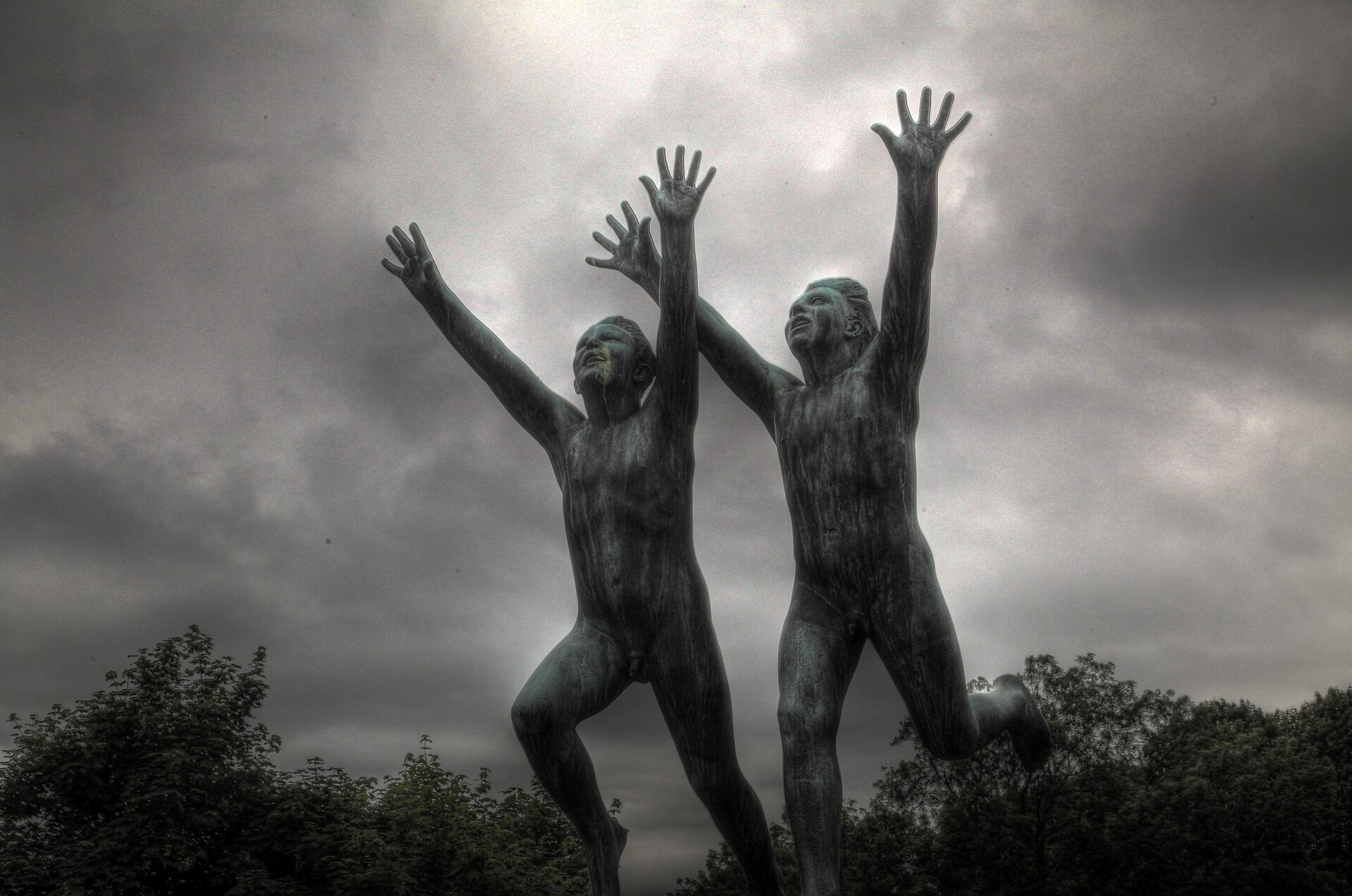
Two hundred and twelve sculptures by Gustav Vigeland along a single axis in Frogner Park. No gate, no ticket, no opening hours — it is a public park and it is open at three in the morning if you want it to be.
That last point is the one to act on. Go at 07:30 or after nine in the evening in summer and you will have the Monolith to yourself. At midday in July you will be sharing it with coach parties. Tram 12 from the centre takes about ten minutes; walking from the Royal Palace takes about 25.
Note the distinction the guides blur: the park is free forever. The Vigeland Museum, the sculptor’s studio across the road, is a separate paid ticket at around 80 NOK for adults. You do not need it.
The Opera House roof
You walk up the outside of the building on white marble from ground level to the top. There is no ticket, no barrier and no staff. It is the most generous piece of public architecture I have seen in a European capital, and it takes twenty minutes.
Winter caveat: sections get roped off when the marble ices, and it does ice.
The Akerselva river walk
This is the one nobody writes about properly. The Akerselva runs about 8 km from Maridalsvannet lake down through Grünerløkka to the harbour, along a continuous path past waterfalls and converted mill buildings. It is entirely free, it starts in the centre, and outside the Grünerløkka section you will barely see another visitor.
Do it downhill: metro or bus to the top end, walk down to Vaterland, two hours at a stroll. That is a substantial half-day for the price of one transit ticket.
Nordmarka
The forest above Oslo, reached by metro line 1 to Frognerseteren or line 3 to Sognsvann. The trails are free, they are marked, and in summer they lead to swimmable lakes. In winter the same network is groomed for cross-country skiing, much of it floodlit.
Cost: one zone-1 fare each way, around 42 NOK. There is no other city in Europe where twenty minutes of metro puts you in genuine forest. If you do one thing on this list, do this. Our hiking guide covers the more ambitious walks elsewhere in the country.
The rest of the free list, honestly rated
Ekebergparken
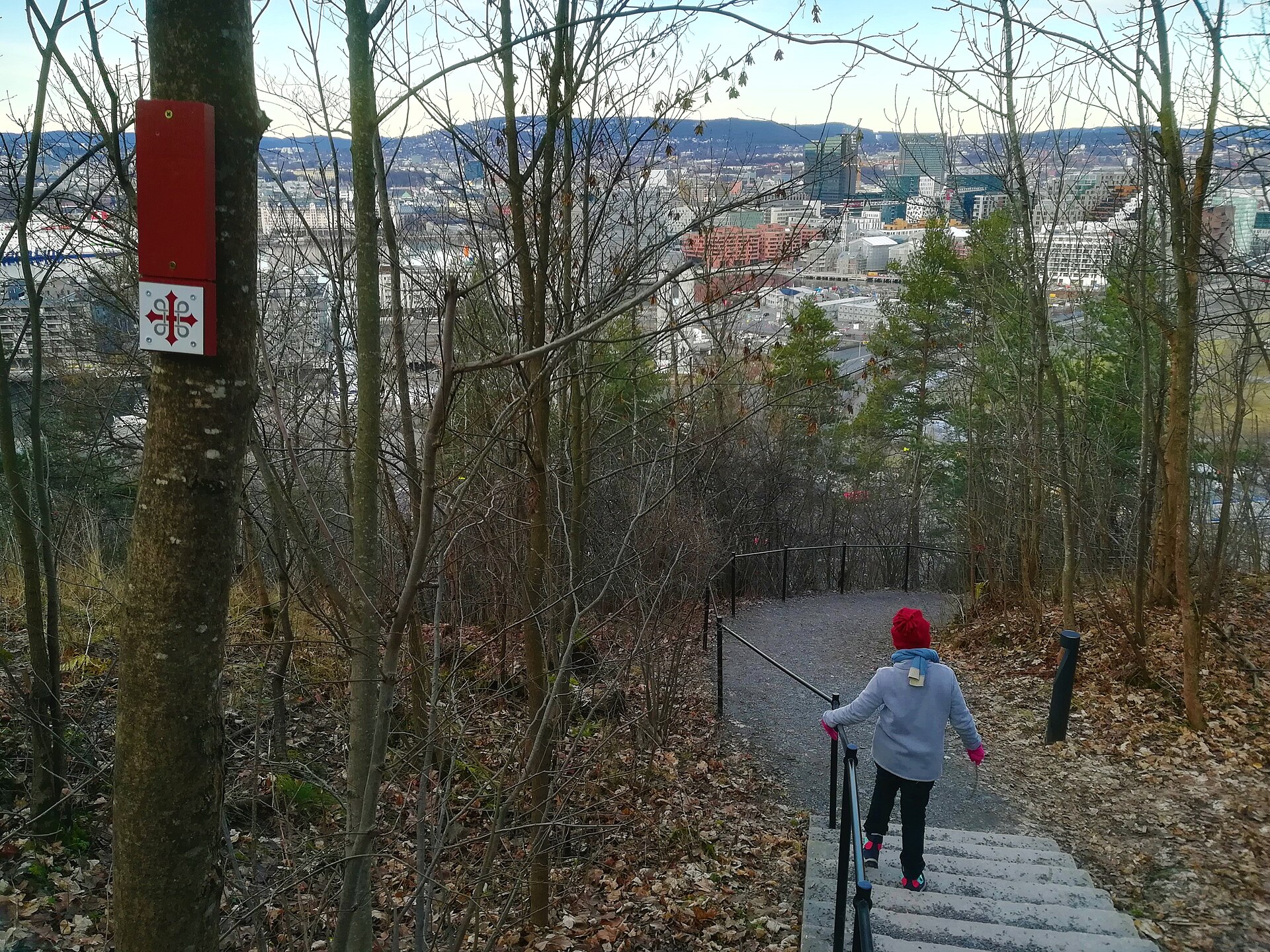
A 26-hectare sculpture park on the hillside east of the centre, with more than 30 works including pieces by Rodin and Dalí, and the view across the city that Munch painted The Scream from. Free, open dawn to dusk, tram 13 or 19 gets you there for a single fare.
Verdict: the best free thing in Oslo that visitors miss. It is quieter than Vigeland, the art is more varied, and the view is better. Allow ninety minutes including the walk up.
Oslo City Hall (Rådhuset)
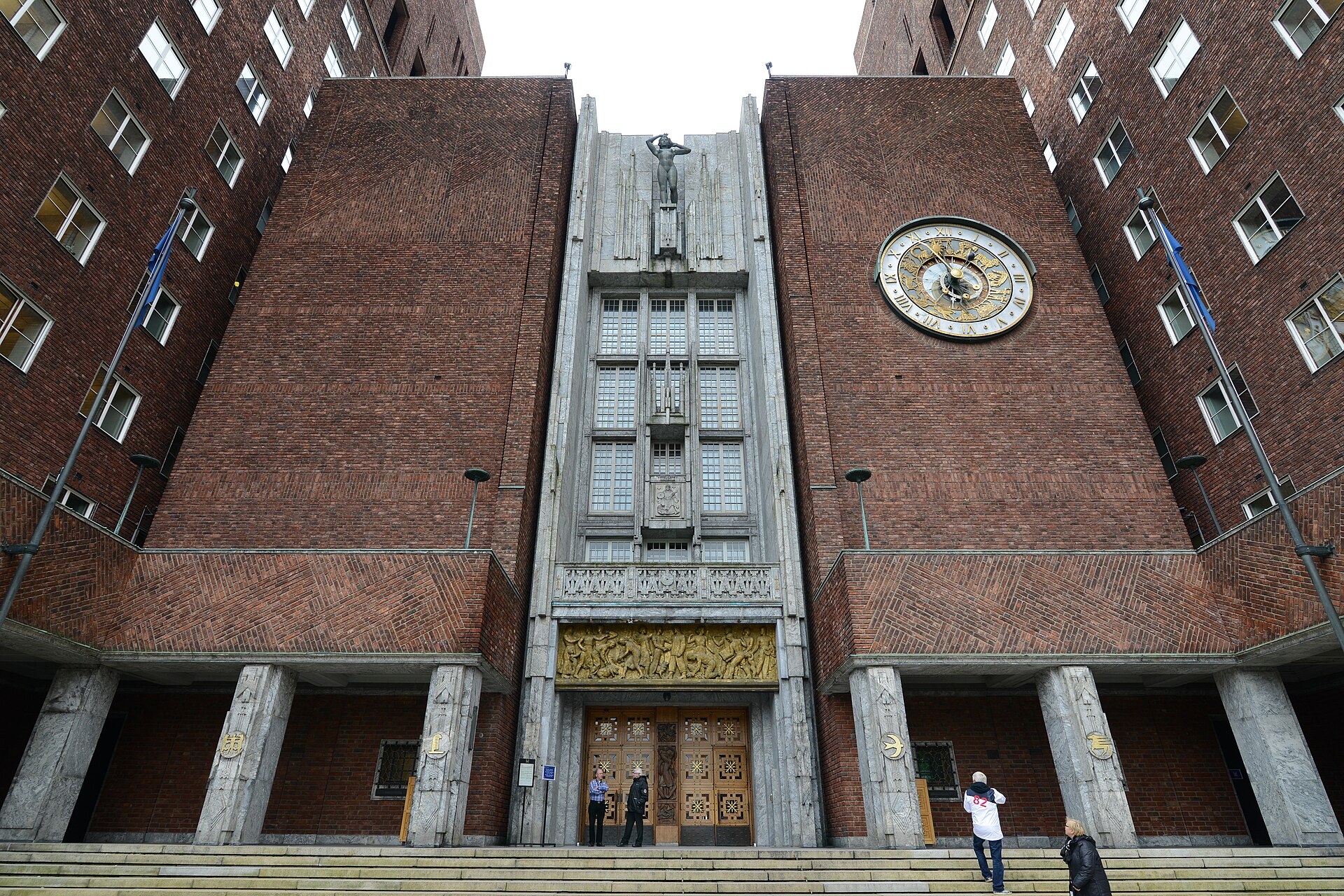
Free to walk into, and most people do not. The main hall is covered wall to ceiling in murals — enormous, strange, politically loaded 1940s work that takes a while to make sense of. The Nobel Peace Prize is awarded in this room every December.
Verdict: thirty minutes, no ticket, genuinely interesting. Better than several things people pay for in this city.
Botanical Garden, Tøyen
Free, run by the university, a short walk or one metro stop east of the centre. Around 35,000 square metres of planting including an arboretum and a scent garden. The greenhouses charge separately.
Verdict: lovely from May to September, thin the rest of the year. Combine it with a walk through Tøyen and Grønland.
Damstredet and Telthusbakken
Two lanes of eighteenth and nineteenth-century wooden houses just north of the centre, near the Old Aker Church. Ten minutes to walk, no ticket, and the only place in central Oslo that looks like the city did before it was rebuilt.
Verdict: a fifteen-minute detour, not a destination. Worth folding into a walk up to St. Hanshaugen, and an easy add if you are already staying in one of the northern districts covered in our guide to where to stay in Oslo.
Oslo Cathedral and Old Aker Church
Both free. The cathedral on Stortorvet is central and takes fifteen minutes; Old Aker Church, from around 1080, is Oslo’s oldest surviving building and stands in a graveyard on the hill.
Verdict: mild. Go for the old church rather than the cathedral if you only do one.
Grünerløkka and the Mathallen
Walking a neighbourhood is free; eating in it is not. The Mathallen food hall is free to walk through and the stalls are Oslo-priced. Grünerløkka’s parks — Birkelunden, Sofienbergparken — are free, full of locals in summer, and a better way to spend an afternoon than another sight.
Sørenga and Tjuvholmen swimming
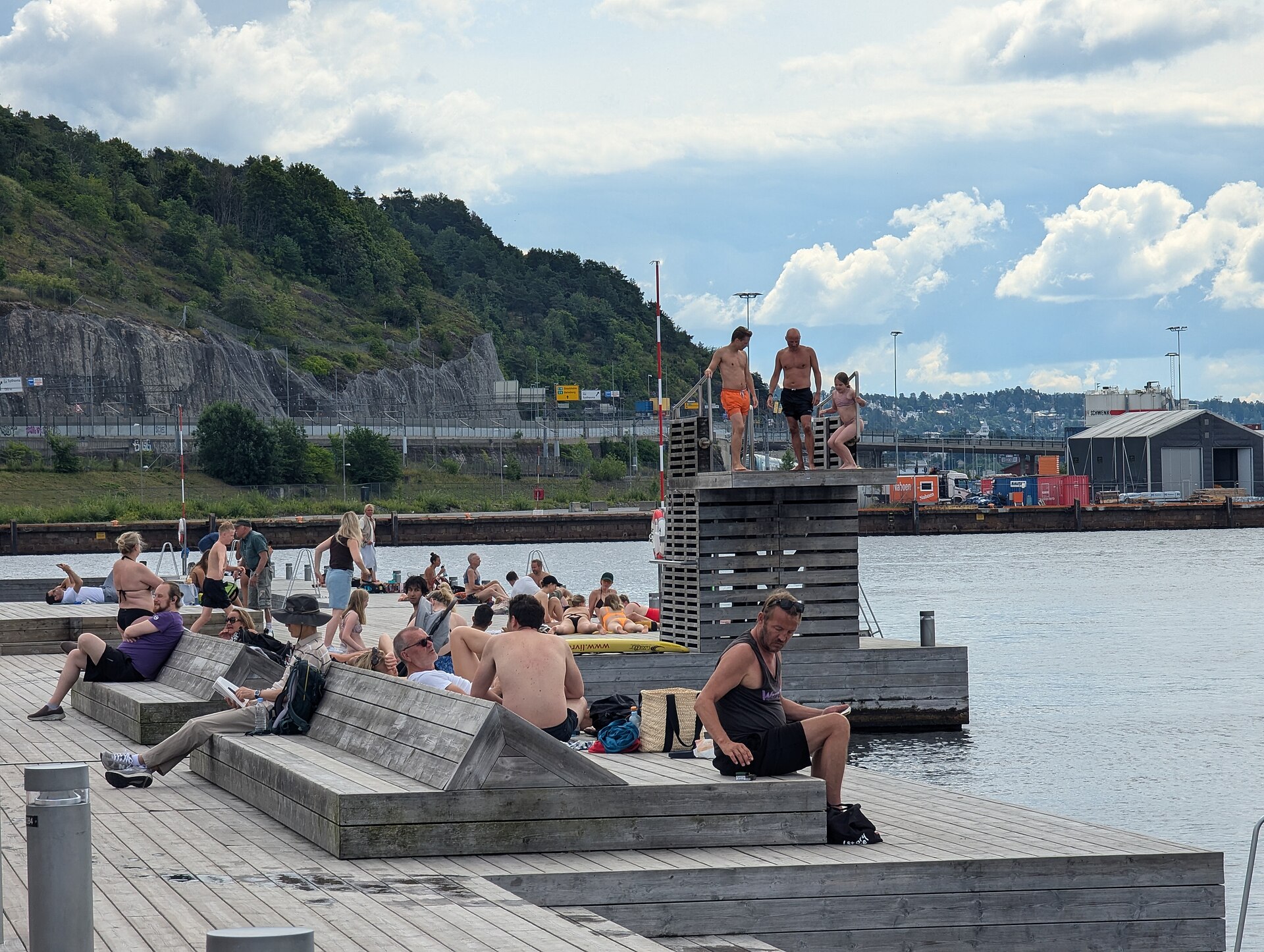
The Sørenga seawater pool and decking is free and open year-round. Water sits at 19–22°C in summer, up to 24°C in sheltered corners in mid-July. Tjuvholmen has a small city beach at the end of the spit.
Verdict: in June, July and August this is the best free afternoon in Oslo, and the fact that a capital city has a clean free swimming spot ten minutes from its main station is worth more attention than it gets.
Free things by season
Half of this list is weather-dependent, so the honest version depends on when you come.
| Season | Free and good | Free but not worth it |
|---|---|---|
| Jun–Aug | Sørenga swimming, island ferries, Akerselva walk, Nordmarka lakes, Ekebergparken | Nothing indoors — you are wasting the light |
| Sep–Oct | Akerselva in autumn colour, Ekebergparken, Nordmarka | Sørenga, island ferries thin out |
| Nov–Feb | Deichman library, City Hall, Spikersuppa rink, Korketrekkeren sledding, Jul i Vinterland | Botanical Garden, Vigeland after dark, the harbour walk in wind |
| Mar–May | Vigeland as it thaws, Botanical Garden from May, Nordmarka on skis then on foot | Swimming — the fjord is still cold |
Winter changes the list more than it shortens it. The sledding run at Korketrekkeren is free to ride and floodlit, and the Spikersuppa ice rink is free to skate on if you bring your own skates. Full detail is in Oslo in winter.
Free with children
Oslo is unusually good at this, for one structural reason: the under-18 free admission rule at the major museums means that a family’s museum bill is only the adults’ tickets. Add the free outdoor list and a family day costs very little.
What works: Vigeland Park, where children climb on the sculptures and nobody minds; the Sørenga pool in summer; the Botanical Garden; the ferry to Hovedøya, which has a beach and monastery ruins; and Korketrekkeren in winter. What does not work: Karl Johans gate, the cathedral, and any of the art museums with a child under about ten. If you are travelling further, the same free-outdoors logic applies across the country’s landmark sights, most of which charge nothing to look at. There is more in our guide to Norway with kids.
Paid museums that become free, and when
This is the section that saves the most money and it appears in almost none of the competing articles. Several Oslo museums have free windows. Structure your trip around them and you can see the city’s best collections for nothing.
| Museum | Normal adult price | Free when |
|---|---|---|
| MUNCH | 280 NOK | First Wednesday of the month, 18:00–21:00. Not in July, August or September. |
| MUNCH | 280 NOK | Always free for under-18s; 100 NOK for under-25s |
| National Museum | ~180–220 NOK (sources differ) | Always free for under-18s |
| Astrup Fearnley | 180 NOK | Always free for under-20s. Reported free on Sundays — single source, verify at the door. |
| Nobel Peace Center | 180 NOK | Always free for under-18s |
| Norsk Folkemuseum | ~200–220 NOK | Always free for under-6s; under-18s reduced or free |
The under-18 rule is the big one, and it is unusually generous by European standards. A family of four with two teenagers walks into MUNCH for 560 NOK rather than 1,120. Two adults and two under-18s at the National Museum is half the price you would budget from the sticker.
One correction to make: I have seen the Nobel Peace Center quoted at 120, 160 and 180 NOK across different guides. The figure from the centre’s own site is 180 NOK for adults, 100 for students, free under 18, open Tuesday to Sunday 11:00–17:00. Note also that three of its exhibitions closed for renovation on 7 September 2026, so check what is actually on display before you go. Full prices are in our Oslo museums guide.
The transport cost that “free” hides
Here is the arithmetic nobody does. Say you spend a day on free attractions spread across the city: Frogner Park, then Ekebergparken, then the Botanical Garden, then Nordmarka. That is six or seven separate journeys.
A single Ruter zone-1 ticket is somewhere between 42 and 46 NOK depending on which source you believe, and a 24-hour ticket is quoted between 105 and 137 NOK. Ruter’s own fare pages are JavaScript-driven and returned no figure I could quote, which is why every guide, including this one, is giving you a range. Buy in the Ruter app, where you see the real price before paying.
The practical rule: three or more journeys in a day and the 24-hour ticket wins. Below that, buy singles. And note that the Oslo Pass at 580 NOK includes transport — so if you were already planning three paid museums, the “free things” day becomes a rounding error inside a pass you were buying anyway.
The cheap fjord trip
Sightseeing cruises on the Oslofjord run from 490 NOK in winter to 690 NOK from April to December. The public alternative: the Ruter ferry to Nesoddtangen, line B10 from Aker Brygge, about 23 minutes each way, every half hour, on a normal transit ticket. Same water, same skyline, no commentary.
In summer the island lines from Rådhusbrygge 4 serve Hovedøya, Lindøya, Gressholmen and Nakholmen on the same fare. Hovedøya has monastery ruins and a beach; Langøyene has swimming and camping. This is the best-value thing on the whole list and it costs the same as a bus ride. Details of which line goes where are in our Oslofjord guide.
What to skip
The Oslo Pass, unless you are doing three paid museums. At 580 NOK for 24 hours, the break-even is three admissions plus transport. Two museums comes out roughly level. One museum loses you about 220 NOK. It is a good product sold with bad arithmetic.
City bike day passes, probably. Oslo Bysykkel is quoted at 35 NOK a single ride and either 49 or 69 NOK for a day pass, depending on the source. Either way it is cheap. But Oslo is hilly to the north and west, the good free stuff is either flat and walkable or up a metro line, and you will use it less than you expect.
Bottled water. Oslo tap water is excellent and free everywhere. A bottle from a kiosk is one of the worst-value purchases in the city. Carry a refillable.
Karl Johans gate as an attraction. It is a shopping street with a palace at one end, and it is on the route of almost every two-day Oslo plan anyway. Walk it because it is on your way, not because it is on a list.
The changing of the guard. Daily at 13:30 at the Royal Palace. It is short, it is small, and it is not the Buckingham Palace event people are expecting. Go if you are already in the park.
“Free” walking tours. Tip-based tours are a real cost dressed as a free one — the expected tip in Oslo runs to 200 NOK or more per person, which is more than most museums. Either budget for it honestly or take the Akerselva walk instead.
A free day in Oslo, with the receipts
Built to be genuinely free rather than nearly free.
- 08:00 Opera House roof, before the crowds. 0 NOK
- 08:45 Harbour promenade west to Akershus Fortress, through the grounds. 0 NOK
- 10:00 Oslo City Hall interior — the murals are genuinely worth the half hour. 0 NOK
- 10:45 Ferry to Nesoddtangen and straight back, for the fjord. ~42 NOK
- 12:00 Supermarket lunch eaten on the Sørenga decking. ~80 NOK
- 13:15 Tram 12 to Frogner Park. Vigeland, an hour and a half. ~42 NOK
- 15:30 Walk back through St. Hanshaugen park to the centre. 0 NOK
- 17:00 Deichman Bjørvika library, rooftop terrace. 0 NOK
- 18:00 First Wednesday of the month? MUNCH, free until 21:00. 0 NOK
Running total: about 164 NOK (~$18), or roughly 125 NOK if you buy a 24-hour transit ticket and use it more. That is one and a half beers in an Oslo bar, where a pint runs about 110 NOK.
For the same approach applied to the rest of the country, see free things to do in Norway, and our full breakdown of what a Norway trip costs. If you want the timed sightseeing version of the day rather than the free one, that is one day in Oslo.
Frequently asked questions
Is Vigeland Park really free?
Yes. The sculpture park inside Frogner Park has no gate, no ticket and no closing time — all 212 works are open public art. The separate Vigeland Museum across the road charges around 80 NOK and is not necessary.
Are any Oslo museums free?
Several are free for under-18s permanently, including MUNCH, the National Museum and the Nobel Peace Center, with Astrup Fearnley free for under-20s. MUNCH is free for everyone on the first Wednesday evening of the month from 18:00 to 21:00, except in July, August and September.
Is the Oslo Pass worth it?
Only above three paid museums in 24 hours. The adult pass is 580 NOK for 24 hours, 845 for 48 and 995 for 72. Guides quoting 395 or 520 are working from old prices.
How much does public transport cost in Oslo?
A single zone-1 ticket is roughly 42–46 NOK and a 24-hour ticket roughly 105–137 NOK; sources disagree and Ruter’s own site would not return a figure. Three journeys in a day is the point where the 24-hour ticket becomes the better buy.
How do you get to the Oslofjord islands cheaply?
Ruter’s public ferries leave from Rådhusbrygge by the City Hall and serve Hovedøya, Lindøya, Gressholmen and Nakholmen in summer on an ordinary transit ticket. There is no need to pay 490–690 NOK for a sightseeing cruise to see the same water.
Is tap water free and safe in Oslo?
Yes, and it is very good. Refill a bottle rather than buying one; bottled water at Oslo kiosk prices is a genuinely poor deal.
Can you visit Oslo on a budget?
A day of free attractions plus transport and a supermarket lunch comes to about 165 NOK (~$18). Accommodation is where Oslo gets expensive, not activities — hostel dorms average around $20 a night and hotel rates are lowest in January.
Is Oslo the most expensive city in Europe?
No. Numbeo put Oslo’s cost-of-living index at 90.2 in August 2026, against Zurich at 118.5 and Reykjavík at 98.9. It is expensive, and it is not the top of the list.
Photo credits
- Two hundred and twelve sculptures, no gate, no ticket, no closing time. — Photo: 5snake5 / CC0 via Wikimedia Commons.
- Ekebergparken: free, dawn to dusk, quieter than Vigeland, and the view Munch painted The Scream from. — Photo: MOs810 / CC BY-SA 4.0 via Wikimedia Commons.
- City Hall is free to walk into and most people do not. The murals are worth half an hour. — Photo: Jorge Láscar from Melbourne, Australia / CC BY 2.0 via Wikimedia Commons.
- Sorenga Sjobad: free, open year-round, and swimmable from mid-June to August. — Photo: AleWi / CC BY-SA 4.0 via Wikimedia Commons.
Prices checked August 2026, converted at 9.35 NOK to 1 USD. Where sources disagreed — on Ruter fares, on the National Museum admission, on the city bike day pass — I have given the range rather than picking one. Museum free-entry windows are the most likely thing here to change, so confirm on the museum’s own site before building a day around one.