Ask the internet which fjord to visit in Norway and you get five ranked lists. Twenty fjords, fifteen fjords, ten fjords, each described in warm adjectives, none of them answering the question you actually have — which is some version of “I have four days, I land in Bergen, I don’t want to hire a car, and it’s late September.”
A ranking cannot answer that. The best fjord in Norway is probably the Hjørundfjord, and it is completely wrong for a first-time visitor with four days and no vehicle.
So this page is a decision tool rather than a list. Five fjords, compared on the things that actually determine whether a trip works: how many days each needs, whether you need a car, when the roads and boats run, how crowded it gets, and which airport it hangs off. Then a set of straight answers to the common constraints. If you want the ranked version instead, we have the best fjords in Norway for that.
The five-second answer
First trip, limited time, no car: the Nærøyfjord from Flåm. It is the only major fjord you can reach year-round from either Bergen or Oslo on public transport, and it is UNESCO-listed for good reason.
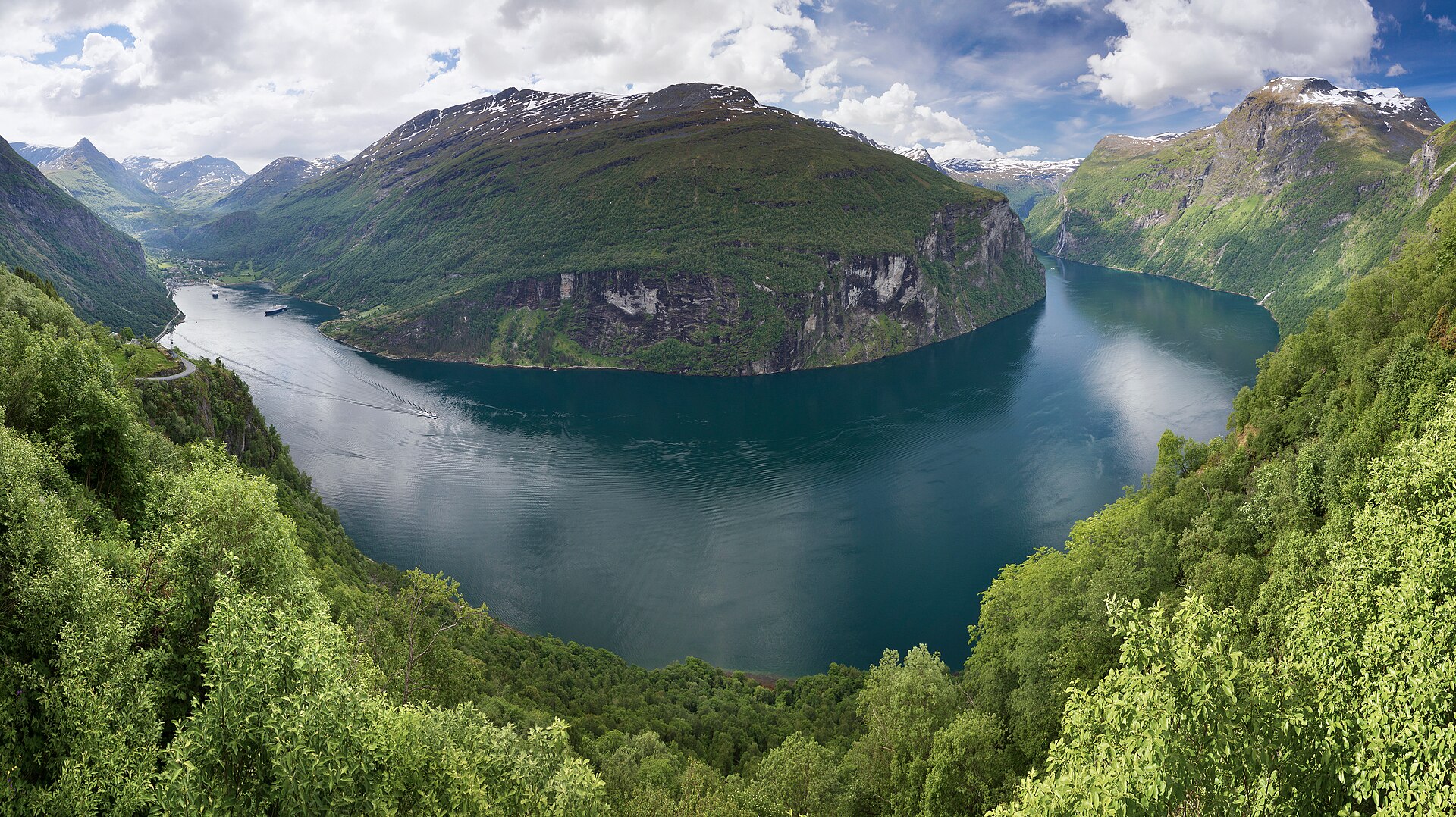
Best scenery, if you have a car and it is summer: the Geirangerfjord. More dramatic than Flåm’s fjords and considerably harder to reach.
A day trip from a city: the Lysefjord from Stavanger. Three and a half hours on a boat, back for dinner, no logistics.
Everything below is why. If you would rather begin with the region as a whole, see our start-to-finish fjord planning guide.
The comparison table
| Nærøyfjord | Geirangerfjord | Sognefjord | Hardangerfjord | Lysefjord | |
|---|---|---|---|---|---|
| Days needed | 1–2 | 2–3 | 3–5 | 2–3 | 1 |
| Car needed? | No | Effectively yes | Helpful | Yes | No |
| Nearest airport | Bergen (BGO) | Ålesund (AES) | Bergen or Sogndal | Bergen | Stavanger (SVG) |
| Boats run | Year-round | 1 Apr–17 Oct | Apr–Oct mostly | Year-round to Rosendal | Year-round |
| Crowds | Very high, Jun–Aug | Very high on ship days | Moderate | Low to moderate | Moderate |
| Signature hike | Rimstigen, hard | Skageflå, moderate | Molden, moderate | Trolltunga, brutal | Preikestolen or Kjerag |
| Works in winter? | Yes | No, largely closed | Partly | Partly | Boat yes, hikes no |
| Best for | First visit, no car | Pure scenery | Depth and variety | Fruit, waterfalls, Trolltunga | One big day out |
Answers by constraint
“I have two days and I’m based in Bergen”
Nærøyfjord, via Flåm. Train or bus out to Flåm in about two and a half hours, boat down the Nærøyfjord, shuttle bus back, night in Flåm or Aurland, return the next day. Nothing else is reachable in that window.
The alternative, if you only have one day and want to sleep in Bergen both nights: take the Rosendal express boat into the Hardangerfjord. Weekday departures leave Bergen at 08:50, arrive at 10:45, and you are back by 16:20 with three and a half hours ashore. From around NOK 838 ($90) return.
“I have five days and a rental car”
Geirangerfjord, and route through the Sognefjord to get there. This is what a car unlocks. Bergen to Geiranger is around 367 kilometres and roughly eight hours with a ferry crossing, so do not attempt it in one hop — break at Balestrand or Sogndal.
The reward is the roads. Ørnevegen, Nibbevegen up to Dalsnibba at 1,500 metres, and if you push north, Trollstigen. Those are the views that do not exist from a boat.
“I’m flying into Ålesund”
Geirangerfjord, easily. A direct bus runs Ålesund to Geiranger in about two and a half hours, daily from 1 June to 30 September 2026, leaving Ålesund at 07:00. Outside those dates you go by bus to Hellesylt and take the ferry across, about an hour.
Geiranger without a car is workable in summer and awkward the rest of the year. Details in the Geiranger village guide.
“I have one day and I want to see a fjord properly”
Lysefjord from Stavanger. Rødne’s cruise runs three to three and a half hours on an electric vessel, NOK 890 ($95) adult, and takes you under Preikestolen — which sits 604 metres above the water — and past a 95-metre waterfall the boat noses into. You leave from the city harbour and return to it.
No other Norwegian fjord gives you that little friction. See the Stavanger guide for the rest of the day.
“I’m coming in winter”
Nærøyfjord. It is the only one of the five that works properly between November and March. The Flåm–Gudvangen boats run year-round on a reduced timetable, the railway runs year-round, the road up to Stegastein stays open, and there are no cruise ships at all.
Geiranger is effectively closed — the sightseeing boats stop mid-October, Nibbevegen is under snow, and the village largely shuts. Do not plan a February trip around it.
“The hiking is the point”
Lysefjord or Hardangerfjord. This is where the famous ones are. Preikestolen is eight kilometres round trip with roughly 500 metres of ascent and takes about four hours; sources differ on the ascent figure, with some quoting closer to 350 metres. Kjerag is a much harder six to ten hours. Trolltunga, off the Hardangerfjord, is 28 kilometres and 800 metres of climbing from the lower car park, or 20 kilometres and 300 metres from the upper one.
Parking is the hidden cost. Preikestolen charges NOK 275 ($29) for over two hours, Kjerag NOK 300 ($32), and Trolltunga NOK 550 ($59) a day at P2 or NOK 600–800 at P3, where there are only about 30 spaces and you must pre-book. Budget for it. Our hiking guide covers the grading and the season.
“We have young children”
Nærøyfjord or Lysefjord. Short boat trips, no long drives, and both have somewhere to go when it rains. Geiranger with small children means a lot of hours in a car on switchbacks. A short boat and a short drive is the difference between a good family day and a bad one.
The five, in one paragraph each
Nærøyfjord — the practical one
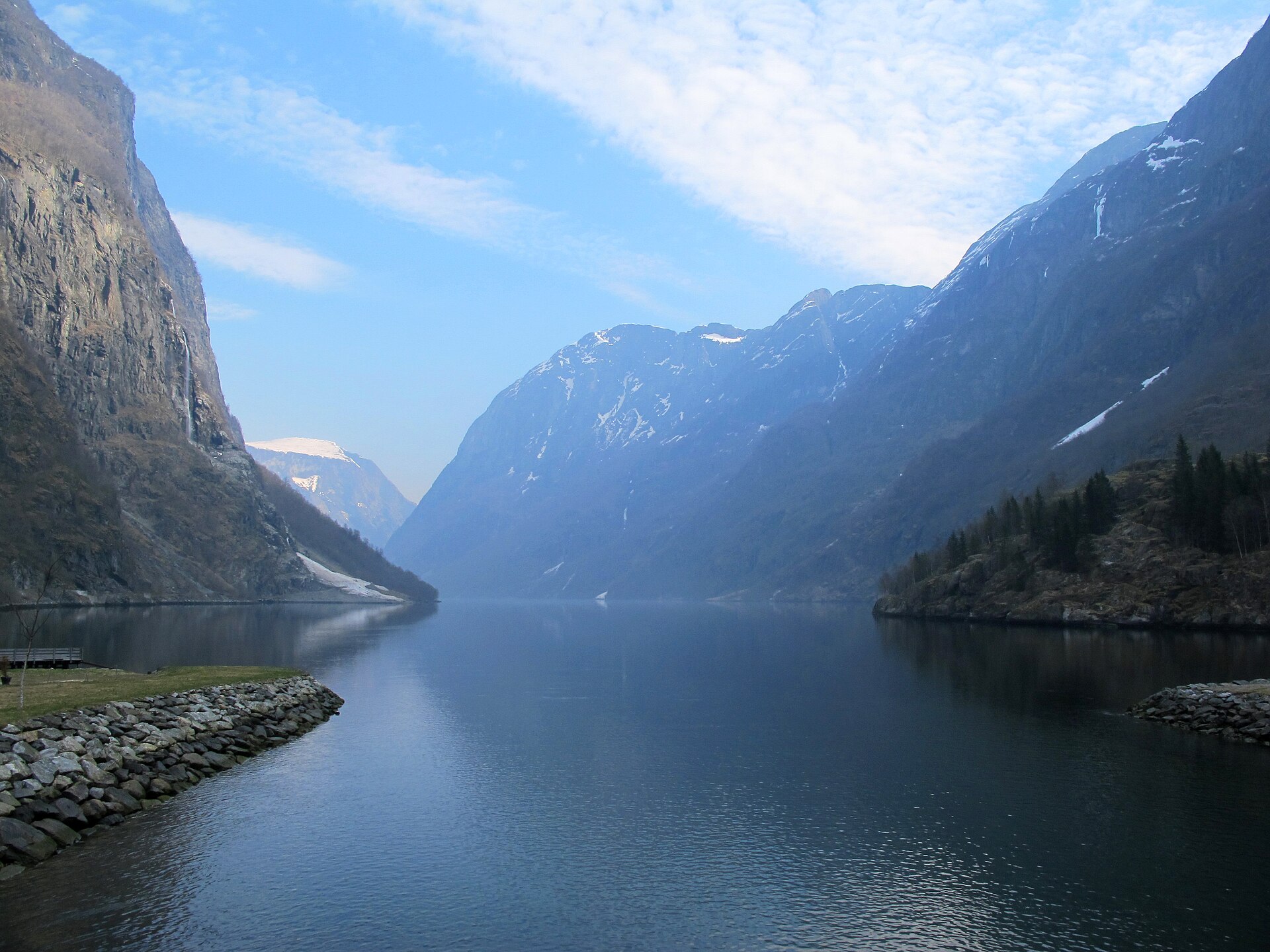
Seventeen kilometres long, narrowing to about 250 metres between walls over a kilometre high, with peaks behind reaching around 1,800 metres. UNESCO-listed since 2005. Boats run Flåm to Gudvangen in two hours, all year, on battery-electric vessels — since 1 January 2026 they legally have to be zero-emission inside this fjord. You reach it from Bergen in about two and a half hours or from Oslo in six to eight, without a car, in any month.
Verdict: the correct choice for most first visits. Its only real weakness is that Flåm in July is one of the busiest places in Norway. Come in May, September or winter and that disappears.
Geirangerfjord — the spectacular one
A twenty-kilometre branch of the Storfjord in Møre og Romsdal, with the Seven Sisters falling from a hanging valley opposite an abandoned clifftop farm. Three viewpoints do the work: Flydalsjuvet (free, roadside), Ørnesvingen at 620 metres on the Eagle Road (free, open all year), and Dalsnibba at 1,500 metres up the Nibbevegen toll road at NOK 330 ($35) per car. Boats run 1 April to 17 October, with the new electric two-hour cruise from June to September.
Verdict: the best-looking fjord in Norway, and the most conditional. It needs a car, it needs summer, and it needs you to check the cruise-ship calendar. Get those three right and nothing else compares.
Sognefjord — the deep one
205 kilometres long and 1,308 metres deep, the longest and deepest in the country. Most visitors only touch its far end at Flåm and never see the fjord itself. The interior is where it earns its reputation: Balestrand, the Urnes stave church, the Lustrafjord, Nigardsbreen coming off the largest ice cap on mainland Europe, and Jotunheimen rising behind. Express boats run Bergen to Flåm in about five and a half hours from April to October.
Verdict: the best three to five days in fjord Norway and almost nobody does it. Needs a car and time. If this is a second trip rather than a first, come here.
Hardangerfjord — the productive one
179 kilometres and 860 metres deep, though sources also give 190 kilometres and 893 metres depending on where the mouth is drawn. Softer country than the Sognefjord — orchards on the slopes, blossom in the first half of May, cider producers you can visit. It has Vøringsfossen, which drops 182 metres in total with a 145-metre free fall and now has a stepped bridge across the gorge. It also has Trolltunga, which is a serious mountain day, not a photo stop.
Verdict: the best fjord for people who want scenery plus something to do that is not a boat. Reachable from Bergen by the year-round Rosendal express. Full detail in the Hardangerfjord guide.
Lysefjord — the vertical one
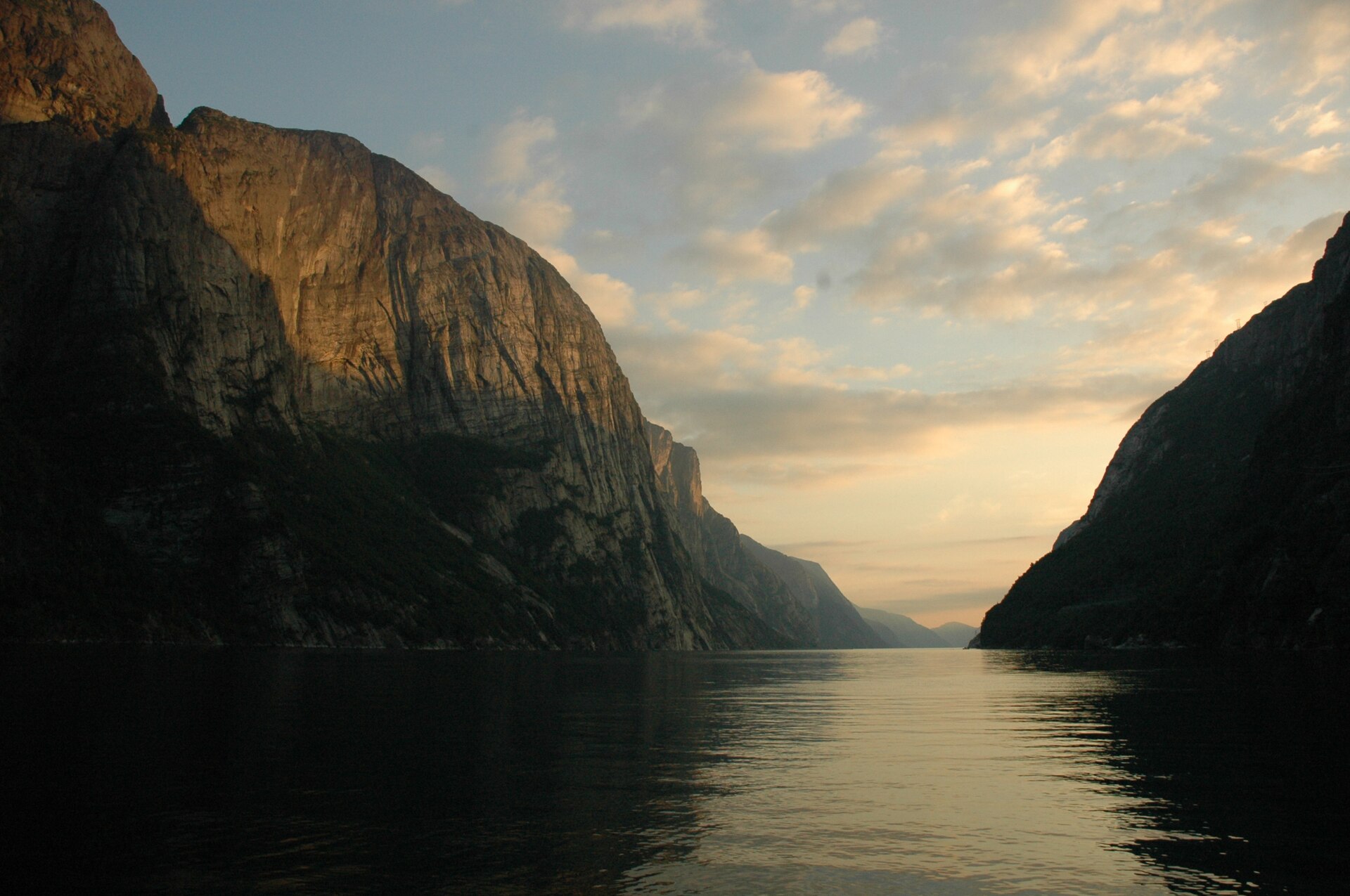
The one with the cliffs everybody has seen. Preikestolen is a plateau roughly 25 metres square, 604 metres above the water; Kjeragbolten is a boulder wedged in a chasm around a thousand metres up. The boat from Stavanger takes three to three and a half hours, runs year-round on an electric vessel, and costs NOK 890 ($95).
Verdict: the least logistically demanding fjord in Norway and the most physically demanding, depending on whether you take the boat or the trail. See the Lysefjord guide for both.
Combining two fjords
The most common planning mistake is a route that looks fine on a map and eats two days in transit. These pairs actually work.
| Pair | Days needed | Transfer | Car? |
|---|---|---|---|
| Nærøyfjord + Sognefjord | 4 | They are the same fjord system — Flåm is on an arm of the Sognefjord | Helpful, not required |
| Nærøyfjord + Hardangerfjord | 4–5 | Flåm–Voss–Hardanger, about 2 hours | Yes |
| Geirangerfjord + Sognefjord | 5–6 | Roughly 5 hours with a ferry | Yes |
| Lysefjord + Hardangerfjord | 5 | Stavanger to Odda, around 4 hours | Yes |
| Nærøyfjord + Geirangerfjord | 6+ | ~8 hours driving. Do not attempt in under six days | Yes |
| Lysefjord + Nærøyfjord | 5 | Stavanger–Bergen 5 hours, then Bergen–Flåm | No, ferries and buses connect |
Head to head: Geirangerfjord vs Nærøyfjord
This is the real question behind most searches, so let me take it directly.
| Geirangerfjord | Nærøyfjord | |
|---|---|---|
| Drama | Higher. Waterfalls fall straight into the fjord from hanging valleys | Narrower. 250 m wide with kilometre walls, which is a different kind of impressive |
| Getting there without a car | Hard outside summer | Easy, year-round, from Bergen or Oslo |
| Season | Boats 1 Apr–17 Oct. Mountain roads May/June to September | Year-round |
| Roads and viewpoints | Outstanding — Ørnevegen, Dalsnibba, Flydalsjuvet | Limited. Stegastein is on the neighbouring Aurlandsfjord |
| Cruise ships | 80+ calls in 2026, up to 6,600 passengers per ship, tendered | Ships call at Flåm, not in the Nærøyfjord itself |
| Beds | Few, expensive, book months out | More options across Flåm, Aurland, Gudvangen and Voss |
| Cost of a boat trip | from NOK 610 ($65) | NOK 520–665 ($56–71) |
My verdict: Geirangerfjord wins on scenery by a clear margin and loses on almost everything else. If you have a car, it is summer, and you have three days to give it, go to Geiranger. In every other circumstance, go to the Nærøyfjord and do not feel you have compromised — it is UNESCO-listed alongside Geiranger, not instead of it.
Both are covered in full in the Geirangerfjord guide and the Nærøyfjord guide.
The season problem, with 2026 dates
No competitor on this search gives dates, and dates are what break itineraries. Here is what was actually true in 2026.
| Road or service | 2026 status | What it affects |
|---|---|---|
| Trollstigen | Opened 27 April 2026 — the earliest ever, after closures for rockfall work | The northern approach to Geiranger |
| Aurlandsfjellet Snow Road | Opened 1 June 2026. Historic openings 7 May–3 June | The high route between Aurland and Lærdal |
| Aurland–Stegastein | Open all year | The viewpoint itself is always reachable |
| Nibbevegen (Dalsnibba) | Snow-closed in winter, typically opens second half of May | The 1,500 m view over Geiranger |
| Ørnevegen (Eagle Road) | Open all year | Geiranger’s best free viewpoint |
| Geiranger sightseeing boats | Classic 1 Apr–17 Oct; two-hour silent cruise 1 Jun–30 Sep | Whether you can get on the fjord at all |
| Geiranger–Hellesylt ferry | Roughly April–October. Sources conflict; some advertise into December | The car-free route in and out |
| Flåm–Gudvangen boats | Year-round, reduced in winter | Nothing. This is the reliable one |
| Trolltunga without a guide | 1 June–30 September | The hike; outside that you need a guide |
The pattern is stark once it is in a table. The Nærøyfjord has no season. Everything else does. That single fact should drive most decisions for anyone travelling outside June to September. The month-by-month detail is in when to visit the Norwegian fjords.
The fjords nobody tells you to consider
Three that would beat the famous five for the right traveller.
Hjørundfjord. Steeper than Geiranger, an hour from Ålesund, almost no traffic. Ask a Norwegian which fjord is best and this is what they say. Sailings are sparse and it needs a car. If you want the Geiranger landscape without the ships, this is the answer.
Trollfjord, Lofoten. A hundred metres wide at the entrance with 1,100-metre walls — boats turn around inside it on their own length. It is a different trip entirely, three hours from Svolvær at NOK 950–1,390, and only makes sense if you are already in Lofoten.
Sognefjord’s inner arms. The Sognefjord is 205 kilometres long and 1,308 metres deep, and most visitors see one small piece of it at Flåm. The upper reaches — Lustrafjord, Urnes stave church, Nigardsbreen glacier, Jotunheimen behind — are the best three days in fjord Norway and hardly anyone does them. Needs a car and time. See the Sognefjord guide.
What to skip
Skip trying to do two fjord regions in under five days. Bergen to Geiranger is eight hours of driving with a ferry. Adding it to a Flåm trip on a short visit means you spend the difference in a car. Pick one region and go deeper. Our five-day plan built on a single base shows what that looks like.
Skip Geiranger in October, and skip it entirely in winter. The boats stop on 17 October, the high roads close, and the village empties. People still book it because photographs do not carry dates.
Skip the Oslofjord if you are expecting the western fjords. Different landform, different geology, no cliffs. Pleasant, but not what you came for — the explanation is in how the fjords were formed.
Skip a car for the Nærøyfjord. It is the one fjord where a vehicle actively makes the trip worse: parking in Flåm is paid and tight, and every headline activity is a boat or a train.
Skip booking a Geiranger hotel before checking the cruise calendar. Beds are few and the village runs on ship days. Landing there on a two-ship day in July is the worst version of the place.
How they cost out
A representative two-day trip to each, per person, excluding accommodation. Converted at 9.35 NOK to the dollar.
| Fjord | Getting there from the nearest city | Boat | Rough total |
|---|---|---|---|
| Nærøyfjord | Bergen–Flåm return, ~NOK 800 | Cruise + bus, ~NOK 760 | ~NOK 1,560 ($167) |
| Lysefjord | Nothing — starts in Stavanger | NOK 890 | ~NOK 890 ($95) |
| Geirangerfjord | Ålesund bus return, ~NOK 700 | from NOK 610 | ~NOK 1,310 ($140) plus car costs if driving |
| Hardangerfjord | Rosendal boat return, NOK 838 | Included | ~NOK 838 ($90) |
The Lysefjord is the cheapest real fjord day in Norway by a distance, because the city and the fjord are the same place. That is worth knowing if the budget is tight.
Frequently asked questions
Which is the most beautiful fjord in Norway?
By consensus, the Geirangerfjord — waterfalls falling from hanging valleys straight into the water, abandoned farms clinging to ledges, and viewpoints at 620 and 1,500 metres. The Nærøyfjord is narrower and arguably more atmospheric. The Hjørundfjord is the one Norwegians pick, and almost nobody outside Norway has heard of it.
Geirangerfjord or Nærøyfjord — which is better?
Geiranger for scenery, Nærøyfjord for practicality. If you have a car and it is between June and September, Geiranger. If you do not, or it is not, the Nærøyfjord — and you are not settling for less, since both are inside the same UNESCO World Heritage listing.
Which fjord is easiest to visit from Bergen?
The Hardangerfjord, if you want to sleep in Bergen — the Rosendal express is under two hours each way. The Nærøyfjord if you are prepared to stay a night, which is about two and a half hours out to Flåm.
Can you visit the Norwegian fjords without a car?
Yes, and better than most people assume. Flåm, Bergen, Stavanger and Ålesund are all connected by public transport, and the boats are public transport too. What you lose is the high roads and viewpoints — Dalsnibba, Trollstigen, Aurlandsfjellet — which are genuinely hard to reach without a vehicle. Our transport guide covers what connects to what.
How many days do you need in the fjords?
Two days gets you one fjord properly. Four to five gets you a region — the Sognefjord and its arms, or Geiranger and Sunnmøre. Under two days, you are taking a boat trip rather than visiting the fjords, which is fine but worth naming.
Is Norway in a Nutshell worth it?
It works, and it is well-organised. It also costs from around NOK 2,698 ($289) for components that come to roughly NOK 1,300–1,950 booked separately. You are paying for one booking instead of four. If that is worth several hundred kroner to you, take it; if you are comfortable buying a train ticket and a boat ticket, do not.
What is the best month to visit the Norwegian fjords?
September, narrowly. Everything is still running until Geiranger closes mid-October, the crowds have gone, autumn colour comes up the fjord walls, and prices drop. May is the alternative — the waterfalls are at full snowmelt volume, but some mountain roads are still shut.
Can you see the fjords in winter?
Some of them. The Nærøyfjord works fully, the Lysefjord boat runs year-round, and the Bergen–Mostraumen cruise runs every day of the year. Geiranger does not. Winter fjords are dark, quiet and genuinely beautiful, but the hiking is off and the high roads are shut — see Norway in winter for what stays open.
Which fjord has the best hiking?
The Lysefjord, for sheer concentration — Preikestolen and Kjerag are both on it. The Hardangerfjord has Trolltunga, which is harder than either. Around the Nærøyfjord, Rimstigen is steep and rewarding but far less known.
Where should I stay to see the fjords?
Flåm or Aurland for the Nærøyfjord, Geiranger or Hellesylt for the Geirangerfjord, Stavanger for the Lysefjord, and Balestrand or Sogndal for the Sognefjord. Aurland and Hellesylt are consistently cheaper than their famous neighbours and ten to sixty minutes away. Our accommodation guide goes region by region.
Photo credits
- Ørnesvingen, 620 metres up on the Eagle Road. Free, and open all year. — Photo: Ximonic (Simo Räsänen) / CC BY-SA 3.0 via Wikimedia Commons.
- The Nærøyfjord narrows to about 250 metres. It is the only major fjord with boats running all year. — Photo: Acediscovery / CC BY 4.0 via Wikimedia Commons.
- The Lysefjord: the least logistically demanding fjord in Norway, and the most physically demanding above it. — Photo: Dimitri Neyt / CC0 via Wikimedia Commons.
Prices, season dates and road openings checked 1 September 2026, converted at 9.35 NOK to the US dollar. The 2026 opening dates given are what actually happened this year; mountain roads shift by up to four weeks between seasons and the Geiranger–Hellesylt ferry season is quoted inconsistently by different operators. Parking fees at the major trailheads rose in 2026 and may rise again.