Search for Alta, Norway and you’ll be told, page after page, that it’s the City of the Northern Lights. It is, and we’ve written a whole guide to the aurora in Alta. But Alta has a lot more to offer than winter nights: the UNESCO rock art, and Kautokeino and Karasjok, the Sámi towns on the plateau behind it.
Here’s a number worth knowing. Statistics Norway counts guest nights in every municipality, and in Alta the busiest month of 2026 so far wasn’t February or March. It was July, with 32,911 guest nights, almost twice March’s 16,701. A lot of people are coming to Alta in summer, for things that have nothing to do with the aurora.
So this guide covers the rest of Alta: the prehistoric carvings, the canyon and the river, the salmon lottery, the war history in Kåfjord, Finnmarksløpet, and the Finnmark plateau, where Kautokeino and Karasjok are two of the most important Sámi communities in Norway. It’s organised by season, because in Alta the season decides almost everything you can do.
Alta by season, at a glance
Alta has about 21,000 residents, which makes it the largest town in Finnmark, and it sits at the head of the Altafjord with the plateau rising behind it. Visit Alta’s own summary of when to go is a good starting point: November to March for the northern lights, dog sledding and snow; September and October for the aurora with milder weather and fewer visitors; April for deep snow and long days; July and August for the midnight sun, the rock carvings, the salmon river and hiking.
| When | What’s on | What’s not | Verdict |
|---|---|---|---|
| Late November to mid-January | Polar night (26 November to 17 January), aurora, Sorrisniva igloo hotel from 20 December | The rock-art footpaths, the canyon, the riverboats | For the aurora, not for sightseeing |
| February to March | Snow, returning light, dog sledding, Finnmarksløpet from 5 March 2027 | Summer river activities | The best winter weeks |
| Easter | The Sámi Easter Festival in Kautokeino; Easter Sunday is 28 March in 2027 | Little in Alta itself | Go to the plateau |
| Late May to July | Midnight sun (17 May to 27 July), rock carvings at full summer hours, riverboats from 1 June, salmon season from 24 June | The aurora | Alta’s most underrated season |
| August to September | Last riverboats (to 31 August), dark nights return, first aurora | The rock-art footpath closes in August | A good mixed season |
| October to November | Aurora, quiet | Most summer activities | Fine if the aurora is the point |
The weather is kinder than the latitude suggests. Visit Alta says July averages about 14 °C, with warm days often passing 20 °C. Bring a rain jacket and, for summer hikes, insect repellent.
The Rock Art of Alta: what you can actually see, and when
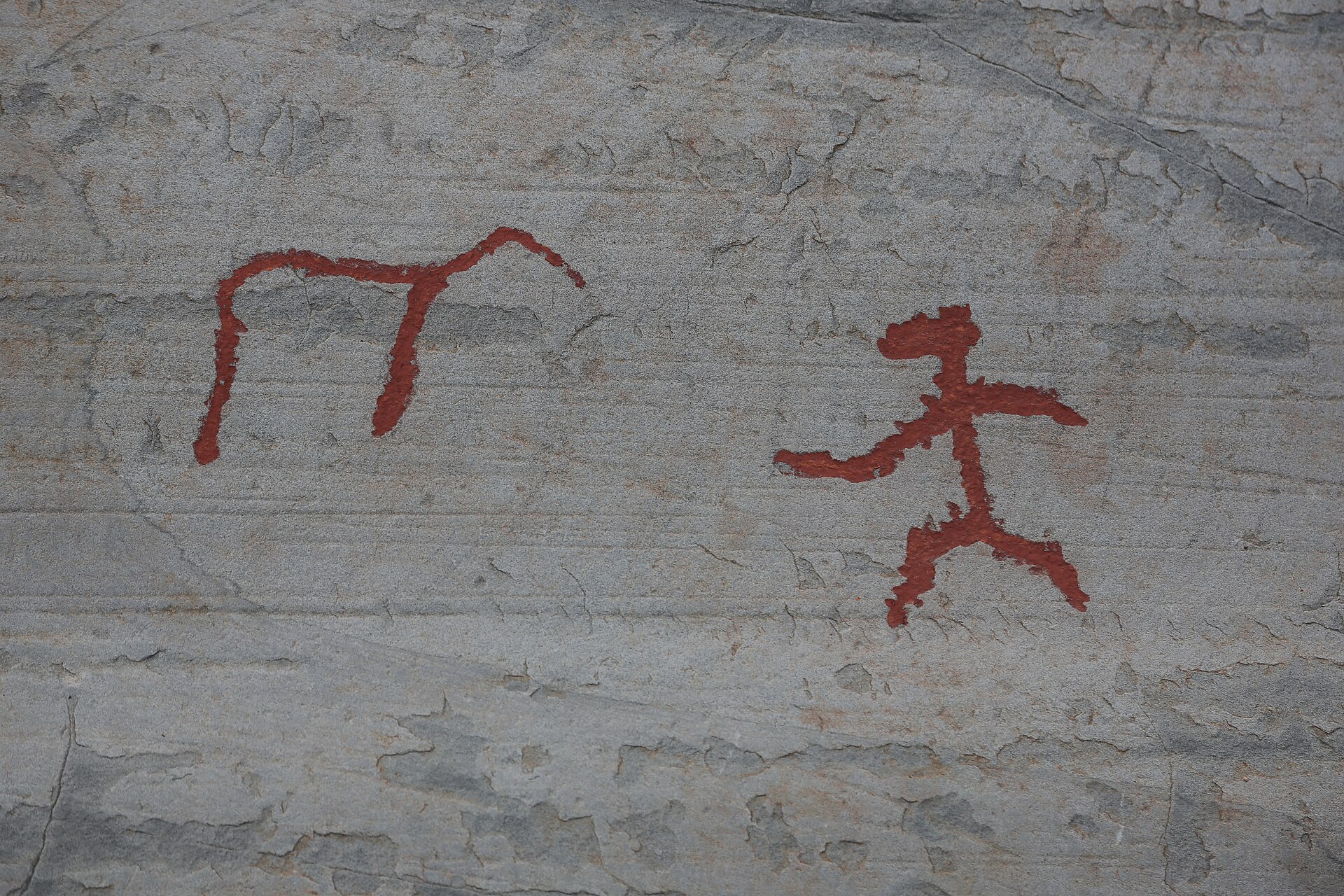
The carvings are the reason Alta is on UNESCO’s World Heritage List, inscribed in 1985. UNESCO describes thousands of carvings and paintings at 45 sites in five areas at the head of the fjord (Kåfjord, Hjemmeluft, Storsteinen, Amtmannsnes and Transfarelvdalen), left by people who lived here from about 4200 to 500 BC. The Alta Museum, the World Heritage Rock Art Centre, stands at Hjemmeluft. Look for the people: UNESCO singles out the exceptionally high number of human figures, with dancing, processions and rituals alongside the animals and boats.
Season is everything here. In summer you walk the footpaths between the rock-art areas and see the carvings themselves. The outdoor area then goes into a winter closure: in 2026 the museum closed the footpath between the rock-art areas from 19 August. Outside the summer months, what you get is the indoor museum and a winter visual guide, not the rock.
Hours and prices
| Period (2026) | Opening hours |
|---|---|
| 1 June to 21 August | Daily 09:00–19:00 |
| 18 to 31 May, and 22 August to 18 September | Daily 09:00–17:00 |
| 2 January to 17 May, and 19 September to 31 December | Mon–Fri 09:00–15:00, Sat–Sun 11:00–16:00 |
| Ticket (2026) | Summer rate, 1 May to 30 September | Winter rate, 2 January to 30 April and 1 October to 30 December |
|---|---|---|
| Adult | NOK 175 ($18) | NOK 115 ($12) |
| Senior (65+) | NOK 165 | NOK 110 |
| Student | NOK 155 | NOK 95 |
| Child 7–16 | NOK 50 | NOK 40 |
Under-sevens go free. An audio guide is NOK 50, a 45 to 50 minute guided summer tour costs NOK 950 on top of entry, and a winter introductory guiding is NOK 400 plus entry. For 2027 the museum has published its hours: daily 09:00–19:00 from 1 June to 22 August, with reduced Easter hours (11:00–16:00) from 25 to 29 March and closures on 1 January and 24, 25, 26 and 31 December. Check its site for the 2027 prices.
My view: if you’re in Alta between June and mid-August, this is the single best thing to do in town, better than anything you’ll pay ten times as much for. Give it two hours and walk the full circuit. In winter, the indoor museum is still worthwhile, but don’t build a winter trip around the carvings: you won’t see them.
The Alta River and Sautso, the canyon
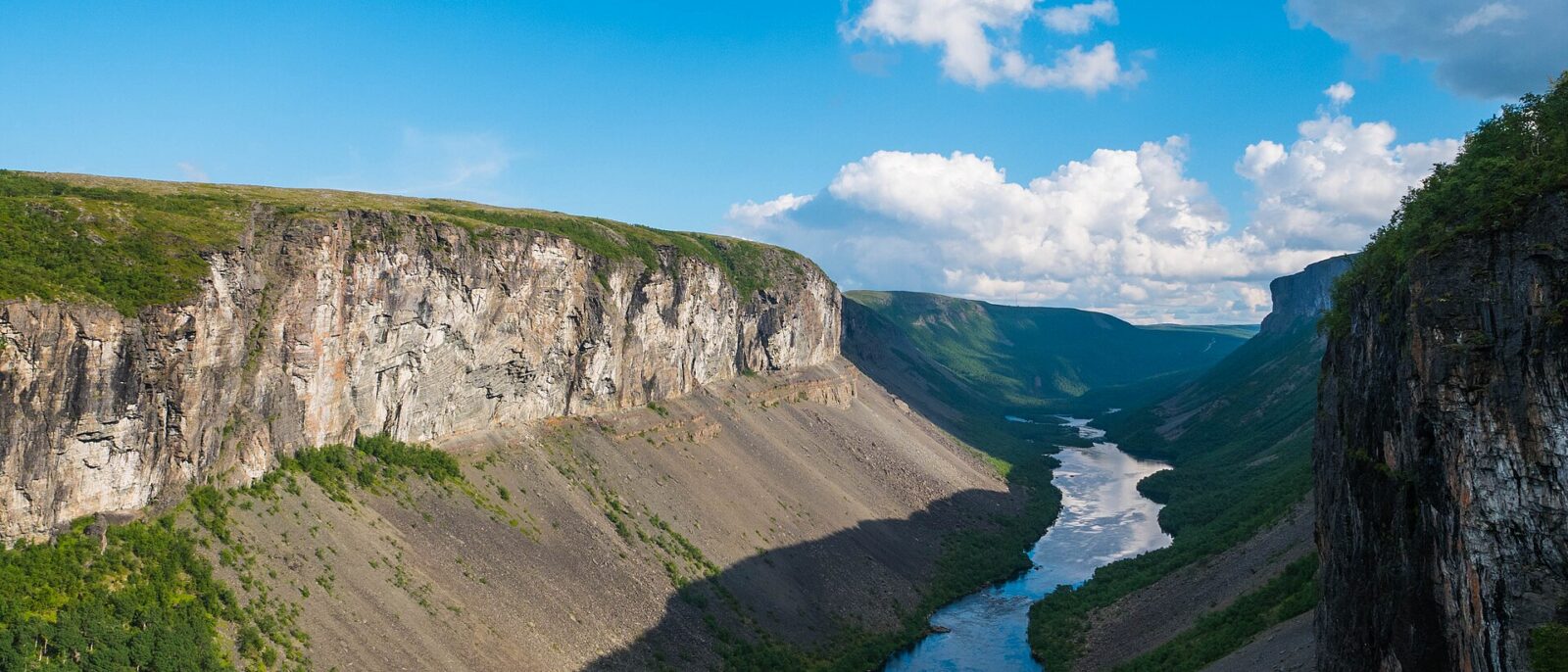
Behind the town, the Alta River runs out of the plateau through Sautso, the Alta Canyon. Visit Alta calls it Northern Europe’s largest canyon: it starts just below the Alta power station, where the Kautokeino River meets the Alta, and runs for ten kilometres towards the fjord, with walls rising more than 400 metres above the riverbed.
The power station is part of the story. In the late 1970s and early 1980s, plans to dam the river for hydroelectric power set off the Alta controversy: protests, a blockade at Stilla and hunger strikes in Oslo, with Sámi activists at the centre of them. The dam was built anyway and completed in 1987.
Three ways to see the canyon
- By riverboat. In summer, when the water is high enough, Sorrisniva runs trips in traditional long riverboats. Its Alta Canyon trip runs from 1 June to 31 August on Tuesdays, Thursdays, Fridays and Saturdays, takes about two and a half hours, carries two to nine people per boat and costs NOK 2,150 ($222) for adults and NOK 1,050 for children. A shorter trip to the Pahtakoski rapids takes an hour and a half and costs NOK 1,300 (children NOK 765). The prices on Sorrisniva’s page carry no year, so confirm them when you book.
- On foot from Bæskades. Visit Alta describes a 13-kilometre hike from Bæskades across the plateau, relatively flat until the final drop to the viewpoint, with reindeer country all around. This is the classic way to look down into the canyon; our guide to hiking in Norway covers the kit and the mountain safety rules.
- From the Stilla side. From Tutteberget in Stilla there’s no marked trail, so you need to be good with a map and compass, or book a guided trip; Visit Alta suggests Altaturer. From this side you look down on Sautsogården.
Visit Alta also lists GLØD Explorer for canoeing and hiking, Cavzo Safari for riverboat trips, North Adventure for private tours that include the power station, and Boreal Adventure at the Alta dam itself, and it mentions packraft trips on the river too. None of this works in winter: the canyon is a summer place.
The salmon lottery
The Alta is one of the most famous salmon rivers in the world, and you can’t simply turn up and fish it. According to Visit Alta, 700 fishing licences are distributed by lottery among residents of Alta, Loppa and Kautokeino, with about 4,000 people applying each year, and about 1,200 out-of-town anglers enter a separate draw for the periods when non-residents can fish. The out-of-town draw usually happens at the end of February and the local one in early March; your number decides your place in the queue to choose a licence. Until St Hans there’s open “folk fishing”; from 24 June you need a licence. The river is split into five zones, Sautso, Sandia, Vina, Jøraholmen and Raipas, and many of the upper beats can only be reached by boat.
For a visitor, the realistic version is this: enter the draw early in the year if you’re serious, and otherwise enjoy the river during the daily conservation period, 12:00 to 18:00, when fishing stops and Sorrisniva’s riverboats and GLØD’s canoes go out.
More of Alta: Kåfjord, Haldde and the town
- The Tirpitz Museum, Kåfjord. The German battleship Tirpitz spent part of the Second World War hidden in Kåfjord, near Alta. The Tirpitz Museum at Kåfjordbotn, opened in 1980, tells the story; Visit Alta lists it as a summer attraction open 10:00 to 17:00. Check the season and price with the museum before you drive out.
- Haldde. Visit Alta describes the observatory on Haldde mountain, built in 1899, as the world’s first aurora observatory; DNT lists the destination at 907 metres. The DNT cart road starts about 400 metres north of Kåfjord church: 9 kilometres and about three hours up. There’s a six-bed DNT cabin at the top, locked with the DNT key. In winter, take advice on the safer route; skis or snowshoes are recommended.
- The Northern Lights Cathedral. The spiralling church in the town centre is one of Alta’s best-known buildings. Its winter hours are short (Monday to Friday, 11:00 to 13:00, from early October to mid-May), so check before you go; the cathedral and its exhibition are covered in our aurora guide to Alta.
- Sorrisniva. The igloo hotel, rebuilt from river ice and snow every winter, is open from about 20 December to the end of March. A day visit costs NOK 395 for adults and NOK 180 for children aged 3 to 12; rooms start at NOK 4,070. In summer the same riverside site is where the riverboats leave.
Finnmarksløpet 2027: Europe’s longest sled-dog race, and a world championship
Every March Alta becomes the start and finish of Finnmarksløpet, the sled-dog race across Finnmark that bills itself as Europe’s longest, and in 2027 it doubles as the IFSS World Championship. The organiser’s provisional programme (updated in August 2026, and marked as subject to change) looks like this:
| Date (2027) | What happens |
|---|---|
| Thursday 4 March | Opening concert in Alta |
| Friday 5 March | Official opening at 11:45; FL-1200 teams start from 12:00 at two-minute intervals; the FL-300 class starts from 18:00 |
| Saturday 6 March | FL-600 and junior class start, 13:00 to 14:30, with a market in town |
| Monday 8 March | Checkpoint event in Kirkenes |
| Wednesday 10 March | FL-600 teams finish in Alta through the day |
| Thursday 11 March | Checkpoint event in Karasjok, 12:00 to 18:00 |
| Friday 12 to Saturday 13 March | FL-1200 finishes in Alta, then the closing banquet |
The start is held in the open in Alta, and it’s one of the best spectacles in Finnmark: team after team of dogs desperate to go, mushers fiddling with booties, crowds in the snow. If you’re coming for it, book your bed early, because the teams, handlers and media fill Alta that week. And if you want to try a team yourself, our guide to dog sledding in Tromsø explains what the different tour formats include; several Alta kennels offer the same kind of trips.
Onto the plateau: Kautokeino and Karasjok
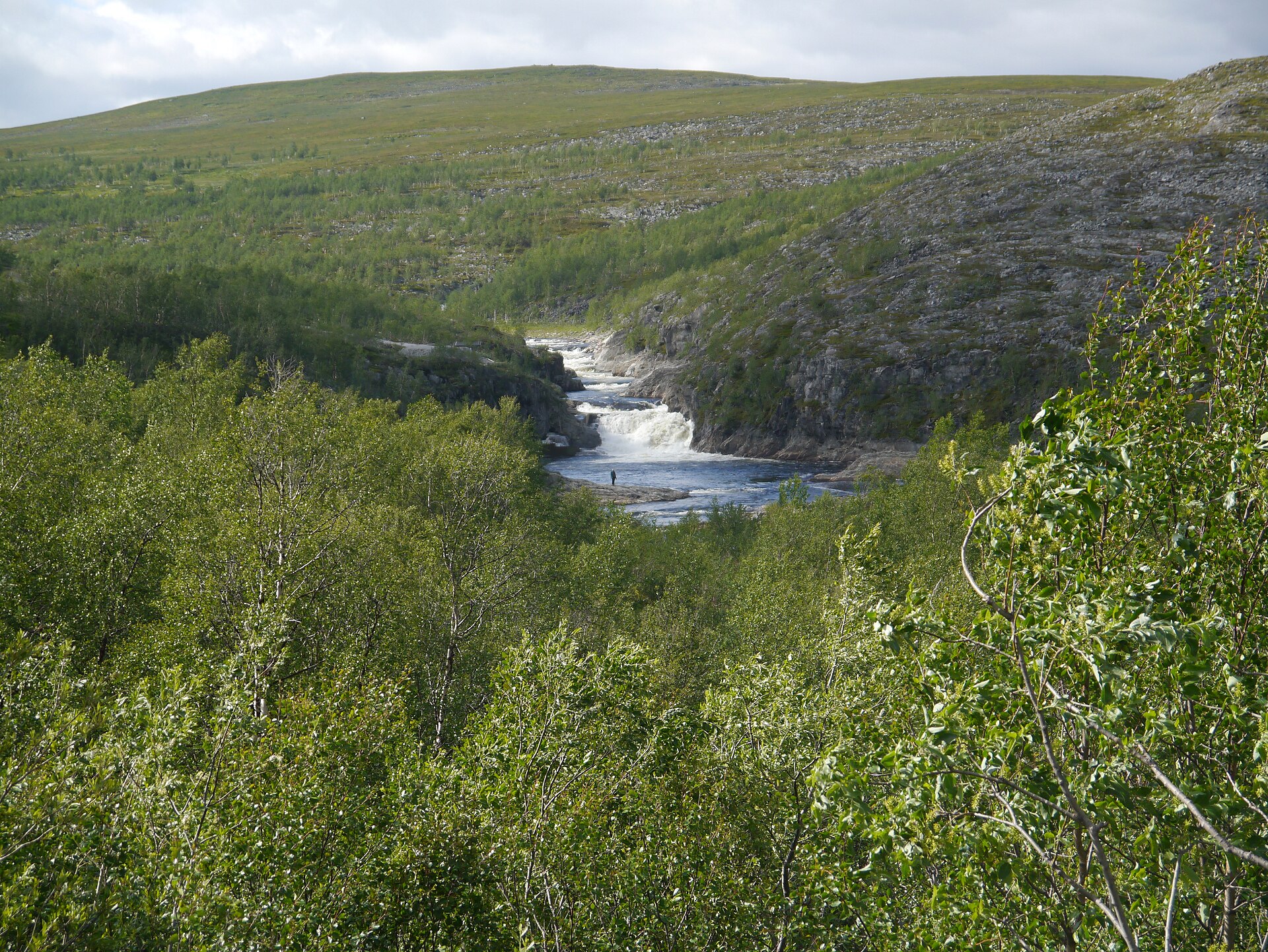
Behind Alta the land rises onto Finnmarksvidda, the Finnmark plateau: a huge, open, lake-studded upland of birch, lichen and reindeer pasture, and the heart of Sámi Norway. Two towns matter for visitors, and both feel very different from Alta.
Be ready for the cold. The plateau has an inland climate, and in January Visit Alta puts typical temperatures in town at about −8 °C by day and −14 °C at night, and says it is often much colder on the plateau, with −25 °C or lower not unusual. Karasjok holds Norway’s lowest recorded temperature, −51.4 °C, on 1 January 1886.
Kautokeino (Guovdageaidnu)
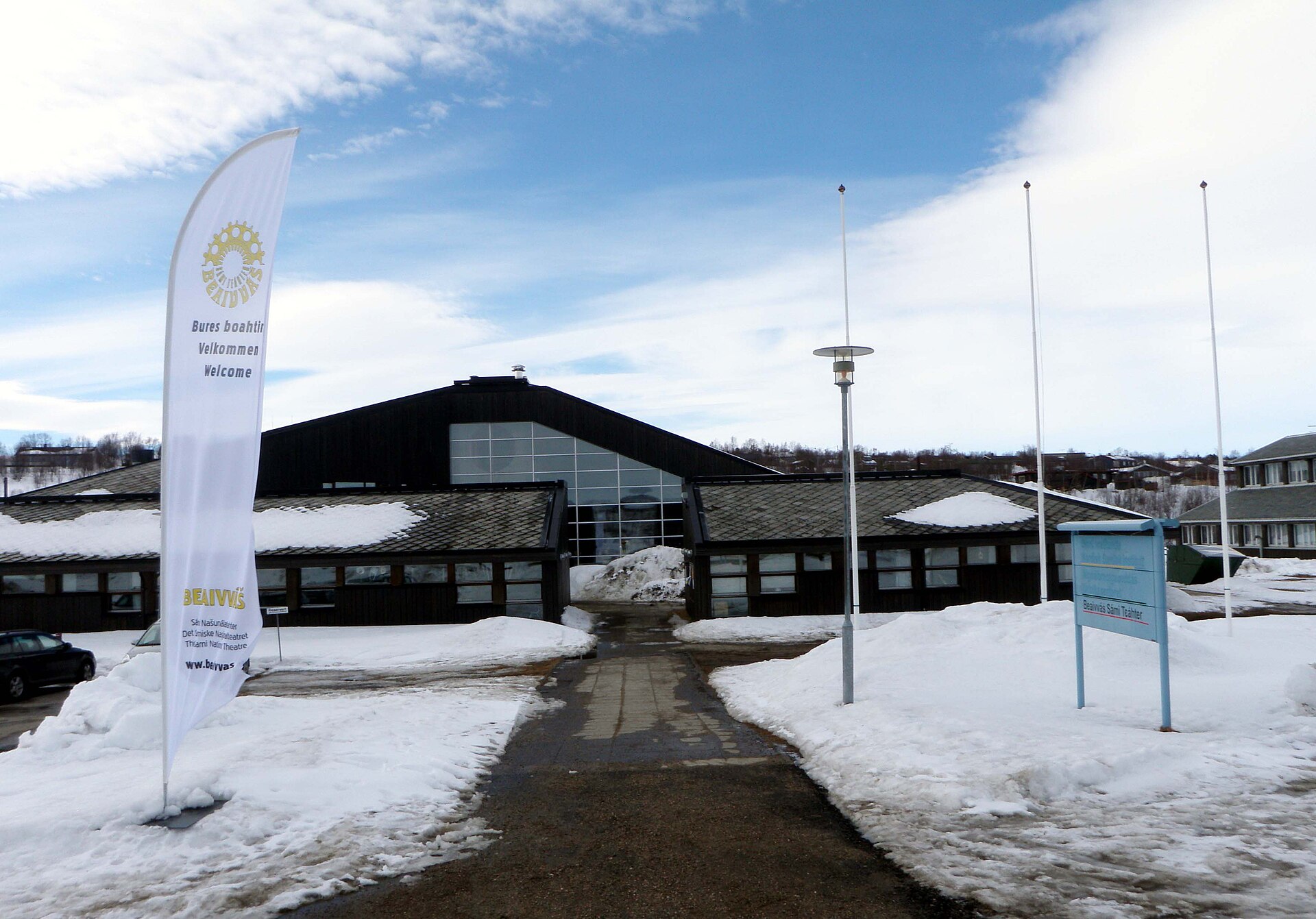
Kautokeino is about two hours’ drive south of Alta, by Visit Alta’s estimate. Its big moment is Easter, when the Sámi Easter Festival fills the town with concerts, events and visitors; the organisers say it’s held every year at Easter, and in 2027 Easter Sunday falls on 28 March, so check the festival’s own site for the programme. Outside Easter, the main draws are Juhls’ Silver Gallery, a silversmith’s workshop, and the Beaivváš Sámi National Theatre, based in Kautokeino.
Karasjok (Kárášjohka)
Karasjok is the seat of the Sámi Parliament, the Sámediggi, whose building is worth a look from outside; check the parliament’s own site for visiting arrangements. Two other things to know before you go:
- The Sámi Museum’s indoor exhibitions have closed for good. RiddoDuottarMuseat says its collection is being moved and only the outdoor museum is open. Any guide that sends you to the indoor Sámi Museum in Karasjok is out of date. Its art collection now puts on exhibitions at the Sámi Parliament.
- Sápmi Park, run by Scandic, keeps winter hours from 24 August 2026 to 31 May 2027: Monday to Friday 10:00 to 16:00 and Saturday 11:00 to 15:00, closed on public holidays, with the café, cinema and outdoor area closed in winter. Its listed prices are NOK 230 for adults, NOK 115 for children and NOK 550 for a family.
If you’re going to the plateau to learn about Sámi life rather than just to see it, read our guide to visiting Sámi Norway respectfully first; it covers what to call things, what to buy and how to choose an operator.
Driving the plateau in winter
The roads across the plateau are good but exposed, and in bad weather some mountain stretches switch to convoy driving. The E6 over Sennalandet has fixed convoy times when that happens: from Leirbotnvann, at 07:30, 10:45, 13:30, 16:10, 18:45, 22:00, 00:00 and 03:00, and from Fossen at 06:00, 09:30, 12:15, 15:00, 17:45, 20:30, 23:00 and 01:30. Check Statens vegvesen’s traffic information on the morning you drive, carry warm clothes and food, and don’t drive the plateau in a blizzard in a hire car you met that morning. Cars need at least 3 mm of tread from 16 October to 30 April in Finnmark.
Getting to Alta
By air
Alta’s airport has nonstop flights from Oslo with SAS and Norwegian, which Visit Alta puts at about two hours, and Widerøe flights from Tromsø: on Entur’s planner the 10:25 from Tromsø lands in Alta at 11:05. Local bus 42 serves the airport, and so does the line 110 bus to Honningsvåg. For most visitors from abroad, flying into Alta is the simplest way in.
By bus from Tromsø
Svipper’s line 150, run by Nordlandsbuss, links Tromsø and Alta once a day. It leaves Tromsø’s Prostneset terminal at 16:00, crosses on the Lyngseidet–Olderdalen ferry, and reaches Alta at about 22:15, a ride of over six hours and about 295 kilometres through the Lyngen Alps and along the fjords of Nord-Troms. In daylight it’s one of the great bus rides in the north; in December it’s a long evening in the dark.
By car
Visit Alta gives six hours from Tromsø, two from Hammerfest and Kautokeino, three from Honningsvåg and six and a half from Kirkenes. Alta is the natural overnight stop on a road trip between Tromsø and the North Cape, and our Norway road-trip guide covers the rules of the road.
By sea
Hurtigruten’s classic coastal route doesn’t call at Alta; it stops at Hammerfest and Honningsvåg, among other Finnmark ports. Its premium North Cape Line does stop at Alta, on the southbound leg. From Hammerfest, the VargsundXpressen express boat runs to Alta, taking about an hour and a half, and there’s a bus as well.
Where to stay in Alta
Visit Alta’s accommodation list gives a good idea of the range:
- In town: Scandic Alta and Thon Hotel Alta, the two big hotel-chain options, plus Canyon Hotell.
- Lodges outside town: Sorrisniva (a riverside wilderness lodge, plus the igloo hotel in winter), Holmen Husky Lodge, Trasti & Trine, Alten Lodge, ONGA Boutique Lodge and Bjørnfjell Mountain Lodge.
- Something different: GLØD Explorer’s Aurora Canvas Dome and its boutique apartment.
Rates swing with the season and events, Finnmarksløpet week above all, so compare them on the properties’ own sites. My advice is to stay in town if you’re relying on buses and tours, and at a lodge if you have a car and want darker skies and quieter nights.
How many days, and what it costs
Two full days covers the town: the rock art, the cathedral and a canyon trip in summer, or the museum, Sorrisniva and a dog-sled or aurora tour in winter. Three or four days lets you add a day on the plateau in Kautokeino or Karasjok, or the drive north towards Hammerfest and the North Cape. If the aurora is your main goal, add nights rather than activities; our comparison of Tromsø, Lofoten and Alta for the northern lights explains why.
| Example | What’s included | Per adult |
|---|---|---|
| Summer essentials | Alta Museum and rock art (summer rate) plus Sorrisniva’s canyon riverboat | NOK 2,325 ($240) |
| Summer, budget version | Alta Museum plus the Bæskades hike to the canyon viewpoint | NOK 175 ($18) |
| Winter essentials | Alta Museum (winter rate) plus a Sorrisniva igloo hotel day visit | NOK 510 ($53), before any tours |
Add your flights, beds, food and any guided tours. Our Norway travel cost guide has the general picture.
Two days in Alta: a summer plan and a winter plan
Summer (June to mid-August). Start at the Alta Museum when it opens at 09:00 and walk the full rock-art circuit at Hjemmeluft; allow two hours and take the audio guide. In the afternoon, drive out to Kåfjord for the Tirpitz Museum, or up the valley to Sorrisniva for the canyon riverboat on a Tuesday, Thursday, Friday or Saturday. On day two, walk the 13 kilometres from Bæskades to the canyon viewpoint, then spend the evening on the fjord under the midnight sun, which in Alta lasts from 17 May to 27 July. If you’re comparing Alta with the rest of the country, our guide to Norway in summer covers the weather and the crowds elsewhere.
Winter (December to March). Do the museum in the midday light, which in December is twilight, then the Northern Lights Cathedral on a weekday between 11:00 and 13:00. From 20 December, add a day visit to the Sorrisniva igloo hotel. Keep the evenings free for the aurora: with clear skies the sky does the work, and a guided hunt is worth booking for one night, not every night. On day two, go dog sledding with one of the kennels outside town, or, in the first week of March, watch Finnmarksløpet start in the centre of Alta.
What I’d skip, and what people get wrong
- Booking a winter trip for the rock carvings. The outdoor area closes for winter. Come between June and mid-August for the rock.
- Planning a canyon visit outside summer. The riverboats only run from June to August, so plan the canyon for summer.
- The indoor Sámi Museum in Karasjok. It has closed; only the outdoor museum remains.
- Turning up to fish the Alta. From 24 June it’s licence only, and licences go by lottery months in advance.
- Treating Alta as an aurora-only town. The guest-night figures say otherwise, and the town is at its best in summer, when the carvings, the river and the midnight sun all line up.
- Doing Kautokeino as a rushed day trip at Easter. The festival fills the town; stay over if you can, and book early.
- Assuming the coastal ship stops here. Only the premium North Cape Line calls at Alta. On the classic coastal route, get off at Hammerfest and take the boat or bus.
For the wider far north, start with our Tromsø and Arctic Norway hub, and for timing the light in summer, see where and when the midnight sun shines in Norway.
Frequently asked questions
What is Alta, Norway famous for?
The northern lights, first of all: Visit Alta says the world’s first aurora observatory was built on Haldde mountain above Alta in 1899, which is where the City of the Northern Lights name comes from. It’s also known for its UNESCO-listed rock art, the Alta River’s salmon, the Alta Canyon and the Finnmarksløpet sled-dog race.
Is Alta worth visiting in summer?
Yes. The midnight sun lasts from 17 May to 27 July, the rock-art trails are open at full summer hours, the riverboats run from June to August and the canyon hikes are possible. July was Alta’s busiest month for guest nights in 2026.
Can you see the Alta rock carvings in winter?
Not the carvings themselves: the outdoor rock-art area closes for the winter. The Alta Museum stays open with shorter winter hours and a winter visual guide, but for the rock you need to come in summer.
How do you get from Tromsø to Alta?
Fly in about 40 minutes, take Svipper’s daily line 150 bus (16:00 from Prostneset, arriving about 22:15), or drive, which Visit Alta puts at about six hours. The bus uses the Lyngseidet–Olderdalen ferry.
How far is Alta from Nordkapp?
About three hours by car from Alta to Honningsvåg, the town nearest the North Cape, and the line 110 bus takes about three hours. From Honningsvåg you still need a car or a tour to reach the North Cape plateau, and from 1 January to 15 April 2027 the road beyond Skarsvåg runs only in fixed convoys.
What is Finnmark known for?
Wide open plateau, Sámi culture, reindeer, the North Cape and a long Arctic coast. It’s Norway’s northernmost county; Kautokeino and Karasjok on the plateau are important centres of Sámi life, and Karasjok is home to the Sámi Parliament.
How many days do you need in Alta?
Two full days for the town and its main sights, three or four if you want to add the plateau or the North Cape. For the aurora, plan more nights, since the weather decides.
Is Alta better than Tromsø?
It’s different. Tromsø has far more to do in the evenings and many more tour operators; Alta is smaller and quieter, and has the rock art, the canyon and the plateau on its doorstep. The two pair well: fly into one and out of the other.
Photo credits
- Rock carvings at Hjemmeluft, part of the UNESCO-listed Rock Art of Alta, in July. — Photo: Hans A. Rosbach / CC BY-SA 3.0 via Wikimedia Commons.
- Sautso, the Alta Canyon: ten kilometres long, with walls more than 400 metres high. — Photo: Andreas Haldorsen / CC BY-SA 4.0 via Wikimedia Commons.
- Summer on Finnmarksvidda, the plateau behind Alta: the Repparfjord river in July. — Photo: Zairon / CC BY-SA 4.0 via Wikimedia Commons.
- Kautokeino’s cultural centre in 2014, then home to the Beaivváš Sámi National Theatre. — Photo: Manxruler / CC BY-SA 4.0 via Wikimedia Commons.
Prices, hours and timetables were checked in November 2026 against the operators’ and organisers’ own pages, Visit Alta, Statistics Norway, Statens vegvesen and Entur, and converted at NOK 9.69 to the US dollar (Norges Bank, 19 November 2026). The Alta Museum sets its 2027 prices separately, and riverboat prices can change, so check them before you go.