Twenty-seven destinations in the longest guide to day trips from Oslo currently ranking. Not one fare in kroner. Every single article on this search says some version of “check the Vy app”, which is true and useless, because the thing you need to know before you plan a day is whether the train is 40 minutes or four hours and whether it costs 150 kroner or 900.
I have also cut this list hard. A day trip means you leave in the morning and sleep in your own bed. Several guides pad theirs with Bygdøy — which is inside Oslo — and with the Sognefjord, which is not a day trip from here by any honest definition. What follows is what actually returns.
Two things before the list. The Oslo Pass does not cover the trains you need. And I have kept the Oslofjord islands out of this entirely, because they are a half-day inside the city and belong in our Oslofjord guide, not here.
At a glance
| Destination | Time each way | How | Verdict |
|---|---|---|---|
| Drøbak & Oscarsborg | ~40 min | Bus 500, every 30 min | Best short day out. Do this first. |
| Fredrikstad | 1 hr–1 hr 15 | Train from Oslo S | Best full day out. |
| Moss / Jeløy | ~40 min | Train, every ~20 min | Good, and underrated. |
| Eidsvoll | 35–40 min | Train | For the history, not the town. |
| Hamar | 1 hr 5 min | Train, hourly | Worth it for the cathedral ruin. |
| Tønsberg | ~1 hr 11 min | Train | Good in summer. |
| Lillehammer | ~2 hr | Express train | Only with an early start. |
| Halden | 1.5–2 hr | Train | Long day for one fortress. |
| Kistefos | ~1 hr by car | Car, or bus to Jevnaker | Excellent, awkward without a car. |
| Kongsberg silver mines | ~1 hr 20 | Train + local bus | Summer only, and expensive. |
| Rjukan / Vemork | ~4 hr 15 | Coach via Notodden | Not a day trip. Overnight. |
| Bergen / fjords | ~7 hr | Train | No. See below. |
Fares, and what I could not confirm
Let me be direct about the state of the numbers, because the alternative is pretending. Vy publishes dynamic fares and its site does not return a price to any tool without an interactive search. What I could establish:
- Moss, 40 minutes from Oslo S with departures roughly every 20 minutes, at fares in the region of 140–210 NOK (~$15–22) one way.
- Vy minipris advance fares are reported to open around 90 days ahead and climb through tiers as departure approaches, with a full-price Flex fare at the top. That is one source and I could not confirm it on Vy’s own pages, but the mechanism is standard for Norwegian rail and matches what regular travellers describe.
- The practical rule that follows: for anything beyond about an hour from Oslo — Lillehammer, Halden, Kongsberg — book as far ahead as you can. The difference between a minipris and a walk-up fare on those routes is substantial. For journeys inside an hour it matters much less.
What the Oslo Pass does and does not cover. It covers Ruter zones 1, 2, 3, 4V and 4N, plus the Vy local train to and from Gardermoen. It does not cover Vy intercity or regional trains, and it does not cover Vy Express coaches. So it will get you to Drøbak’s bus and to the airport, and it will not get you to Fredrikstad, Tønsberg or Lillehammer. Several guides imply otherwise. The pass arithmetic for what it does cover is in our Oslo museums guide.
The five that are genuinely worth the day
Drøbak and Oscarsborg — the one to do first
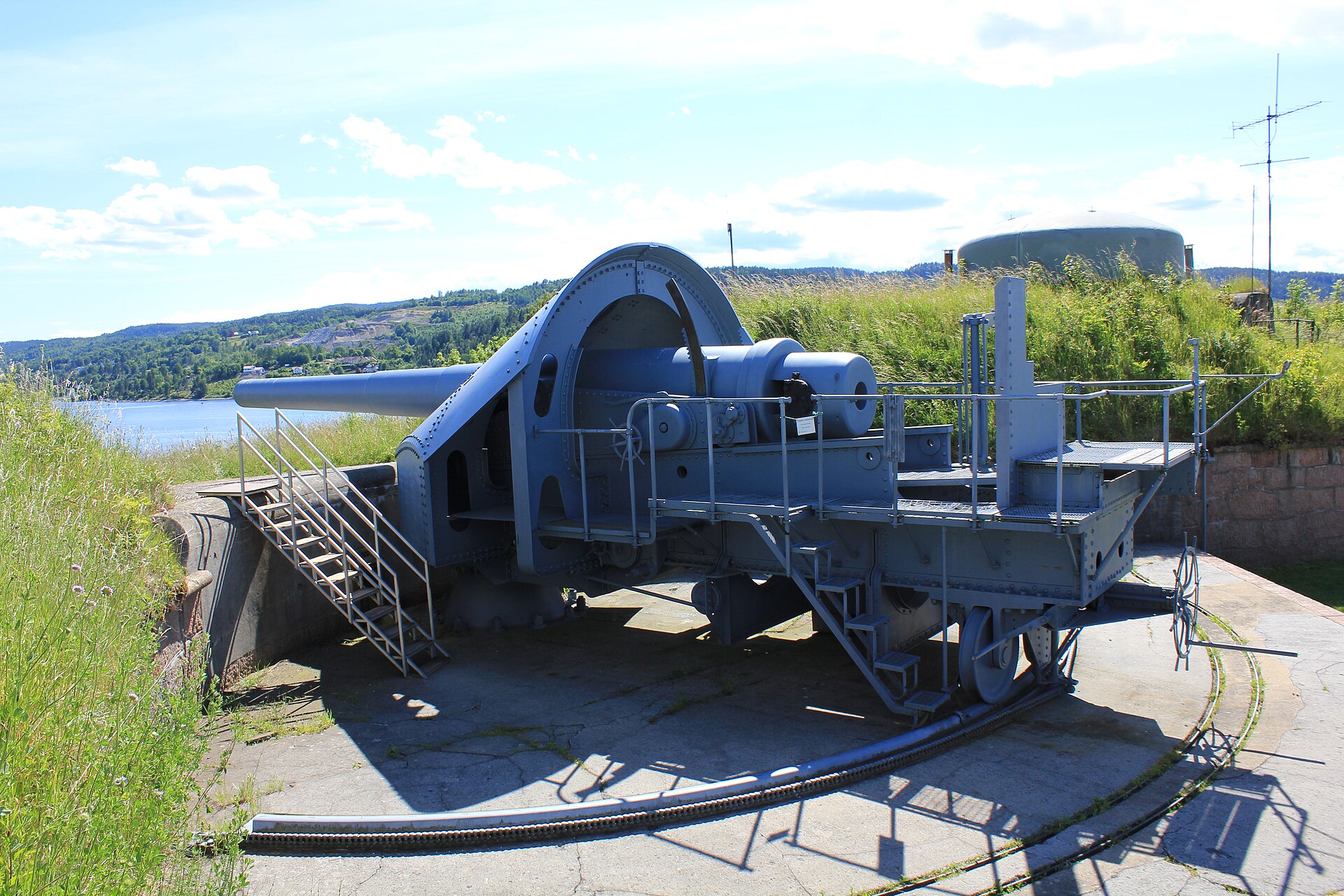
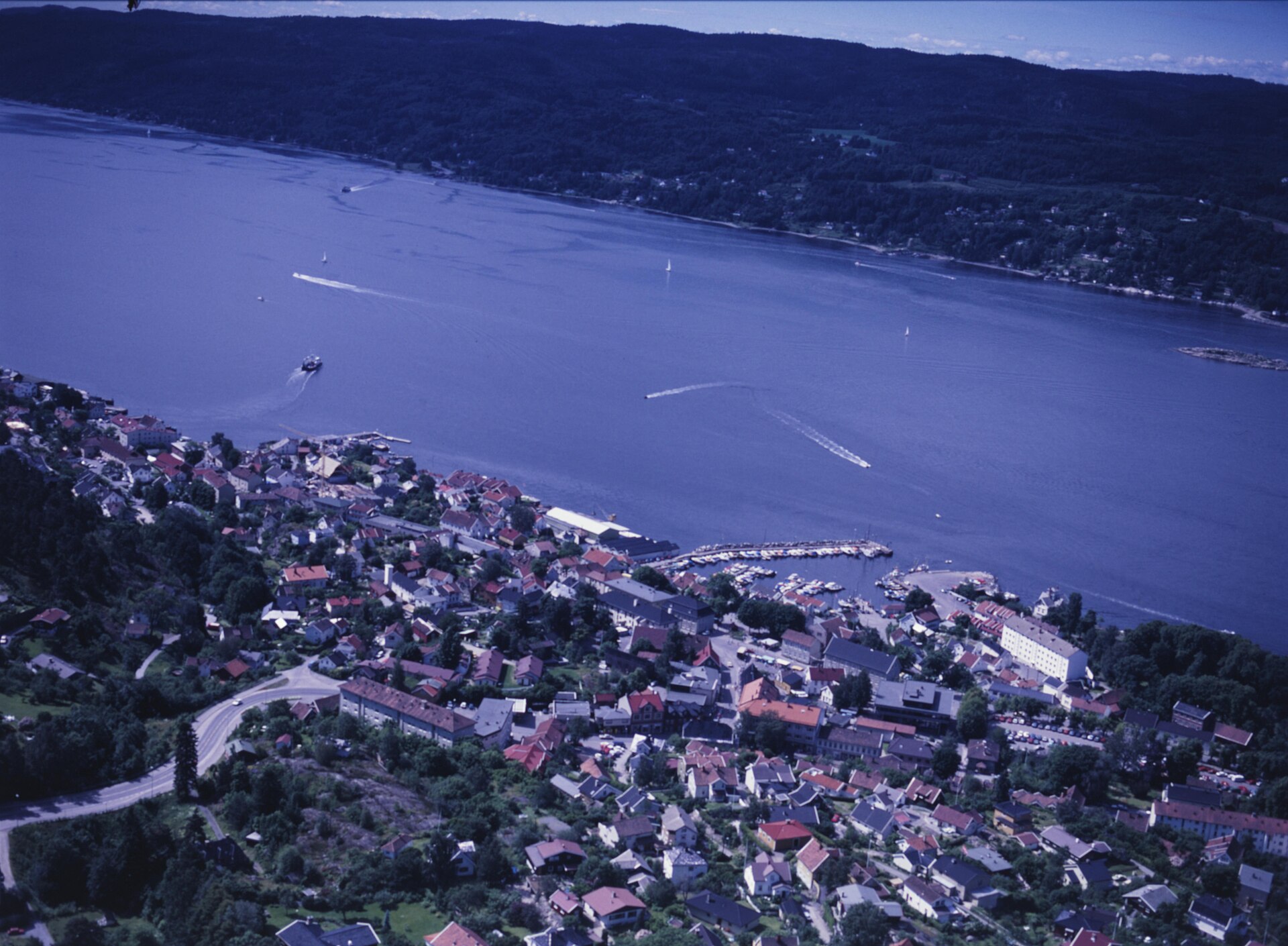
Forty minutes on bus 500 from the Oslo bus terminal, departures every half hour. A white wooden town at the point where the fjord narrows to almost nothing, and from its quay a five-minute ferry to Oscarsborg fortress for 70 NOK return.
The fortress is the reason to go. On 9 April 1940 its Victorian guns and a torpedo battery sank the German heavy cruiser Blücher at point-blank range in the narrows, killing roughly a thousand men and delaying the occupation of Oslo by long enough for the King, the government and the gold reserve to get out of the city. You can stand on the battery. It is a short walk from where the ship went down.
Cost: bus fares plus 70 NOK for the ferry. Time: five to six hours door to door. Verdict: the best value day trip from Oslo and it is not close.
Fredrikstad — the best full day
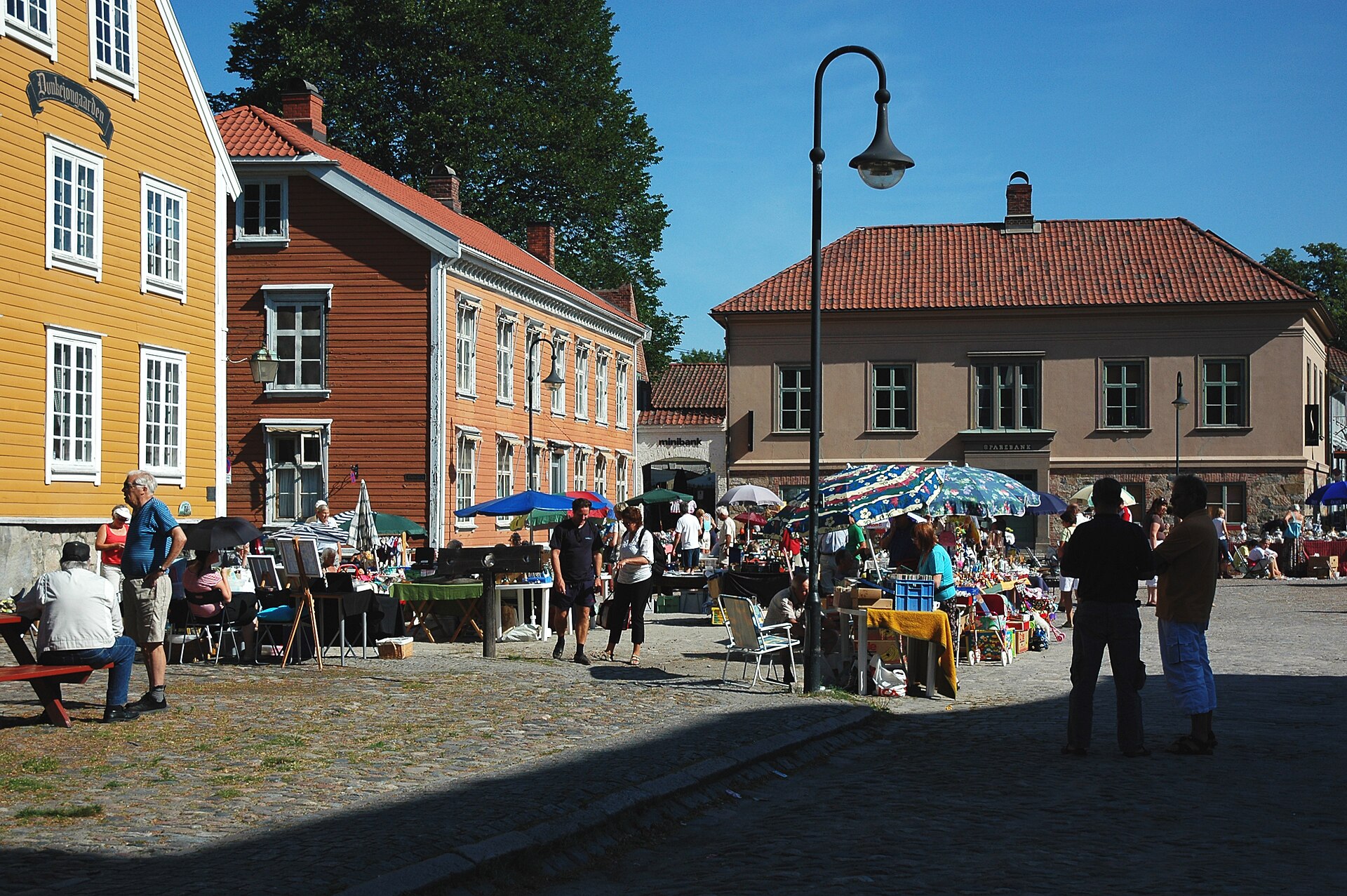
An hour to an hour and a quarter by train. Gamlebyen, the old town, is a fortified seventeenth-century garrison inside intact star-shaped earthworks and a moat — the best-preserved fortress town in Scandinavia, still lived in, reached by a small ferry across the river that runs frequently and costs nothing.
Verdict: a proper day. Cobbled streets, ramparts you can walk the whole way round, and enough there to fill five hours without forcing it.
Moss and Jeløy — the one nobody suggests
Forty minutes, trains every twenty minutes, roughly 140–210 NOK. Moss itself is a working town; Jeløy, the island beside it, has coastal walks, the Galleri F 15 art centre and the Alby estate.
Verdict: not spectacular, but it is the cheapest and most frequent train out of Oslo and you can go on a whim at eleven in the morning. That flexibility is worth more than it sounds.
Hamar — the cathedral ruin under glass
Sixty-five minutes on hourly trains, on Lake Mjøsa. The medieval cathedral ruin is enclosed inside an enormous glass structure — a genuinely strange and successful piece of architecture. The Norwegian Railway Museum is here too, and the 1994 Olympic speed-skating hall shaped like an upturned Viking ship.
Tønsberg — Norway’s oldest town
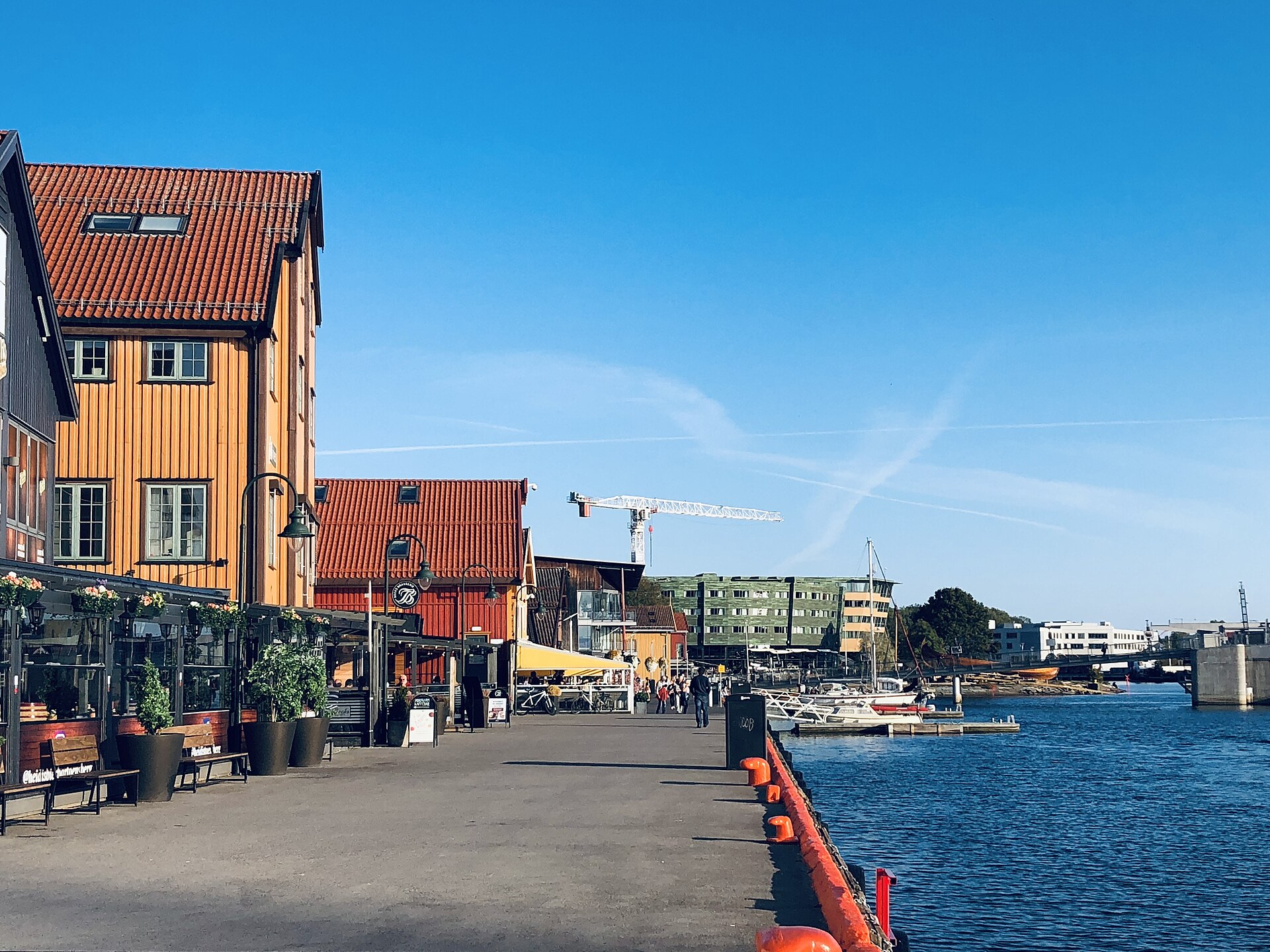
About 1 hour 11 minutes by train. Founded before 900, with a ruined castle on the hill above the town and a reconstructed Viking ship on the quay. It works best in summer, when the harbour is busy and the boats to the Færder archipelago run.
Eidsvoll — where Norway was invented
Thirty-five to forty minutes by train, north towards Gardermoen. Eidsvollsbygningen is the manor house where, over ten weeks in the spring of 1814, 112 men wrote the Norwegian constitution and elected a king. The rooms have been restored to how they were that May.
Verdict: the town is unremarkable and the building is not. If Norwegian history interests you at all, this is the shortest journey to the most consequential place on this list. Ninety minutes on site, easily combined with the airport if you are flying out the same evening.
Halden and Fredriksten
An hour and a half to two hours by train, right on the Swedish border. Fredriksten fortress dominates the town from a ridge — a huge seventeenth-century complex where Charles XII of Sweden was shot dead in 1718, ending a war and an empire.
Verdict: genuinely impressive, and a long way to go for it. Fredrikstad is on the same line, closer, and has more to fill the day with. Do Halden only if fortresses are the point of your trip.
Notodden and Heddal stave church
Around two hours by coach. Heddal is the largest stave church in Norway, built in the early thirteenth century — a dark, tarred, many-gabled thing that looks like nothing else in European architecture. Entry is reported at around 100 NOK including a guided tour, with typical summer hours of 10:00 to 18:00, though I could not confirm either against the church’s own site.
Verdict: a four-hour round trip for one building. Worth it if you will not otherwise see a stave church on your trip; skip it if your route goes anywhere near Borgund or Urnes. Stave churches feature heavily in our roundup of Norway’s landmarks.
Blaafarveværket
The old cobalt works at Modum, about an hour and a quarter by car, with an art gallery, a mine you can go into, and a waterfall gorge at Haugfoss. Summer season only, and effectively car-dependent.
Verdict: a pleasant half day if you are already driving. Not worth building a public transport itinerary around.
How to build the day
A pattern that works, learned by getting it wrong: decide your return train before you leave, not while you are there. Norwegian regional services outside the Oslo commuter belt can drop to one an hour or worse by late afternoon, and the difference between the 16:40 and the 17:40 out of Lillehammer is an hour standing on a platform.
Beyond that:
- Leave before 09:00 for anything over an hour away. The useful window at the destination is what you are buying, and every hour of lie-in costs you two.
- One destination per day. Every guide that strings Fredrikstad and Halden together on the same day has not done it. They are 45 minutes apart on a line with gaps in the timetable.
- Check the season before the timetable. Kistefos runs 9 May to 11 October. Munch’s House is May to September. Kongsberg’s mine tours are summer only. Turning up to a closed site is the most common way these days go wrong, and it is entirely avoidable.
- Eat before you go, or take food. Small-town Norway at 15:00 on a Sunday is not a dense restaurant market, and what there is charges Oslo prices for less.
If you find yourself with more than a couple of days to fill, the honest answer is usually to stop day-tripping and move. Two nights in Bergen or the fjords beats four day trips out of the same hotel, and the routes are laid out in our seven-day Norway itinerary and five-day version. The parent Oslo guide covers the city itself.
Worth it if you have a car
Kistefos and Hadeland Glassverk
About an hour’s drive north-west. Kistefos is an old wood-pulp mill turned sculpture park, with The Twist — a gallery shaped like a twisted bridge over the river — as its centrepiece. The 2026 season runs 9 May to 11 October, with adult entry 200 NOK, seniors 170, ages 20–25 100 NOK and under-19s free.
Hadeland Glassverk, a working glassworks with a shop and furnaces you can watch, is 20 minutes further. Reachable by bus to Jevnaker plus a local connection, but the combination only really works with a car.
Verdict: the best art day out of Oslo, and effectively car-only. If you are hiring one anyway, this is what to do with it — our Norway road trip guide covers the costs of running one here.
Åsgårdstrand and Munch’s House
On the west shore, no direct train — change to a bus at Skoppum, around two hours five minutes total, which is why a car helps. Munch’s small yellow summer house is open weekends 11:00–16:00 in May and September and Tuesday to Sunday 11:00–17:00 from June to August. 50 NOK adult, 30 NOK concession, free under 17.
Verdict: fifty kroner to stand in the garden Munch painted Girls on the Bridge in. Cheap, small, and rather moving if you have just come from MUNCH in the city.
The ones I would not do
Bergen, or “Norway in a Nutshell” from Oslo. People genuinely ask. The Oslo–Bergen train alone is just under seven hours one way. The full Nutshell loop runs nine to fourteen hours before you have gone home. It is a superb journey and it is not a day trip — it is the spine of a multi-day route, which is how we treat it in Oslo to Bergen.
Rjukan and Vemork. The heavy water plant, the Telemark sabotage, Gaustatoppen — all excellent, all about four and a quarter hours away by coach via Notodden. That is eight and a half hours of travel for a few hours on site. Stay the night or leave it.
Kongsberg silver mines, unless the numbers suit you. An hour and twenty from Oslo, then a local bus to Saggrenda. Museum entry around 150 NOK, and the guided mine tour — which is the actual attraction — around 600 NOK for adults and 350 for children, summer season only. Those prices were last confirmed for 2025 and I could not verify them for 2026. Six hundred kroner is a lot for a mine tour, and it is only worth it if going underground is specifically your thing.
Lillehammer, on a late start. Two hours each way by express train. Maihaugen, the open-air museum, is genuinely good and needs three hours. That is a seven-hour day minimum and it only works if you are on a train before 09:00. Do not attempt it on a whim.
Halden. Fredriksten fortress is impressive, and it is an hour and a half to two hours each way for one site in a small town. Fredrikstad is closer, richer, and on the same line.
Anything at all in December or January. With six hours of daylight, a two-hour journey each way leaves you two hours of light at the destination. Winter day trips from Oslo should be under an hour each way or not at all — see Oslo in winter for what to do instead.
Matching the trip to the day you have
| You have | Go to | Why |
|---|---|---|
| Half a day | Drøbak | 40 min each way, fortress ferry included |
| A full day, no car | Fredrikstad | Best single destination on the rail network |
| A full day, with a car | Kistefos + Hadeland | Two good stops an hour apart, impossible by bus |
| A rainy day | Hamar | Cathedral ruin is enclosed; railway museum indoors |
| A summer day | Tønsberg | Harbour, castle hill, archipelago boats |
| A winter day | Drøbak or Moss | Short enough to fit inside the daylight |
| Children in tow | Drøbak | Boat ride, fortress, short journey |
| A history obsession | Eidsvoll | Where the 1814 constitution was written, 35–40 min away |
Practical notes worth having
Trains leave from Oslo S, which is why our guide to where to stay in Oslo favours Sentrum or Grønland for anyone planning to leave the city. Twenty minutes’ walk to the station at 07:30 is the difference between catching the useful train and the next one.
Buses leave from the Oslo bus terminal, next door to the station, which is where bus 500 to Drøbak goes from.
Vy tickets are app-based and seat reservations are separate on the longer intercity routes. On a busy summer Saturday to Lillehammer that reservation matters.
Petrol is around 26.84 NOK a litre after the duty rise on 1 September 2026, which is worth knowing before you decide a hire car is the cheap option. Sources on Norwegian fuel prices genuinely conflict — official statistics from earlier in 2026 put petrol nearer 23.50 — so budget the higher figure. The full picture is in what Norway costs and getting around Norway.
Frequently asked questions
What is the best day trip from Oslo?
Drøbak, with the ferry to Oscarsborg fortress. Forty minutes each way on bus 500, 70 NOK for the fortress crossing, and the site where the Blücher was sunk in 1940. For a full day rather than a half, Fredrikstad’s fortified old town.
Can you do day trips from Oslo without a car?
Almost all of them, yes. Drøbak, Fredrikstad, Moss, Hamar, Tønsberg, Eidsvoll, Lillehammer and Halden are all on the train or a direct bus. Only Kistefos, Hadeland Glassverk and Åsgårdstrand really need a car.
Does the Oslo Pass cover trains for day trips?
No. It covers Ruter zones and the Vy local train to Gardermoen only — not Vy intercity or regional trains, and not Vy Express coaches. You will buy separate tickets for every destination on this page.
Is Bergen a realistic day trip from Oslo?
No. The train alone is just under seven hours each way and the Norway in a Nutshell loop runs nine to fourteen hours. Treat it as a two- or three-day journey.
How much does a day trip from Oslo cost?
Drøbak comes to bus fares plus 70 NOK. Moss is roughly 140–210 NOK each way. Longer routes such as Lillehammer or Halden vary a great deal with how far ahead you book — Vy’s advance minipris fares reportedly open around 90 days out and rise from there.
Are day trips from Oslo worth it in winter?
Only short ones. With around six hours of daylight in December, a two-hour journey each way leaves almost nothing at the other end. Keep winter trips under an hour each way — Drøbak or Moss.
How far ahead should I book Norwegian trains?
As far as you can for anything over an hour. Advance fares are reported to open around 90 days ahead and climb in tiers towards the full flexible price. For short hops like Moss the difference is small enough not to worry about.
Can you reach the fjords on a day trip from Oslo?
Not the western fjords. You can reach the Oslofjord easily — it starts at the City Hall pier — but Sognefjord, Geirangerfjord and the rest are an overnight journey minimum. Which one to aim for is covered in our guide to choosing a Norwegian fjord.
Photo credits
- Oscarsborg, five minutes by boat from Drobak and 70 kroner return. The best value day out of Oslo. — Photo: Øyvind Holmstad / CC BY-SA 3.0 via Wikimedia Commons.
- Fredrikstad’s Gamlebyen: the best-preserved fortress town in Scandinavia, an hour by train. — Photo: DimiTalen / CC0 via Wikimedia Commons.
- Tonsberg, Norway’s oldest town, is about an hour and eleven minutes by train from Oslo S. — Photo: Ssu / CC BY-SA 4.0 via Wikimedia Commons.
- Drobak sits at the Drobak Sound, where the fjord narrows to almost nothing. Forty minutes on bus 500. — Photo: Creator:Bjørn Østrem / CC BY 4.0 via Wikimedia Commons.
Journey times and prices checked August 2026, converted at 9.35 NOK to 1 USD. Rail fares in Norway are dynamic and Vy does not publish a static price table, so the figures above are the ones I could source rather than quotes — I have flagged where a number rests on a single source or a 2025 confirmation. Kistefos and Munch’s House season dates are for 2026 and will shift slightly next year.