Ask which is the tallest waterfall in Norway and you’ll get four different answers depending on which page you land on. Vinnufossen. Ramnefjellsfossen. Mongefossen. Vettisfossen. The five articles currently ranking for this search give heights that contradict each other — one lists the Seven Sisters as 250 metres, 410 metres and 820 feet on the same page — and none of them explain why.
The reason is that “tallest” means at least three different things, and Norwegian hydropower has quietly turned off some of the contenders. This guide sorts that out first, then tells you which waterfalls are actually worth driving to, when they run hardest, and — the fact nobody publishes — which ones only have water on specific dates because a power company controls the tap.
First, the tallest waterfall question, answered properly
Three different measurements produce three different champions. Here’s the honest version.
| Measured by | Winner | Height | The catch |
|---|---|---|---|
| Total cumulative drop | Vinnufossen | 845 m over three drops, longest 575 m | Tiered, not a single plunge |
| Tallest single drop on paper | Mongefossen | 773 m | Diverted for hydropower in 1977 — effectively dry |
| Tallest free fall that actually flows | Vettisfossen | 275 m single vertical drop | Requires a walk in; unregulated |
So: Vinnufossen, fed by the Vinnufonna glacier above Sunndalsøra, is Norway’s tallest waterfall by total drop at 845 metres, and one of the tallest in the world — though whether it ranks sixth or eighth depends on whose methodology you use. You’ll also see 860 or 865 metres quoted; I couldn’t verify those.
Ramnefjellsfossen (also called Utigardsfossen), above Lovatnet, is 818 metres in four drops with a longest single fall of 405 metres. It’s often called the world’s third tallest; the World Waterfall Database ranks it eleventh. Again — methodology, not measurement.
Mongefossen is the one to be careful about. At 773 metres it’s frequently listed among the world’s tallest single-drop falls, and one major cruise line still promotes it. But the Mongeelva was diverted into the Grytten hydropower scheme in 1977 and it has been functionally dry ever since. Do not plan a detour.
Vettisfossen, in Utladalen near Årdal, is the answer to the question most people are actually asking: the tallest free-falling waterfall in Europe that isn’t regulated. A 275-metre vertical drop, about 23 metres wide, averaging one to four cubic metres a second. It takes a walk to reach, which is why it’s quiet.
Norway holds roughly ten of the world’s thirty highest waterfalls. That’s the genuinely remarkable statistic, and it’s the one to keep in mind rather than any single ranking.
Norway’s best waterfalls at a glance
| Waterfall | Height | Where | Access | Peak flow |
|---|---|---|---|---|
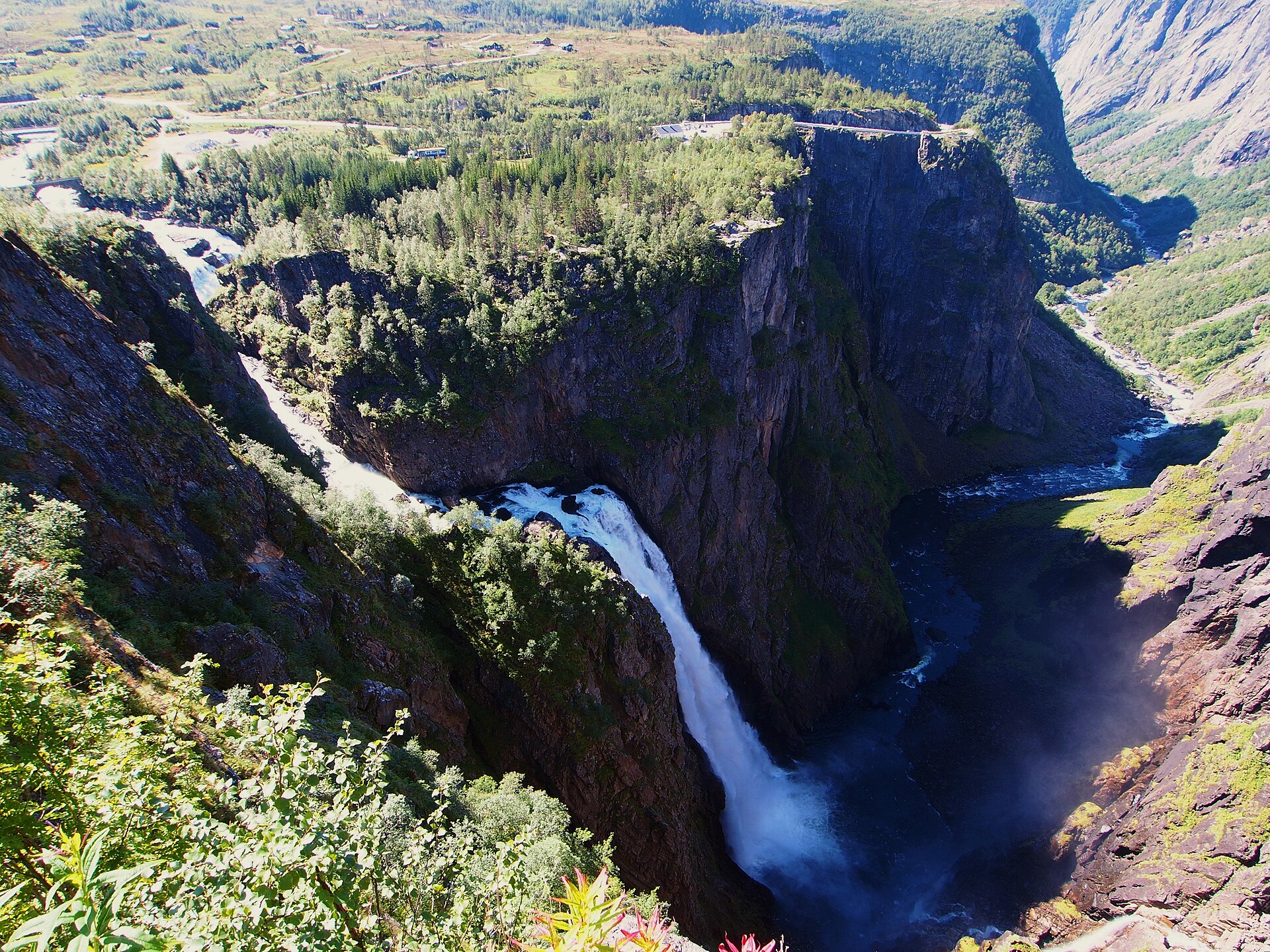
| Vøringsfossen | 182 m (145 m free fall) | Hardangervidda | Free parking, footbridge | May–Jul |
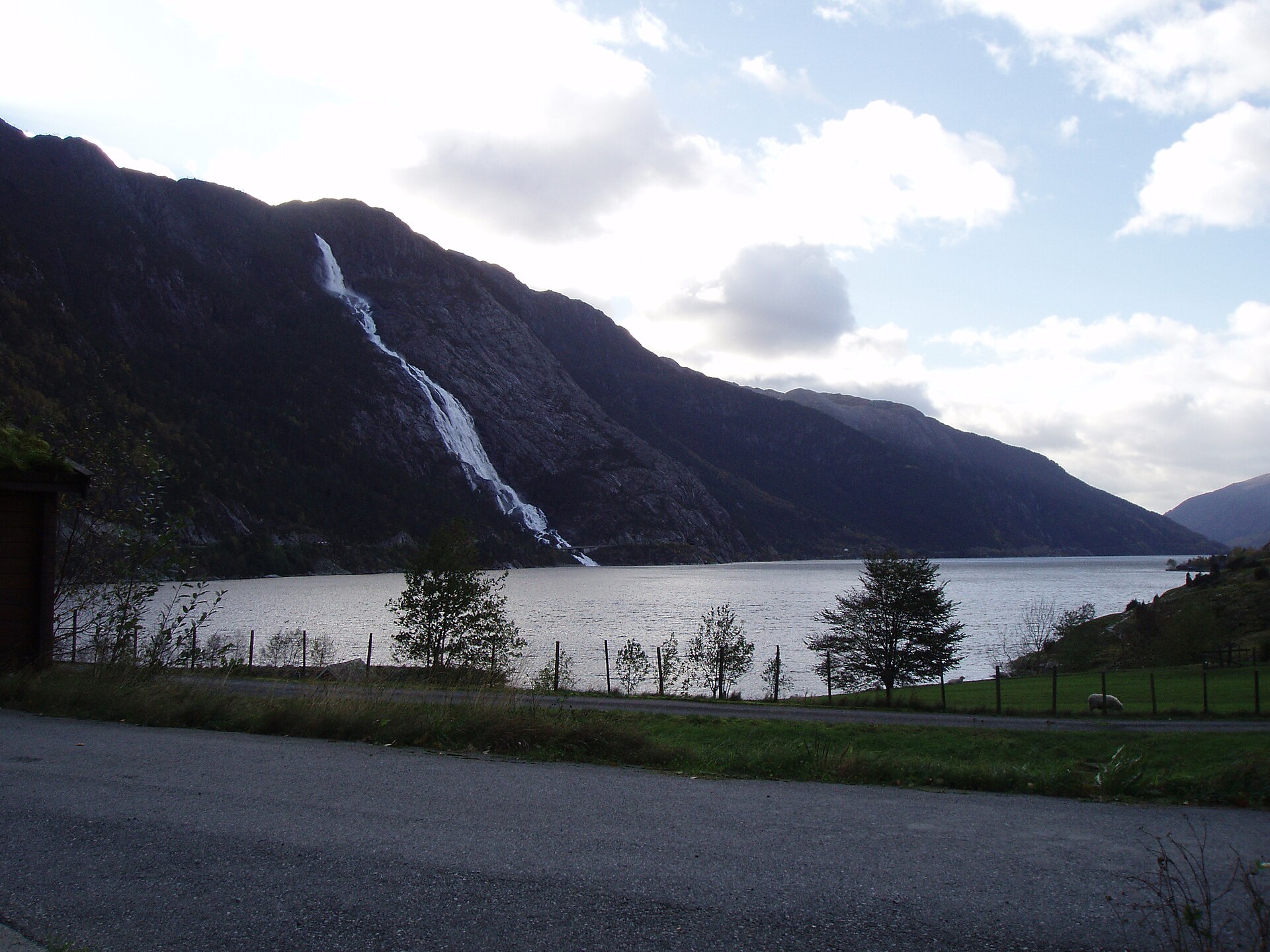
| Langfossen | 612 m, unregulated | Åkrafjorden, E134 | Roadside | May–Jun |
| Seven Sisters | 410 m total, 250 m tallest fall | Geirangerfjord | Ferry or cruise | May–Jul |
| Steinsdalsfossen | 46 m (20 m main drop) | Norheimsund | Free, walk behind it | May–Jun |
| Låtefossen | 165 m twin cascade | Rv13 near Odda | Roadside, gets you wet | May–Jun |
| Vettisfossen | 275 m single free fall | Utladalen | Hike in | Jun–Jul |
| Kjosfossen | 225 m | Flåm Railway | Train stop | Jun–Aug |
| Mardalsfossen | 655 m total, 297 m free fall | Eikesdalen | Roadside + walk | 20 Jun–20 Aug only |
| Tvindefossen | ~116 m | Near Voss | Free car park | May–Jun |
| Vinnufossen | 845 m, tallest in Norway | Sunndalsøra | Roadside view | Jun–Jul |
| Stigfossen | ~300–320 m | Trollstigen | Roadside | Jun–Jul |
| Feigumfossen | ~190–218 m | Lustrafjord | Free parking + walk | Jun–Jul |
The fact nobody publishes: some waterfalls are switched on
This is the single most useful thing in this guide. Several of Norway’s famous waterfalls are regulated for hydropower, which means the water runs when a power company decides it runs.
Mardalsfossen is the important one. At 655 metres total with a 297-metre free fall, it’s one of the great sights in the country — and the water is released only between 20 June and 20 August, at roughly 2 to 2.5 cubic metres per second against a recorded natural maximum of 45. Arrive on 15 June and you’ll find a cliff. This date window appears in no competing article I read.
Mongefossen, as above, has been dry since 1977.
Kjosfossen, the one the Flåm Railway stops at, is partly dammed to power the railway itself, so late-summer flow can be noticeably weak. The huldra performance runs 1 June to 31 August.
The general principle: if a Norwegian waterfall looks disappointing, the likeliest explanation isn’t drought — it’s that the water is somewhere else, making electricity. Norway generates the overwhelming majority of its power this way, and the trade-off is visible in the landscape.
More waterfalls worth knowing about
Beyond the headline names, these are the ones that reward a detour or turn up unexpectedly on a route you’re already driving.
Stigfossen, Trollstigen. Around 300 metres falling alongside the eleven hairpins, and the reason the road viewpoint works so well — you get the waterfall and the road in one frame. Accessible only when Trollstigen is open, which in 2026 means from 27 April.
Skjervsfossen, Hardanger. A National Scenic Routes project with architect-designed steps and a viewing platform that takes you down alongside the fall. Free, and far quieter than Vøringsfossen half an hour away.
Husedalen, Kinsarvik. Not one waterfall but four in a single valley — Tveitafossen, Nyastølsfossen, Nykkjesøyfossen and Søtefossen — climbing toward Hardangervidda. A full day’s walk and the best waterfall hike in Norway.
Furebergsfossen, Hardangerfjord. Drops almost directly onto the road on the Rosendal side, which makes for a dramatic drive-by. No car park to speak of; take the corner slowly.
Storsæterfossen, Geiranger. Another you can walk behind, reached on foot from the Westerås farm above Geiranger. About two hours return and it gets you away from the cruise-day crowds entirely.
Vermafossen and the Kylling Bridge, Romsdalen. The waterfall is impressive; the 1920s stone railway bridge curving above the gorge is arguably more so. Both visible from the Rauma railway, which is one of Norway’s great short train rides.
Hellesyltfossen. Runs straight through the middle of Hellesylt village and under the road bridge, which means you can stand over it while waiting for the Geiranger ferry. The most convenient waterfall in Norway.
Gudbrandsjuvet. Less a waterfall than a gorge — the Valldøla river forced through a five-metre-wide slot, with walkways built out over it. On the same road as Trollstigen, so it costs you twenty minutes.
Månafossen, Rogaland. The tallest waterfall in Rogaland at around 92 metres, reached by a steep but short chain-assisted path. Pairs naturally with a Preikestolen trip from Stavanger.
Waterfalls in winter
Most guides stop at September, which misses something. Norwegian waterfalls in deep winter partially freeze into blue-white columns, and several become ice-climbing venues — Rjukan in Telemark is one of the best ice-climbing destinations in Europe precisely because its regulated falls freeze reliably.
For sightseeing rather than climbing, the accessible winter options are the low-altitude, roadside falls: Steinsdalsfossen, Låtefossen and Tvindefossen are all on roads that stay open, and all look completely different under ice. Vøringsfossen’s upper paths close, though the main viewpoint is often reachable.
What you can’t do in winter is anything requiring a mountain pass. Mardalsfossen, Vettisfossen, Stigfossen and the Husedalen falls are all inaccessible. The winter guide covers what stays open.
Photographing them, without the disappointment
Two practical points that make more difference than any lens.
Overcast is better than sunshine. Bright sun on white water blows out the highlights and puts the gorge in deep shadow. A grey Norwegian day — of which there are many — gives even light across the whole fall. This is genuinely good news given the weather.
Deep gorges have short windows. Vøringsfossen sits in a canyon; the sun reaches the bottom for only part of the day. Around midday is when the light gets in. The opposite applies to falls landing in fjords, like the Seven Sisters, where morning side-light works best.
If you’re flying a drone, note that Norway’s rules are stricter than most visitors expect: under 250 g requires operator registration, and 250 g or over requires an A1/A3 certificate and liability insurance, with a separate registration for foreign visitors using cameras and sensors. Several waterfall car parks sit inside airport control zones.
What a waterfall trip costs
Very little, which is the appeal. Almost every fall in this guide has free parking and no admission, so the cost is fuel, ferries and beds.
Fuel is unusually cheap this year — roughly NOK 20–21 a litre thanks to a temporary excise holiday running April to September 2026 — and many western Norway car ferries are free outright, with over a hundred connections carrying vehicles and passengers at no charge. Where a crossing is paid, an AutoPASS-for-ferje account takes 40–50% off.
Reckon on NOK 900–1,200 a day camping and self-catering, or NOK 1,600–2,200 with hotels and a restaurant meal. The costs guide has the detail, and the accommodation guide covers cabins in the fjord villages, which are the natural bases for this. For the wider picture of what else to build around these, see the main things-to-do guide.
The waterfalls worth planning around
Vøringsfossen
The one to see if you only see one, largely because of what’s been built around it. A 182-metre drop — 145 of them free fall — into the Måbødalen canyon, with a stepped footbridge over the Bjoreio that opened in 2020: 99 steps, spanning 47 metres, putting you directly above the lip. The full National Scenic Routes rebuild finished in September 2024 and added over a kilometre of secured path.
Parking is free, there’s EV charging at one of the car parks, and toilets at Fossatromma and Fossli are open roughly April to November. Parts of the path close in winter, and the Hardangervidda road is generally clear from around June. It’s on the main Oslo–Bergen route, which makes it the easiest spectacular detour in Norway.
Langfossen
Six hundred and twelve metres of completely unregulated water sliding straight into the Åkrafjord beside the E134. No dam, no diversion, no seasonal release — what you see is what the mountain is doing. CNN once put it on a list of the world’s most beautiful waterfalls and it’s hard to argue. You can see it from the road, which is either a convenience or a shame depending on your view of these things.
The Seven Sisters
Seven separate streams dropping into the Geirangerfjord, 410 metres in total with the tallest single free fall around 250 metres. The number of visible streams changes through the season — after a dry August you may count four. Opposite them, the Suitor falls, and Norwegian folklore has an explanation involving a rejected proposal that is worth asking a local about.
Best seen from the Geiranger–Hellesylt car ferry, which is public transport rather than a tour and costs a foot passenger somewhere between NOK 150 and 390. The fjords guide covers the wider area.
Steinsdalsfossen
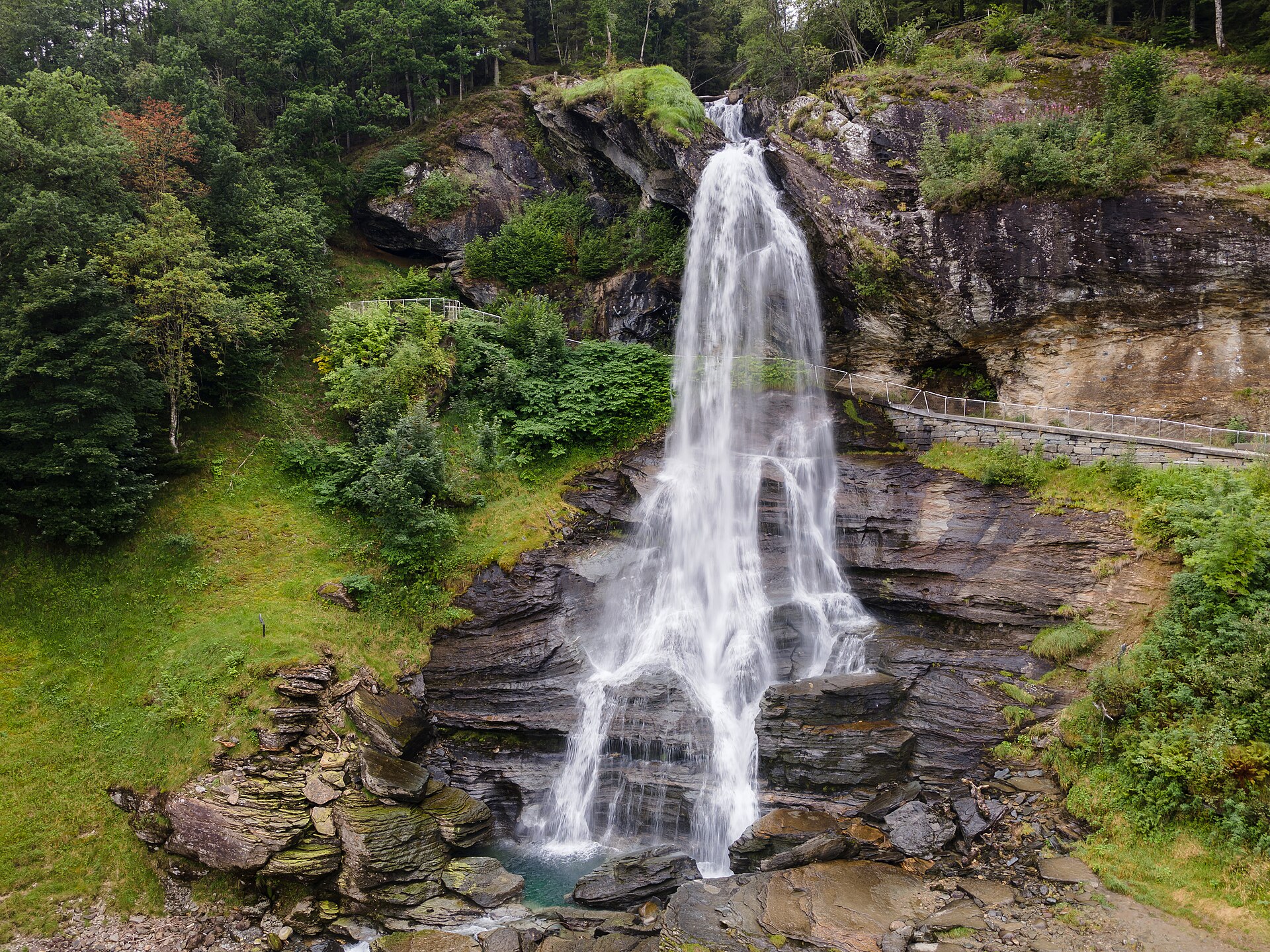
Only 46 metres, with a main drop of about 20 — many sites say 50, which is wrong — but you walk behind it on a maintained path, and that changes everything. It formed in 1699 when the river cut a new course, so it’s younger than most of the buildings in Bergen. Free parking, around 300,000 visitors a year, and Kaiser Wilhelm II came almost every summer between 1889 and 1914.
Låtefossen
A 165-metre twin cascade on Rv13 about 25 km from Odda, landing beside a six-arch stone bridge and soaking your windscreen as you pass. The two streams converge under the bridge, which is the bit that makes the photographs work. No fee, no car park attendant, and in high flow you will get wet standing anywhere near it.
Vettisfossen
The connoisseur’s choice. A 275-metre unbroken vertical drop in Utladalen, protected from development since 1924, and reached by a walk of about an hour and a half from Hjelle up a beautiful valley. Because it takes effort, you may well have it to yourself — which is not a sentence you can write about anything else on this list.
Mardalsfossen
Worth its own trip if your dates work: 655 metres total with a 297-metre free fall, in Eikesdalen. Water runs 20 June to 20 August only. Outside that window there is essentially nothing to see. It’s a short walk from the road.
Tvindefossen and Feigumfossen
Tvindefossen, about 10 km from Voss, is the easy one — big car park, kiosk, campsite, water fanning down a broad rock face. Height claims vary wildly between 100 and 152 metres; the best-sourced figure is around 116.
Feigumfossen on the Lustrafjord is usually described as a 218-metre single leap, though at least one detailed topographic analysis argues it’s closer to 190 and that the commonly quoted 229 metres is an overestimate. Free fjordside parking about 16 km from Skjolden, then a walk up.
When Norwegian waterfalls run hardest
Waterfall season in Norway is a snowmelt story, and it moves up the mountain as summer progresses.
| Month | What’s happening | Best for |
|---|---|---|
| April–May | Low-altitude melt begins; lowland falls surge | Steinsdalsfossen, Låtefossen, Tvindefossen |
| June | Peak. High and low catchments both running | Everything, including Vøringsfossen |
| July | High-altitude and glacier-fed falls at their best | Vinnufossen, Ramnefjellsfossen, Vettisfossen |
| August | Smaller falls thinning; glacier-fed still strong | Mardalsfossen until the 20th |
| Sept–Oct | Autumn rain gives a second, shorter surge | Coastal falls in Hordaland |
| Nov–Apr | Many roads closed; some falls freeze | Ice climbing, not sightseeing |
The rule of thumb: late May and June for the lowland classics, July for anything glacier-fed. A snowy winter followed by a warm June is the jackpot; a dry August is when visitors come away underwhelmed and blame the guidebook.
Getting there, and what it costs
Almost every waterfall in this guide is free to look at. What you pay for is the road.
Vøringsfossen, Steinsdalsfossen, Låtefossen, Tvindefossen, Langfossen and Feigumfossen all have free parking. Kjosfossen is a scheduled stop on the Flåm Railway — 20 km, 20 tunnels, climbing to 867 metres, with return tickets NOK 620–730 depending on season and ten departures a day from 1 May to 30 September 2026. The Seven Sisters need a boat, and the car ferry is the cheap way.
Two access notes for 2026. Trollstigen, and therefore Stigfossen, reopened on 27 April 2026 after two seasons closed for rockfall securing — the earliest opening on record. And the high scenic roads that reach several of the best falls open late: Gamle Strynefjellsvegen from around 15 June, Aurlandsfjellet from 1 June. The transport guide covers the road network, and the itinerary guide has routes that string these together.
A waterfall route that works
You can see six of Norway’s best in three days without rushing, on the Oslo–Bergen axis.
- Day 1: Oslo to Geilo, over Hardangervidda. Vøringsfossen and its footbridge in the afternoon.
- Day 2: Down to Odda for Låtefossen, then north along the Hardangerfjord to Steinsdalsfossen at Norheimsund, where you walk behind the water.
- Day 3: Voss for Tvindefossen, then Flåm — take the railway up for Kjosfossen and the huldra, and the electric boat back through the Nærøyfjord.
Add a day and you can push north for Vinnufossen and the Trollstigen falls. Add three and you’re into Mardalsfossen territory — but only between 20 June and 20 August.
Safety, briefly but seriously
Norwegian waterfalls have very few barriers, and the rock beside them is wet, polished and often covered in a film of algae. People fall in every year. Stay on the built paths at Vøringsfossen — the drop is 182 metres and the edges are unfenced beyond the secured sections. Don’t wade above a lip. And in spring, be aware that meltwater levels can rise noticeably within a single warm afternoon.
Frequently asked questions
What is the tallest waterfall in Norway?
Vinnufossen, at 845 metres of total drop across three tiers, is the tallest overall. Mongefossen at 773 metres is often listed as the tallest single drop, but it has been dry since 1977. The tallest unregulated free fall that actually flows is Vettisfossen at 275 metres.
What is the biggest waterfall in Norway by volume?
By sheer water volume the honours go to regulated rivers rather than the famous scenic falls — which is precisely why several of the tallest look thin. Sarpefossen near Sarpsborg carries by far the greatest flow, though it’s an industrial setting rather than a scenic one.
What’s the best time of year to see Norway’s waterfalls?
Late May and June for the lowland classics, when snowmelt peaks. July for anything fed by a glacier. August is when smaller falls thin out and visitors are most often disappointed.
Can you walk behind a waterfall in Norway?
Yes — Steinsdalsfossen at Norheimsund has a maintained path that takes you right behind the curtain of water. It’s free and takes about twenty minutes.
Why do some Norwegian waterfalls have no water?
Hydropower. Several famous falls are diverted or regulated. Mongefossen has been dry since 1977; Mardalsfossen only runs from 20 June to 20 August, when water is deliberately released; Kjosfossen is partly dammed for the Flåm Railway’s own power station.
Can you see Norway’s waterfalls without a car?
Some. Kjosfossen is a stop on the Flåm Railway, the Seven Sisters are visible from the public Geiranger–Hellesylt ferry, and Tvindefossen is on a bus route from Voss. Vøringsfossen, Låtefossen, Vettisfossen and Mardalsfossen realistically need a car.
Is Vøringsfossen worth the detour?
Yes, and it’s barely a detour — it sits on the main road between Oslo and Bergen. Free parking, an hour of your time, and a footbridge that puts you directly over a 182-metre drop.
How many of the world’s tallest waterfalls are in Norway?
Roughly ten of the top thirty, depending on the ranking methodology used. That concentration, rather than any single record, is what makes the country remarkable for waterfalls.
Photo credits
All photographs are used under their respective Creative Commons or public-domain licences.
- Steinsdalsfossen. Only 46 metres, but you walk behind it — Photo: Jules Verne Times Two / CC BY-SA 4.0 via Wikimedia Commons.
- Langfossen, 612 metres into the Åkrafjord. Completely unregulated — Photo: Frokor / CC BY-SA 4.0 via Wikimedia Commons.
- Vøringsfossen, 182 metres into Måbødalen. Free parking, and a footbridge directly over the lip. — Photo: rheins / CC BY 3.0 via Wikimedia Commons.
Heights, release dates and access details were checked in July 2026. Waterfall heights in Norway are genuinely disputed between sources — where figures conflict I’ve said so rather than picking one. Confirm road status before travelling; mountain routes open and close with the snow.