Svalbard’s rules have changed, and they matter as much as the snowmobiles and polar bears: a NOK 150 environmental fee added to every ticket, the 300-metre and 500-metre distances you now have to keep from bears, camping permits, and approved guides that are due to become compulsory for tourist activities.
This guide to Svalbard is built the other way round. It starts with what each season actually lets you do, then the rules as the Governor of Svalbard publishes them, then flights, real 2027 tour prices from an operator’s own pages, museums, places to stay and a frank section on what to skip. Longyearbyen is where almost every visitor bases themselves, so that’s where it’s centred.
A quick orientation. Svalbard is a Norwegian archipelago far out in the Arctic Ocean; Longyearbyen, its main settlement, sits at about 78° north, which puts it much closer to the North Pole than to Oslo. It’s governed by Norway but sits outside the Schengen area, which is why there’s a passport check on the way in.
Svalbard season by season, at a glance
Svalbard’s year is defined by light more than by temperature, and the season you choose decides almost everything about the trip. Visit Svalbard, the official destination company, gives the dark season as 26 October to 16 February and the darkest stretch, when even the midday twilight fades, as 14 November to 29 January. At the other end of the year, the sun doesn’t set for about four months.
| Season | Roughly when | The light | What it’s good for | Watch out for |
|---|---|---|---|---|
| Polar night | Mid-November to late January | No sun; darkest period 14 Nov to 29 Jan | Northern lights even around midday, snowmobile and dog trips under the stars, the strangeness of it | Fewer departures; the North Pole Expedition Museum is closed until 1 February |
| Returning light | Late January to early March | Blue twilight growing daily; sun back over the horizon from mid-February | Snowmobile trips in pastel light, the Solfestuka sun festival | The cold: March is on average the coldest month |
| Light winter | March to May | Long days, then no night at all from late April | Long snowmobile expeditions, including to the east coast; March and April are the busiest winter months | Sea-ice traffic bans on selected fjords after 1 March; bears’ 500 m rule from 1 March |
| Midnight sun | About 20 April to 22 August | Sun above the horizon round the clock | Boat trips, glacier kayaking, hiking with a guide, birds and walrus | No wildlife guarantee; operators say so themselves |
| Autumn | September to October | Fast-shrinking days, first aurora nights | Quieter boats, first northern lights, low Arctic autumn light | Wildlife thins out as species migrate south |
On the midnight sun, the sources disagree by a day or so: Visit Svalbard’s own pages give 19 or 20 April to 23 August, and Hurtigruten gives 20 April to 22 August. Either way, it’s about four months without a sunset. The sun’s return to the town itself is later than the calendar suggests, because the mountains around Longyearbyen keep direct sunlight off most of town until around 8 March, which is why the town celebrates the sun’s return around that date.
The rules: what changed in 2025, and what is coming next
This is the section to read even if you skip the rest. On 1 January 2025 a new set of environmental rules took effect across Svalbard, and on 1 January 2026 new field-safety regulations followed. The Governor of Svalbard (Sysselmesteren) publishes both, and most of what follows comes straight from its pages.
Polar bears
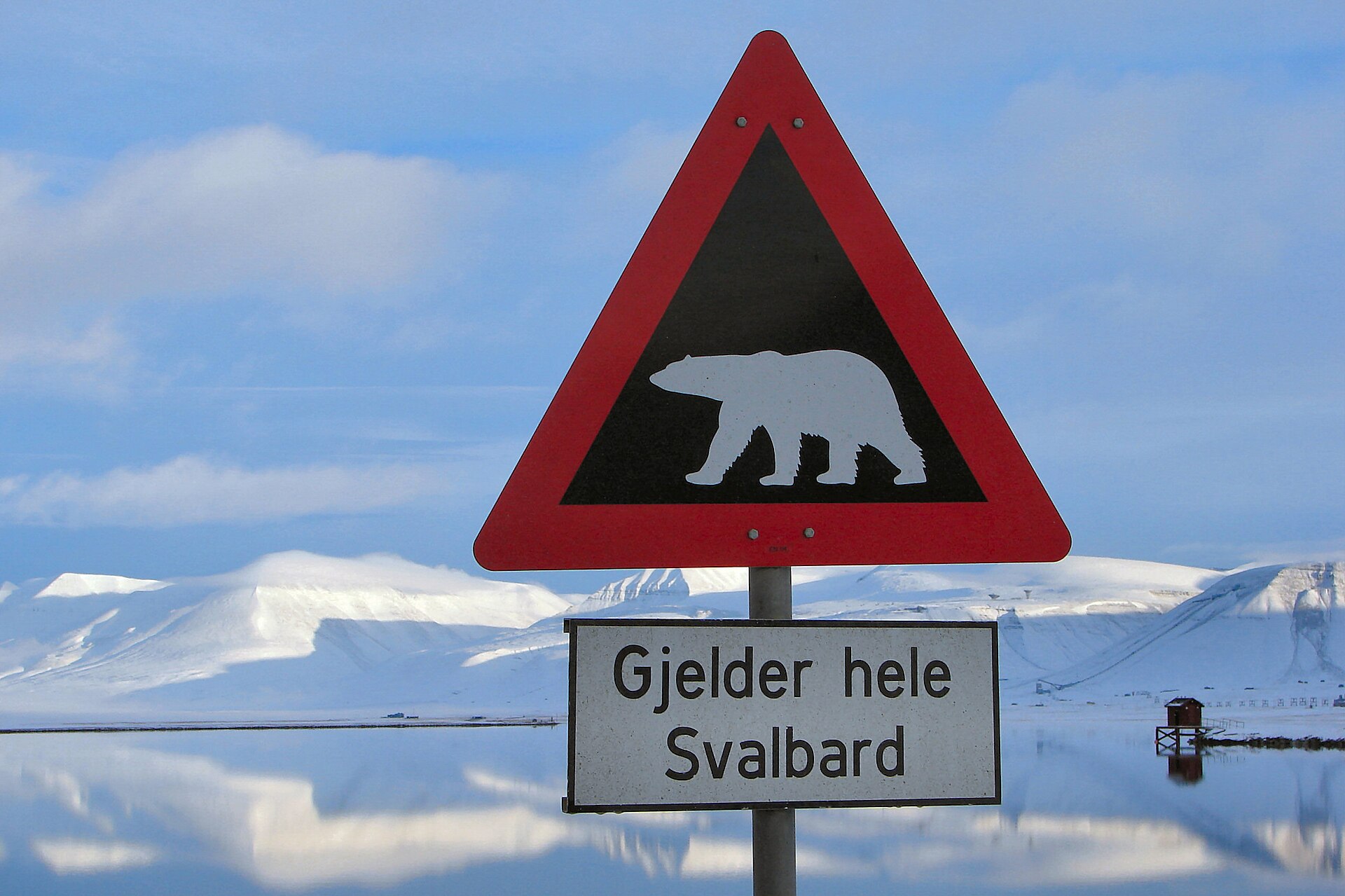
- Distance. You must keep at least 300 metres from a polar bear, and at least 500 metres from 1 March to 30 June. If you find a bear at close range you’re obliged to retreat (that duty doesn’t apply inside settlements, cabins or tents). Disturbing, attracting or pursuing bears is banned outright.
- Leaving town. Anyone outside the settlements must have the knowledge and the deterrents to deal with a bear encounter, and Visit Svalbard’s advice is to go with a professional guide who carries scare devices and a firearm. People on organised tours are covered by the operator. Inside the polar bear warning signs around Longyearbyen you don’t need a guide; Visit Svalbard says the walk around town is about 8 kilometres.
- Approved guides are coming. For now, a guide is strongly recommended. The Governor says approved Svalbard guides will be required for tourist and field activities, but the start date has been postponed, so check the Governor of Svalbard’s guide-approval page for the current date. If you’re planning a trip in 2027 or later, build it around guided trips from the start.
- No bear safaris. Visit Svalbard is clear that there’s no such thing as a polar bear safari, and operators are open that they keep their distance. Better Moments, for example, tells customers it keeps 500 metres from bears at all times.
Camping, drones, boats and snowmobiles
- Camping: all camping, including commercial tourist camps, now needs a permit from the Governor. For individual travellers the requirement applies when camping in the same place for a week or more. Applications have to be in at least four weeks before the trip, and permitted camps must have a polar bear alarm and an organised bear watch whenever people are in camp.
- Drones: banned in protected areas, banned within 500 metres of bird cliffs from 1 April to 31 August, and, according to Visit Svalbard, banned within 5 kilometres of the airport.
- Boats: stay at least 150 metres from walrus haul-outs and slow to 5 knots within 300 metres of them; the same 5-knot limit applies within 500 metres of mapped bird cliffs from 1 April to 31 August. Boats calling in the national parks may carry no more than 200 passengers, and breaking fast ice is banned.
- Snowmobiles: motor traffic on sea ice is banned after 1 March on selected fjords, with different maps for residents and visitors. Better Moments says a valid physical driving licence is required to drive a snowmobile in Svalbard; digital or app licences and photos aren’t accepted, and it gives no refund if yours isn’t valid.
- Going it alone: Visit Svalbard says that if you plan to travel independently outside Management Area 10, the area around Longyearbyen and Isfjorden, you must apply to the Governor for permission and take out search-and-rescue insurance through the Governor. Standard travel insurance normally doesn’t cover search and rescue; organised tour operators include it in their prices.
- Old things: every trace of human activity from before 1946 is automatically protected, with a 100-metre safety zone where you can’t light a fire. That rusting hut or the whale bones on the beach are not souvenirs.
The environmental fee
Every visitor pays a NOK 150 ($15) environmental fee into the Svalbard Environmental Protection Fund. It’s added automatically to your airline or cruise ticket, so you won’t see a separate bill; only private boats pay it themselves.
Getting to Svalbard
Flights
You fly to Longyearbyen from Oslo or Tromsø, and nowhere else. Visit Svalbard says both SAS and Norwegian fly the route, taking about three hours from Oslo and about an hour and a half from Tromsø. Norwegian normally flies weekly from Oslo all year, with more flights from March to August. SAS normally has several flights a week all year, some direct and some via Tromsø, rising to several a day in the March to August peak.
That Tromsø stop matters. Because Svalbard is outside Schengen, everyone goes through an identity check on the way in and out, Norwegians included. On flights that call at Tromsø you get off with your hand luggage, clear passport control and go back through security before continuing. Bring a passport or national ID card. If you need a visa for Norway, you need a Schengen visa valid for two entries, since leaving for Svalbard counts as leaving the area.
Two practical points about arrival. The airport shuttle meets every flight and stops at every hotel and guesthouse in town; Visit Svalbard lists the fare as NOK 110 ($11) one way for adults, NOK 75 for students and NOK 45 for children. And there are no banks, no ATMs and nowhere to change money in Longyearbyen, so plan on paying by card.
By sea
The other way in is by ship. Hurtigruten’s Svalbard Line is a 15-day round trip from Bergen to Longyearbyen and back, sailing between May and September; on its US site the lowest advertised fare was from US$5,393 per person, for a July 2027 departure. Expedition cruises also sail around the archipelago in summer, and our guide to Norway’s cruises and coastal voyages explains how the ships and the price brackets differ. If you’re comparing ships, remember the 200-passenger limit for boats calling in the national parks.
What to do in Svalbard, with real prices
Prices here are high, but they’re not mysterious. Better Moments, one of the Longyearbyen operators, publishes its 2027 prices on its own site, and they’re a useful benchmark for what a guided day costs:
| Trip | When (2027) | Length | Price |
|---|---|---|---|
| Catching the Light: snowmobile under the polar-night sky, looking for the aurora | Daily, 11 to 24 January, pick-up 10:00 | 4 hours | Driver from NOK 2,600 ($268); passenger from NOK 2,200 ($227) |
| When the Light Returns: snowmobile trip in the returning twilight | Daily, 25 January to 7 February, pick-up 10:00 | 4 hours | Driver from NOK 2,600; passenger from NOK 2,200 |
| Ursus Maritimus, East Coast Extreme: snowmobile expedition of about 200 km | Sundays, 21 March to 23 May, pick-up 08:00 | 12 hours | Driver from NOK 5,200 ($537); passenger from NOK 4,400 ($454) |
| Catch of the Day: boat trip with wildlife and a glacier front | Daily, 1 May to 30 September | 5 hours | From NOK 3,300 ($341); children under 12 NOK 2,500 |
| Icebreaker: kayaking along glacier fronts | Mon, Wed, Fri and Sat, 2 June to 31 August | 7 hours | From NOK 4,000 ($413) |
Snowmobile trips have a minimum age of 12, and Better Moments sells optional snowmobile insurance for NOK 200, which covers damage up to NOK 6,000. Its summer boat trip leaves at 18:00 from May to August and at 10:00 in September.
Look at the January dates and pick-up time again, because they capture Svalbard in one detail: in mid-January the aurora snowmobile trip collects you at ten in the morning. In the polar night it’s dark enough at midday to look for the northern lights.
Snowmobiles
This is the classic Svalbard activity, and for good reason: it’s the usual way to cover real distance in winter. Short trips from town give you the valleys and the polar-night sky; the long spring expeditions, like the 12-hour east-coast run, take you somewhere that feels genuinely remote. My view: if you can come between March and May, do one long trip rather than two short ones. The extra distance is the whole point. Bring that physical licence.
Dog sledding
Visit Svalbard’s activity listings include dog-sledding trips from Basecamp Explorer Spitsbergen, Arctic Husky Travellers, Green Dog Svalbard, Svalbard Husky and Svalbard Villmarkssenter. Basecamp Explorer says it has 90 huskies, and on its summer trips on wheels guests drive their own team. In summer several kennels switch to husky-pulled wagons and carts on the tundra of Adventdalen. Prices vary by operator and season, so compare them on each kennel’s own booking page; if you’ve sledded in Tromsø, our Tromsø dog-sledding comparison gives you a feel for what different formats include.
Boats, glaciers and the Russian settlements
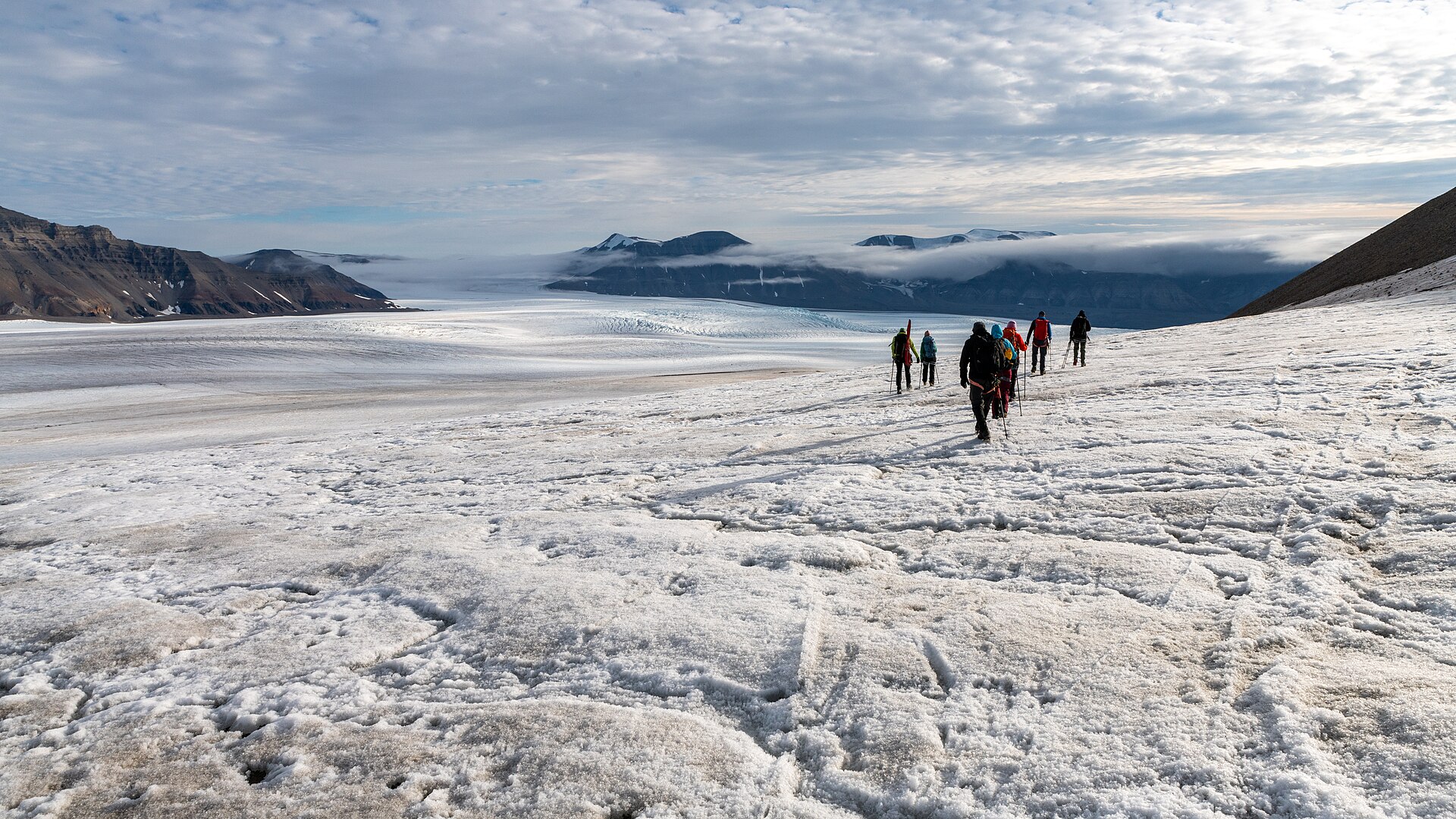
From May to September the boats take over, and they’re the best way to see the scale of the place: glacier fronts calving into the fjords, walrus hauled out on the beaches, bird cliffs. The Nordenskiöld Glacier at the head of Billefjorden is the classic summer destination.
Many older guides sell Barentsburg and Pyramiden, the Russian mining settlements, as easy day trips. That’s out of date. Visit Svalbard says it has removed every tour connected to Russian state-owned companies, including Trust Arktikugol, from its platforms, so ordinary tours to either settlement aren’t listed there. Some boat and snowmobile trips pass close enough to see them from a distance, and that’s about it. If an operator does offer a landing, ask exactly what it includes before you book.
Two other ways out of town in season: the Isfjord Ekspressen boat runs daily from June to mid-September, according to Visit Svalbard, and Isfjord Radio, a former radio station on the coast that’s now a hotel, opens to guests from roughly mid-February to late September.
Museums and the town
- Svalbard Museum: open daily 10:00 to 17:00, with shorter hours and closures over Christmas and New Year (closed 24 to 26 December and 31 December to 2 January this winter). Adults NOK 160 ($17), students NOK 110, children free; a guided tour with admission, Monday to Friday at 10:30, is NOK 400. This is the one to do on your first day, because it explains everything you’ll see afterwards.
- North Pole Expedition Museum: open daily 09:00 to 17:00 from 1 February to 30 September and closed from 1 October to 31 January, so it’s shut through the polar night. Adults NOK 150, children over 12 NOK 75.
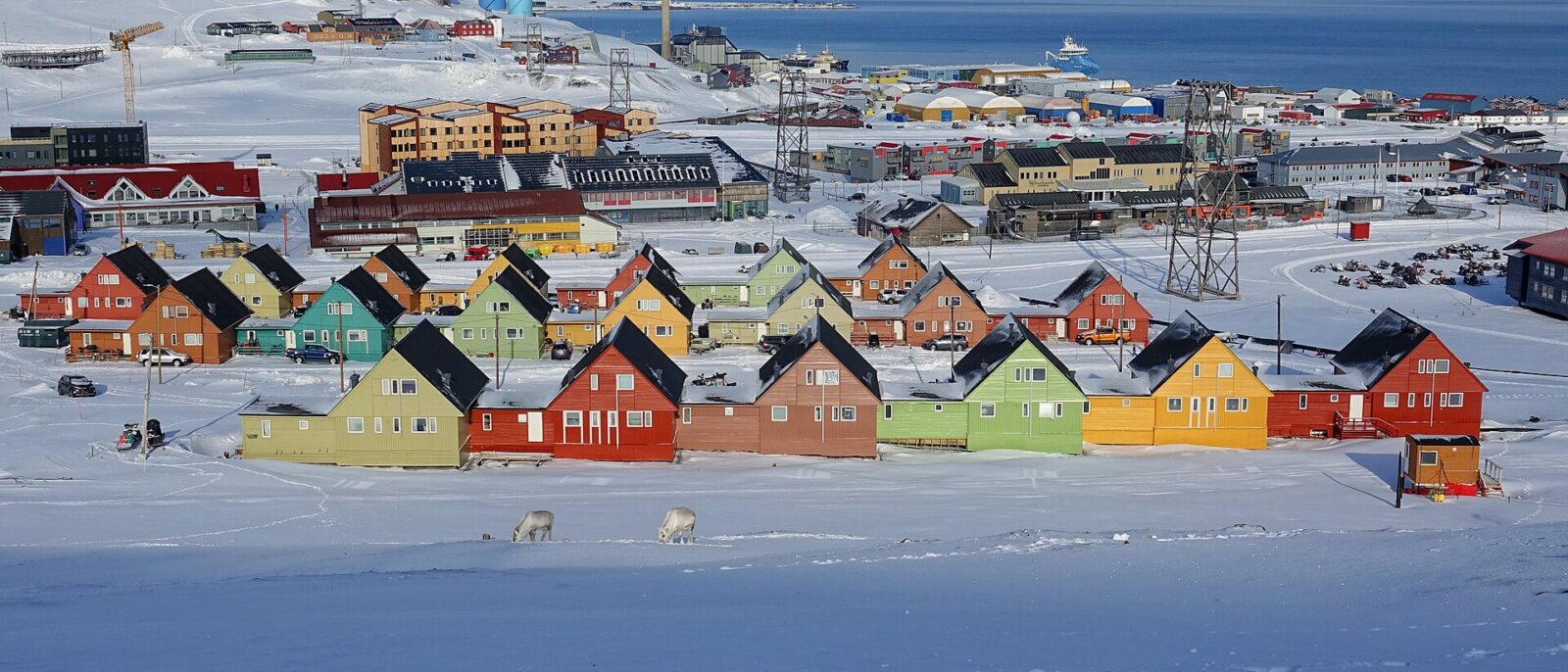
- The town walk: inside the polar bear warning signs you can walk freely. Visit Svalbard points out that Svalbard reindeer are a common sight between the houses and along the streets, and if you’re lucky an Arctic fox turns up too. Take the camera even on a short walk.
The Global Seed Vault
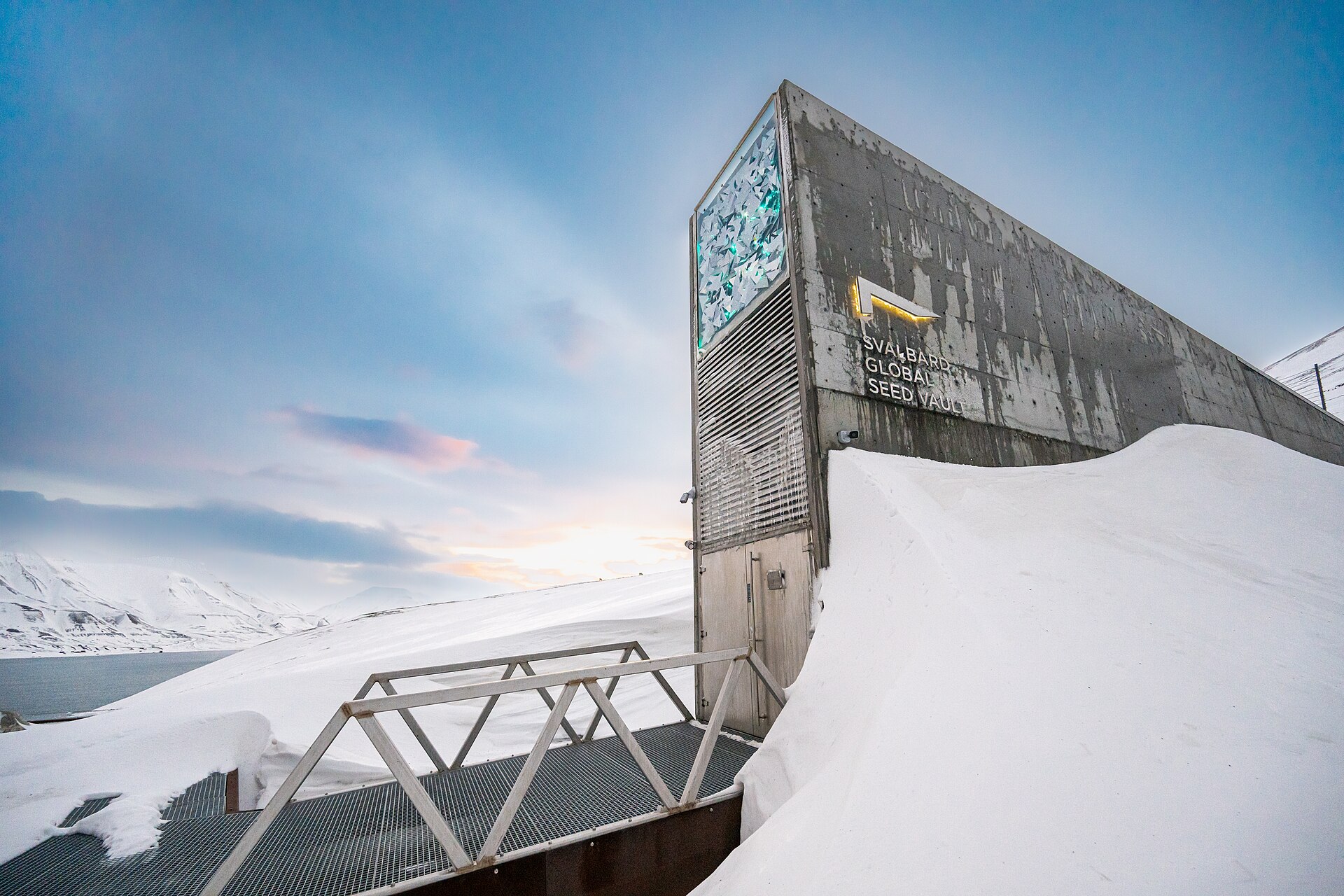
You can’t go in. The vault isn’t open to visitors, and guided tours stop outside the entrance, so what you get is the entrance building set into the mountainside. It’s worth a photo stop if a tour passes it, and not worth a trip of its own.
When to go: the numbers behind the seasons
Two sets of numbers help more than any amount of adjectives. The first is the climate. At Svalbard Airport, the Norwegian Meteorological Institute’s 1991–2020 normals give a daily mean of −10.9 °C in January, −11.6 °C in February and −12.0 °C in March, making March the coldest month on average, against 7.0 °C in July.
The second is who else is there. Statistics Norway’s figures for guest nights in the Longyearbyen planning area in 2025 show how the year actually fills up:
| Month (2025) | Guest nights | What it means for you |
|---|---|---|
| January | 10,855 | Polar night; quiet |
| February | 18,293 | The light returns and the visitors with it |
| March | 21,219 | Peak winter season, with the cold at its deepest |
| April | 19,436 | Snowmobile season in long daylight |
| May | 16,657 | Late snow; boats start |
| June | 17,458 | Midnight sun, boat season |
| July | 21,591 | The busiest month |
| August | 20,385 | Still busy |
| September | 13,233 | Shoulder season |
| October | 10,935 | Dark season begins |
| November | 9,452 | Polar night |
| December | 9,284 | The quietest month |
So March is almost as busy as July, despite the cold, because that’s when the snow, the light and the long snowmobile trips all line up. If you want that season, book flights and beds early. If you want Svalbard with fewer people, November and December have well under half of July’s guest nights, but you’re trading company for darkness and a shorter menu of trips.
My pick for a first visit is late March or April: proper winter, long days, the big snowmobile expeditions, and the best odds of everything running. The polar night is the right choice only if the darkness itself is what you’ve come for. If it is, our guide to what polar night is like in Norway explains what the light really does, and the best time for the northern lights covers the aurora side on the mainland.
Where to stay in Longyearbyen
Longyearbyen has a handful of hotels, a few guesthouses and a campsite, and that’s the whole market, so in March and July it fills up. These are the places listed by Visit Svalbard:
- Hotels: Radisson Blu Polar Hotel Spitsbergen, Funken Lodge, Svalbard Hotell’s two hotels Polfareren and The Vault, Basecamp Hotel, and Mary-Ann’s Polarrigg.
- Apartments: Svalbard Hotell Lodge.
- Guesthouses: Coal Miners’ Cabins, Gjestehuset 102 and Haugen Pensjonat, the budget end of town.
- Camping: Longyearbyen Camping; check its season before you plan around it.
- Out of town: Isfjord Radio Adventure Hotel on the coast, open roughly mid-February to late September, and wilderness cabins and lodges sold as packages.
Rates move a lot with the season, so compare them on the properties’ own sites for your dates. Two tips: the airport shuttle stops at every hotel and guesthouse, so you don’t need to be central; and shoes come off indoors in many Longyearbyen buildings, a local custom Visit Svalbard asks visitors to respect.
Getting around town, and where to eat
Longyearbyen is small. Visit Svalbard says virtually everything within the town limits is a 20 to 30 minute walk away, all year, and in summer you can borrow a town bike for free from the tourist information office. Apart from the airport shuttle there’s no ordinary public transport anywhere in Svalbard. If you need a car, Longyearbyen Taxi and Svalbard Buss og Taxi run taxis, and Arctic Autorent and Svalbard Auto rent cars.
For a place this size, the eating is surprisingly good. Visit Svalbard’s restaurant list runs from Huset’s restaurant and bistro to Gruvelageret, Polfareren, Restaurant Nansen, Kroa, Vinterhagen and Stationen, with Funken Bar and Det gamle Nordpolet for a drink. Book ahead for dinner in March and July, the two busiest months, when the hotels fill and the same few restaurants serve everyone.
On money: the currency is the Norwegian krone, almost every business takes cards and prefers them, and there’s nowhere in Svalbard to withdraw cash. If you really want some, take it out on the mainland before you fly. Svalbard is part of Norway but outside the Schengen area and the European Economic Area; it was exempted from the EEA agreement in 1992.
What a Svalbard trip costs
The fixed costs are small and predictable: the NOK 150 environmental fee (already in your ticket) and NOK 110 each way for the airport shuttle. Purchases in Svalbard are VAT-free, which takes the edge off shop prices, but there’s no getting round the cost of guided trips, and you’ll want at least two.
| Example | What it includes | Per person |
|---|---|---|
| Four days in mid-January | Airport shuttle both ways, Svalbard Museum, one aurora snowmobile trip as driver | NOK 2,980 ($308) |
| A spring long weekend | Shuttle both ways, museum, the 12-hour east-coast snowmobile expedition as driver | NOK 5,580 ($576) |
| A summer week | Shuttle both ways, museum, Catch of the Day boat trip, glacier kayaking | NOK 7,680 ($793) |
Those totals cover the activities, transfers and the museum only. Add flights, which vary hugely by date and are the biggest single cost, plus beds and food. Alcohol is sold at Nordpolet, the local off-licence, where you need valid ID and your boarding pass and purchases are limited by a monthly quota. And since there are no ATMs, banks or currency exchange in town, bring a card that works abroad. For how this compares with the mainland, see our Norway travel cost guide.
What I’d skip, and what people get wrong
- Coming to see a polar bear. Bears are why every trip leaves town armed, not what the trips are for. Guides keep 300 to 500 metres away by law and some keep 500 metres all year. If you see one, it’ll be at a distance. Come for the landscape and the light, and treat a bear as a bonus.
- Renting a rifle to wander off alone. It’s legal: Longyear78 and Sportscenteret rent firearms, and visitors without a Norwegian permit or a European Firearms Pass apply to the Governor for a borrowing permit. But you also take on the distance rules, the retreat duty and, beyond Management Area 10, the permit and search-and-rescue insurance requirements, and approved guides are due to be required for tourist activities in future anyway. For a first-time visitor, this is not the way to see Svalbard.
- A special trip to the Seed Vault. You can’t go inside. A photo from a passing tour is plenty.
- Booking a day trip to Barentsburg or Pyramiden. Visit Svalbard no longer lists tours there.
- The “you can’t die in Svalbard” story. It’s a myth. What’s true, according to Visit Svalbard, is that coffin burials aren’t allowed; residents can have an urn burial.
- Coming in November or December by accident. These are the quietest months for good reasons. They’re wonderful if you want the polar night and the daytime aurora; they’re the wrong choice if you want long snowmobile days. The North Pole Expedition Museum is also closed until February.
- Arriving with a digital driving licence only. No physical licence, no snowmobile, and no refund either.
- Assuming your travel insurance covers rescue. Standard policies normally don’t cover search and rescue, and not all of them cover Svalbard at all. Check yours before you go; booked tours include it.
How many days you need
Three full days is the minimum that makes the flights worthwhile: one for the museum and the town, two for guided trips, with a little slack for weather. Five days is better, especially from March to May, when a long snowmobile expedition takes a whole day and you’ll want a recovery day after it. In summer, five days lets you do a boat trip, a glacier kayak and a guided hike without rushing. Remember that weather can delay flights and cancel trips, so don’t schedule your one essential tour for the morning you leave.
If you’re combining Svalbard with the mainland, Tromsø is the natural partner: some of SAS’s flights route through it, and a few days there before or after give you a second shot at the aurora with far more to do in the evenings. Our Tromsø in winter guide covers that end, and our Tromsø and Arctic Norway hub has the wider far north, including the road to the North Cape. For everything you need to know about documents and money on the mainland, see our Norway travel tips.
Two four-day plans
These use Better Moments’ 2027 dates as the backbone because they’re published; other operators run similar trips on their own schedules.
Late March or April, the winter classic.
- Day 1: fly in, take the shuttle, spend the afternoon at the Svalbard Museum (open daily, 10:00 to 17:00), then walk the town inside the polar bear signs.
- Day 2: the long snowmobile day. Better Moments’ 12-hour East Coast Extreme runs on Sundays from 21 March to 23 May, so build the trip around a Sunday. Bring your physical driving licence.
- Day 3: dog sledding with one of the kennels in Bolterdalen or Adventdalen, and the North Pole Expedition Museum, which reopens on 1 February.
- Day 4: keep it free. If day 2 was cancelled for weather, this is when it happens; if not, it’s a slow morning and the flight home.
July, the summer version.
- Day 1: arrive, museum, town walk, and if you have the energy, the Catch of the Day boat trip, which collects you at 18:00 from May to August and runs about five hours under the midnight sun.
- Day 2: glacier kayaking (Mondays, Wednesdays, Fridays and Saturdays from 2 June to 31 August; seven hours, average fitness needed).
- Day 3: a guided hike above town, or the Isfjord Ekspressen boat, which runs daily from June to mid-September.
- Day 4: borrow a town bike, see the Seed Vault entrance from the outside if you’re curious, and fly out.
For the polar night, swap the snowmobile expedition for the four-hour Catching the Light trip (daily from 11 to 24 January, 10:00 pick-up) and a dog-sledding trip under the stars, and add a spare evening for the aurora. If it’s the light you’re chasing in summer, our guide to the midnight sun across Norway has the mainland dates for comparison.
Frequently asked questions
Do you need a passport to visit Svalbard?
You need a passport or a national ID card, because Svalbard is outside the Schengen area and everyone goes through an identity check, Norwegians included. Svalbard itself doesn’t require a visa, but if you need a visa for Norway you’ll need a Schengen visa valid for two entries, since you leave and re-enter Schengen on the way.
Can you see polar bears in Svalbard?
Possibly, but you shouldn’t plan on it. Visit Svalbard estimates about 300 bears live on Svalbard year-round, the law requires you to stay at least 300 metres away (500 metres from 1 March to 30 June), and there are no polar bear safaris. Any sighting will be at a distance.
What is the best time to visit Svalbard?
Late March to April for winter activities in long daylight, June to August for boats, glaciers and the midnight sun, and mid-November to January only if you specifically want the polar night. March and July were the busiest months in 2025, according to Statistics Norway.
How many days do you need in Svalbard?
Three full days at a minimum, five if you can. That gives you the museum and town, two or three guided trips and a buffer for weather, which can cancel both tours and flights.
Is Svalbard expensive?
Yes, mainly because of flights and guided trips. Better Moments’ 2027 prices run from NOK 2,200 for a snowmobile passenger on a four-hour trip to NOK 5,200 for a driver on its 12-hour east-coast expedition, and a summer boat trip starts at NOK 3,300. Shopping is VAT-free, which helps a little.
Can you visit Barentsburg?
Not on an ordinary tour from Longyearbyen: Visit Svalbard no longer lists them, because it has cut ties with the Russian state-owned companies in Svalbard. Some boat and snowmobile trips let you see Barentsburg and Pyramiden from a distance.
Can you leave Longyearbyen without a guide?
Inside the polar bear warning signs, yes. Beyond them you’re legally responsible for having the knowledge and equipment to deal with a polar bear, independent travel outside Management Area 10 needs the Governor’s permission and search-and-rescue insurance, and approved guides are due to become compulsory for tourist activities. In practice, go guided.
Is it illegal to die in Svalbard?
No, that’s a myth. Visit Svalbard explains that coffin burials aren’t allowed, and residents can have an urn burial instead.
Photo credits
- Longyearbyen in winter. Everything in town is within a 20 to 30 minute walk, and the reindeer wander between the houses. — Photo: Bjørn Christian Tørrissen / CC BY-SA 4.0 via Wikimedia Commons.
- The sign says it applies to all of Svalbard. Beyond the town’s signs you need a guide, or the knowledge and equipment to deal with a bear. — Photo: Bjørn Christian Tørrissen / CC BY-SA 3.0 via Wikimedia Commons.
- The Global Seed Vault entrance. Visitors can’t go inside; tours stop out here. — Photo: Michael Major for Crop Trust / CC BY-SA 2.0 via Wikimedia Commons.
- Walkers on the Nordenskiöld Glacier in August, at the head of Billefjorden. — Photo: Christoph Strässler / CC BY-SA 2.0 via Wikimedia Commons.
Prices, rules and timetables were checked in November 2026 against the Governor of Svalbard, Visit Svalbard, Statistics Norway and the operators’ own pages, and converted at NOK 9.69 to the US dollar (Norges Bank, 19 November 2026). Svalbard’s rules changed in 2025 and are due to change again when the approved-guide requirement starts, and tour prices are set season by season, so check them for your dates.