The five guides ranking for Oslo in winter run to about 16,000 words between them. They all tell you it is cold and dark. Not one gives you the price of a lift pass at Tryvann, the cost of hiring skates at the Spikersuppa rink, or a table of how much daylight you actually get in each winter month.
That last one is the important omission, because the difference between December and March in Oslo is not a matter of degree. It is roughly six hours of daylight against twelve. Same city, same prices, twice the day.
So here is the winter version: the light, the temperatures, what is open, what costs what, and the honest answer to whether you should come at all in January.
The light, month by month
This is the table nobody publishes and it should be the first thing in every winter guide.
| Month | Approx. daylight | What that means in practice |
|---|---|---|
| December | ~6 hr at the solstice | Light roughly 09:20–15:20. One outdoor thing and one indoor thing, and that is your day. |
| January | 6–8 hr | Coldest month. Light returns noticeably by month’s end. |
| February | 8–10 hr | Still cold, but you get a proper day. Best snow reliability in the city. |
| March | 11–13 hr | Snow in the forest, sun in the city, long days. The month most people should pick. |
Two details that surprise people. The winter solstice on 21 December gives Oslo about 5 hours 53 minutes of daylight — sources vary by a few minutes on the exact figure. But the earliest sunset is on 16 December and the latest sunrise is on 27 December, not on the solstice itself. If you want the darkest, most atmospheric evening, come in mid-December; if you want a lie-in that ends in darkness, late December does it.
And it is never as dark as “six hours of daylight” sounds. Oslo gets long blue twilights at both ends, so the useful outdoor window is more like eight hours in December, just not eight hours of anything you would call bright.
How cold, actually
January averages somewhere between -5°C and -1°C (23–30°F), and January and February are colder than December — which catches out people who assume the darkest month is also the coldest. Norway’s Meteorological Institute figure for average January temperature is about -4°C (24.8°F). One source gives December as a 1°C high against a -4°C low, and January as 0°C against -5°C; that is a single source and the numbers are broadly consistent with the rest, so treat them as indicative.
Snowfall across the winter runs roughly 60–80 cm in total, but here is the thing every guide gets wrong by omission: central Oslo is frequently snow-free while the forest above it is not. The city sits at sea level and generates its own heat. Marka, the forest belt starting 20 minutes up the metro, holds snow for months. If you have come for snow and it is grey slush outside your hotel, take line 1 uphill rather than concluding you missed it.
What to wear is duller than the packing lists make out: proper boots with grip, because the pavements ice over and Oslo does not salt heavily; a windproof outer layer; and something for your ears. The temperature is manageable. The wind off the fjord is what gets people.
What winter actually costs
| Activity | Price (2026) | Time | Verdict |
|---|---|---|---|
| Spikersuppa ice rink | Free; skate hire ~200 NOK/day | 1–2 hr | Keep. Central and free. |
| Jul i Vinterland Christmas market | Free entry | 1 hr | Keep, if your dates fit. |
| Korketrekkeren toboggan run | Free to ride; sled hire disputed (see below) | 2–3 hr with transport | Keep. The best winter thing in Oslo. |
| Oslo Winter Park (Tryvann) | ~450 NOK day pass (unconfirmed) | Half day+ | Skip unless you specifically want lift-served skiing. |
| Holmenkollen ski museum + tower | ~185–195 NOK (~$20) | 2–2.5 hr round trip | Worth it in winter, unlike in summer. |
| Cross-country in Nordmarka | Free trails; ~42 NOK metro fare | Half day | Keep. The reason to come in winter. |
| MUNCH | 280 NOK (~$30) | 90 min | Keep. Free some Wednesday evenings. |
| Floating sauna | Varies by operator | 1–2 hr | Optional, and pricier than it looks. |
| Northern lights tour from Oslo | Any price | Any | Skip. See below. |
Outdoors: the part Oslo is genuinely good at
Korketrekkeren — the toboggan run
A 2 km sledding track down the old 1952 Olympic bobsleigh route, from Frognerseteren to Midtstuen. It is free to ride, floodlit in the evenings, and you ride the metro back up to the top with the sled on your lap. Metro line 1 takes about 25 minutes from the centre.
Sled hire prices are genuinely disputed — one source quotes 100–150 NOK for a day, another 50–80 NOK per ride. I could not resolve it, so budget the higher figure and be pleased if it is less. You can hire at Frognerseteren.
Verdict: the single best winter thing in the city, and it costs almost nothing.
Cross-country skiing in Nordmarka
The forest starts where the metro ends. Take line 1 to Frognerseteren or line 3 to Sognsvann and you step off a city train into groomed trails, many of them floodlit into the evening. The trails themselves are free; the only cost is the roughly 42 NOK zone-1 fare.
On trail length, the sources are all over the place: one gives 100 km of groomed and lit trails around the city, another claims 1,600 miles across the wider network. Those cannot both be describing the same thing, and I would not print either as fact. What is not in dispute is that the network is very large and that you can be on it within half an hour of Karl Johans gate.
Hire is the practical problem. Rental outlets near Sognsvann and Frognerseteren exist and are seasonal; I could not find a current published price, so ask your hotel to call ahead rather than turning up hoping.
Oslo Winter Park (Tryvann)
Lift-served downhill skiing inside the city boundary, reachable on the metro. A single adult day ticket is quoted at around 450 NOK with a season pass near 3,000 NOK, but that figure comes from a snow-report aggregator rather than the operator and I would confirm it before travelling. The 2025–26 season was estimated as running late November to mid-April, which is a reasonable guide to 2026–27.
Verdict: perfectly good for an afternoon, and completely pointless as a reason to visit Norway. The vertical is small and the country has far better skiing elsewhere. Come for the cross-country instead.
Saunas and winter bathing
The floating saunas along the harbour front are the newest thing in Oslo’s winter, and the guides that mention them never say what they cost. Operators run from Sørenga, Langkaia and Aker Brygge, mostly on a per-person slot basis, and prices vary enough between them that I will not quote a single figure — but be aware this is not a cheap activity. A private sauna hire runs into four figures in kroner.
The free version: Sørenga Sjøbad, the seawater pool and decking at the end of the Bjørvika waterfront, is open and free year-round. In summer the water sits between 19 and 22°C, and mid-July it can reach 24°C in sheltered corners. In February it does not, which is rather the point for anybody who wants the cold-water plunge without paying for the hot bit first.
Verdict: the sauna is a good evening if you have budgeted for it. The free plunge at Sørenga is the more Norwegian experience and costs nothing.
Getting around in a Norwegian winter
Oslo’s transport does not stop for snow, which is the main practical difference from most European cities. The metro, trams and buses run through it, and metro lines 1 and 3 climb into the forest specifically so that people can ski at the weekend. That is not a tourist service; it is a commuter network that happens to end at a trailhead.
Three things that catch visitors out:
- Pavements ice, roads do not. Oslo grits and ploughs the roads thoroughly and the side streets much less so. More visitors hurt themselves on a hotel forecourt than anywhere else. Boots with real grip, or the strap-on spikes sold in every pharmacy for a couple of hundred kroner.
- The Bygdøy ferry is seasonal. In winter you reach the museum peninsula on bus 30 instead. Guides that route you onto the boat in January are working from a summer visit.
- Driving is unnecessary and expensive. Oslo is compact, parking is costly, and Norwegian winter driving rules require adequate traction with a minimum 3 mm tread depth from 1 November to the first Sunday after Easter. Winter tyres are not literally mandated by name, but you will need them in practice. Do not hire a car for a city visit — see our road trip guide for when a car does make sense.
What winter costs compared with summer
Winter is Oslo’s value season and it is worth seeing the numbers side by side, because the saving is larger than most people assume.
| Line item | January | August |
|---|---|---|
| Average hotel night (aggregate) | ~$168 | ~$237 |
| Museum admission | Identical | Identical |
| Restaurant meal, inexpensive | ~200 NOK | ~200 NOK |
| Public transport | Identical | Identical |
| Crowds at MUNCH and Vigeland | Few | Many |
| Usable daylight | 6–8 hr | 16–17 hr |
Only the room rate moves. Everything else in Oslo costs the same in February as in July, which means the winter discount is real but narrower than the seasonal swing you would see in, say, a Mediterranean city. You are trading ten hours of daylight for roughly a third off your hotel. Whether that is a good trade depends entirely on whether you intend to use the forest. If you do, it is a very good trade; if you plan to walk around looking at buildings, it is not.
For a wider comparison of when to come and what it costs, see the best time to visit Norway and our note on the months to avoid.
Skating at Spikersuppa
The rink in the middle of Karl Johans gate, between the Parliament and the National Theatre. Free to skate, with hire at around 200 NOK a day. It closes for resurfacing between roughly 09:00 and 10:00 daily, which nobody tells you and which is annoying if that is when you turn up.
Jul i Vinterland
Oslo’s main Christmas market occupies the same Spikersuppa strip. Entry is free; the rides and the food are not. It runs roughly from early November to early January, hours vary by day, and it closes on Christmas Eve. Exact 2026–27 dates were not published when I checked, which is normal — they usually appear in October.
Holmenkollen in winter
I tell people to skip Holmenkollen on a summer day trip. In winter it flips: the ski museum and the jump tower cost around 185–195 NOK, and standing at the top of a ski jump in the snow, looking down over a frozen city, is a genuinely different experience from doing it in July haze. Metro line 1, about 25 minutes, then a steep walk.
Indoors, when the light goes
You will have four to six hours of darkness to fill in a city where a beer costs 110 NOK. Plan for it.
MUNCH is open until 21:00 Wednesday to Saturday, which makes it an evening activity rather than a daytime one. Full price is 280 NOK, the 18:00–21:00 evening ticket is 200 NOK, under-18s are free and under-25s pay 100 NOK. Entry is free on the first Wednesday of the month from 18:00 to 21:00 — and unlike the summer, that offer runs in winter, since it is suspended only in July, August and September.
Deichman Bjørvika, the main library, is free, warm, has a rooftop terrace and does not care whether you borrow anything. It is the most underrated indoor space in Oslo and every winter guide skips it.
The Bygdøy museums come into their own when it is dark at four. Fram (around 180 NOK), Kon-Tiki (180 NOK adult, 70 NOK for 6–18s, open every day of the year) and the Norsk Folkemuseum are all indoor and all take an hour or more. Note that the Bygdøy passenger ferry is seasonal — in winter you take bus 30 instead. Our Oslo museums guide has the full price list and the Oslo Pass arithmetic.
Astrup Fearnley closes at 17:00 most days and all day Monday outside July and August, so it does not work as an evening plan. 180 NOK adult, free under 20.
What to skip
Any northern lights tour sold from Oslo. This is the one that costs people real money and real disappointment. Oslo sits at 59°N, well south of the auroral oval, in a city’s worth of light pollution. Aurora visible from Oslo requires an unusually strong geomagnetic storm and happens a handful of times a decade. If the lights are why you are coming, the trip is to Tromsø, not here — see also our guide to aurora chances in southern Norway, which is honest about the odds.
Waiting for the fjord to freeze. It does not, or at least not where you will be. Only sheltered inner sections such as Bunnefjorden ice over in a properly cold winter, and when they do the police actively warn people off the ice. Do not plan a walk on it.
Downhill skiing as your reason for coming. Covered above. Tryvann is a city hill.
The full outdoor sightseeing route. The Opera House roof is partly roped off when iced, Frogner Park in December is 212 bare bronze figures in the dark, and the harbour promenade in a fjord wind is not a pleasant hour. Do a shortened outdoor loop at midday and put the rest indoors.
Assuming December is the coldest month. It is not — January and February are. December is the darkest. If you want cold and snow, come later; if you want Christmas markets and blue light, come in December and accept the six hours.
Which winter month to choose
| Month | Come for | Avoid if |
|---|---|---|
| December | Christmas market, blue-hour light, the darkest atmosphere Oslo offers | You need daylight to enjoy a city |
| January | The cheapest hotel rates of the year, reliable cold, quiet museums | You are photographing the city |
| February | Best snow, half-decent daylight, full winter sports season | You want mild weather |
| March | Snow in the forest, sun in the city, 11–13 hours of light | You want the Christmas atmosphere, which is long gone |
If I had one winter week to spend in Oslo, I would take the first week of March. You get the skiing, you get the light, and hotel rates have not yet started climbing towards Easter. December is the more romantic choice and it costs you half the day.
January is the cheapest month for accommodation by a clear margin — an aggregate puts the average around $168 a night against August’s $237. Where that money goes depends on district; our guide to where to stay in Oslo has the breakdown, and for the broader seasonal picture see Norway in winter and Norway’s weather month by month.
A winter day that works
Built around December’s six hours, so it works in any winter month with room to spare.
- 09:30 Metro line 1 to Frognerseteren. Sled down Korketrekkeren, or walk a forest trail. Two to three hours, mostly free.
- 12:30 Metro back down. Lunch somewhere indoors — Mathallen in Grünerløkka, or a supermarket if the 200 NOK restaurant floor is putting you off.
- 14:00 Skate at Spikersuppa while there is still light, or walk Karl Johans gate to the Royal Palace. One hour.
- 15:30 Dark. Deichman Bjørvika library, free and warm, or the Christmas market if it is December.
- 17:00 MUNCH on the 200 NOK evening ticket, Wednesday to Saturday. Ninety minutes.
- 19:00 Dinner. Budget 200 NOK a head at the low end.
That is roughly 450–700 NOK per person for the day depending on the museum and the meal, and most of the good parts of it were free. For how Oslo fits into a longer winter trip, see the five-day Norway itinerary, and the parent Oslo guide covers the city across all seasons.
Frequently asked questions
Is Oslo worth visiting in winter?
Yes, if you go outdoors. The city’s winter case rests on the forest above it — cross-country trails, a free floodlit toboggan run, all within half an hour of the centre on the metro. Purely as an indoor city break, Oslo in January is expensive and dark and you would have a better time elsewhere.
How cold does Oslo get in winter?
January averages around -4°C (25°F), with January and February colder than December. It is a manageable cold; the fjord wind is what you feel. Boots with grip matter more than a heavier coat, because Oslo’s pavements ice over.
Does it snow in Oslo?
Roughly 60–80 cm across the winter, but central Oslo is often bare while the forest 20 minutes uphill is deep in snow. If the city looks grey, take metro line 1 or 3 rather than assuming there is no snow.
Can you see the Northern Lights in Oslo?
Realistically no. Oslo is at 59°N with heavy light pollution and sightings need an exceptionally strong storm. Any tour sold as an Oslo aurora experience is selling you a low probability at a high price.
How many hours of daylight does Oslo get in December?
About 5 hours 53 minutes at the winter solstice, roughly 09:20 to 15:20, plus long twilights at either end. The earliest sunset is 16 December and the latest sunrise is 27 December, so the darkest evenings and the darkest mornings are on different dates.
Is the Christmas market in Oslo free?
Entry to Jul i Vinterland at Spikersuppa is free. The rides, food and drink are not, and Oslo prices apply. It runs from roughly early November to early January and closes on Christmas Eve.
Is skiing in Oslo any good?
The cross-country is excellent and effectively free, on a large floodlit network reachable by metro. The downhill at Tryvann is a modest city hill — fine for an afternoon, not a reason to fly to Norway.
Which is the best winter month to visit Oslo?
March, for snow in the forest plus 11–13 hours of daylight. December if you want the Christmas market and do not mind losing half the day. January if the priority is the lowest hotel rates of the year.
Photo credits
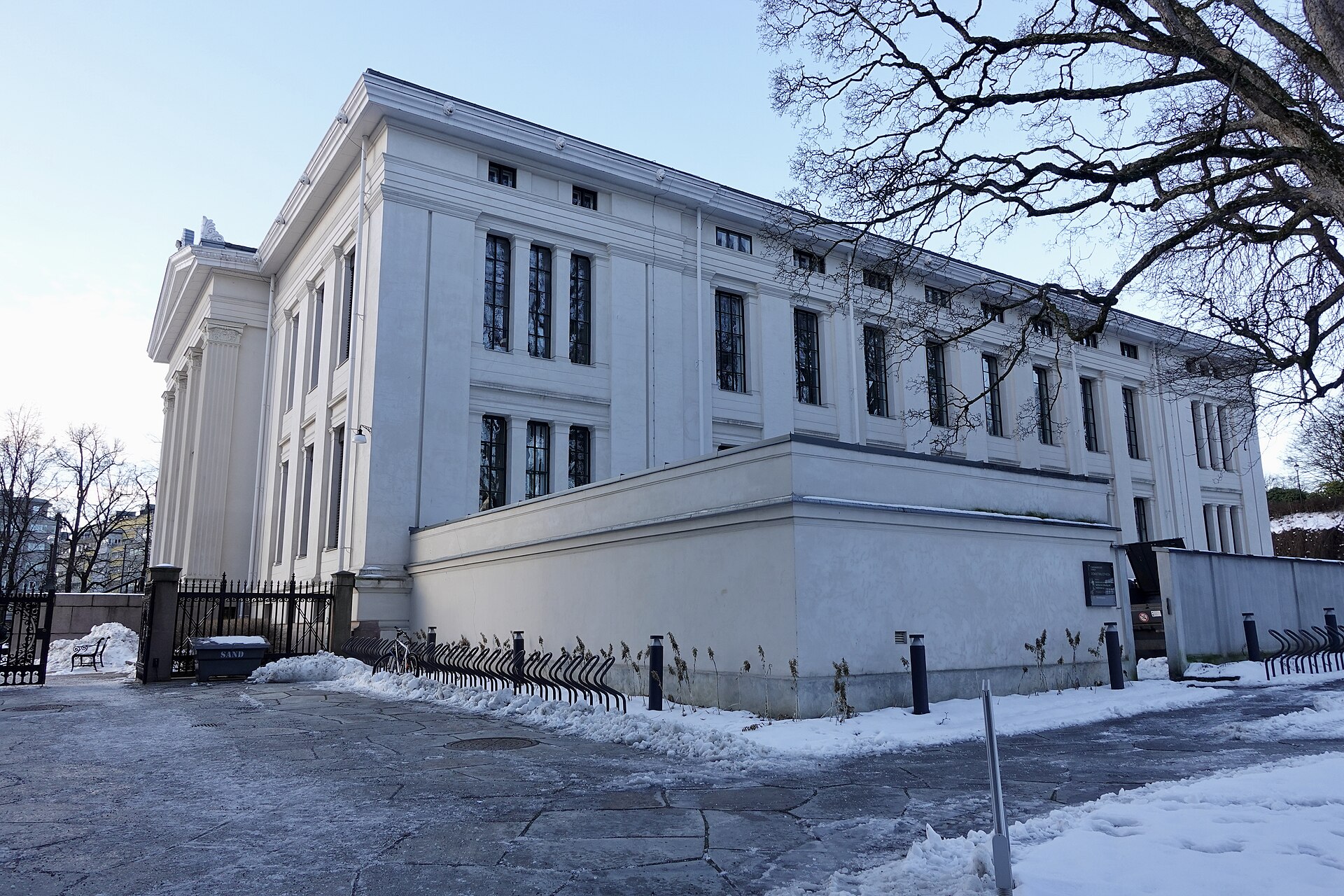
- February, not December, is when Oslo is coldest. The darkest month and the coldest month are not the same one. — Photo: Wolfmann / CC BY-SA 4.0 via Wikimedia Commons.
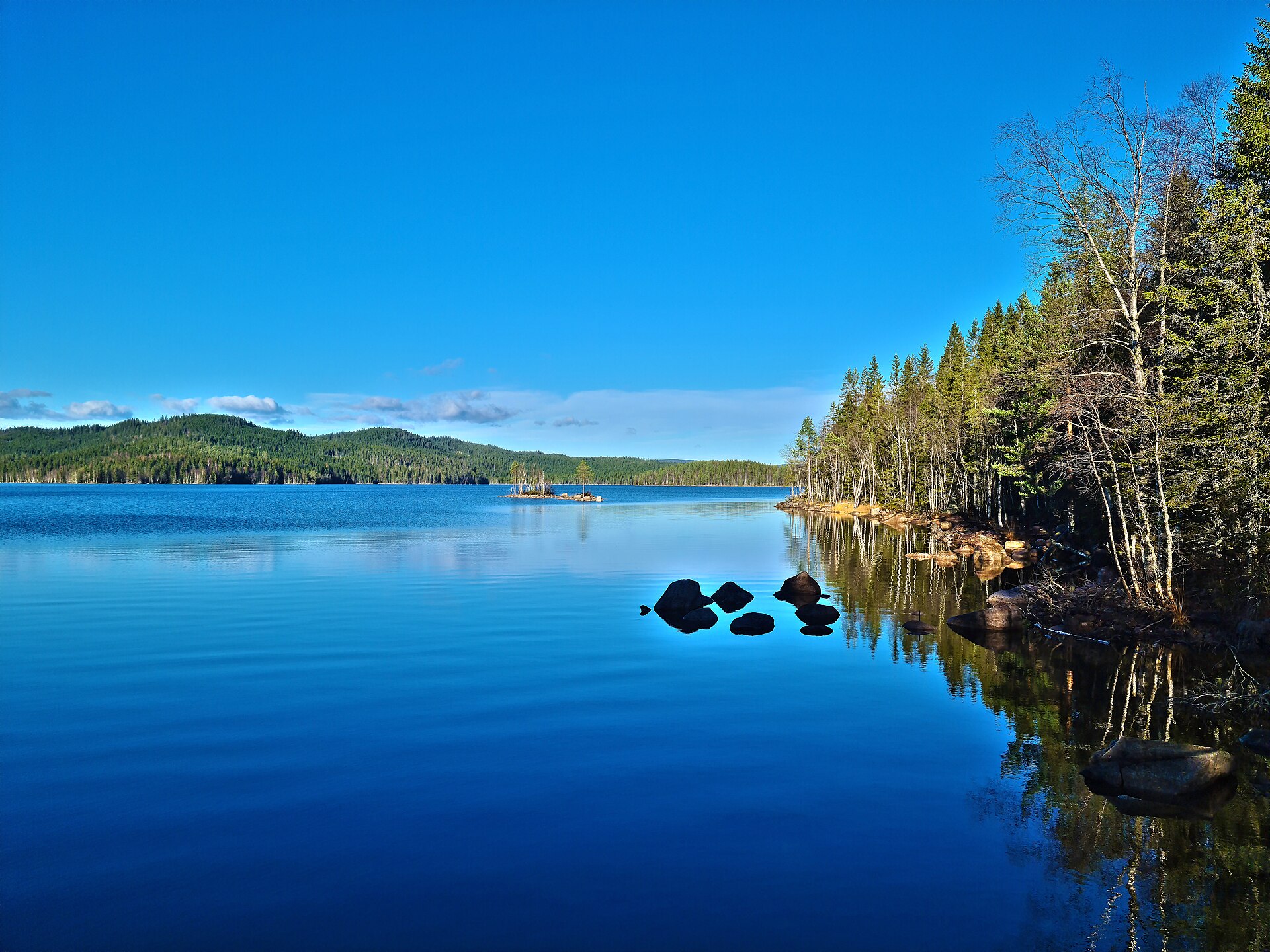
- Nordmarka begins where the metro ends. In winter the same trails are groomed and floodlit. — Photo: Geir Hval (www.MacWhale.eu) / CC BY-SA 4.0 via Wikimedia Commons.
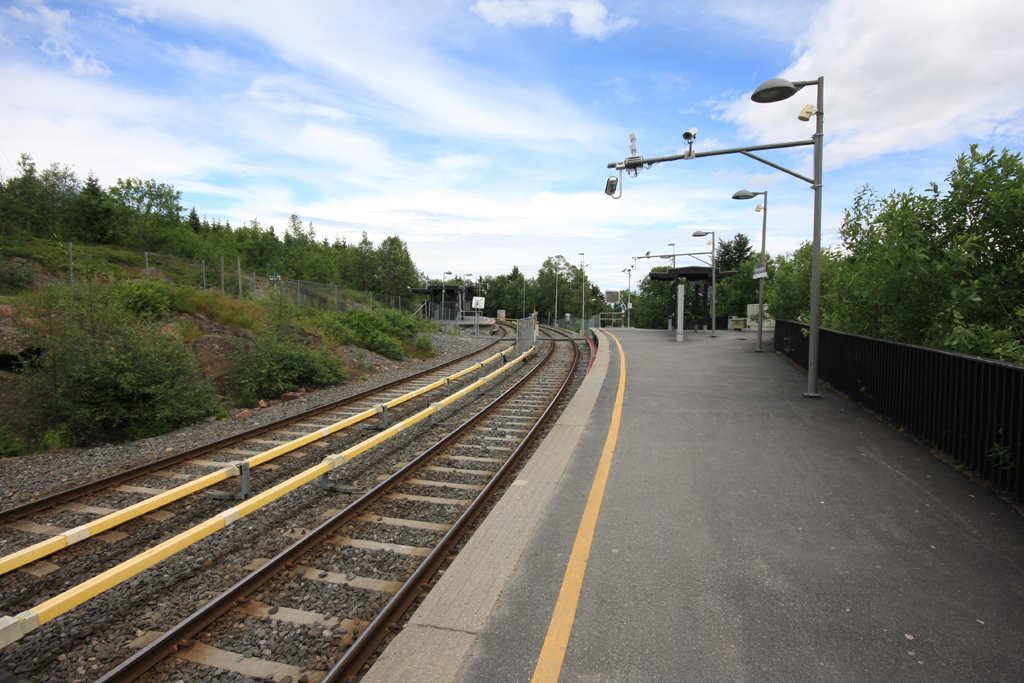
- Line 1 ends at Frognerseteren, at the top of the free Korketrekkeren toboggan run. — Photo: Tommy1972 / CC BY-SA 4.0 via Wikimedia Commons.
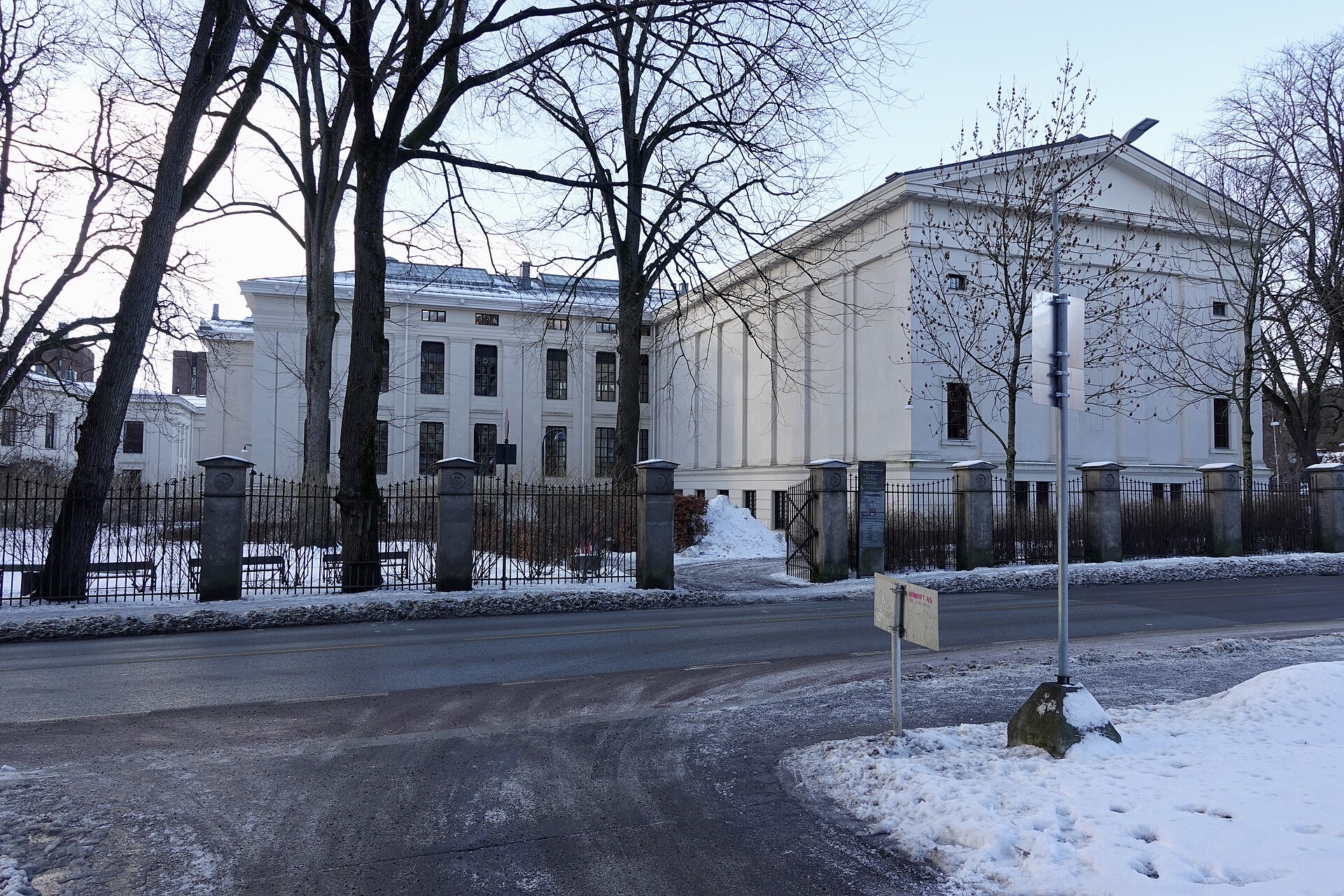
- Oslo grits its roads thoroughly and its pavements much less so. Boots with grip matter more than a heavier coat. — Photo: Wolfmann / CC BY-SA 4.0 via Wikimedia Commons.
Prices and daylight figures checked August 2026, converted at 9.35 NOK to 1 USD. Season dates for Tryvann and Jul i Vinterland are normally confirmed in October, and the Tryvann lift price above comes from an aggregator rather than the operator — check both before you travel. Where sources disagreed, on sled hire and on the length of the Nordmarka trail network, I have said so rather than picking a number.