The single most important fact about whale watching in Tromsø is that the whales are not in Tromsø.
They follow the herring, and the herring have moved twice in twenty years. Until around 2007 the Norwegian spring-spawning herring wintered in Vestfjorden and Tysfjord, near Lofoten — which is where orca tourism started in 1985. Then the fish shifted north. Since about 2017 they have wintered in Kvænangen and the fjords around Skjervøy, several hours north-east of Tromsø by road.
Which means that almost every tour sold as a Tromsø whale safari is a bus ride to Skjervøy or a long sail north, and the day is eight to nine hours rather than three. Nobody puts that in the headline.
Here is the version with the 2026/27 season dates, prices in kroner, an honest account of the light you will be shooting in, and the questions about ethics that the operators would rather you did not ask.
2026/27 at a glance
| Detail | |
|---|---|
| Season | 16 October 2026 – 31 January 2027 (RIB from 19 October) |
| Where the whales are | Kvænangen and the fjords around Skjervøy |
| Typical day length | 8–9 hours including transfer |
| Big-boat price | NOK 1,990 adult (NOK 2,189 over Christmas) |
| RIB price | NOK 3,300 with bus from Tromsø; NOK 2,400 from Skjervøy |
| Main species | Orca and humpback; fin whale occasional |
| Sighting odds | Operators claim over 95%; nobody guarantees it |
| Light available | ~10:00–14:00 of twilight in December |
Where the whales actually are, and why it matters
Norwegian spring-spawning herring gather in a wintering ground each year, and orcas and humpbacks follow them there, one of the more reliable Arctic wildlife encounters in Norway. Where that ground is has moved.
The Institute of Marine Research reports that the winter 2025/26 fishery took place in and around Kvænangen and the Alta fjords, the same as the year before. The 2026 fishery opened in early January in the northern Troms fjords, mainly Kvænangen, ran through and finished off Helgeland on 7 March, and landed 214,000 tonnes against 115,000 the year before.
So as of the last complete season, the whales are north-east of Tromsø, and Skjervøy is the working base.
The honest caveat: nobody knows where they will be until the herring settle, usually in November. Historically the pods have appeared in Andfjord, off Senja, in Kaldfjord on Kvaløya, in Tromsø’s own fjords, at Skjervøy and in Alta. I found no evidence of a further shift for 2026/27, but I also cannot promise there will not be one. Ask your operator where they are currently sailing before you book — they will know, and a good one will tell you.
What the day actually involves
The big boat: Brim Explorer
NOK 1,990 adult · 8–9 hours · daily, 16 October 2026 – 31 January 2027
Departures at 07:30, 07:45 or 08:00, returning between 17:00 and 17:30. Youth and students pay NOK 1,492.50, children 3–11 pay NOK 995, infants free. Over the Christmas period — 11 December 2026 to 10 January 2027 — those rise to NOK 2,189, 1,641.75 and 1,094.50. Group sizes run from 8 to 140.
The vessel is hybrid-electric and marketed on silence. Here is the number the operator publishes and nobody quotes: about 10% of the tour runs on the electric engine. That is the part where the boat goes quiet near the animals, which is genuinely the point of it — but it is a tenth of the day, not the whole thing.
Brim claims better than a 95% chance of seeing orcas, fin or humpback whales, and states explicitly that sightings are not guaranteed. If the weather kills the trip, it converts to an Arctic Fjord Cruise rather than being cancelled outright.
The RIB: See & Explore
NOK 3,300 with the bus from Tromsø · 19 October 2026 – 31 January 2027
Rising to NOK 3,500 after 1 December 2026. Booked directly from Skjervøy it is NOK 2,400, or 2,600 after that date — so if you are already up there, you save NOK 900.
The logistics are brutal and worth knowing before you book: the bus meets at 05:15 and departs Prostneset at 05:30, arriving Skjervøy at 09:00. That is about three and a half hours each way. Maximum twelve people. Flotation suits, goggles, boots, mittens and food are included.
On the drive time: sources genuinely disagree. The operator and one Tromsø-based writer both put Skjervøy at around four hours from Tromsø; a photographer who spent a week there says about two. The 05:15 meet and 09:00 arrival suggest the longer figure is the operating reality.
Big boat or RIB?
| Hybrid catamaran | RIB | |
|---|---|---|
| Price from Tromsø | NOK 1,990 | NOK 3,300 |
| Group | Up to 140 | Max 12 |
| Day length | 8–9 hrs | Similar, with a 05:15 start |
| Indoors | Yes, heated | No |
| Suits supplied | Not needed | Yes |
| Minimum age | None | 8 |
| Best for | Families, cold-averse, first-timers | Photographers, small groups |
The RIB is NOK 1,310 more, gets you closer to the water, and puts you outdoors at −5°C for hours. The big boat has a heated cabin you can retreat into, which after four hours matters more than people expect.
My verdict: take the big boat unless you are photographing seriously. The animals surface where they surface; a smaller boat does not conjure more of them, and the approach rules apply equally to both.
Free second trips
Several operators offer a free repeat if you see nothing — Norwegian Travel for winter 2026/27 subject to space, Rødne, MS Gabriele, and Arctic Whale Tours. That is worth more than it sounds, but only if you have a spare day. On a three-night trip you probably do not, which is an argument for booking the whale day early in your stay rather than late.
The light problem, quantified
This is the section every competitor skips and it will define your photographs.
You are whale watching in and around the polar night. Tromsø’s sun stays below the horizon from roughly 27 November to 15 January. In December you get approximately 10:00 to 14:00 of coloured twilight, with about forty minutes of proper civil twilight around solar noon at roughly 12:20 to 12:35.
That is your window. Four hours of blue and pink light, forty minutes of it decent, and darkness either side. Which is why the boats leave at half past seven — most of the sail out and back happens in the dark.
What that means practically:
- Photograph at ISO 800–3200 and expect to push it. A 70–200mm or 100–400mm is the useful range.
- Phone photographs of whales in December twilight will not work. Adjust expectations rather than the settings.
- Book October or November if the pictures matter. The season opens 16 October, when you still have real daylight, and the herring are usually settled by early November.
- January gives you the light coming back plus the last of the whales — but the season ends 31 January.
The trade-off is real: October and early November have the light but the whales may not have arrived; December has the whales and no light; January has both, briefly. The wider winter calendar is worth reading alongside this.
What you will see
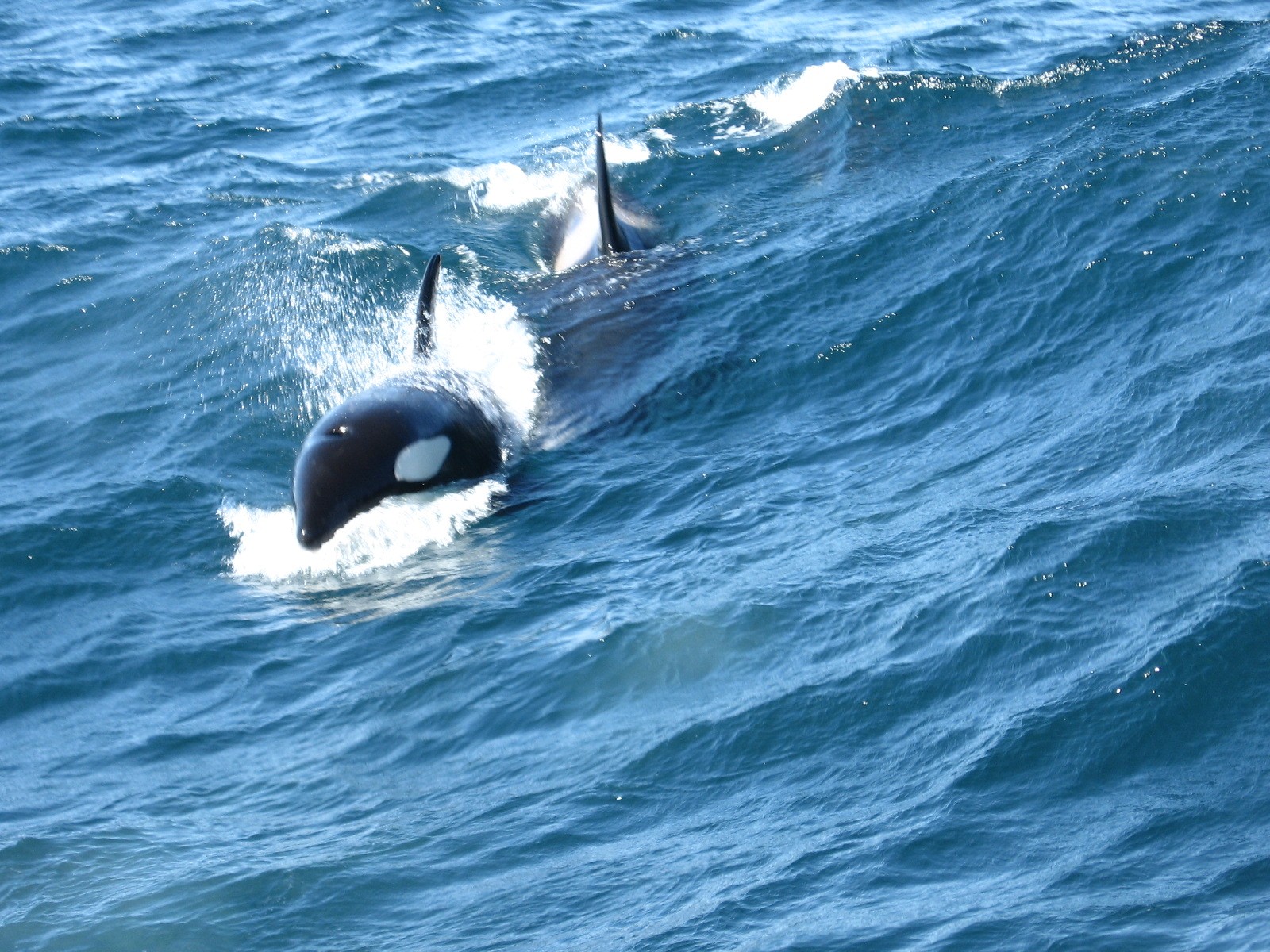
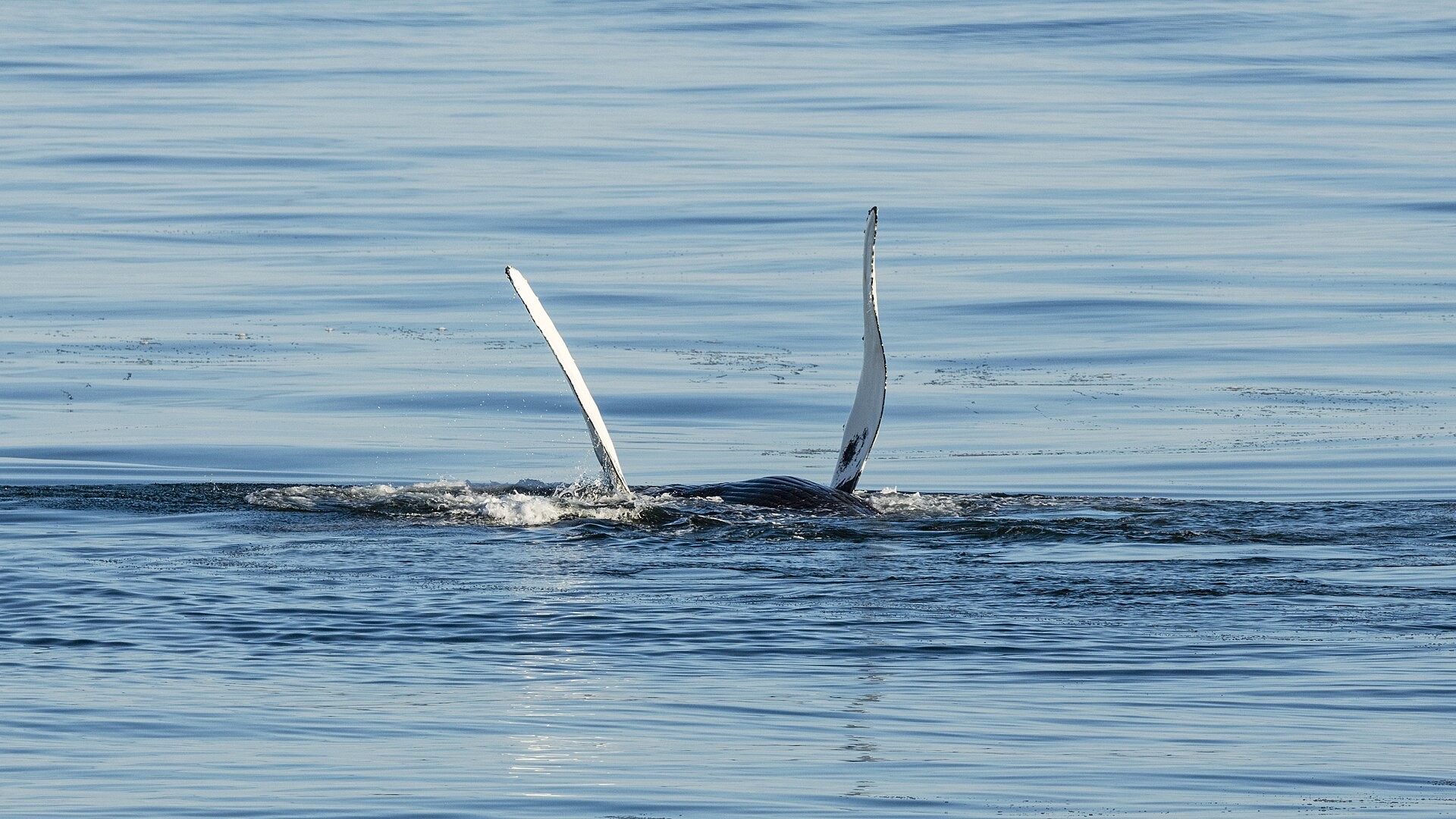
Orcas and humpbacks dominate. Orcas work the herring in coordinated groups, herding fish into a tight ball near the surface and stunning them with their tails — carousel feeding, and it is the thing people come for. Humpbacks arrive to exploit the same concentration and feed by lunging up through it.
Fin whales turn up occasionally — the second-largest animal on earth, and easy to under-appreciate because you see so little of them.
Minke whales, harbour porpoises and, rarely, sperm whales are possible. Sperm whales are properly a Vesterålen animal rather than a Troms one, and worth a separate leg of the trip.
Sea eagles follow the boats — one of the reliable Arctic sights people do not book for. So do gulls, in numbers.
The odds, honestly
Operators claim upwards of 95%, and over a full season that is probably about right when the herring are settled and the boats know where to go. Nobody guarantees it, and the free-second-trip policies exist precisely because blank days happen.
One caution: at least one Tromsø operator publishes a detailed “sightings log” showing 96.8% success and 9.2 whales per tour, while labelling it an illustrative example. It is marketing, not data. Do not plan around it.
The rules, and the ethics
Norway has whale-watching guidelines, and they are more specific than most visitors realise:
- Keep 100 metres from the animals, or 200 if another boat is already there.
- Under 5 knots within 300 metres; minimum speed from 100 metres; engine idling from 50.
- A maximum of three boats at any one situation, on a 30-minute rotation, with others waiting 500 metres off.
- Trips capped at three hours of active watching.
A responsible skipper will visibly hold off and wait his turn. If yours does not, that is worth noticing.
Swimming with orcas
People ask, and the answer is more complicated than either side presents it. It is not banned in Norway. Visit Tromsø discourages in-water activity and the NorWhale industry guidelines say it is not recommended — but it operates near-daily out of Skjervøy in season.
The safety case against it is specific rather than general: the reason to be in the water is carousel and bubble-net feeding, and that is precisely the moment when large animals are moving fast and unpredictably through a dense fish ball. It is also, by most readings, disturbance of a feeding animal at the moment it is feeding.
I would not do it. Your call, but make it knowing it is discouraged rather than sanctioned.
The thing nobody mentions: Norway hunts whales
Worth saying plainly, because it surprises people who have just spent NOK 1,990 to admire them. Norway’s 2026 minke whale quota is 1,641 animals, up 235 on 2025. In practice the fleet takes far less: in 2025, ten vessels killed 429 whales.
Minke whales are not the species you go out to see — the tours are about orcas and humpbacks — and whale meat appears on menus in Tromsø, sometimes in restaurants a short walk from the whale-watching quay. You can hold both facts at once, and it is better to know than to find out over dinner.
Seasickness and what to wear
The crossing to the whale grounds is open water and it moves. Brim’s own booking page says the tour “can be wavy at times” and recommends bringing seasickness pills — they do not supply them. Nor does anyone else I checked. Buy them in town the day before and take them before boarding, not when you start to feel it.
On clothing: the RIB operators supply flotation suits, boots and mittens, so you need only base layers underneath. On the big boat you provide everything, and you will be standing on an open deck for hours at around −5°C with wind. Merino base layers, a proper mid-layer, a windproof shell, mittens rather than gloves with a thin liner underneath for the camera, and a hat that covers your ears. If you have not brought that, Tromsø Outdoor rents an Arctic package from about NOK 400 a day — see the winter kit notes.
Should you stay in Skjervøy instead?
Almost nobody discusses this and it is a real option.
Booking the RIB directly from Skjervøy costs NOK 2,400 instead of NOK 3,300 — a saving of NOK 900 — and removes seven hours of bus from your day. If you plan to go out more than once, or you are photographing, staying up there for two or three nights transforms the trip from an endurance event into something pleasant.
Against that: Skjervøy is a small fishing town with limited beds and nothing else to do, and you lose access to everything else a Tromsø base gives you — the aurora tours, the dog sledding, the restaurants — and the reason most people come north in the first place.
Verdict: one trip, stay in Tromsø and take the bus. Two or more trips, or serious photography, stay in Skjervøy.
The alternative: Andenes
If your dates fall outside 16 October to 31 January, Tromsø has no whale season. Andenes in Vesterålen does, and it runs on a completely different animal.
Sperm whales feed year-round in the Bleik Canyon just offshore, with a main season from May to September. Trips run three to five hours, and operators offer a whale guarantee with free rebooking — which they can do because the animals are resident rather than following a migrating food source.
It is a different experience: one enormous animal at a time, logging on the surface and then diving with its fluke up, rather than a feeding frenzy of orcas. If you are in the north in summer, this is the whale trip to take.
What I would skip
Skip the RIB unless you are photographing. NOK 1,310 more, a 05:15 meet, and hours outdoors — for the same animals, at the same legal distance, that the heated boat reaches.
Skip December if the photographs matter. Four hours of twilight and forty minutes of it usable. Book October, November or January.
Skip booking the whale day on your last morning. Several operators offer a free second trip if you draw a blank, and that is worthless if you fly home the next day.
Skip the swim-with-orcas add-on. Not banned, but discouraged by both the tourist board and the industry’s own guidelines, and the case against it is specific and reasonable.
Skip any operator that will not tell you where they are currently sailing. The herring move. A good operator knows exactly where the pods were yesterday and will say so.
Do not treat any published sighting-rate table as data unless the operator says where the numbers came from.
What I would book
| You are | Book | Cost |
|---|---|---|
| First-timer, one trip | Hybrid catamaran from Tromsø | NOK 1,990 |
| With children | Hybrid catamaran — no minimum age, heated cabin | NOK 995 child |
| Photographing seriously | RIB from Skjervøy, staying up there | NOK 2,400 |
| Travelling over Christmas | Same boats, higher price | NOK 2,189 |
| Outside 16 Oct – 31 Jan | Andenes, sperm whales | Different trip entirely |
| On a tight budget | Skip it and spend the money on aurora nights | — |
That last row is a serious suggestion. A whale day is nine hours and NOK 2,000 for something that is not guaranteed. Two extra aurora chases cost about the same and, over three nights, have better odds — the forecasting guide explains why. If you can only afford one, think about which you would rather have missed.
Frequently asked questions
What is the best month for whale watching in Tromsø?
November. The herring have usually settled by then, the season is fully running, and you still have several hours of real daylight before the polar night closes in on 27 November. October is a gamble on the whales having arrived; December has them but almost no light; January has both, until the season closes on 31 January.
Are there whales near Tromsø in February or March?
Not for tourism purposes. The 2026/27 season runs 16 October to 31 January, and operators stop when the herring disperse. The 2026 fishery moved south to Helgeland by early March. If you are visiting in late winter, Andenes in Vesterålen has sperm whales year-round instead.
Do whale tours actually leave from Tromsø, or do you have to go to Skjervøy?
Both, but the whales are around Skjervøy and Kvænangen. Boats sailing from Tromsø make a long journey north; the RIB operators bus you up, meeting at 05:15 and arriving at 09:00. Either way expect an eight- to nine-hour day. You can book directly from Skjervøy for about NOK 900 less.
How long is a whale watching tour from Tromsø?
Eight to nine hours. The big boats leave between 07:30 and 08:00 and return between 17:00 and 17:30. The RIB with transfer starts even earlier, with a 05:15 meeting time.
Is it too dark to see whales during the polar night?
No, but you are working with roughly four hours of twilight in December, from about 10:00 to 14:00, with only forty minutes of decent light around midday. You will see the animals. Photographing them well is a different matter — book October, November or January if that is the point.
What are the chances of seeing whales in Tromsø?
Operators claim over 95% and none of them guarantee it. Several offer a free second trip if you see nothing, which tells you blank days are real. Book early in your stay so you can use that offer if you need to.
Is whale watching in Tromsø ethical?
Reasonably, if your operator follows the guidelines: 100 metres’ distance (200 with another boat present), under 5 knots within 300 metres, a maximum of three boats on a 30-minute rotation, and no more than three hours of watching. Hybrid-electric vessels help, though “hybrid” means roughly 10% of the trip on the electric engine. Worth knowing separately: Norway’s 2026 minke whale hunting quota is 1,641 animals.
Can you swim with orcas in Norway?
It is not banned, and it operates out of Skjervøy in season. Visit Tromsø discourages it and the industry’s own NorWhale guidelines say it is not recommended, largely because the in-water experience depends on being close to carousel feeding — fast-moving animals in a dense fish ball. Make the decision knowing it is tolerated rather than endorsed.
Photo credits
- Orcas follow the herring — Photo: Martin Lindner / CC BY 3.0 via Wikimedia Commons.
- Humpbacks arrive to feed on the same herring concentration. — Photo: Godot13 / CC BY-SA 4.0 via Wikimedia Commons.
Season dates and prices checked August 2026 against operators’ own booking pages, at NOK 9.35 to the US dollar. Where the whales will be for the 2026/27 season is not knowable until the herring settle in November — the Kvænangen and Skjervøy grounds held for 2024/25 and 2025/26, but confirm with your operator before booking. The Tromsø-to-Skjervøy drive time is given as both two and four hours by different sources; the published transfer timetable supports the longer figure.